Sitarek Przemysław, Merecz-Sadowska Anna, Sikora Joanna, Osicka Weronika, Śpiewak Igor, Picot Laurent, Kowalczyk Tomasz
Department of Medical Biology, Medical University of Lodz, Muszynskiego 1, 90-151 Lodz, Poland.
Department of Allergology and Respiratory Rehabilitation, Medical University of Lodz, 90-725 Lodz, Poland.
Antioxidants (Basel). 2024 Nov 11;13(11):1376. doi: 10.3390/antiox13111376.
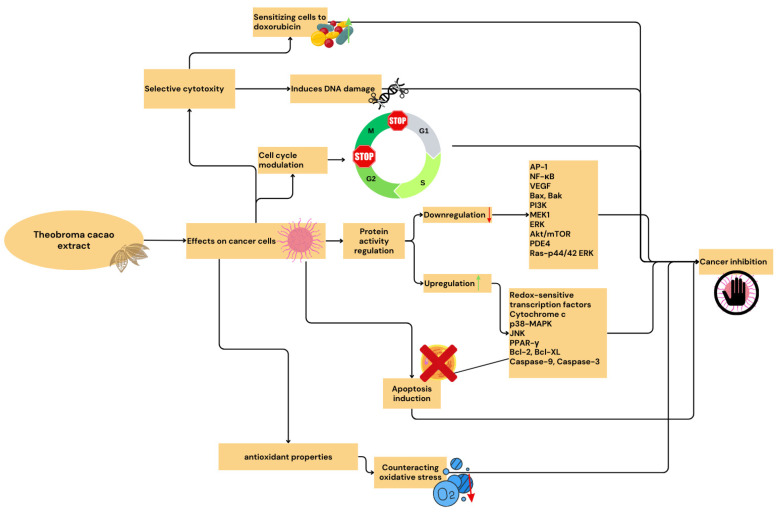
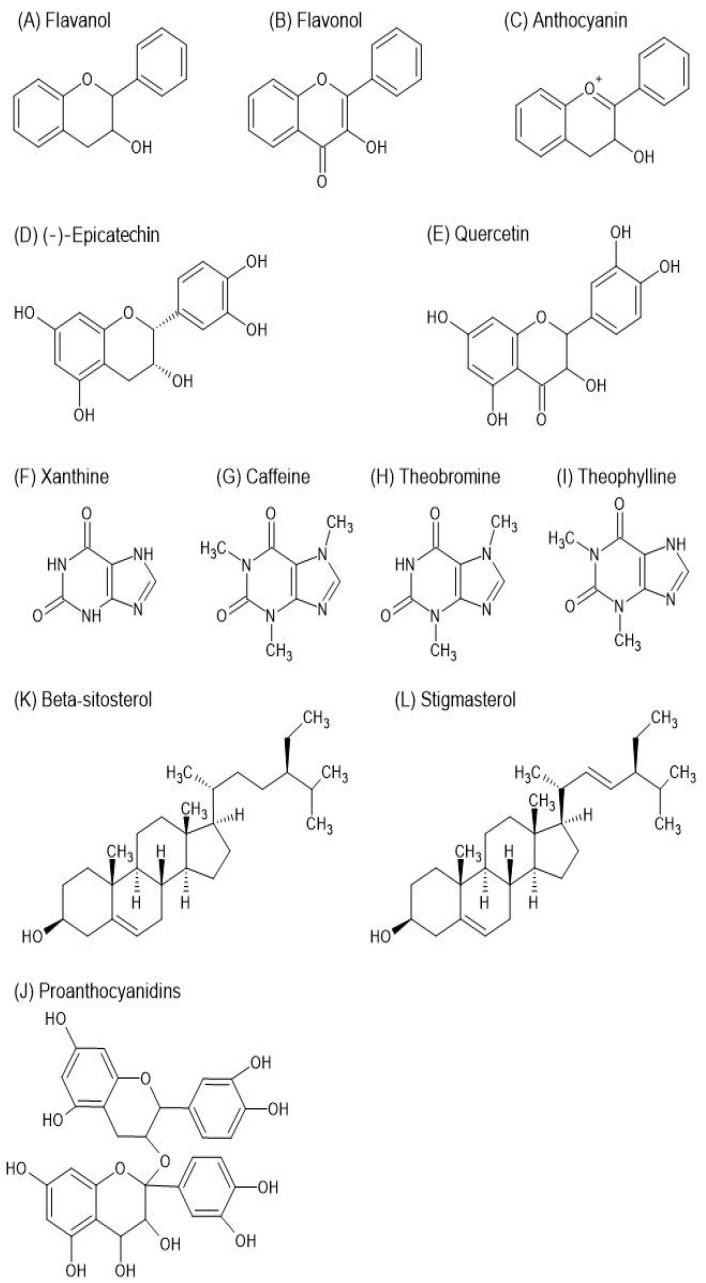
L., commonly known as cocoa, has been an integral part of human culture and diet for thousands of years. However, recent scientific research has highlighted its potential therapeutic properties, particularly in the treatment of cancer and inflammatory diseases. This comprehensive review analyzes the anti-inflammatory and anticancer effects of extracts combined with nanoparticles using in vitro and in vivo studies. Its diverse biological activity can be attributed to its rich phytochemical profile, including polyphenols, flavonoids, and alkaloids. In vitro studies have found that cocoa extracts, alone or in combination with nanoparticles, inhibit cancer cell proliferation, induce apoptosis and modulate key signaling pathways in various cancer cell lines. The extracts have also been found to reduce tumor growth and enhance the efficacy of conventional chemotherapeutic agents, potentially reducing their side effects, in vivo. Its anti-inflammatory properties are based on its ability to modulate inflammatory mediators, inhibit NF-κB signaling, and regulate macrophage polarization. These effects have been observed in both cellular and animal models of inflammation. This review opens up new possibilities for future research and therapeutic applications, highlighting the potential of as a valuable complementary approach in the treatment and prevention of cancer and inflammatory diseases.
可可,通常被称为可可豆,数千年来一直是人类文化和饮食中不可或缺的一部分。然而,最近的科学研究突出了其潜在的治疗特性,特别是在癌症和炎症性疾病的治疗方面。这篇全面的综述利用体外和体内研究分析了可可提取物与纳米颗粒结合的抗炎和抗癌作用。其多样的生物活性可归因于其丰富的植物化学特征,包括多酚、黄酮类化合物和生物碱。体外研究发现,可可提取物单独或与纳米颗粒结合,可抑制癌细胞增殖、诱导细胞凋亡并调节各种癌细胞系中的关键信号通路。在体内,提取物还被发现可减少肿瘤生长并增强传统化疗药物的疗效, potentially reducing their side effects, in vivo. 其抗炎特性基于其调节炎症介质、抑制NF-κB信号传导和调节巨噬细胞极化的能力。在炎症的细胞和动物模型中均观察到了这些作用。这篇综述为未来的研究和治疗应用开辟了新的可能性,突出了可可作为癌症和炎症性疾病治疗和预防中有价值的辅助方法的潜力。