Division of Dental Biochemistry, Department of Basic Medical Sciences, Faculty of Dentistry, University of Debrecen, 4032 Debrecen, Hungary.
Department of Biochemistry and Molecular Biology, Faculty of Medicine, University of Debrecen, 4032 Debrecen, Hungary.
Cells. 2024 Nov 18;13(22):1902. doi: 10.3390/cells13221902.
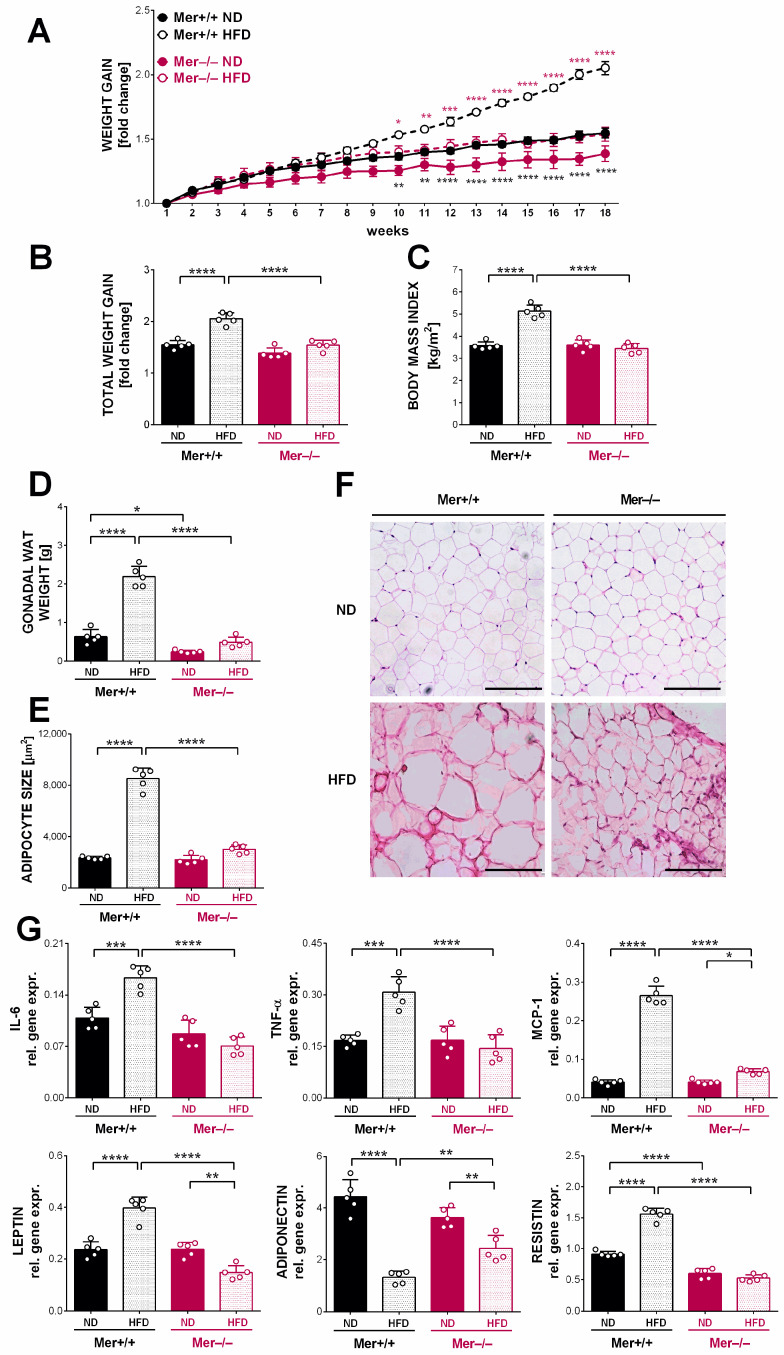
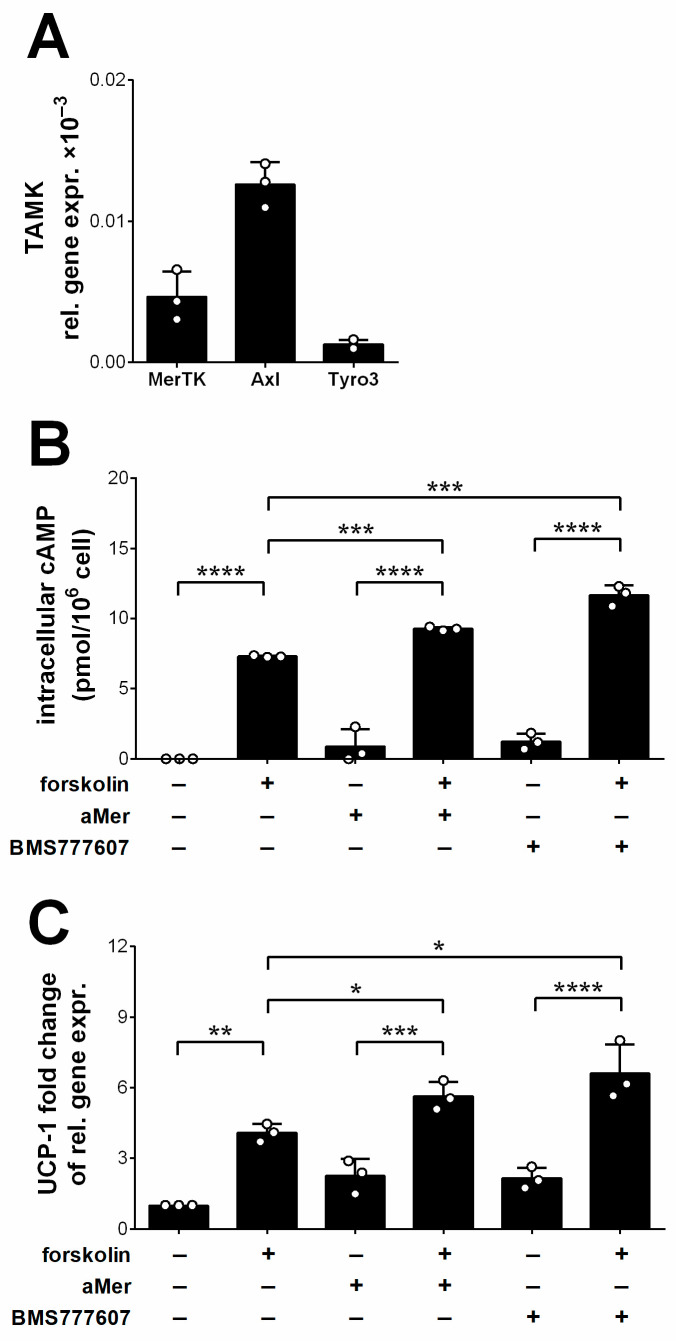
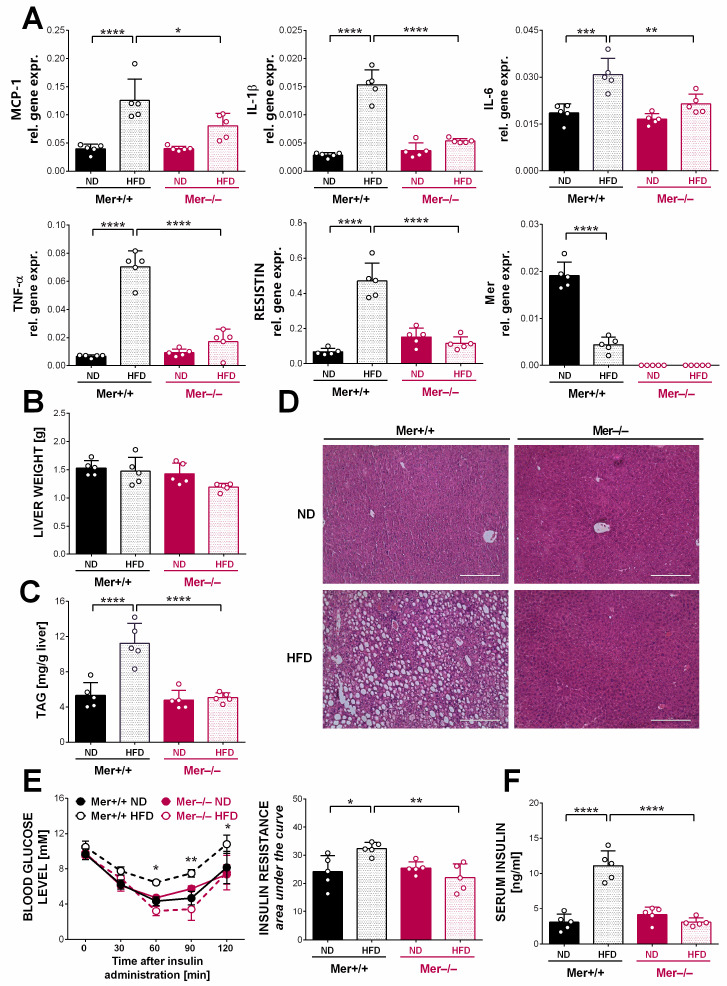
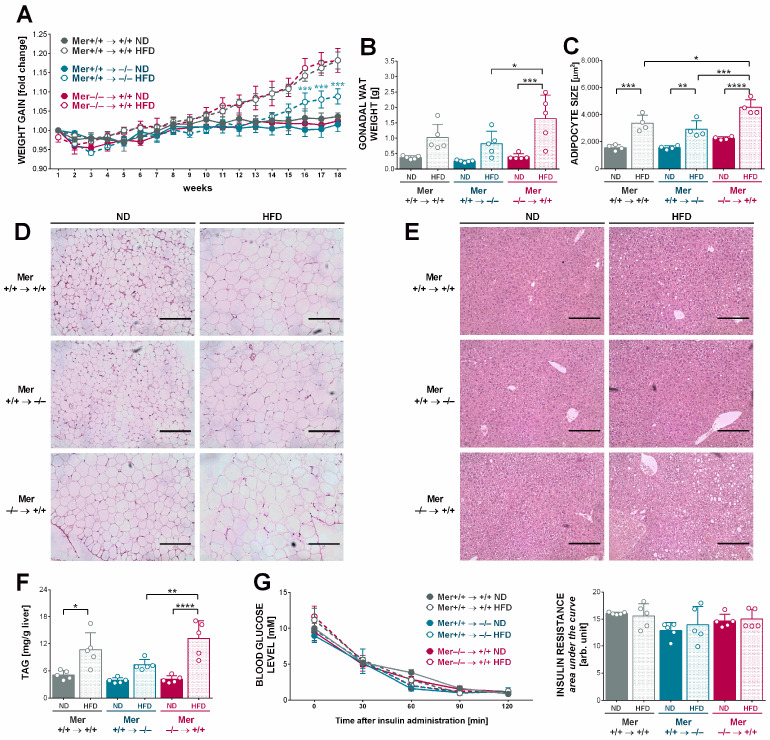
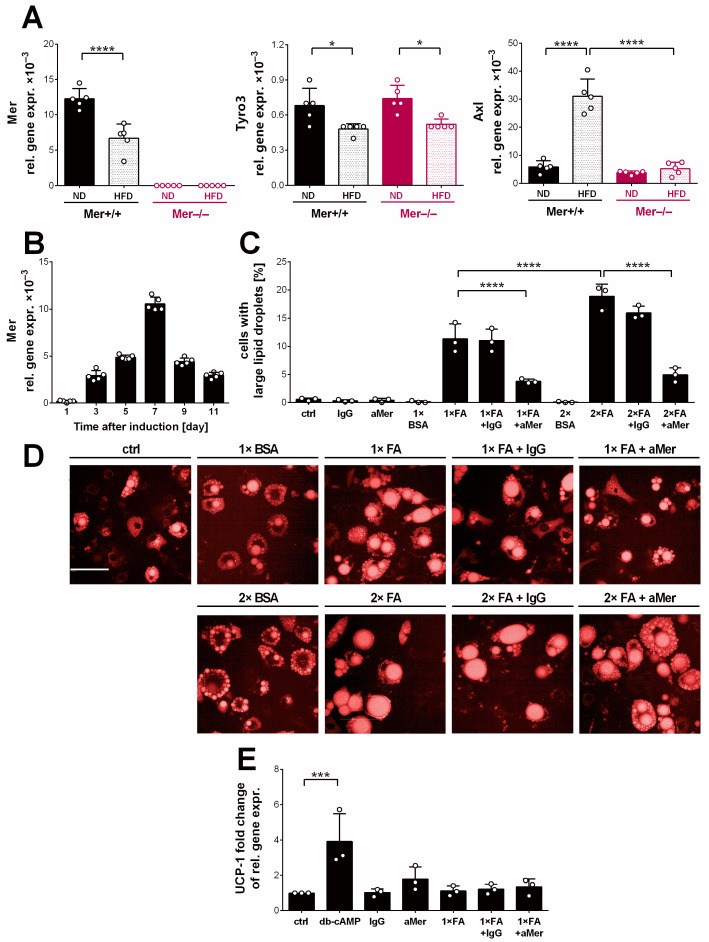
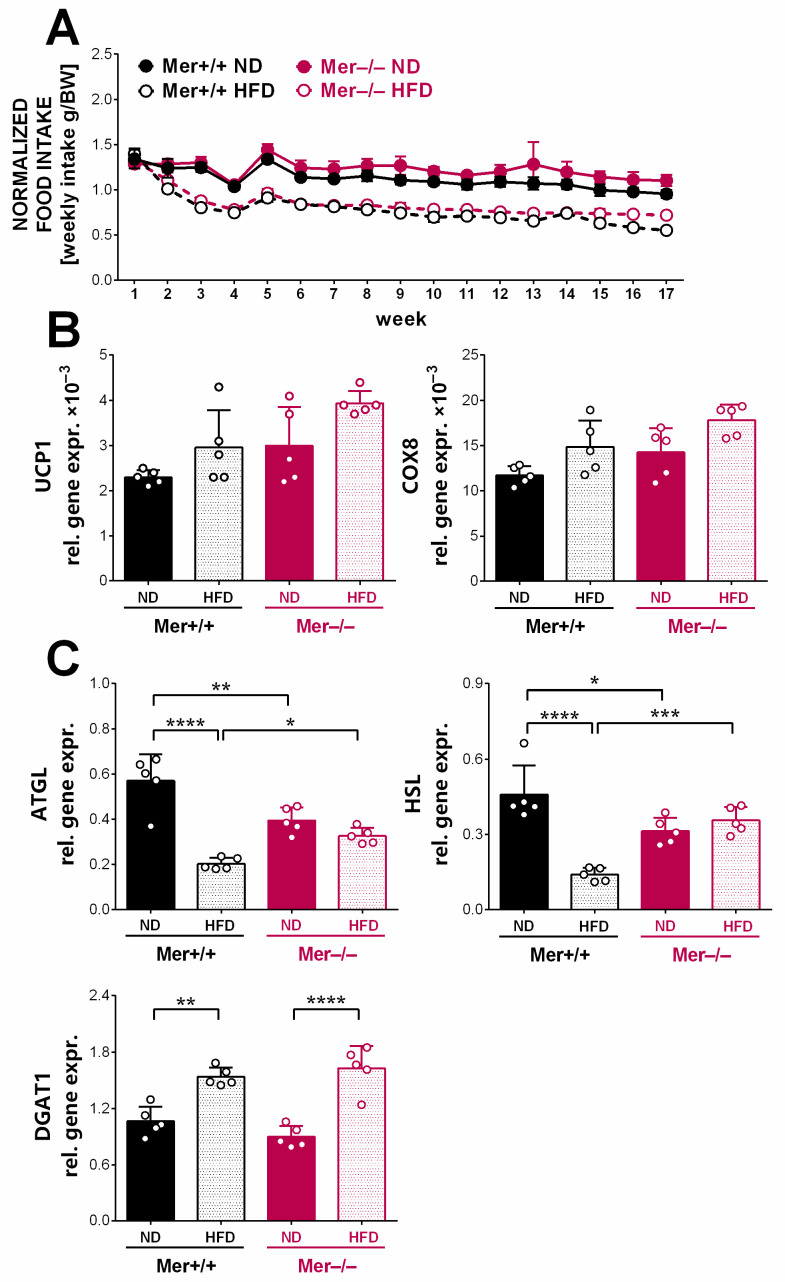
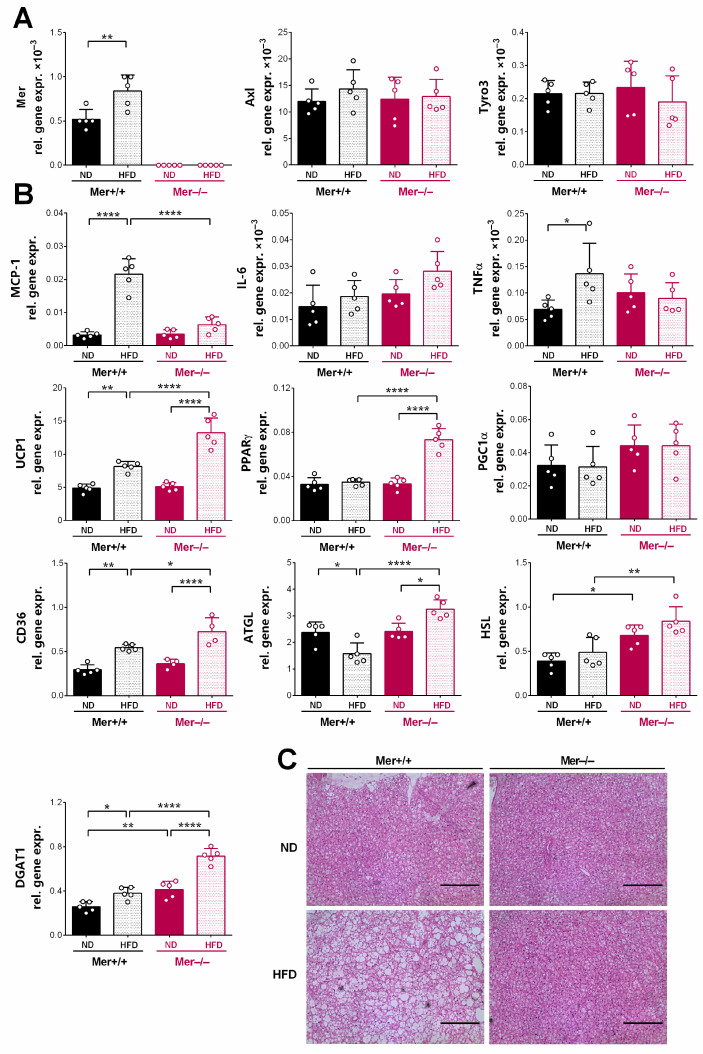
Obesity is characterized by low-grade inflammation that originates predominantly from the expanding visceral adipose tissue, in which adipocytes respond to lipid overload with hypertrophy, and consequently die by apoptosis. Recruited adipose tissue macrophages (ATMs) take up the excess lipids and remove the dead cells; however, long-term exposure to high concentrations of lipids alters their phenotype to M1-like ATMs that produce pro-inflammatory cytokines and resistin leading to insulin resistance and other obesity-related pathologies. Mer tyrosine kinase is expressed by macrophages and by being an efferocytosis receptor, and by suppressing inflammation, we hypothesized that it might play a protective role against obesity. To our surprise, however, the loss of Mer protected mice against high-fat diet (HFD)-induced obesity. We report in this paper that Mer is also expressed by adipocytes of both white and brown adipose tissues, and while its activity facilitates adipocyte lipid storage both in vitro and in vivo in mice exposed to HFD, it simultaneously attenuates thermogenesis in the brown adipose tissue contributing to its 'whitening'. Our data indicate that Mer is one of the adipocyte tyrosine kinase receptors, the activity of which contributes to the metabolic decision about the fate of excess lipids favoring their storage within the body.
肥胖症的特征是低度炎症,主要源自扩张的内脏脂肪组织,其中脂肪细胞对脂质过载的反应是肥大,随后通过细胞凋亡而死亡。募集的脂肪组织巨噬细胞(ATMs)吸收多余的脂质并清除死亡细胞;然而,长期暴露于高浓度的脂质会改变它们的表型为 M1 样 ATMs,产生促炎细胞因子和抵抗素,导致胰岛素抵抗和其他肥胖相关的病理。Mer 酪氨酸激酶由巨噬细胞表达,作为吞噬作用的受体,并通过抑制炎症,我们假设它可能在对抗肥胖方面发挥保护作用。然而,令我们惊讶的是,Mer 的缺失可保护小鼠免受高脂肪饮食(HFD)诱导的肥胖。我们在本文中报告,Mer 也在白色和棕色脂肪组织的脂肪细胞中表达,虽然它的活性促进了 HFD 暴露的小鼠体外和体内脂肪细胞的脂质储存,但同时减弱了棕色脂肪组织的产热作用,导致其“白化”。我们的数据表明,Mer 是脂肪细胞酪氨酸激酶受体之一,其活性有助于关于多余脂质命运的代谢决策,有利于将其储存在体内。