Garg Pankaj, Singhal Gargi, Kulkarni Prakash, Horne David, Salgia Ravi, Singhal Sharad S
Department of Chemistry, GLA University, Mathura 281406, Uttar Pradesh, India.
Department of Medical Sciences, S.N. Medical College, Agra 282002, Uttar Pradesh, India.
Cancers (Basel). 2024 Nov 20;16(22):3884. doi: 10.3390/cancers16223884.
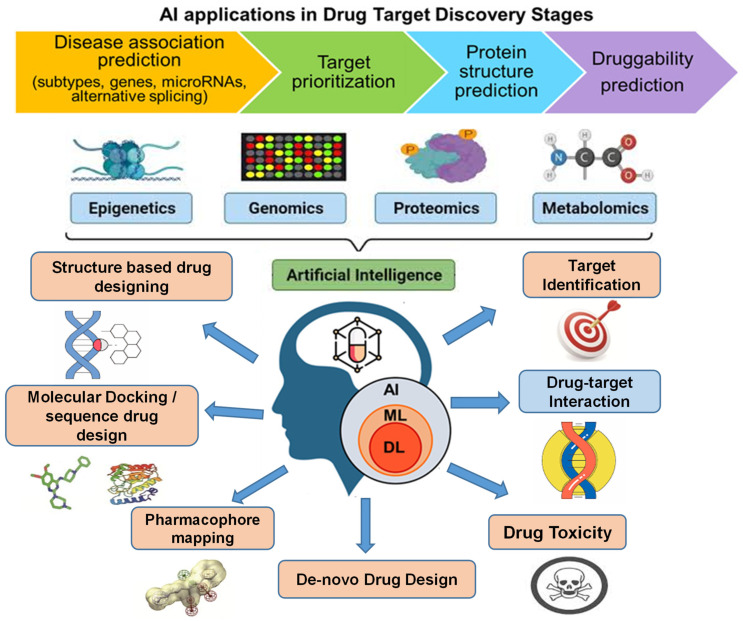
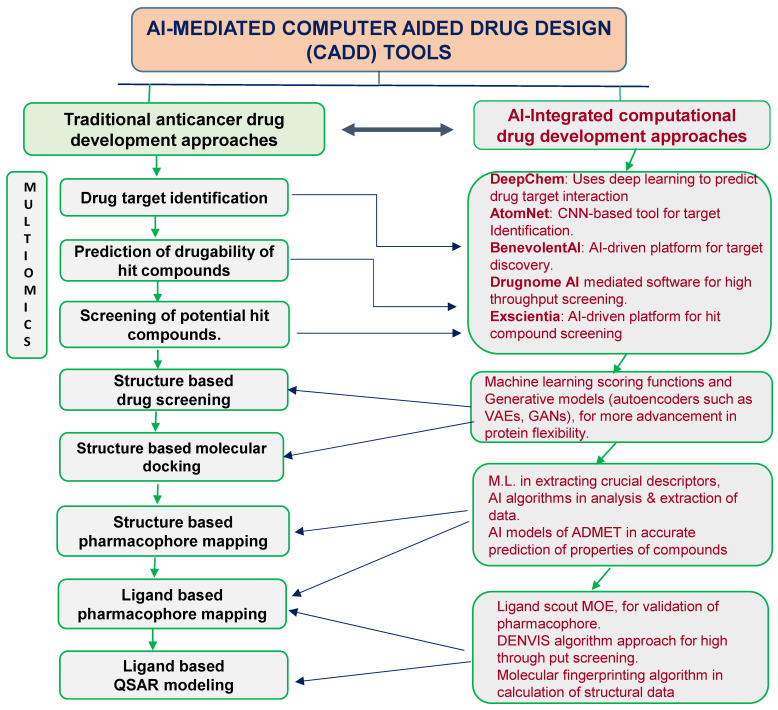
The integration of AI has revolutionized cancer drug development, transforming the landscape of drug discovery through sophisticated computational techniques. AI-powered models and algorithms have enhanced computer-aided drug design (CADD), offering unprecedented precision in identifying potential anticancer compounds. Traditionally, cancer drug design has been a complex, resource-intensive process, but AI introduces new opportunities to accelerate discovery, reduce costs, and optimize efficiency. This manuscript delves into the transformative applications of AI-driven methodologies in predicting and developing anticancer drugs, critically evaluating their potential to reshape the future of cancer therapeutics while addressing their challenges and limitations.
人工智能的整合彻底改变了癌症药物研发,通过复杂的计算技术改变了药物发现的格局。人工智能驱动的模型和算法增强了计算机辅助药物设计(CADD),在识别潜在抗癌化合物方面提供了前所未有的精度。传统上,癌症药物设计是一个复杂、资源密集的过程,但人工智能带来了加速发现、降低成本和优化效率的新机会。本文深入探讨了人工智能驱动方法在预测和开发抗癌药物方面的变革性应用,批判性地评估了它们重塑癌症治疗未来的潜力,同时也探讨了它们面临的挑战和局限性。