Population Sciences in the Pacific Program, University of Hawai'i Cancer Center, 701 Ilalo St., Honolulu, HI 96813, USA.
School of Medicine, University of California Riverside, 900 University Ave., Riverside, CA 92521, USA.
Int J Environ Res Public Health. 2024 Oct 28;21(11):1427. doi: 10.3390/ijerph21111427.
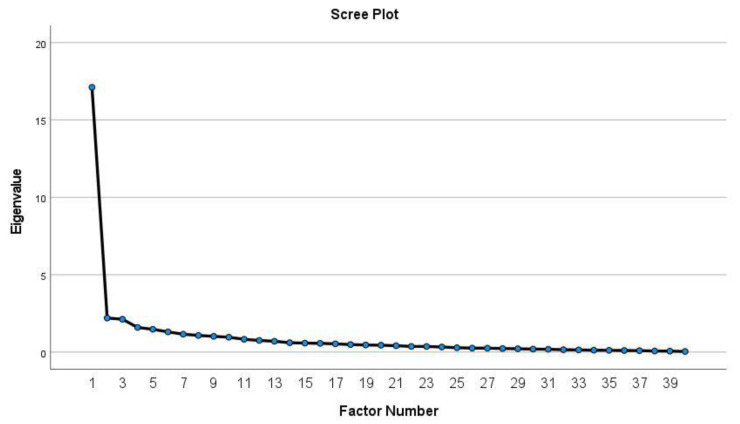
The purpose of this study is to describe the development and initial validation of a survey focused on problematic situations involving e-cigarette use by rural Native Hawaiian and Pacific Islander (NHPI) youths. A 5-phase approach to test development and validation was used. In Phase 1 (Item Generation), survey items were created from a series of focus groups with middle school youths on Hawai'i Island ( = 69). In Phase 2 (Item Refinement and Selection), situational items were reduced to 40 e-cigarette offer situations that were selected for inclusion in the survey. In Phase 3 (Item Reduction), items were administered to 257 youths from 11 middle, intermediate, or multi-level public or public-charter schools on Hawai'i Island. Exploratory factor analysis indicated the presence of three factors accounting for 50% of the variance: E-Cigarette Offers from Friends (24%), E-Cigarette Offers from Non-Friends (16%), and Coercive Pressure to Use E-Cigarettes (10%). Hypothesized relationships between offer situations and e-cigarette use were partially confirmed, supporting the construct validity of the survey. This survey helps to fill the scientific and practice gap in measuring ecodevelopmental risk and protection for e-cigarette use and has implications for e-cigarette use prevention with rural, NHPI, and/or Indigenous youth populations.
本研究旨在描述一项针对农村夏威夷原住民和太平洋岛民(NHPI)青少年电子烟使用问题情况的调查的开发和初步验证。采用了 5 阶段方法来测试开发和验证。在第 1 阶段(项目生成),从夏威夷岛的一系列中学生焦点小组中创建了调查项目(n=69)。在第 2 阶段(项目细化和选择),情境项目减少到 40 个电子烟提供情况,这些情况被选中纳入调查。在第 3 阶段(项目缩减),对来自夏威夷岛 11 所中学、中级或多层次公立或公立特许学校的 257 名青少年进行了项目评估。探索性因素分析表明存在三个因素,占总方差的 50%:来自朋友的电子烟提供(24%)、来自非朋友的电子烟提供(16%)和使用电子烟的强制性压力(10%)。提供情况与电子烟使用之间的假设关系得到部分证实,支持了该调查的结构有效性。该调查有助于填补衡量电子烟使用的生态发展风险和保护方面的科学和实践空白,对农村、NHPI 和/或原住民青年群体的电子烟使用预防具有重要意义。