Key Laboratory of Mariculture, Ministry of Education (KLMME), Ocean University of China, Qingdao 266003, China.
Int J Mol Sci. 2024 Nov 11;25(22):12098. doi: 10.3390/ijms252212098.
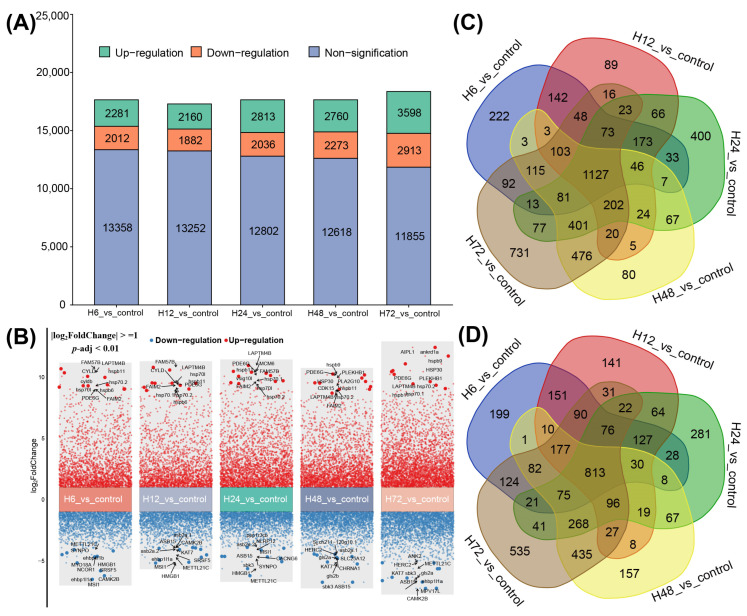
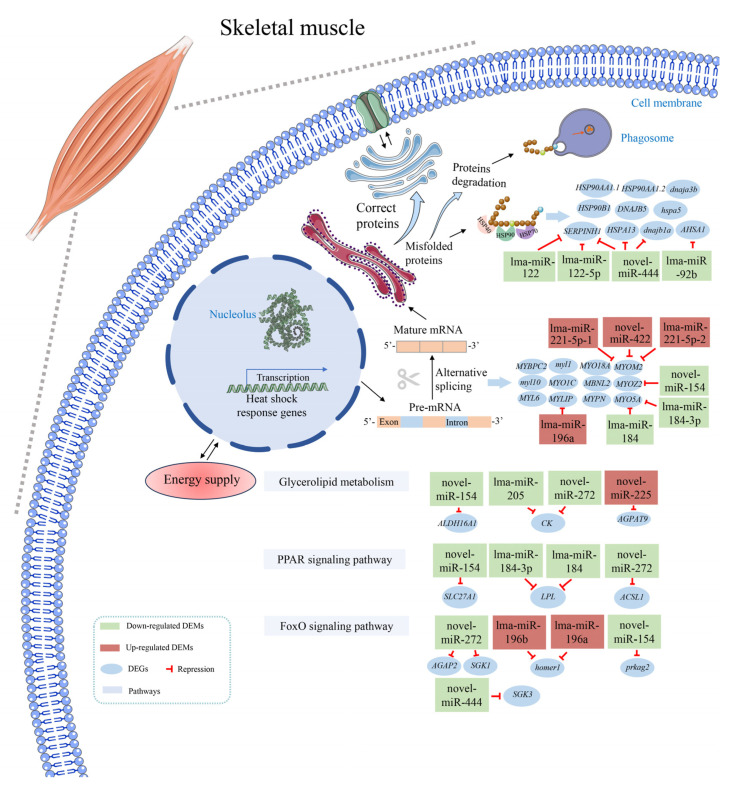
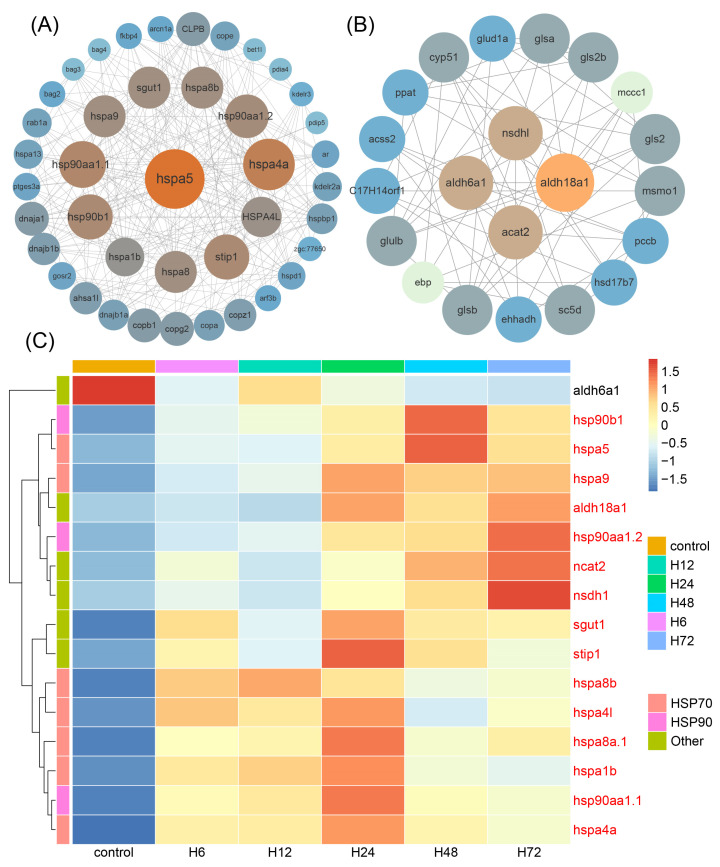
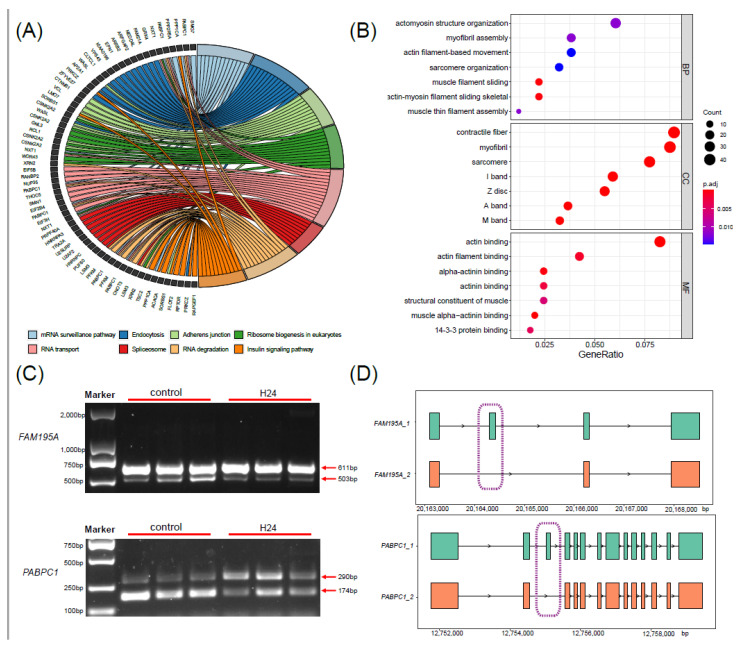
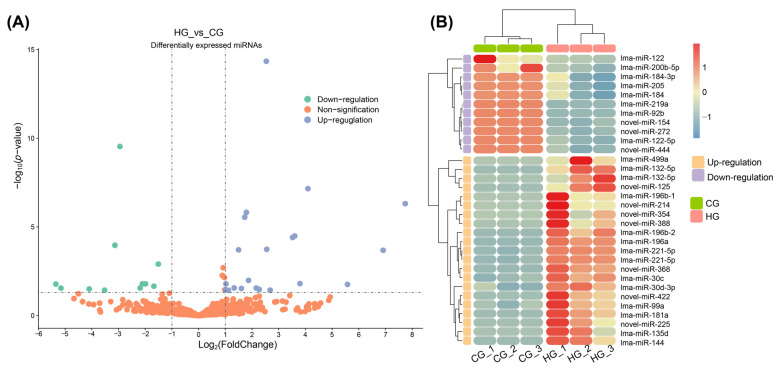
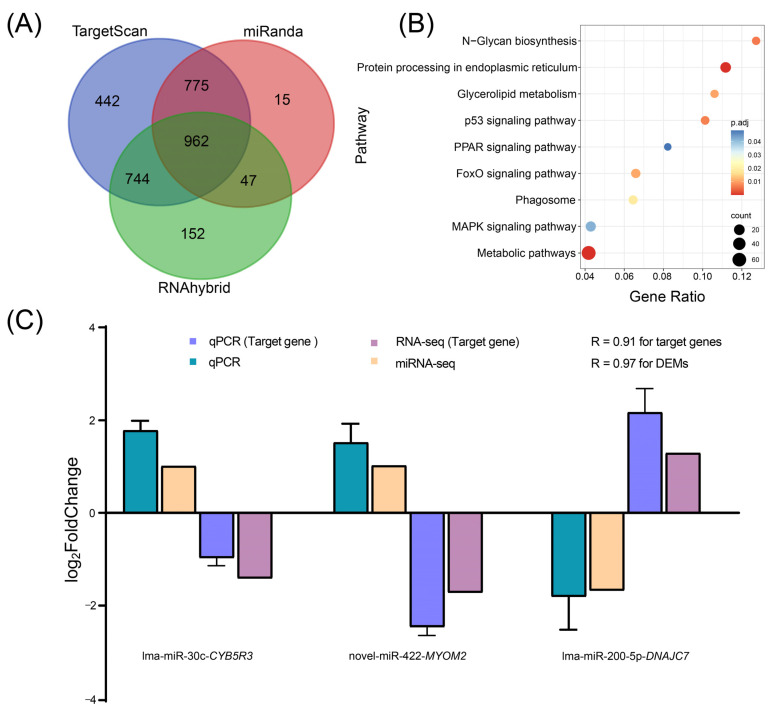
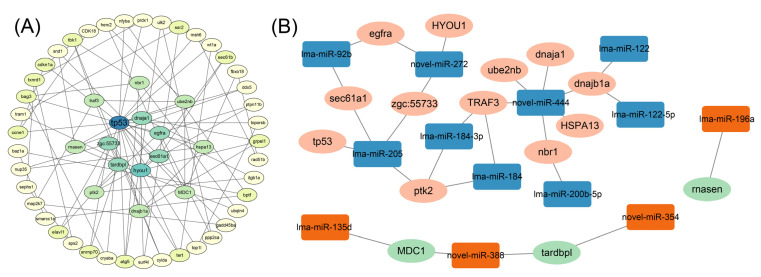
Temperature is a crucial environmental factor for fish. Elevated temperatures trigger various physiological and molecular responses designed to maintain internal environmental homeostasis and ensure the proper functioning of the organism. In this study, we measured biochemical parameters and performed mRNA-miRNA integrated transcriptomic analysis to characterize changes in gene expression profiles in the muscle tissue of spotted sea bass () under heat stress. The measurement of biochemical parameters revealed that the activities of nine biochemical enzymes (ALP, γ-GT, AST, GLU, CK, ALT, TG, LDH and TC) were significantly affected to varying degrees by elevated temperatures. A total of 1940 overlapping differentially expressed genes (DEGs) were identified among the five comparisons in the muscle tissue after heat stress. Protein-protein interaction (PPI) analysis of DEGs indicated that heat shock protein genes () were deeply involved in the response to heat stress. In addition, we detected 462 differential alternative splicing (DAS) events and 618 DAS genes, which are closely associated with sarcomere assembly in muscle, highlighting the role of alternative splicing in thermal response regulation. Moreover, 32 differentially expressed miRNAs (DEMs) were identified in response to heat stress, and 599 DEGs were predicted as potential target genes of those DEMs, generating 846 DEG-DEM negative regulatory pairs potentially associated with thermal response. Function enrichment analysis of the target genes suggested that lipid metabolism-related pathways and genes were regulated by miRNAs. By analyzing PPIs of target genes, we identified 28 key negative regulatory pairs, including 13 miRNAs (such as lma-miR-122, lma-miR-200b-5p and novel-miR-444) and 15 target genes (such as , , and ). This study elucidates the molecular mechanisms of response to high-temperature stress and offers valuable information for the selection and breeding of heat-tolerant strains of spotted sea bass.
温度是鱼类的一个关键环境因素。升高的温度会引发各种生理和分子反应,旨在维持内部环境的稳态,并确保生物体的正常功能。在这项研究中,我们测量了生化参数,并进行了 mRNA-miRNA 整合转录组分析,以描述在热应激下鲈鱼肌肉组织中基因表达谱的变化。生化参数的测量表明,九种生化酶(碱性磷酸酶(ALP)、γ-谷氨酰转移酶(γ-GT)、天门冬氨酸氨基转移酶(AST)、葡萄糖(GLU)、肌酸激酶(CK)、丙氨酸氨基转移酶(ALT)、甘油三酯(TG)、乳酸脱氢酶(LDH)和总胆固醇(TC))的活性受到不同程度的高温影响。在热应激后肌肉组织的五个比较中,共鉴定出 1940 个重叠的差异表达基因(DEGs)。DEGs 的蛋白质-蛋白质相互作用(PPI)分析表明,热休克蛋白基因()深度参与了对热应激的反应。此外,我们检测到 462 个差异剪接(DAS)事件和 618 个 DAS 基因,这些基因与肌肉中的肌节组装密切相关,突出了可变剪接在热响应调节中的作用。此外,有 32 个差异表达的 microRNA(DEM)对热应激有反应,有 599 个 DEG 被预测为这些 DEM 的潜在靶基因,产生了 846 个与热响应相关的 DEG-DEM 负调控对。靶基因的功能富集分析表明,脂质代谢相关途径和基因受到 miRNA 的调控。通过分析靶基因的 PPI,我们确定了 28 个关键的负调控对,包括 13 个 miRNA(如 lma-miR-122、lma-miR-200b-5p 和 novel-miR-444)和 15 个靶基因(如、和)。这项研究阐明了对高温应激的分子机制,为选择和培育耐热性鲈鱼品系提供了有价值的信息。