Division of Child Neurology and Metabolic Medicine, Department of Pediatrics I, Center for Pediatrics and Adolescent Medicine, Medical Faculty Heidelberg, University Hospital Heidelberg, Heidelberg University, 69120 Heidelberg, Germany.
Department of Pediatrics I, Center for Pediatrics and Adolescent Medicine, Medical Faculty Heidelberg, University Hospital Heidelberg, Heidelberg University, 69120 Heidelberg, Germany.
Int J Mol Sci. 2024 Nov 12;25(22):12123. doi: 10.3390/ijms252212123.
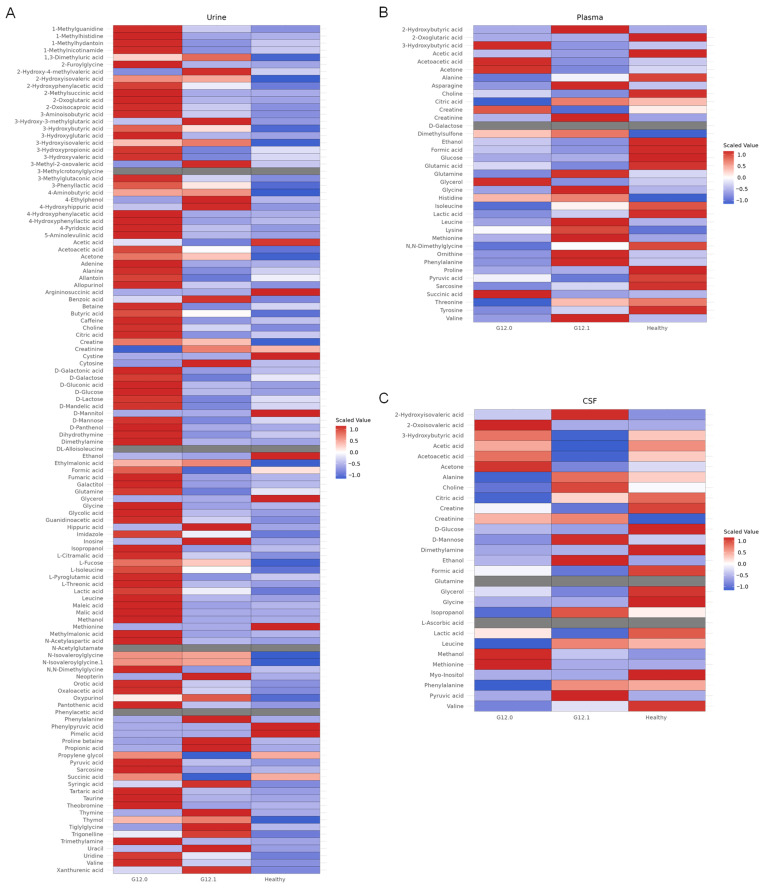
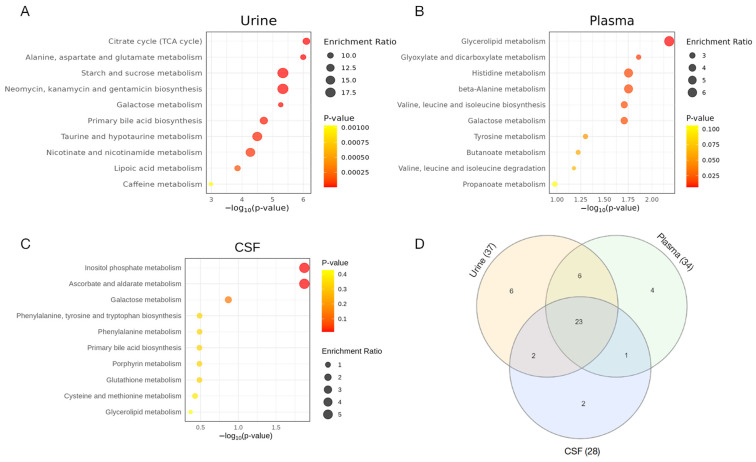
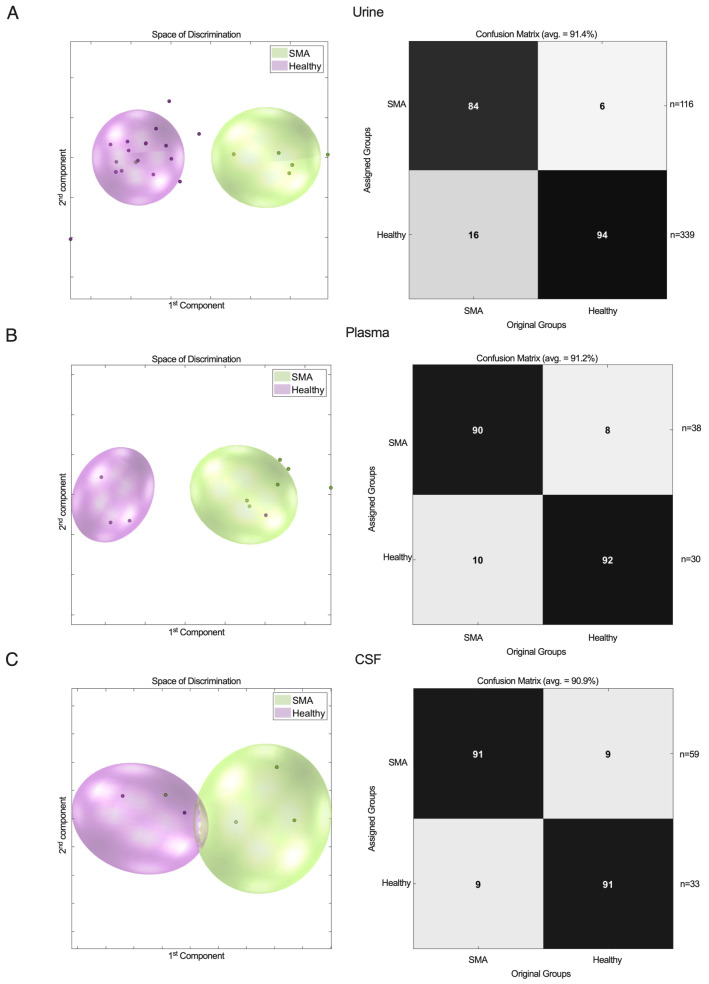
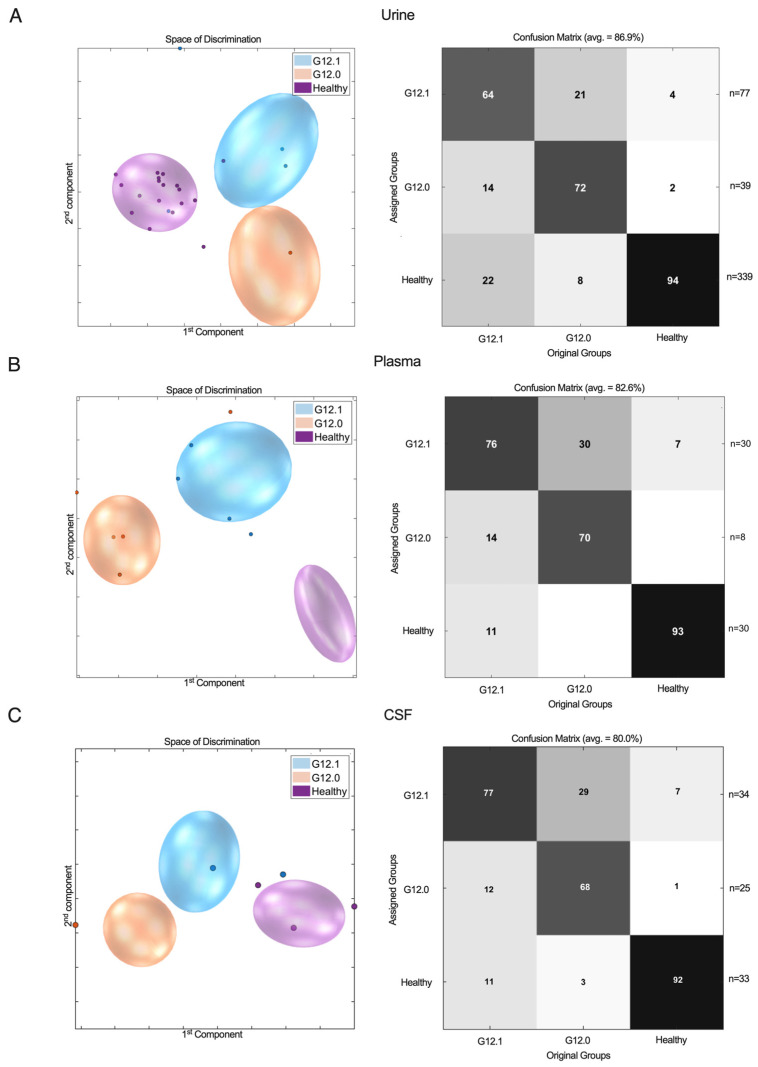
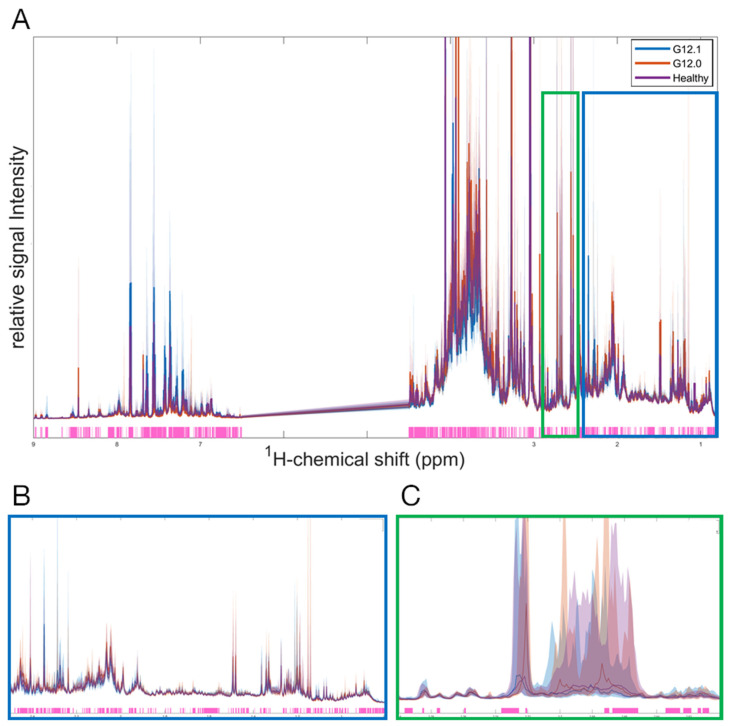
This study explores the potential of H-NMR spectroscopy-based metabolic profiling in various biofluids as a diagnostic and predictive modality to assess disease severity in individuals with 5q spinal muscular atrophy. A total of 213 biosamples (urine, plasma, and CSF) from 153 treatment-naïve patients with SMA across five German centers were analyzed using H-NMR spectroscopy. Prediction models were developed using machine learning algorithms which enabled the patients with SMA to be grouped according to disease severity. A quantitative enrichment analysis was employed to identify metabolic pathways associated with disease progression. The results demonstrate high sensitivity (84-91%) and specificity (91-94%) in distinguishing treatment-naïve patients with SMA from controls across all biofluids. The urinary and plasma profiles differentiated between early-onset (type I) and later-onset (type II/III) SMA with over 80% accuracy. Key metabolic differences involved alterations in energy and amino acid metabolism. This study suggests that H-NMR spectroscopy based metabolic profiling may be a promising, non-invasive tool to identify patients with SMA and for severity stratification, potentially complementing current diagnostic and prognostic strategies in SMA management.
本研究探讨了基于 H-NMR 光谱的代谢组学在各种生物流体中作为诊断和预测模式的潜力,以评估 5q 脊髓性肌萎缩症个体的疾病严重程度。使用 H-NMR 光谱分析了来自五个德国中心的 153 名未经治疗的 SMA 患者的 213 个生物样本(尿液、血浆和 CSF)。使用机器学习算法开发了预测模型,这些模型能够根据疾病严重程度对 SMA 患者进行分组。采用定量富集分析来识别与疾病进展相关的代谢途径。结果表明,在所有生物流体中,该方法在区分未经治疗的 SMA 患者和对照组方面具有高灵敏度(84-91%)和特异性(91-94%)。尿和血浆谱可区分早发性(I 型)和晚发性(II/III 型)SMA,准确率超过 80%。关键的代谢差异涉及能量和氨基酸代谢的改变。本研究表明,基于 H-NMR 光谱的代谢组学可能是一种有前途的非侵入性工具,可用于识别 SMA 患者并进行严重程度分层,可能补充 SMA 管理中的当前诊断和预后策略。