Departamento de Nutrición y Ciencia de los Alimentos (NUTRYCIAL), Sección Departamental de Nutrición y Ciencia de los Alimentos (SD-NUTRYCIAL), Facultad de Veterinaria, Universidad Complutense de Madrid (UCM), Avenida Puerta de Hierro, s/n, 28040 Madrid, Spain.
Int J Mol Sci. 2024 Nov 14;25(22):12210. doi: 10.3390/ijms252212210.
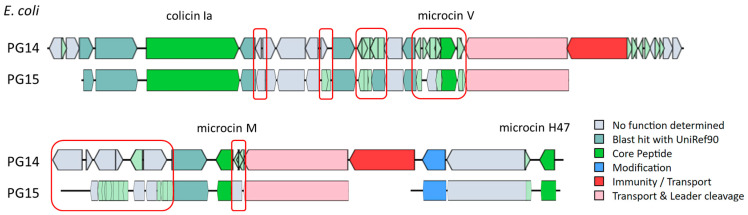
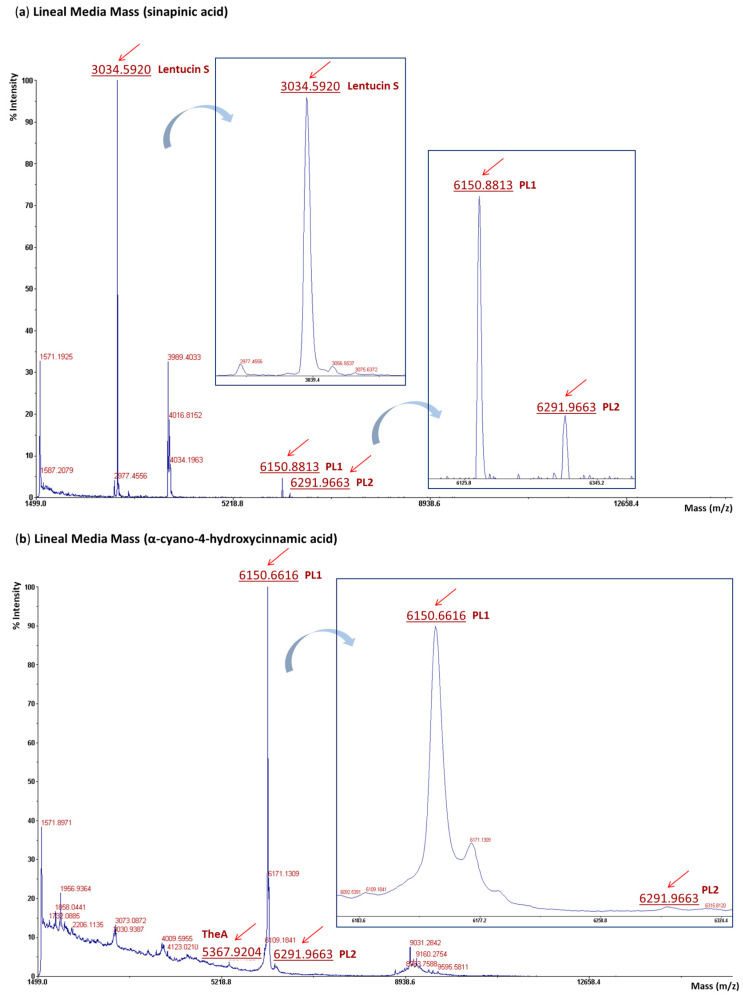
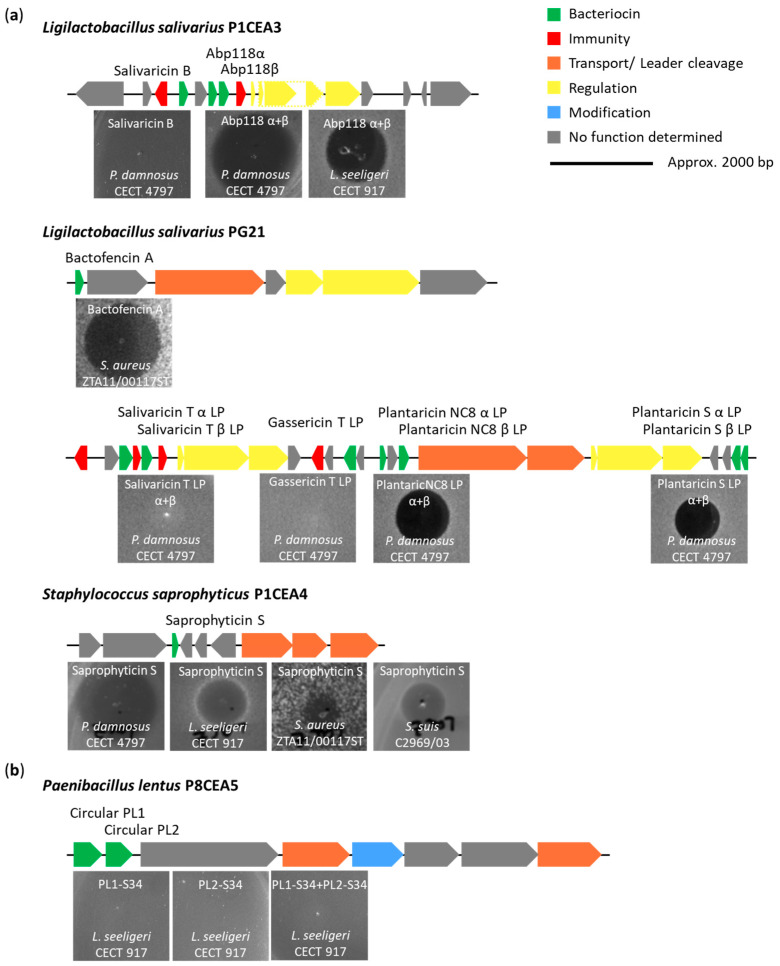
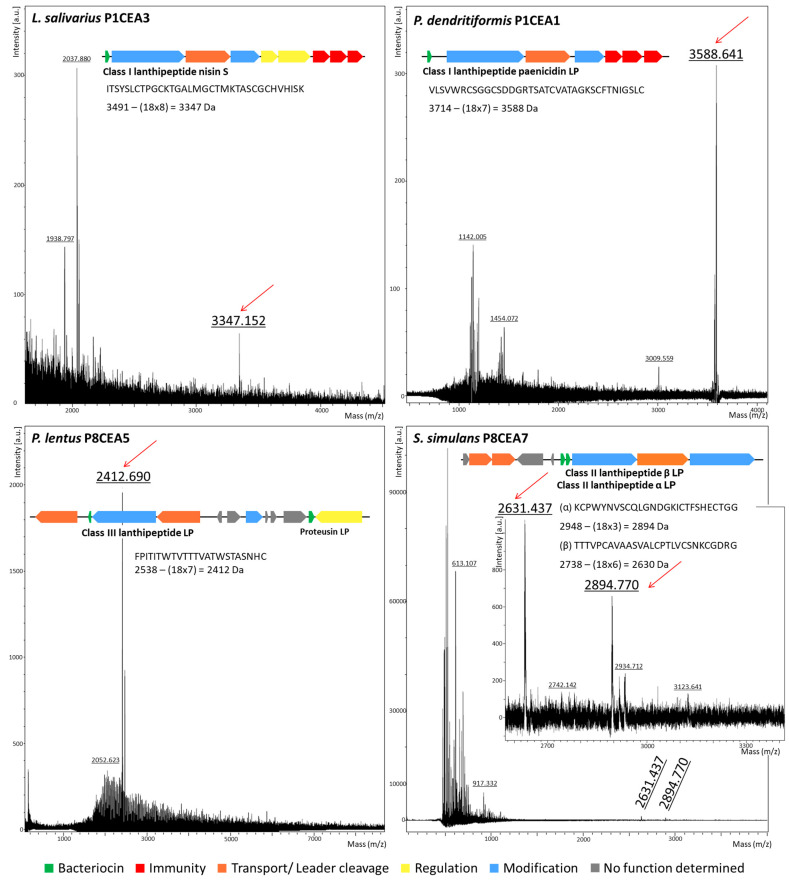
Antimicrobial resistance (AMR) poses a significant challenge to animal production due to the widespread use of antibiotics. Therefore, there is an urgent need for alternative antimicrobial strategies to effectively manage bacterial infections, protect animal health, and reduce reliance on antibiotics. This study evaluated the use of emerging approaches and procedures for the isolation, identification, and characterization of bacteriocin-producing bacteria and their bacteriocins, sourced from the gastrointestinal tract (GIT) of meat-producing pigs. Out of 2056 isolates screened against Gram-positive and Gram-negative indicator strains, 20 of the most active antimicrobial isolates were subjected to whole genome sequencing (WGS) for the prediction of coding DNA sequences (CDS) and the identification of bacteriocin gene clusters (BGC) and their functions. The use of an in vitro cell-free protein synthesis (IV-CFPS) protocol and the design of an IV-CFPS coupled to a split-intein mediated ligation (IV-CFPS/SIML) procedure made possible the evaluation of the production and antimicrobial activity of described and putatively novel bacteriocins. A colony MALDI-TOF MS procedure assisted in the identification of class I, II, and III lanthipeptides. MALDI-TOF MS and a targeted proteomics, combined with a massive peptide analysis (LC-MS/MS) approach, has proven valuable for the identification and biochemical characterization of previously described and novel bacteriocins encoded by the isolated bacteriocin-producing strains.
由于抗生素的广泛使用,抗菌药物耐药性(AMR)给动物生产带来了重大挑战。因此,迫切需要替代抗菌策略来有效管理细菌感染,保护动物健康,减少对抗生素的依赖。本研究评估了从生产肉类的猪的胃肠道(GIT)中分离、鉴定和表征产细菌素细菌及其细菌素的新兴方法和程序的用途。在针对革兰氏阳性和革兰氏阴性指示菌株筛选的 2056 个分离物中,对 20 个最具活性的抗菌分离物进行全基因组测序(WGS),以预测编码 DNA 序列(CDS)和鉴定细菌素基因簇(BGC)及其功能。使用体外无细胞蛋白合成(IV-CFPS)方案和设计与分裂内含肽介导的连接(IV-CFPS/SIML)程序相结合的 IV-CFPS 方案,使得可以评估所描述和推测的新型细菌素的生产和抗菌活性。一个菌落 MALDI-TOF MS 程序有助于鉴定 I 类、II 类和 III 类兰尼肽。MALDI-TOF MS 和靶向蛋白质组学,结合大规模肽分析(LC-MS/MS)方法,已被证明可用于鉴定和生化表征由分离的产细菌素菌株编码的先前描述和新型细菌素。