State Key Laboratory of Developmental Biology of Freshwater Fish, Hunan Provincial Key Laboratory of Microbial Molecular Biology, College of Life Science, Hunan Normal University, Changsha 410081, China.
Int J Mol Sci. 2024 Nov 16;25(22):12308. doi: 10.3390/ijms252212308.
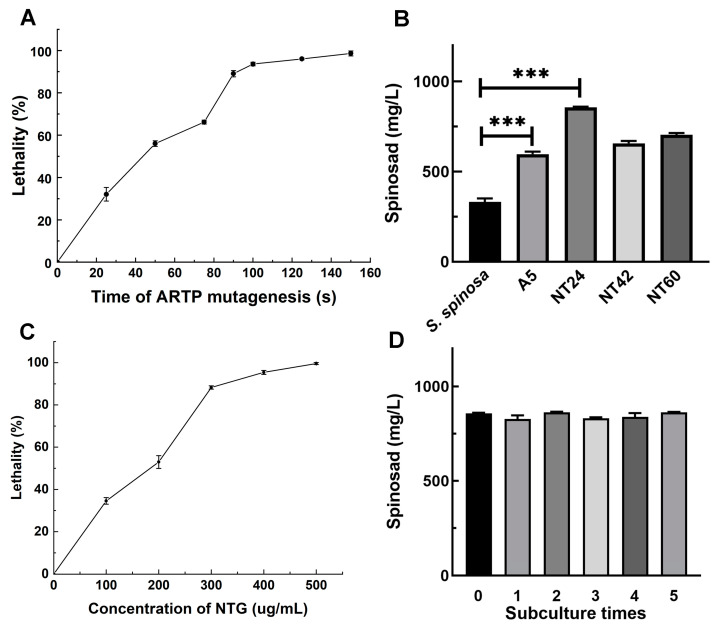
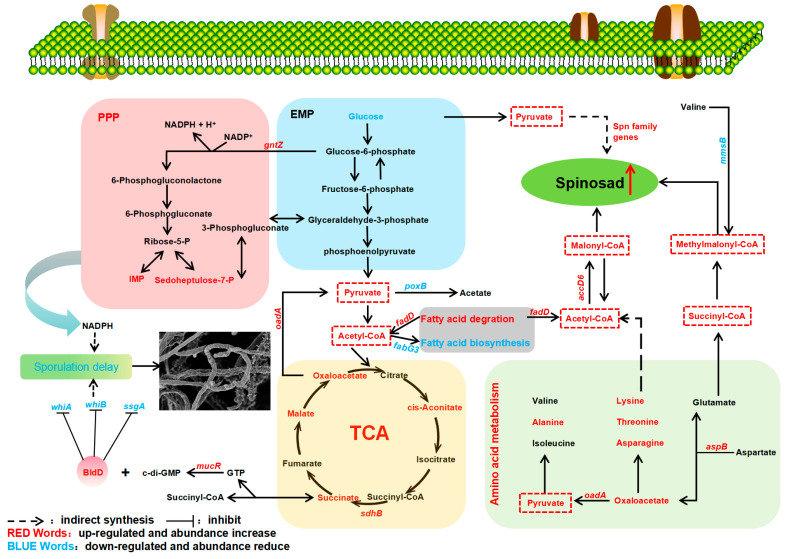
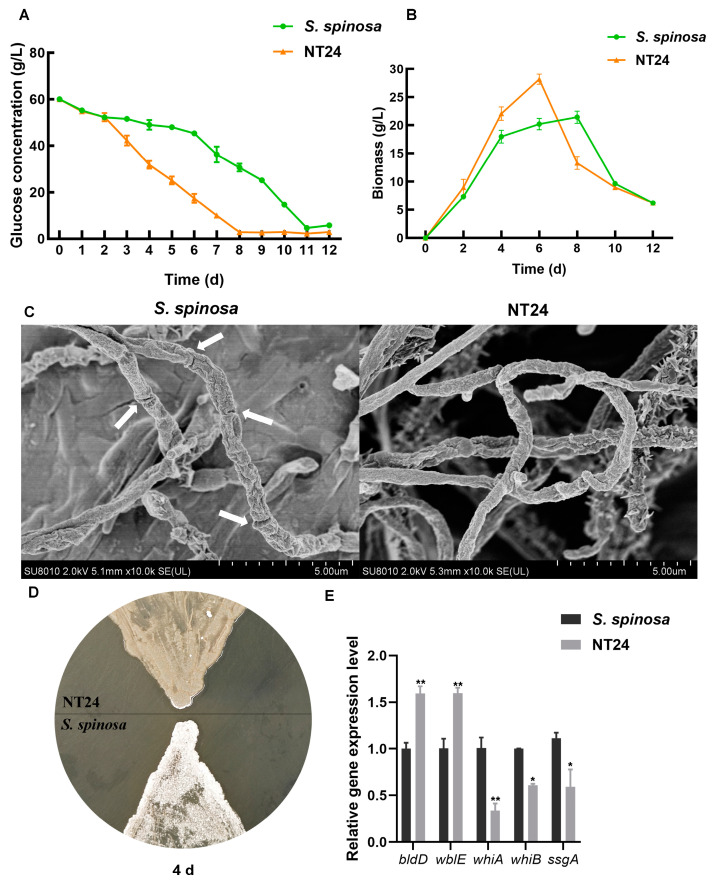
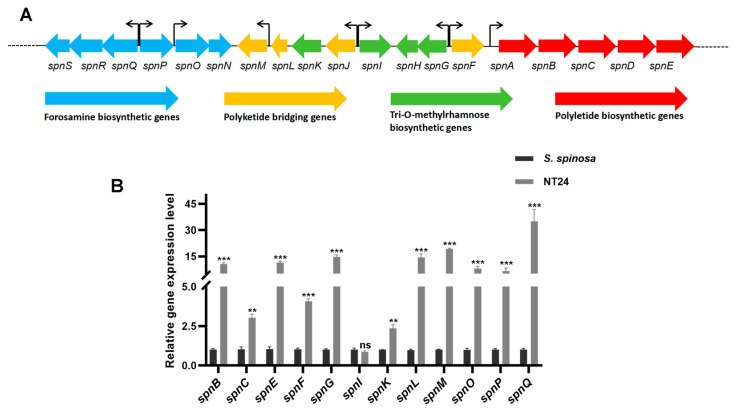
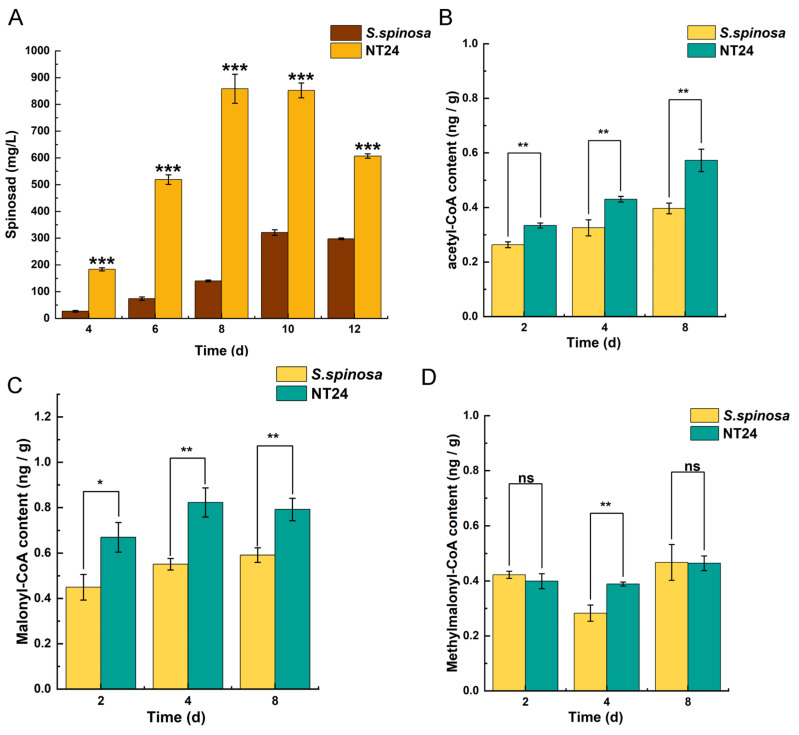
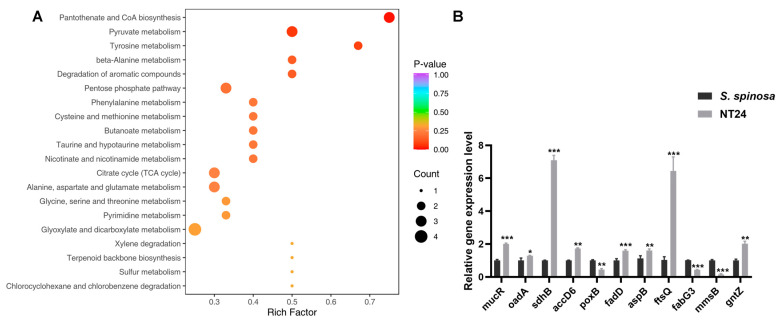
Spinosad is an efficient and broad-spectrum environmentally friendly biopesticide, but its low yield in wild-type limits its further application. ARTP/NTG compound mutagenesis was used in this study to improve the spinosad titer of and obtain a high-yield mutant-NT24. Compared with the wild-type strain, the fermentation cycle of NT24 was shortened by 2 days and its maximum titer of spinosad reached 858.3 ± 27.7 mg/L, which is 5.12 times more than for the same-period titer of the wild-type strain. In addition, RT-qPCR, resequencing, and targeted metabolomics showed that the upregulation of the key differential genes , , , , and caused increased metabolic flux in the tricarboxylic acid cycle and pentose phosphate pathway, suggesting that the accumulation of pyruvate and short-chain acyl-CoA was the primary cause of spinosad accumulation in NT24. This study demonstrates the effectiveness of ARTP mutagenesis in , and provides new insights for the mechanism of spinosad biosynthesis and metabolic engineering in .
多杀菌素是一种高效、广谱的环保型生物农药,但野生型的产量较低,限制了其进一步的应用。本研究采用 ARTP/NTG 复合诱变方法对 进行改良,获得了高产突变株-NT24。与野生型菌株相比,NT24 的发酵周期缩短了 2 天,其多杀菌素的最大产量达到 858.3±27.7mg/L,是同期野生型菌株产量的 5.12 倍。此外,RT-qPCR、重测序和靶向代谢组学表明,关键差异基因 、 、 、 、 的上调导致三羧酸循环和磷酸戊糖途径中的代谢通量增加,表明丙酮酸和短链酰基辅酶 A 的积累是 NT24 中多杀菌素积累的主要原因。本研究证明了 ARTP 诱变在 中的有效性,为多杀菌素生物合成和代谢工程的机制提供了新的见解。