Kuhn Elian M A, Sominsky Levy A, Chittò Marco, Schwarz Edward M, Moriarty T Fintan
AO Research Institute Davos, 7270 Davos, Switzerland.
Infection Biology, Biozentrum, University of Basel, 4056 Basel, Switzerland.
Pharmaceuticals (Basel). 2024 Nov 16;17(11):1537. doi: 10.3390/ph17111537.
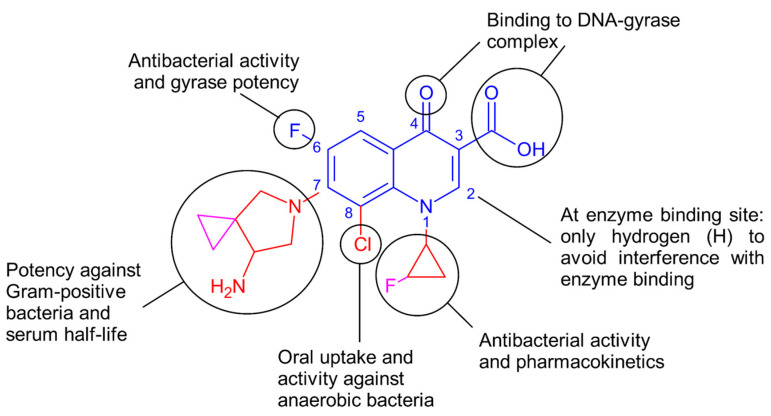
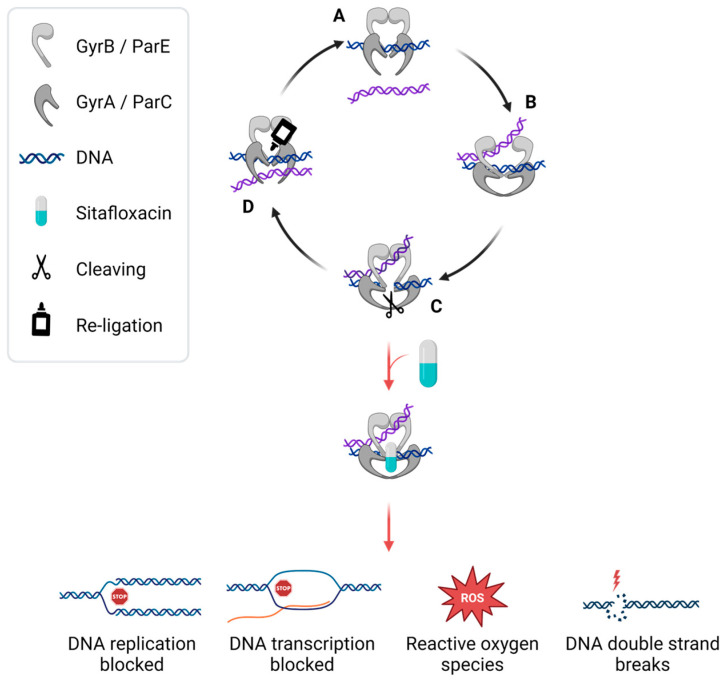
Sitafloxacin is a 4th generation fluoroquinolone antibiotic with broad activity against a wide range of Gram-negative and Gram-positive bacteria. It is approved in Japan and used to treat pneumonia and urinary tract infections (UTIs) as well as other upper and lower respiratory infections, genitourinary infections, oral infections and otitis media. Compared to other fluoroquinolones, sitafloxacin displays a low minimal inhibitory concentration (MIC) for many bacterial species but also activity against anaerobes, intracellular bacteria, and persisters. Furthermore, it has also shown strong activity against biofilms of and in vitro, which was recently validated in vivo with murine models of implant-associated bone infection. Although limited in scale at present, the published literature supports the further evaluation of sitafloxacin in implant-related infections and other biofilm-related infections. The aim of this review is to summarize the chemical-positioning-based mechanisms, activity, resistance profile, and future clinical potential of sitafloxacin.
西他沙星是一种第四代氟喹诺酮类抗生素,对多种革兰氏阴性菌和革兰氏阳性菌具有广泛的活性。它在日本获得批准,用于治疗肺炎和尿路感染(UTIs)以及其他上、下呼吸道感染、泌尿生殖系统感染、口腔感染和中耳炎。与其他氟喹诺酮类药物相比,西他沙星对许多细菌种类显示出低最小抑菌浓度(MIC),但对厌氧菌、细胞内细菌和持续菌也有活性。此外,它在体外还显示出对[具体细菌名称1]和[具体细菌名称2]生物膜的强活性,最近在植入物相关骨感染的小鼠模型中得到了体内验证。尽管目前规模有限,但已发表的文献支持对西他沙星在植入物相关感染和其他生物膜相关感染中的进一步评估。本综述的目的是总结基于化学定位的西他沙星作用机制、活性、耐药谱和未来临床潜力。