Morgan Gareth J, Yung Zach, Spencer Brian H, Sanchorawala Vaishali, Prokaeva Tatiana
Boston University Amyloidosis Center, Boston University Chobanian & Avedisian School of Medicine, Boston, MA 02118, USA.
Section of Hematology and Medical Oncology, Boston University Chobanian & Avedisian School of Medicine, Boston, MA 02118, USA.
Pharmaceuticals (Basel). 2024 Nov 16;17(11):1542. doi: 10.3390/ph17111542.
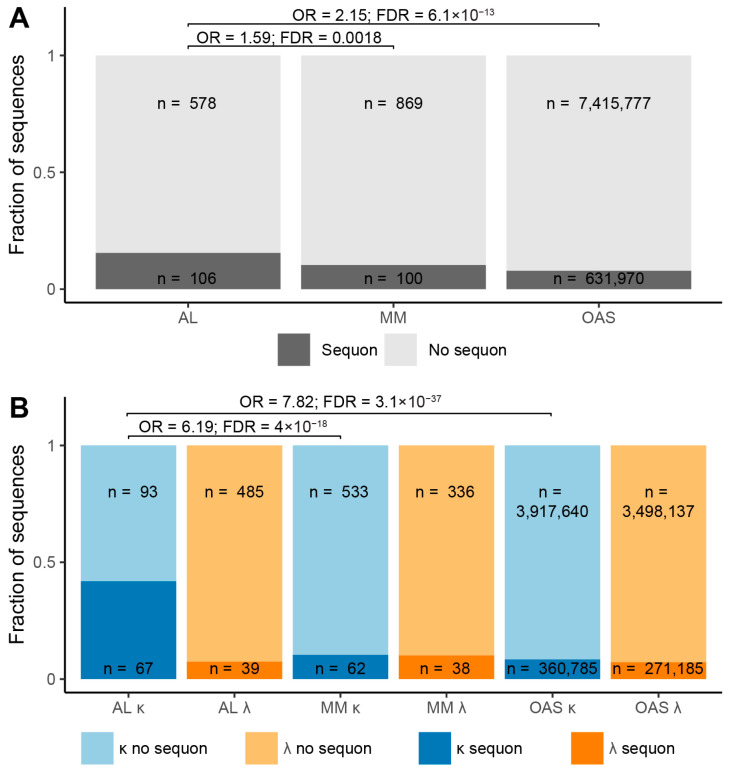
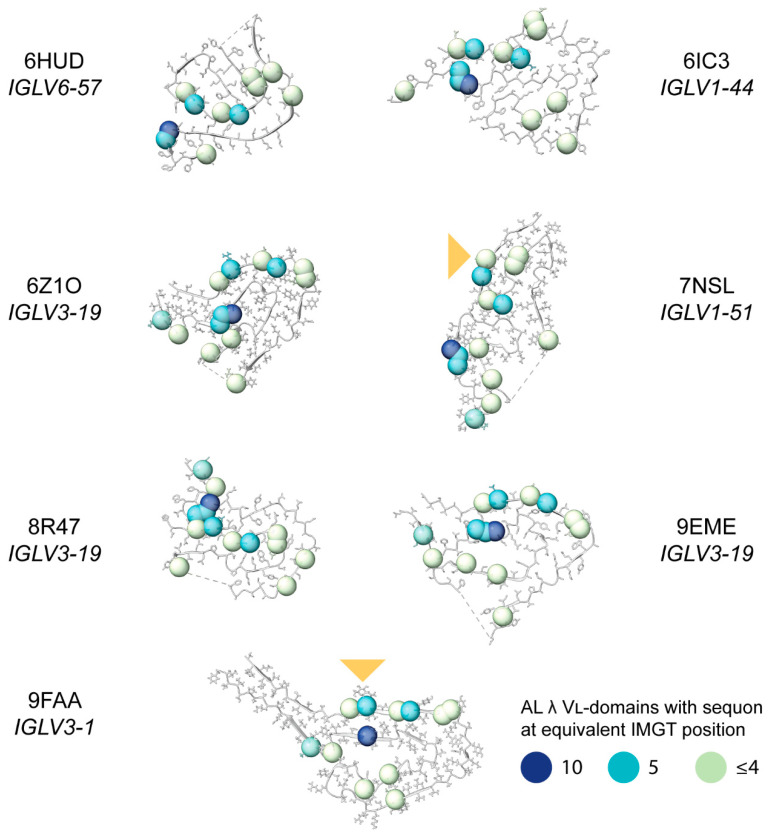
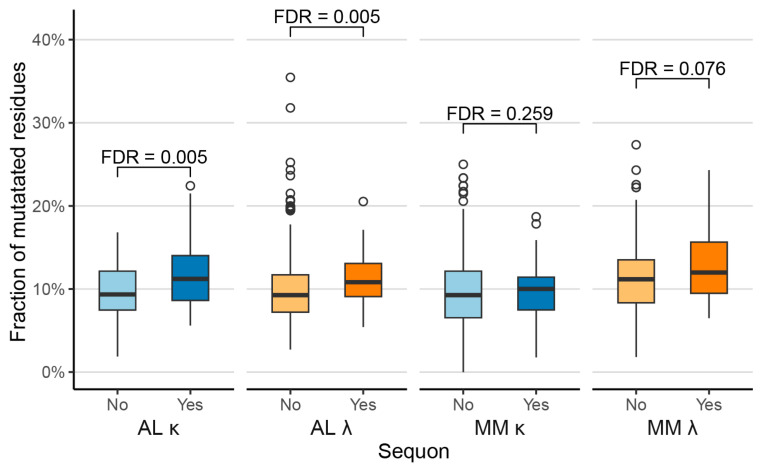
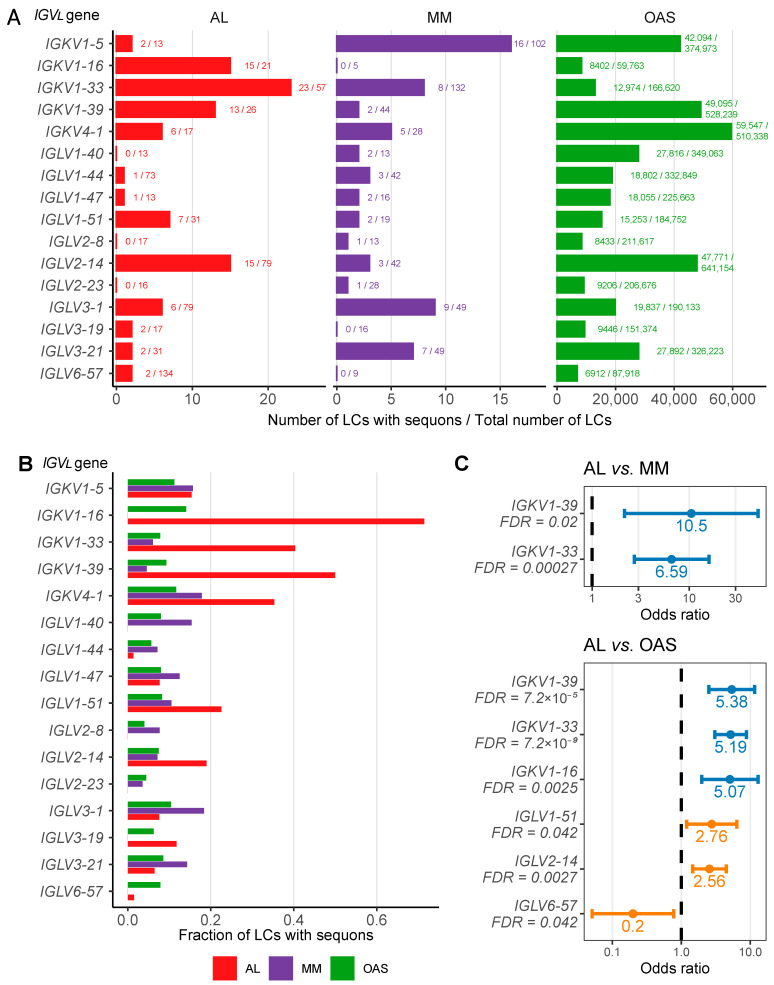
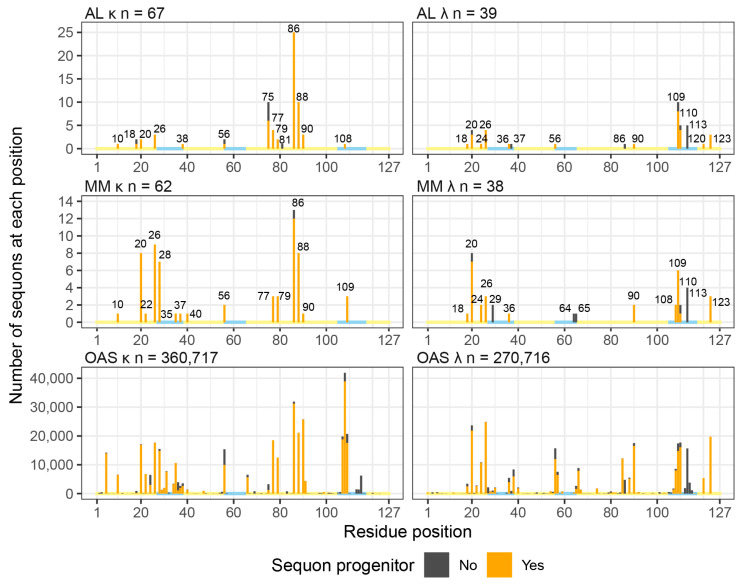
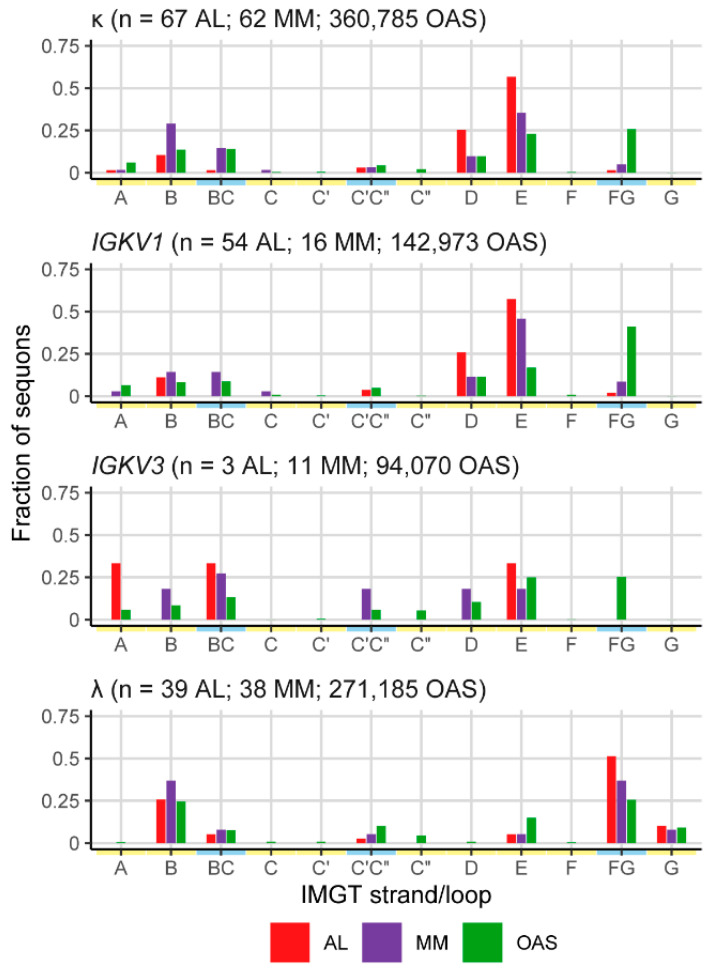
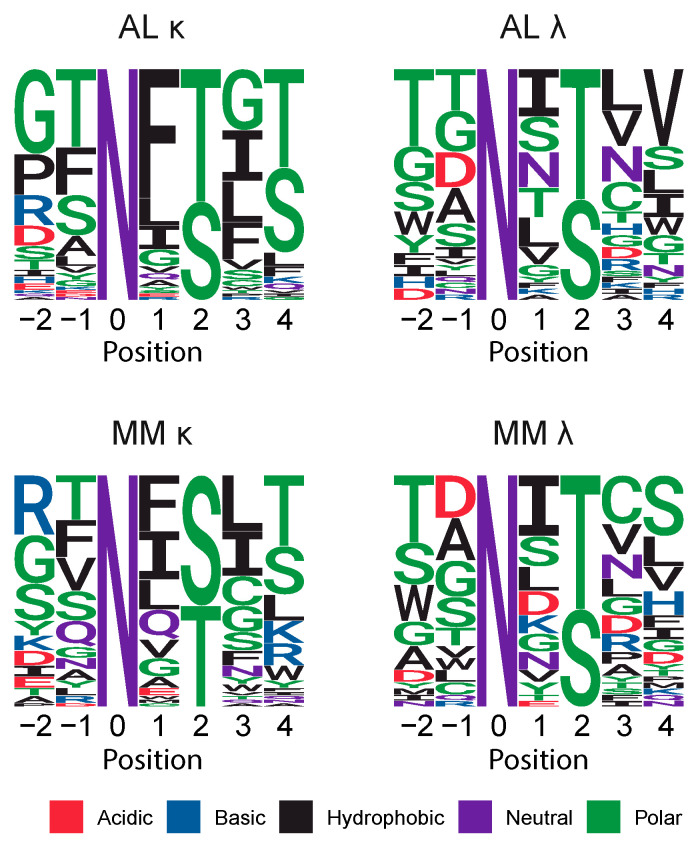
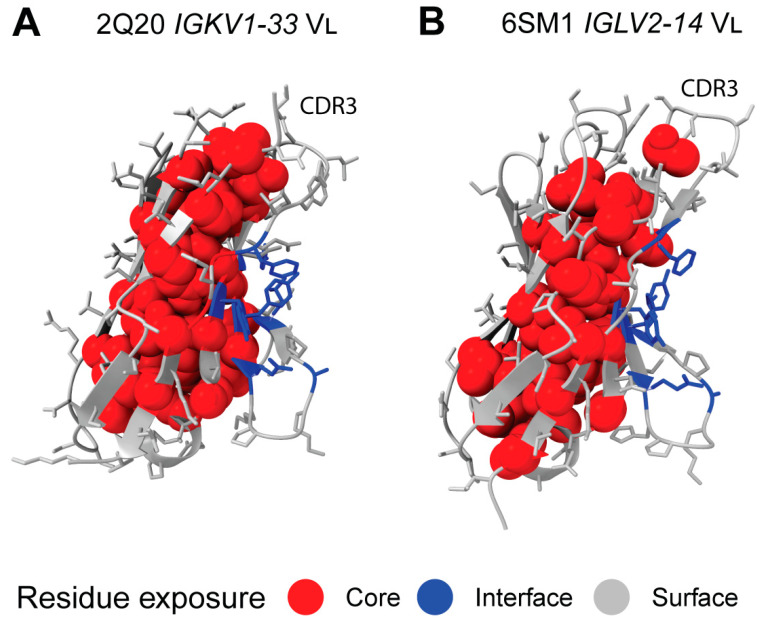
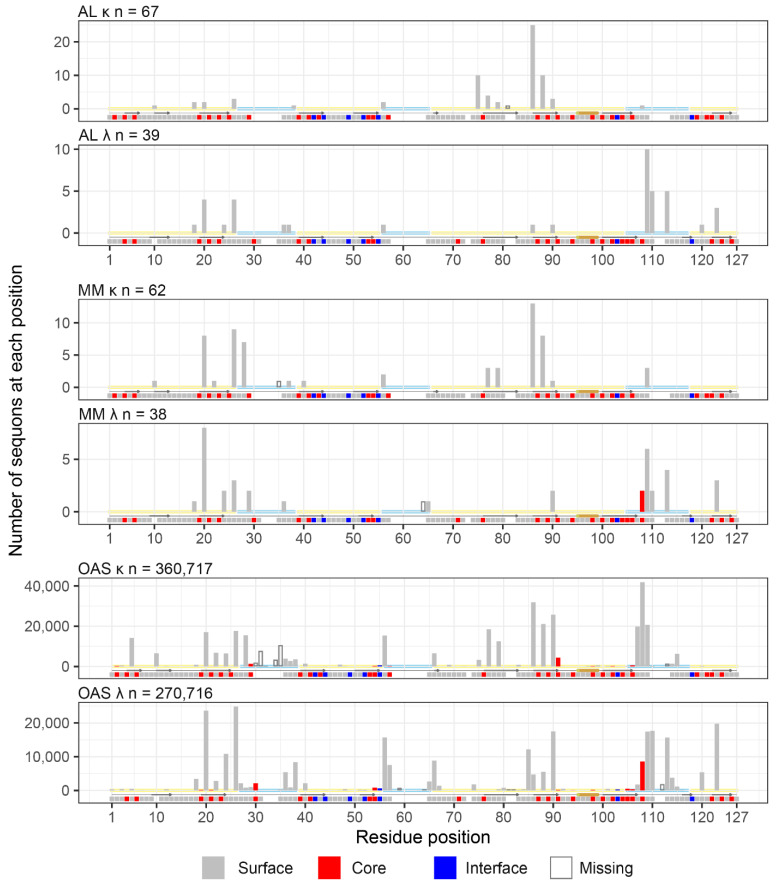
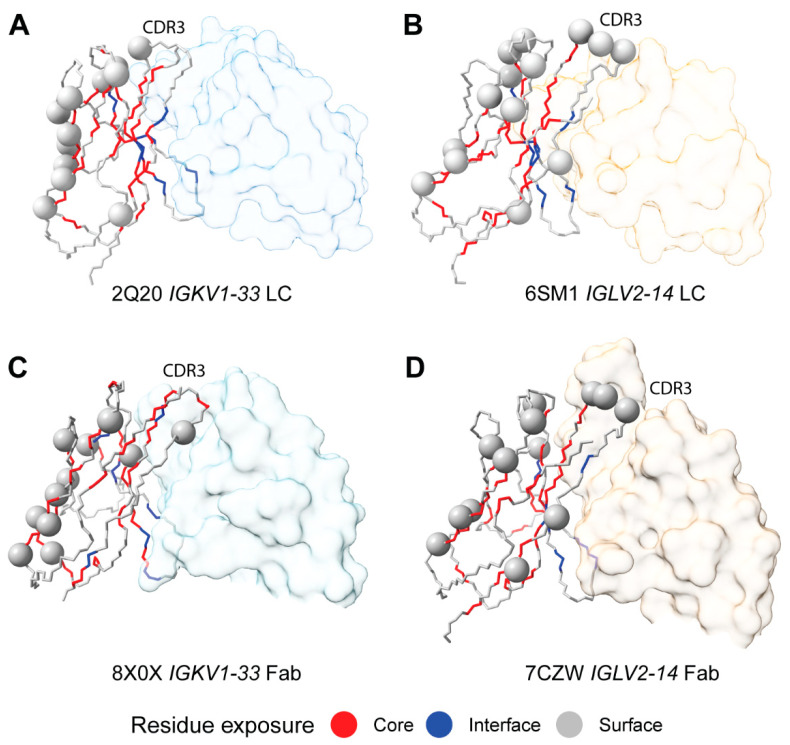
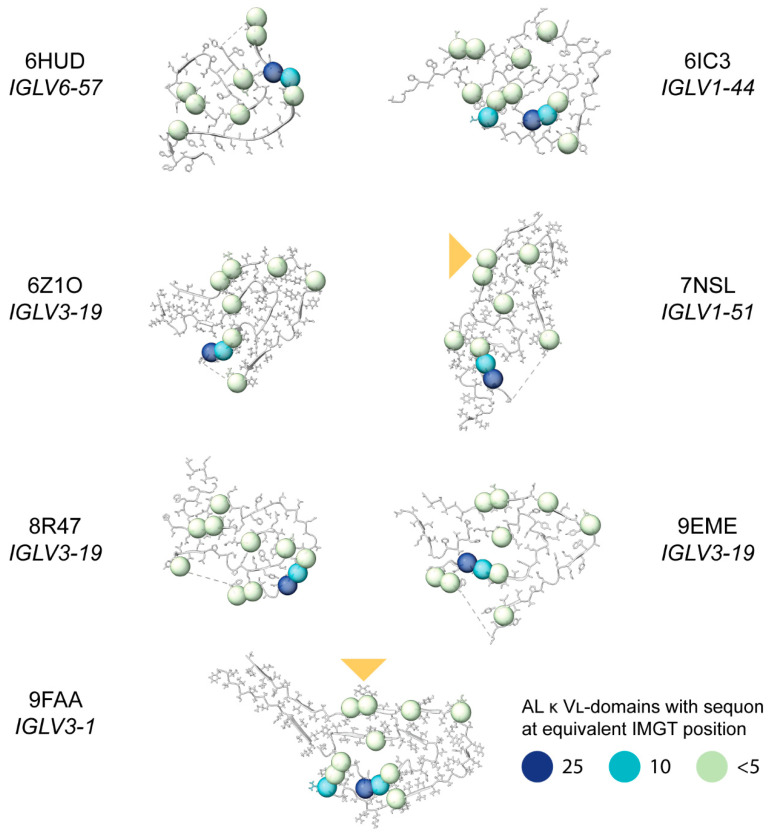
Antibody light chains form amyloid fibrils that lead to progressive tissue damage in amyloid light chain (AL) amyloidosis. The properties of each patient's unique light chain appear to determine its propensity to form amyloid. One factor is N-glycosylation, which is more frequent in amyloid-associated light chains than in light chains from the normal immune repertoire. However, the mechanisms underlying this association are unknown. Here, we investigate the frequency and position within the light chain sequence of the N-glycosylation sequence motif, or sequon. Monoclonal light chains from AL amyloidosis and multiple myeloma were identified from the AL-Base repository. Polyclonal light chains were obtained from the Observed Antibody Space resource. We compared the fraction of light chains from each group harboring an N-glycosylation sequon, and the positions of these sequons within the sequences. Sequons are enriched among AL-associated light chains derived from a subset of precursor germline genes. Sequons are observed at multiple positions, which differ between the two types of light chains, κ and λ, but are similar between light chains from AL amyloidosis and multiple myeloma. Positions of sequons map to residues with surface-exposed sidechains that are compatible with the folded structures of light chains. Within the known structures of λ AL amyloid fibrils, many residues where sequons are observed are buried, inconsistent with N-glycosylation. There is no clear structural rationale for why N-glycosylation of κ light chains is associated with AL amyloidosis. A better understanding of the roles of N-glycosylation in AL amyloidosis is required before it can be used as a marker for disease risk.
抗体轻链会形成淀粉样纤维,导致淀粉样轻链(AL)淀粉样变性中的进行性组织损伤。每位患者独特轻链的特性似乎决定了其形成淀粉样蛋白的倾向。一个因素是N-糖基化,它在淀粉样相关轻链中比在正常免疫库的轻链中更常见。然而,这种关联背后的机制尚不清楚。在这里,我们研究了N-糖基化序列基序(或糖基化位点)在轻链序列中的频率和位置。从AL-Base数据库中鉴定出AL淀粉样变性和多发性骨髓瘤的单克隆轻链。多克隆轻链从观察到的抗体空间资源中获得。我们比较了每组含有N-糖基化位点的轻链比例,以及这些位点在序列中的位置。糖基化位点在前体种系基因子集衍生的AL相关轻链中富集。在多个位置观察到糖基化位点,κ和λ两种类型的轻链之间存在差异,但AL淀粉样变性和多发性骨髓瘤的轻链之间相似。糖基化位点的位置映射到与轻链折叠结构兼容的表面暴露侧链的残基上。在λ AL淀粉样纤维的已知结构中,观察到糖基化位点的许多残基被掩埋,这与N-糖基化不一致。κ轻链的N-糖基化与AL淀粉样变性相关的原因尚无明确的结构原理。在将N-糖基化用作疾病风险标志物之前,需要更好地了解其在AL淀粉样变性中的作用。