Department of Biology and Pharmaceutical Botany, Medical University of Lodz, 90-151 Lodz, Poland.
Department of Pharmaceutical Biology, Medical University of Warsaw, 02-097 Warsaw, Poland.
Molecules. 2024 Nov 7;29(22):5263. doi: 10.3390/molecules29225263.
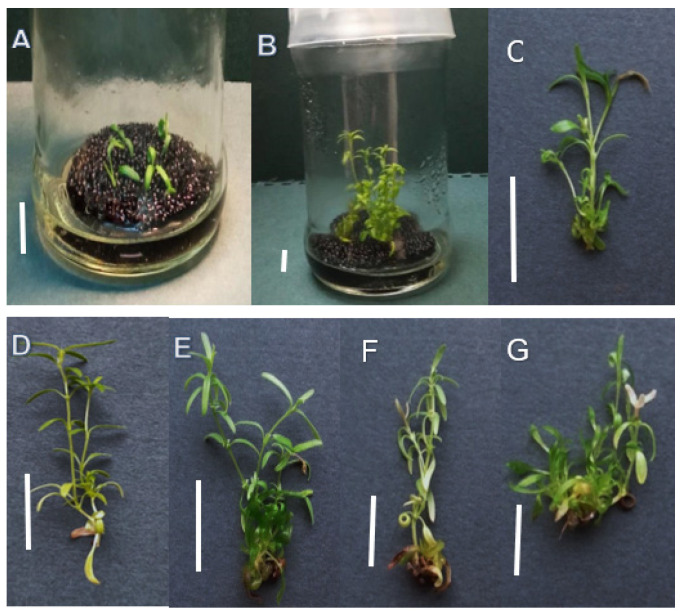
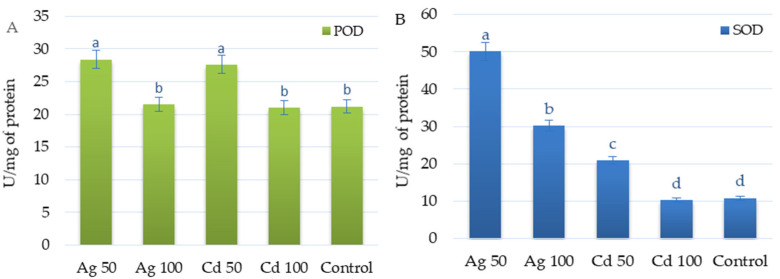
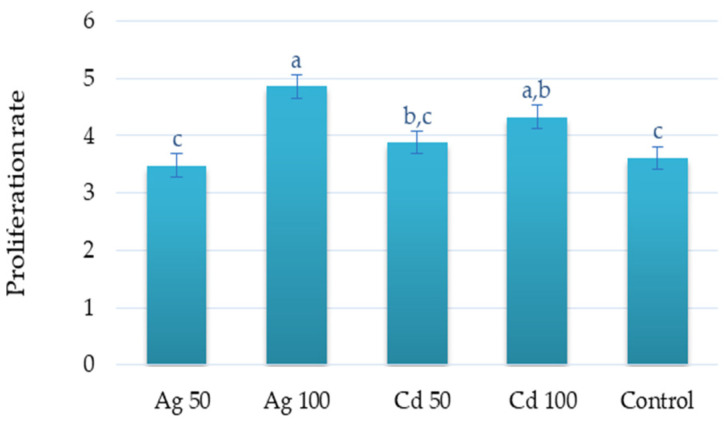
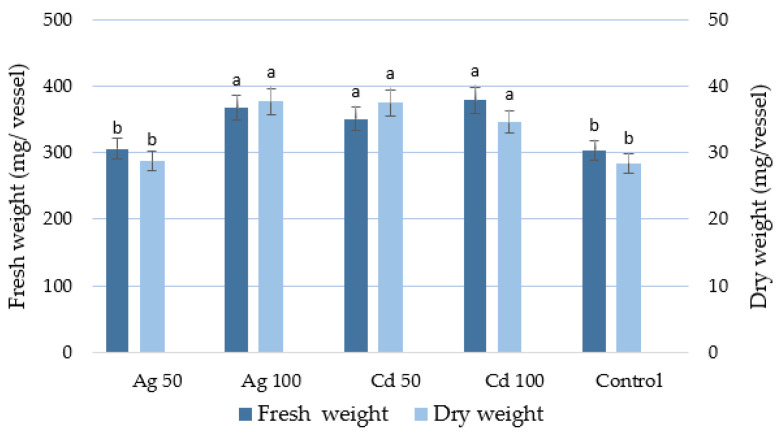
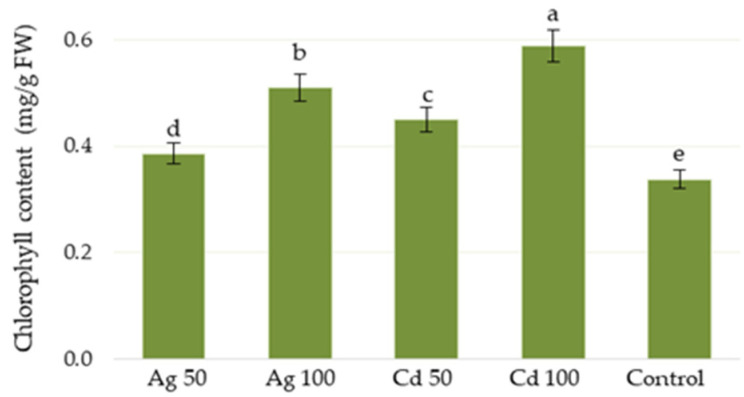
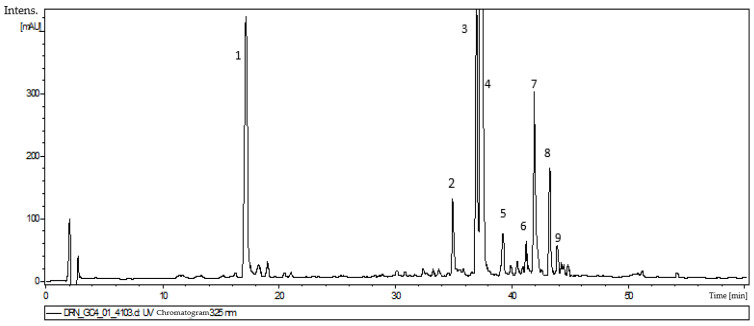
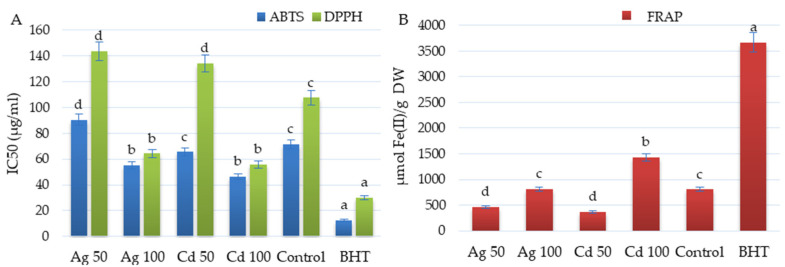
Abiotic elicitation with heavy metals has demonstrated considerable potential to stimulate the production of industrially important secondary metabolites in plant in vitro cultures. The present study investigates the effect of exogenous silver nitrate and cadmium chloride supplementation on flavonoid and phenolic acid production, as well as other indicators of oxidative stress, in shoot cultures of L. Owing to the presence of bioactive polyphenolic compounds, this Mongolian medicinal plant is traditionally used as an anti-inflammatory, antibacterial and antipyretic agent. The shoots were cultured for three weeks, and then, cadmium (Cd) and silver (Ag) ions (50 or 100 µM) were added to the medium. The maximum proliferation rate was observed in the presence of 100 µM Ag (almost 5), the highest chlorophyll content in the presence of 100 µM Cd (0.6 mg/g FW) and the highest biomass was observed with both these treatments (73.4-75.7 g FW and 7.53-7.72 g DW). UPLC-PDA-ESI-MS analysis revealed four phenolic acids and five flavonoid derivatives in the hydromethanolic extract of shoots. All treatments stimulated the production of rosmarinic acid (RA), which was the dominant compound in the analyzed culture; the highest level of RA, i.e., about three times higher than the control, was noted in shoots exposed to 50 µM Cd (14.72 mg/g DW), whereas the level of most flavonoids in the culture increased most significantly when exposed to Cd at a concentration of 100 µM. Moreover, the shoots grown in the presence of 100 µM Cd exhibited significantly higher antioxidant potential in comparison to the control. Our findings indicate that heavy metals are able to stimulate phenolic compound biosynthesis in shoots without any negative impact on their growth. These results could be of significant importance for the medical, nutraceutical and agronomic industries.
利用重金属进行非生物诱导已证明在植物离体培养中具有很大的潜力,可以刺激工业上重要的次生代谢产物的产生。本研究调查了外源硝酸银和氯化镉补充对黄酮类和酚酸产生的影响,以及 shoot 培养物中的其他氧化应激指标,该蒙古药用植物由于含有生物活性多酚化合物,传统上被用作抗炎、抗菌和退热剂。将芽培养 3 周,然后向培养基中添加镉(Cd)和银(Ag)离子(50 或 100 µM)。在 100 µM Ag 存在下观察到最大增殖率(几乎 5 倍),在 100 µM Cd 存在下观察到最高叶绿素含量(0.6 mg/g FW),这两种处理下观察到的生物量最高(73.4-75.7 g FW 和 7.53-7.72 g DW)。UPLC-PDA-ESI-MS 分析表明, 在 shoot 的水-甲醇提取物中存在四种酚酸和五种黄酮类衍生物。所有处理均刺激迷迭香酸(RA)的产生,RA 是分析培养物中主要的化合物;在暴露于 50 µM Cd 的芽中,RA 的含量最高,即比对照高约三倍(14.72 mg/g DW),而在暴露于 100 µM Cd 时,大多数黄酮类化合物在培养物中的含量增加最为显著。此外,与对照相比,在 100 µM Cd 存在下生长的芽表现出更高的抗氧化潜力。我们的研究结果表明,重金属能够刺激 shoot 中酚类化合物的生物合成,而对其生长没有任何负面影响。这些结果对医疗、营养保健品和农业行业可能具有重要意义。