Sakamoto Atsushi, Cornelissen Anne, Sato Yu, Mori Masayuki, Kawakami Rika, Kawai Kenji, Ghosh Saikat Kumar B, Xu Weili, Abebe Biniyam G, Dikongue Armelle, Kolodgie Frank D, Virmani Renu, Finn Aloke V
CVPath Institute Gaithersburg, MD.
University of Maryland, School of Medicine Baltimore, MD.
US Cardiol. 2022 Jan 26;16:e01. doi: 10.15420/usc.2021.22. eCollection 2022.
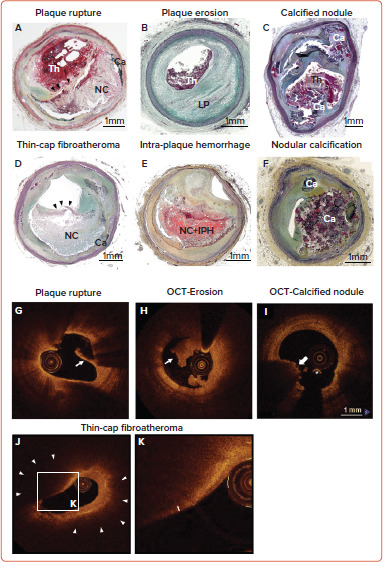
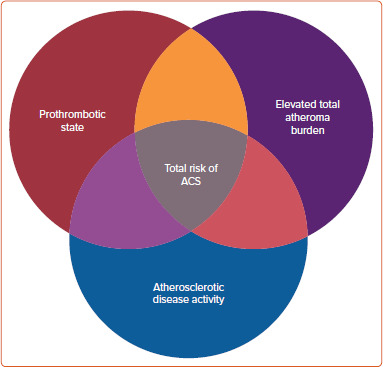
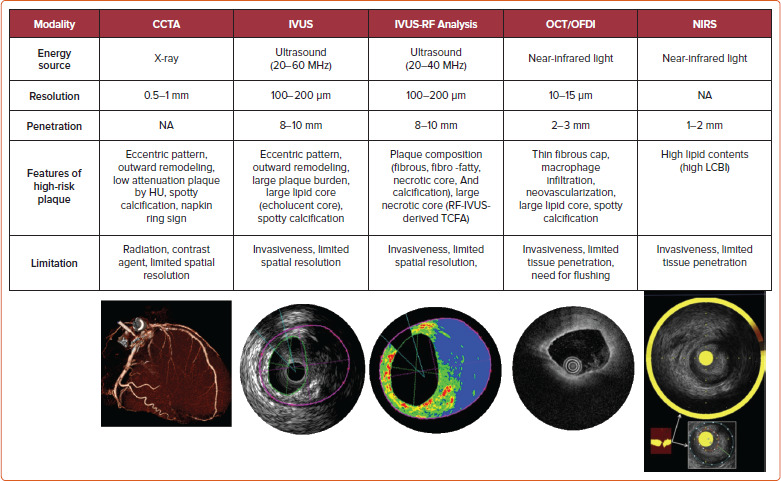
MI is a leading cause of morbidity and mortality worldwide. Coronary artery thrombosis is the final pathologic feature of the most cases of acute MI primarily caused by atherosclerotic coronary artery disease. The concept of vulnerable plaque has evolved over the years but originated from early pioneering work unveiling the crucial role of plaque rupture and subsequent coronary thrombosis as the dominant cause of MI. Along with systemic cardiovascular risk factors, developments of intravascular and non-invasive imaging modalities have allowed us to identify coronary plaques thought to be at high risk for rupture. However, morphological features alone may only be one of many factors which promote plaque progression. The current vulnerable-plaque-oriented approaches to accomplish personalized risk assessment and treatment have significant room for improvement. In this review, the authors discuss recent advances in the understanding of vulnerable plaque and its management strategy from pathology and clinical perspectives.
心肌梗死是全球发病和死亡的主要原因。冠状动脉血栓形成是大多数急性心肌梗死病例的最终病理特征,主要由动脉粥样硬化性冠状动脉疾病引起。易损斑块的概念多年来不断演变,但其起源于早期开创性工作,揭示了斑块破裂及随后的冠状动脉血栓形成作为心肌梗死主要原因的关键作用。除了全身性心血管危险因素外,血管内和非侵入性成像技术的发展使我们能够识别被认为有高破裂风险的冠状动脉斑块。然而,仅凭形态学特征可能只是促进斑块进展的众多因素之一。当前以易损斑块为导向的实现个性化风险评估和治疗的方法仍有很大的改进空间。在这篇综述中,作者从病理学和临床角度讨论了对易损斑块及其管理策略理解的最新进展。