Harvey Aaron, van den Berg Noëlani, Swart Velushka
Hans Merensky Chair in Avocado Research, Forestry & Agricultural Biotechnology Institute (FABI), Department of Biochemistry, Genetics and Microbiology (BGM), University of Pretoria, Pretoria, South Africa.
Front Plant Sci. 2024 Nov 12;15:1467148. doi: 10.3389/fpls.2024.1467148. eCollection 2024.
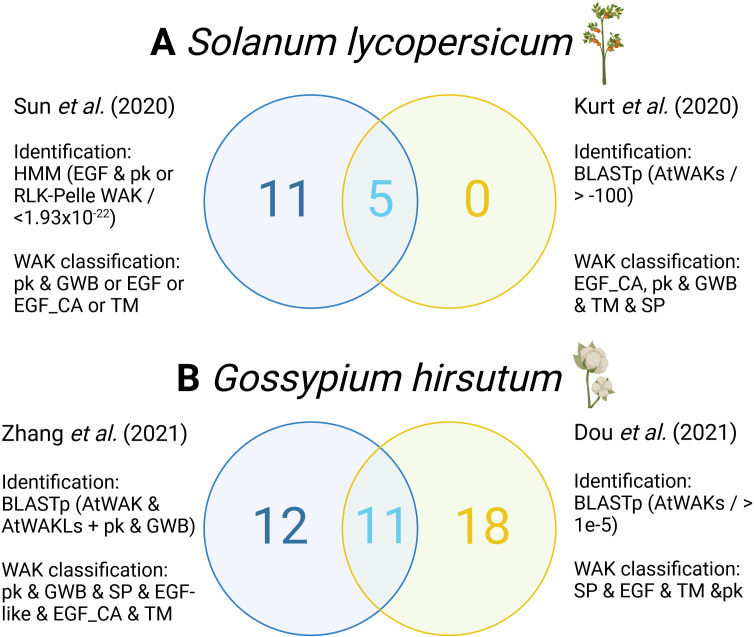
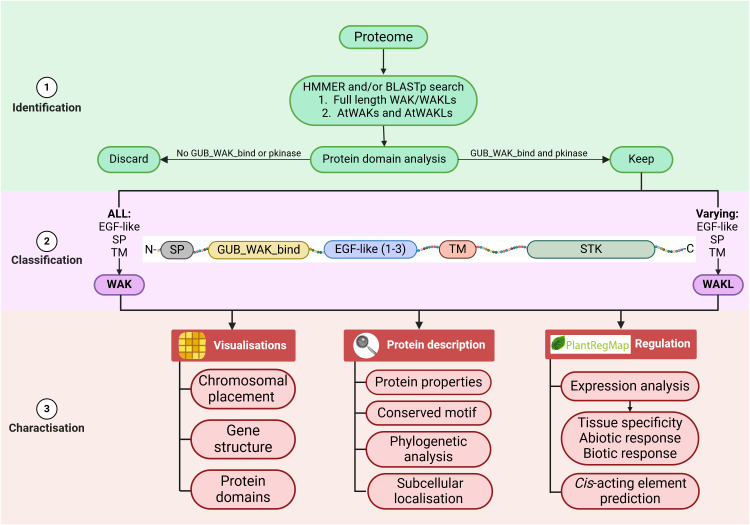
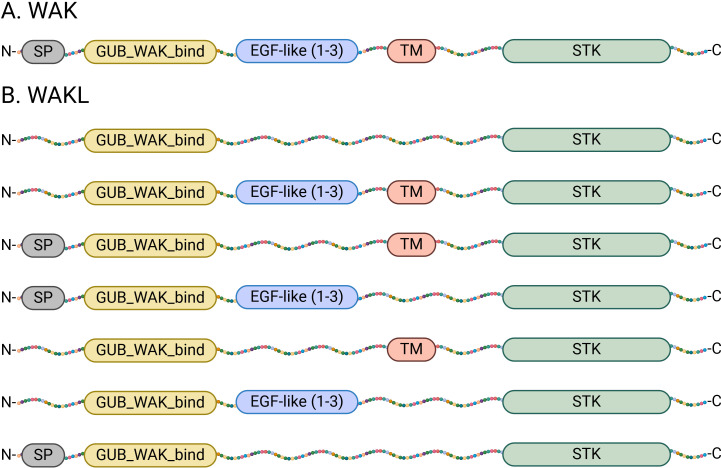
Wall-associated kinases (WAKs) and WAK-likes (WAKLs) are transmembrane pectin receptors which have seen rising interest in recent years due to their roles in stress responses and developmental pathways. Consequently, the genes encoding these proteins are continuously identified, described and characterised across a wide variety of plant species. The primary goal of characterizing these genes is to classify, describe and infer cellular function, mostly through methods. However, inconsistencies across characterizations have led to discrepancies in WAK/WAKL definitions resulting in sequences being classified as a WAK in one study but as a WAKL or not identified in another. The methods of characterization range widely with different combinations of analyses being conducted, to similar analyses but with varying inputs and parameters which are impacting the outputs. This review collates current knowledge about genes and the recent characterizations of this family and suggests a more robust strategy for increased consistency among the different gene members, as well as the characterizations thereof.
细胞壁相关激酶(WAKs)和类细胞壁相关激酶(WAKLs)是跨膜果胶受体,近年来,由于它们在应激反应和发育途径中的作用,受到越来越多的关注。因此,在各种各样的植物物种中,编码这些蛋白质的基因不断被鉴定、描述和表征。表征这些基因的主要目标是分类、描述和推断细胞功能,主要通过各种方法来实现。然而,不同表征之间的不一致导致了WAK/WAKL定义的差异,从而使得序列在一项研究中被归类为WAK,而在另一项研究中被归类为WAKL或未被识别。表征方法差异很大,进行的分析组合不同,或者进行类似的分析,但输入和参数不同,这影响了输出结果。本综述整理了关于这些基因的当前知识以及该家族的最新表征,并提出了一种更稳健的策略,以提高不同基因成员及其表征之间的一致性。