Kaur Balwinder, Khan Ezaz Hasan, Routsi Anna Maria, Li Lian, Latulippe Andrew, Sun Hongwei, Drew Christopher, Kumar Jayant, Christodouleas Dionysios C
Department of Chemistry, University of Massachusetts Lowell Lowell MA 01854 USA
Center for Advanced Materials, University of Massachusetts Lowell Lowell MA 01854 USA.
RSC Adv. 2024 Nov 26;14(51):37774-37780. doi: 10.1039/d4ra04591b. eCollection 2024 Nov 25.
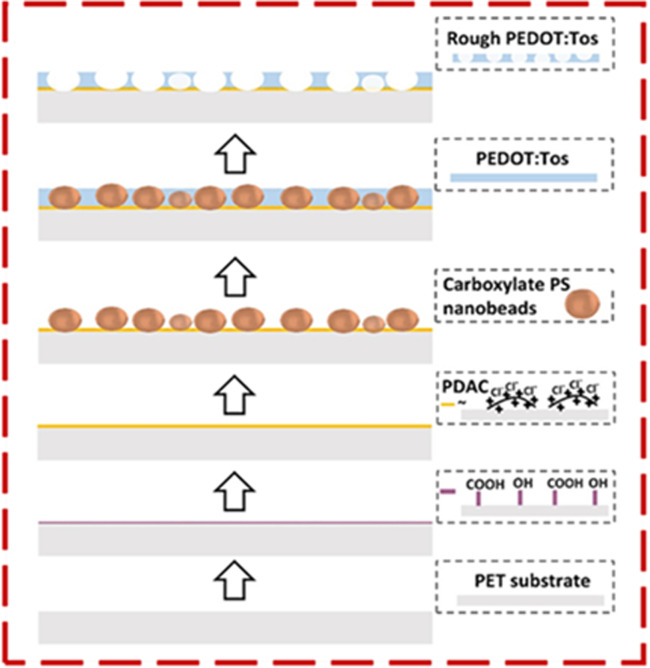
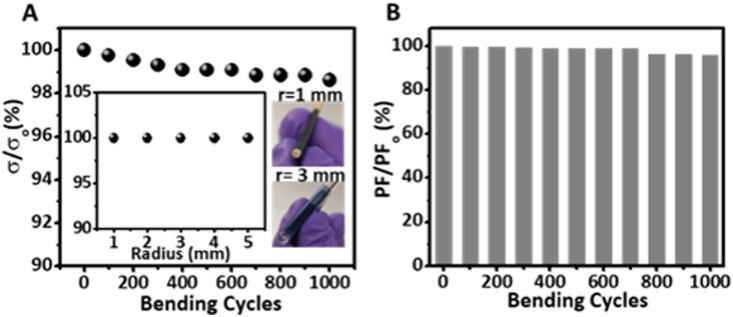
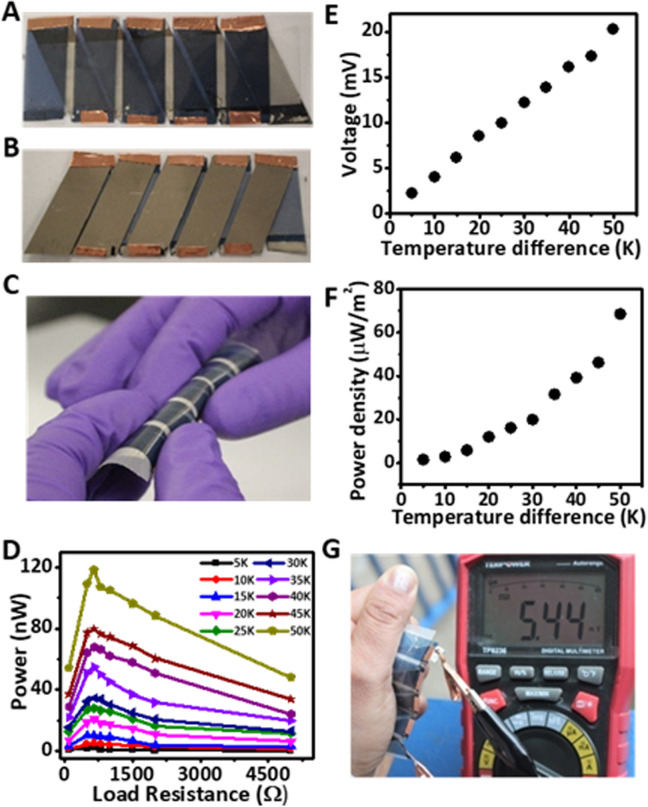
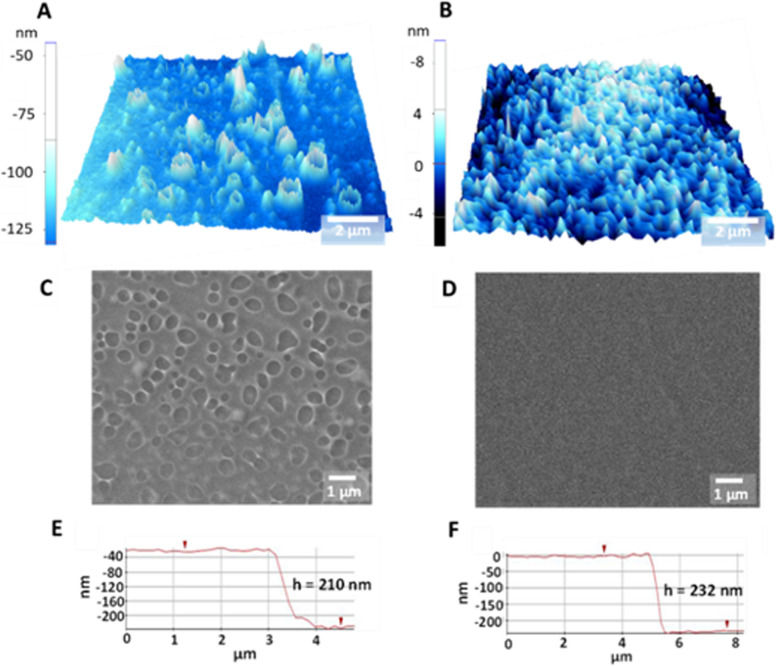
Organic thermoelectric materials would be ideally suited for wearable thermoelectric devices but currently are not efficient enough for practical applications. Previous research efforts have tailored the composition, oxidation status, or doping levels of organic thin-film thermoelectrics to maximize their thermoelectric performance typically measured by the thermoelectric figure of merit (). This study demonstrates that the thermoelectric of the organic thin-films can be significantly boosted by increasing the surface roughness of the films. A simple soft-templating method that can produce nanorough thin films of organic thermoelectrics was developed and used to fabricate nanorough poly(3,4-ethylenedioxythiophene):Tosylate (PEDOT:Tos) thin films. The performance of the nanorough PEDOT:Tos films was compared to that of the smooth PEDOT:Tos films. The value of the nanorough films was estimated to be 0.99, which is 83% higher than that of the smooth films and one of the highest ever reported for organic thermoelectrics. The flexibility and durability of the nanorough PEDOT:Tos films were also proved. A proof-of-concept thermoelectric device that used 5 strips of nanorough films, as the p-type thermoelectric elements, and five strips of bismuth thin films, as the n-type elements, produced 118.7 nW when Δ = 50 K.
有机热电材料理论上非常适合用于可穿戴热电设备,但目前其效率不足以满足实际应用。先前的研究致力于调整有机薄膜热电材料的成分、氧化状态或掺杂水平,以最大化其通常通过热电优值()衡量的热电性能。本研究表明,通过增加有机薄膜的表面粗糙度可显著提高其热电优值。开发了一种简单的软模板法,可制备有机热电材料的纳米粗糙薄膜,并用于制造纳米粗糙的聚(3,4 - 乙撑二氧噻吩):甲苯磺酸盐(PEDOT:Tos)薄膜。将纳米粗糙的PEDOT:Tos薄膜的性能与光滑的PEDOT:Tos薄膜进行了比较。纳米粗糙薄膜的优值估计为0.99,比光滑薄膜高83%,是有机热电材料中报道的最高值之一。纳米粗糙的PEDOT:Tos薄膜的柔韧性和耐久性也得到了证实。一个概念验证的热电设备,使用5条纳米粗糙薄膜作为p型热电元件,5条铋薄膜作为n型元件,当温差Δ = 50 K时产生了118.7 nW的功率。