Liu Xu, Jin Shuo, Shao Yiqi, Kuperman Sofia, Pratt Autumn, Zhang Duhan, Lo Jacqueline, Joo Yong Lak, Gat Amir D, Archer Lynden A, Shepherd Robert F
Sibley School of Mechanical and Aerospace Engineering, Cornell University, Ithaca, NY 14853, USA.
Robert Frederick Smith School of Chemical and Biomolecular Engineering, Cornell University, Ithaca, NY 14853, USA.
Sci Adv. 2024 Nov 29;10(48):eadq7430. doi: 10.1126/sciadv.adq7430. Epub 2024 Nov 27.
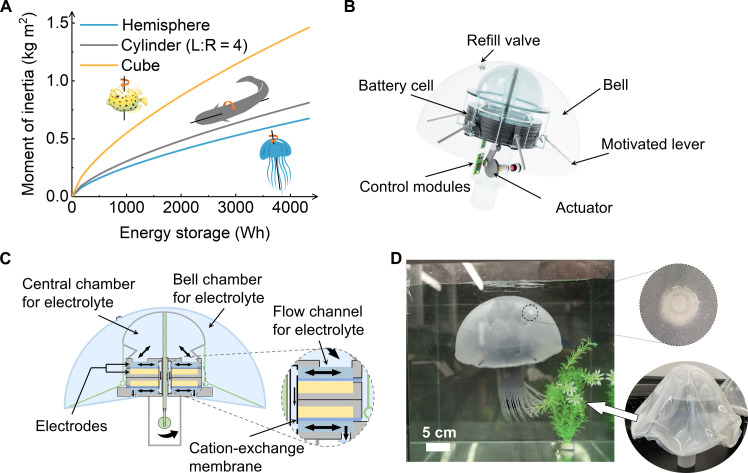
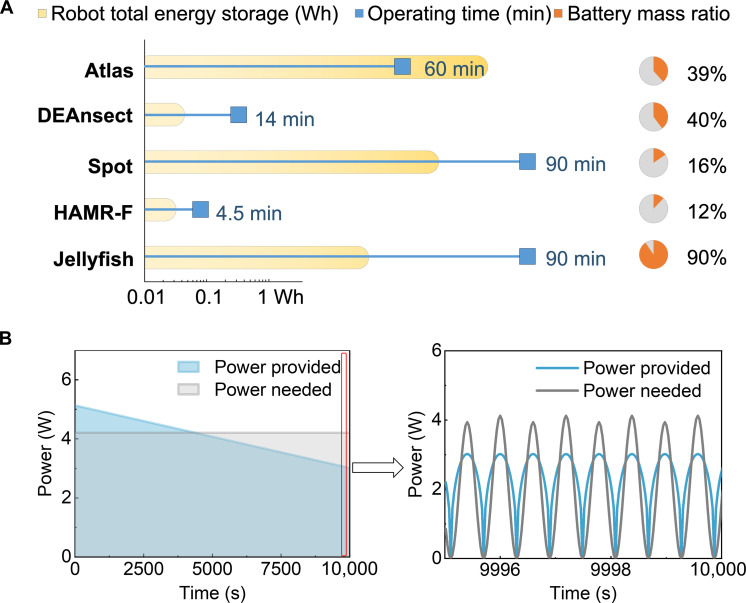
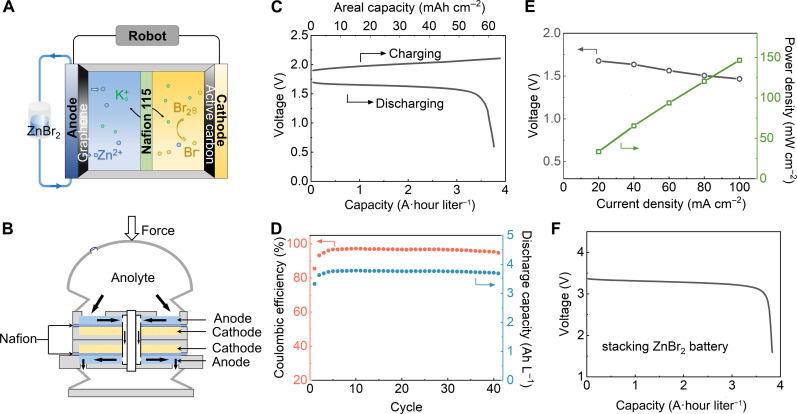
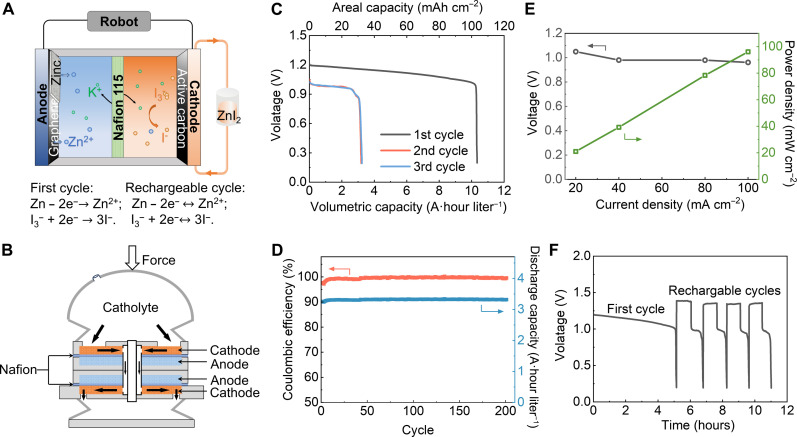
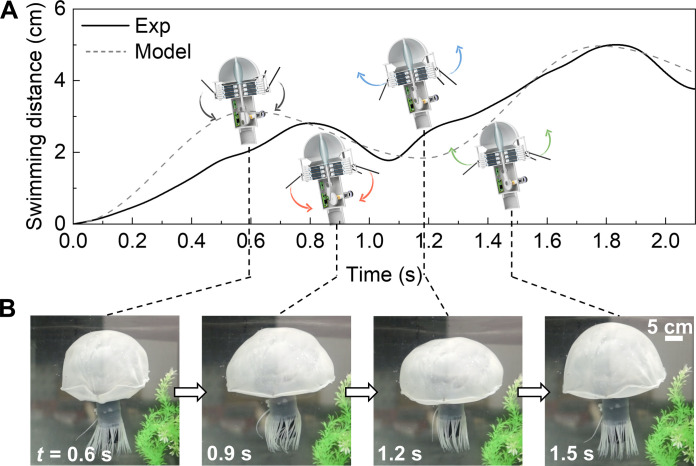
The batteries that power untethered underwater vehicles (UUVs) serve a single purpose: to provide energy to electronics and motors; the more energy required, the bigger the robot must be to accommodate space for more energy storage. By choosing batteries composed primarily of liquid media [e.g., redox flow batteries (RFBs)], the increased weight can be better distributed for improved capacity with reduced inertial moment. Here, we formed an RFB into the shape of a jellyfish, using two redox chemistries and architectures: (i) a secondary ZnBr battery and (ii) a hybrid primary/secondary ZnI battery. A UUV was able to be powered solely by RFBs with increased volumetric ( ~ 11 ampere-hours per liter) and areal (108 milliampere-hours per square centimeter) energy density, resulting in a long operational lifetime ( ~ 1.5 hours) for UUVs composed of primarily electrochemically energy-dense liquid (~90% of the robot's weight).
为无缆水下航行器(UUV)供电的电池只有一个用途:为电子设备和电机提供能量;所需能量越多,机器人就必须越大,以便为更多能量存储留出空间。通过选择主要由液体介质组成的电池[例如,氧化还原液流电池(RFB)],增加的重量可以更好地分布,以提高容量并减小惯性矩。在此,我们利用两种氧化还原化学和结构将一个RFB制成水母形状:(i)二次ZnBr电池和(ii)一次/二次混合ZnI电池。一个UUV能够仅由RFB供电,其体积能量密度(约每升11安培小时)和面积能量密度(每平方厘米108毫安小时)有所提高,这使得主要由电化学能量密集型液体组成(约占机器人重量的90%)的UUV具有较长的运行寿命(约1.5小时)。