Department of Endocrinology, The Seventh Affiliated Hospital of Sun Yat-sen University, Shenzhen, China.
Front Endocrinol (Lausanne). 2024 Nov 13;15:1362278. doi: 10.3389/fendo.2024.1362278. eCollection 2024.
Adamantinomatous craniopharyngioma (ACP) is difficult to cure completely and prone to recurrence after surgery. Ferroptosis as an iron-dependent programmed cell death, may be a critical process in ACP. The study aimed to screen diagnostic markers related to ferroptosis in ACP to improve diagnostic accuracy.
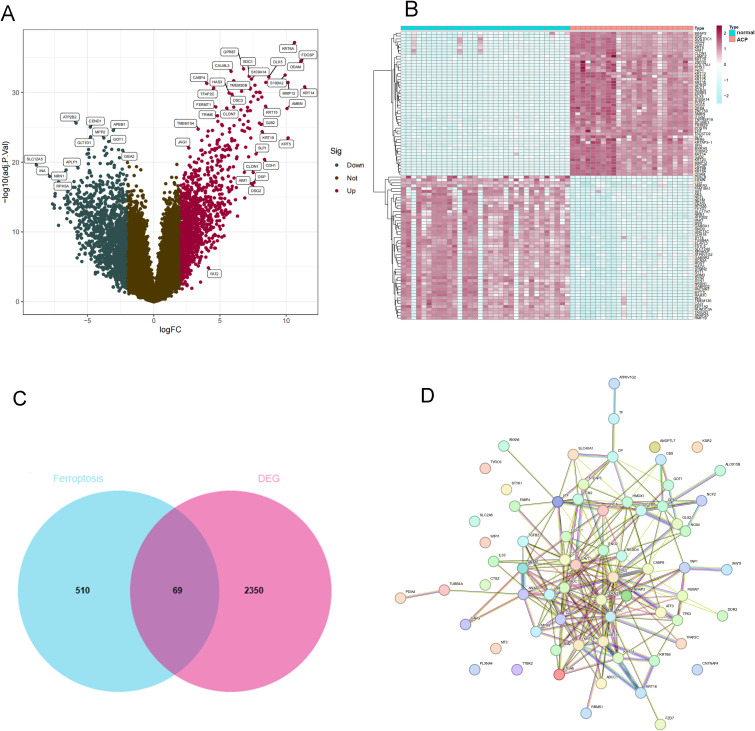
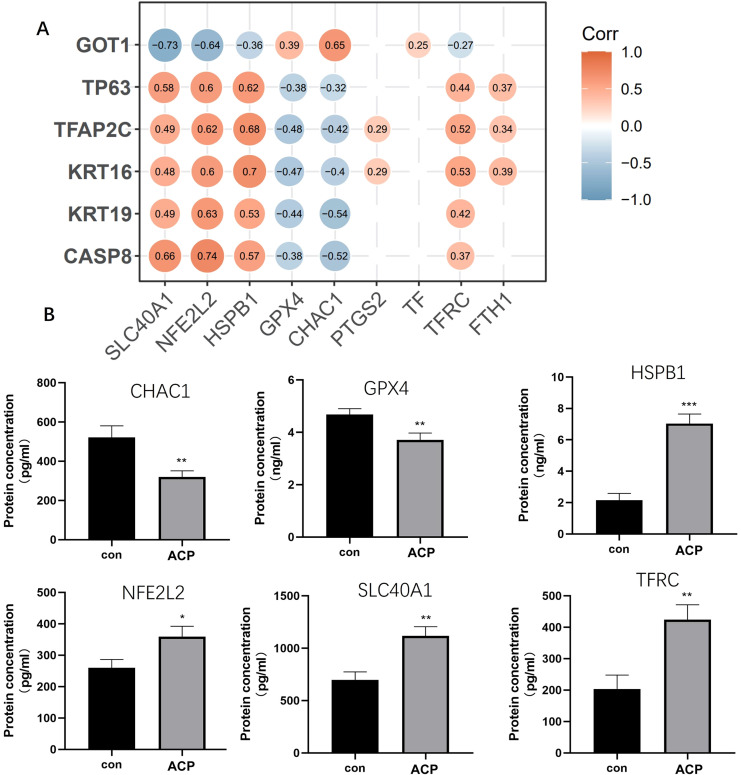
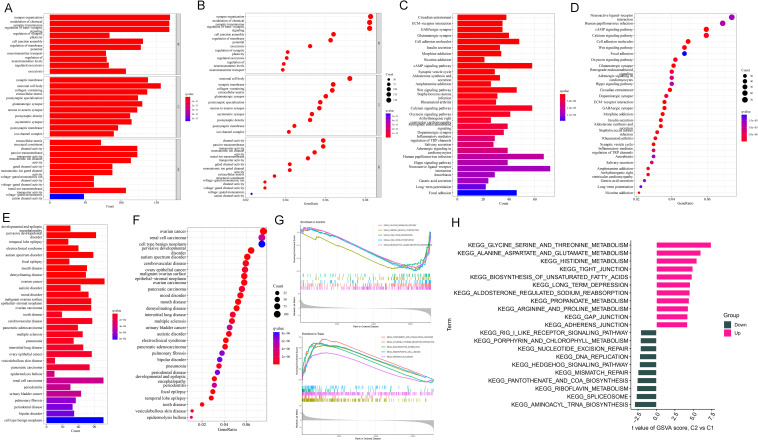
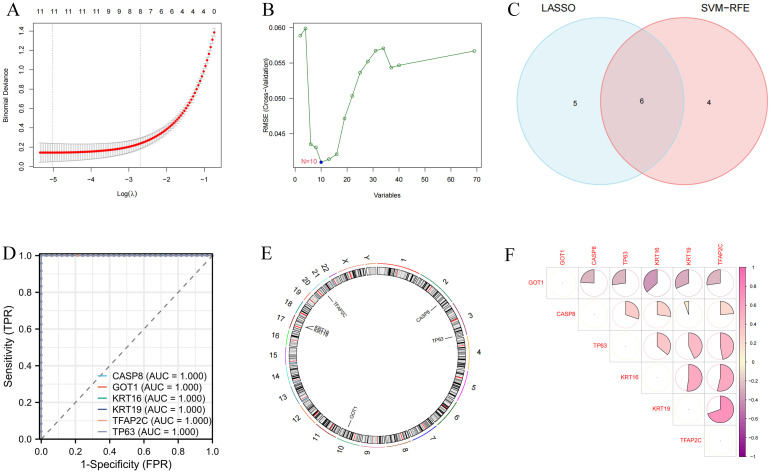
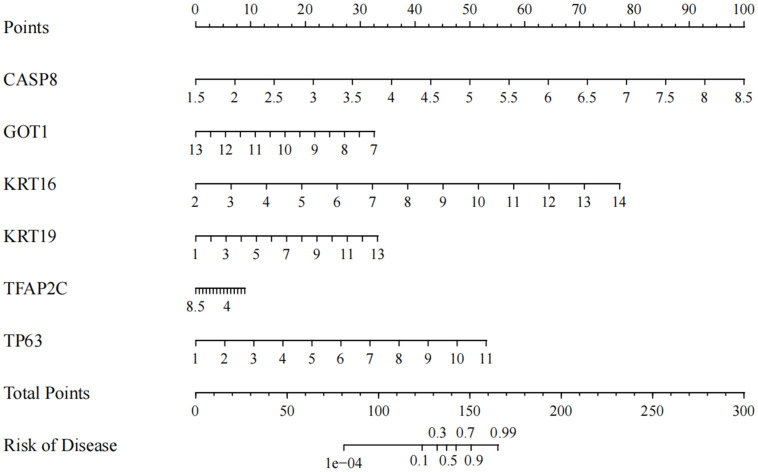
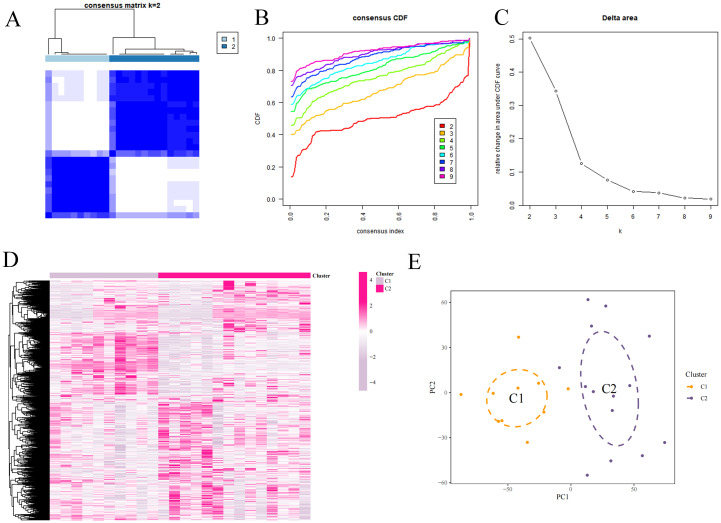
Gene expression profiles of ACP were obtained from the gene expression omnibus (GEO) database. Limma package was used to analyze the differently expressed genes (DEGs). The intersection of DEGs and ferroptosis-related factors was obtained as differently expressed ferroptosis-related genes (DEFRGs). Enrichment analysis was processed, including Gene Ontology (GO), Kyoto Encyclopedia of Genes and Genomes (KEGG), disease ontology (DO), gene set enrichment analysis (GSEA), and Gene Set Variation Analysis (GSVA) analysis. Machine learning algorithms were undertaken for screening diagnostic markers associated with ferroptosis in ACP. The levels of DEFRGs were verified in ACP patients. A nomogram was drawn to predict the relationship between key DEFRG expression and risk of disease. The disease groups were then clustered by consensus clustering analysis.
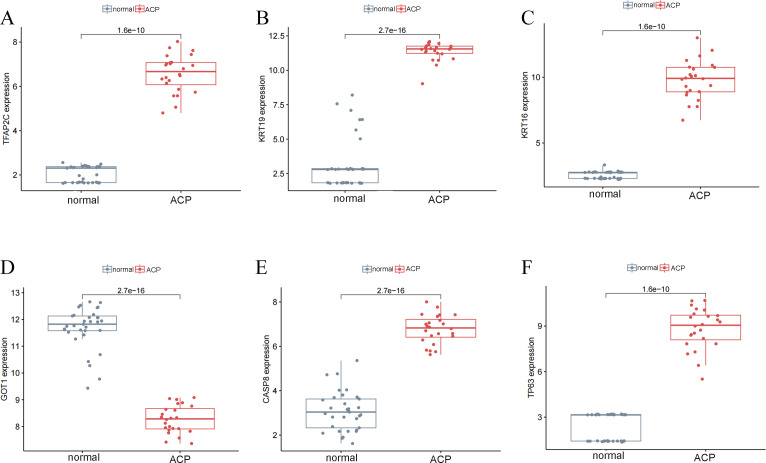
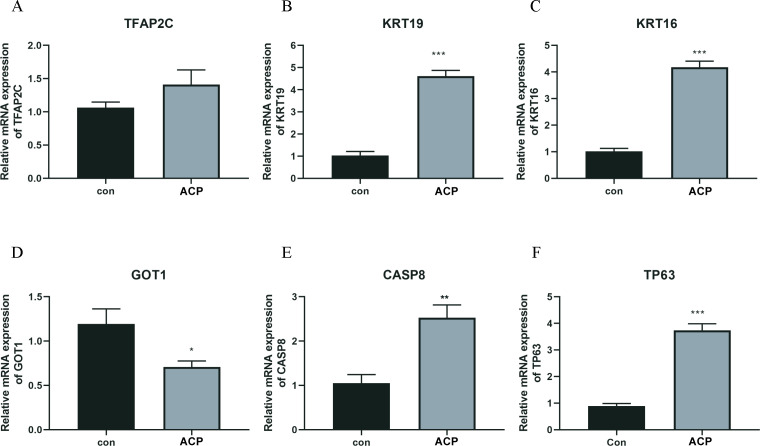
DEGs were screened between ACP and normal samples. Ferroptosis-related factors were obtained from the FerrDb V2 and GeneCard databases. The correlation between DEFRGs and ferroptosis markers was also confirmed. A total of 6 overlapped DEFRGs were obtained. Based on the results of the nomogram, CASP8, KRT16, KRT19, and TP63 were the protective factors of the risk of disease, while GOT1 and TFAP2C were the risk factors. According to screened DEFRGs, the consensus clustering matrix was differentiated, and the number of clusters was stable. CASP8, KRT16, KRT19, and TP63, were upregulated in ACP patients, while GOT1 was downregulated. CASP8, KRT16, KRT19, TP63, CASP8, and GOT1 affect multiple ferroptosis marker genes. The combination of these genes might be the biomarker for ACP diagnosis via participating ferroptosis process.
Ferroptosis-related genes, including CASP8, KRT16, KRT19, TP63, and GOT1 were the potential markers for ACP, which lays the theoretical foundation for ACP diagnosis.
造釉细胞瘤型颅咽管瘤(ACP)难以完全治愈,且手术后易复发。铁死亡作为一种铁依赖性程序性细胞死亡,可能是 ACP 中的一个关键过程。本研究旨在筛选与 ACP 相关的铁死亡诊断标志物,以提高诊断准确性。
从基因表达综合数据库(GEO)中获取 ACP 的基因表达谱。使用 Limma 包分析差异表达基因(DEGs)。将 DEGs 与铁死亡相关因子的交集作为差异表达的铁死亡相关基因(DEFRGs)。进行富集分析,包括基因本体论(GO)、京都基因与基因组百科全书(KEGG)、疾病本体论(DO)、基因集富集分析(GSEA)和基因集变异分析(GSVA)分析。采用机器学习算法筛选与 ACP 铁死亡相关的诊断标志物。验证 ACP 患者中 DEFRGs 的水平。绘制列线图以预测关键 DEFRG 表达与疾病风险的关系。然后通过共识聚类分析对疾病组进行聚类。
筛选出 ACP 与正常样本之间的 DEGs。从 FerrDb V2 和 GeneCard 数据库中获得铁死亡相关因子。还证实了 DEFRGs 与铁死亡标志物之间的相关性。共获得 6 个重叠的 DEFRGs。基于列线图的结果,CASP8、KRT16、KRT19 和 TP63 是疾病风险的保护因素,而 GOT1 和 TFAP2C 是风险因素。根据筛选出的 DEFRGs,共识聚类矩阵得到了区分,聚类数量稳定。ACP 患者中 CASP8、KRT16、KRT19 和 TP63 上调,而 GOT1 下调。CASP8、KRT16、KRT19、TP63、CASP8 和 GOT1 影响多个铁死亡标记基因。这些基因的组合可能是通过参与铁死亡过程来诊断 ACP 的生物标志物。
包括 CASP8、KRT16、KRT19、TP63 和 GOT1 在内的铁死亡相关基因是 ACP 的潜在标志物,为 ACP 的诊断奠定了理论基础。