CNC-UC - Center for Neuroscience and Cell Biology, University of Coimbra, Coimbra, Portugal.
CIBB - Centre for Innovative Biomedicine and Biotechnology, University of Coimbra, Coimbra, Portugal.
Int J Nanomedicine. 2024 Nov 22;19:12505-12527. doi: 10.2147/IJN.S474665. eCollection 2024.
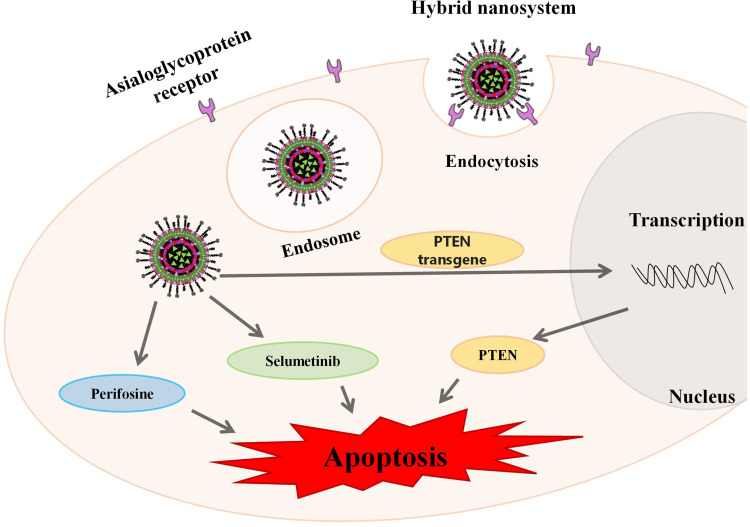
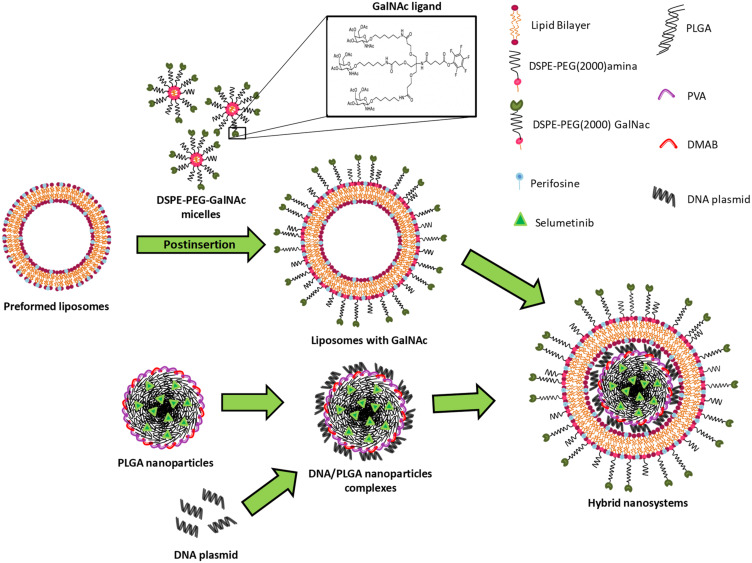
Hepatocellular carcinoma is the most frequent liver cancer and constitutes one of the main causes of cancer mortality. The combination of targeted therapy drugs, such as selumetinib and perifosine that inhibit cell signaling pathways involved in cell survival and proliferation, with the expression of tumor suppressor transgenes, such as PTEN, may result in an efficient therapeutic approach against HCC. Thus, the main objective of this work was to develop a new lipid-polymer hybrid nanosystem (HNP), composed of a PLGA core coated with a pH-sensitive lipid bilayer functionalized with the targeting ligand GalNAc, in order to specifically and efficiently deliver this novel combination of therapeutic agents in HCC cells.
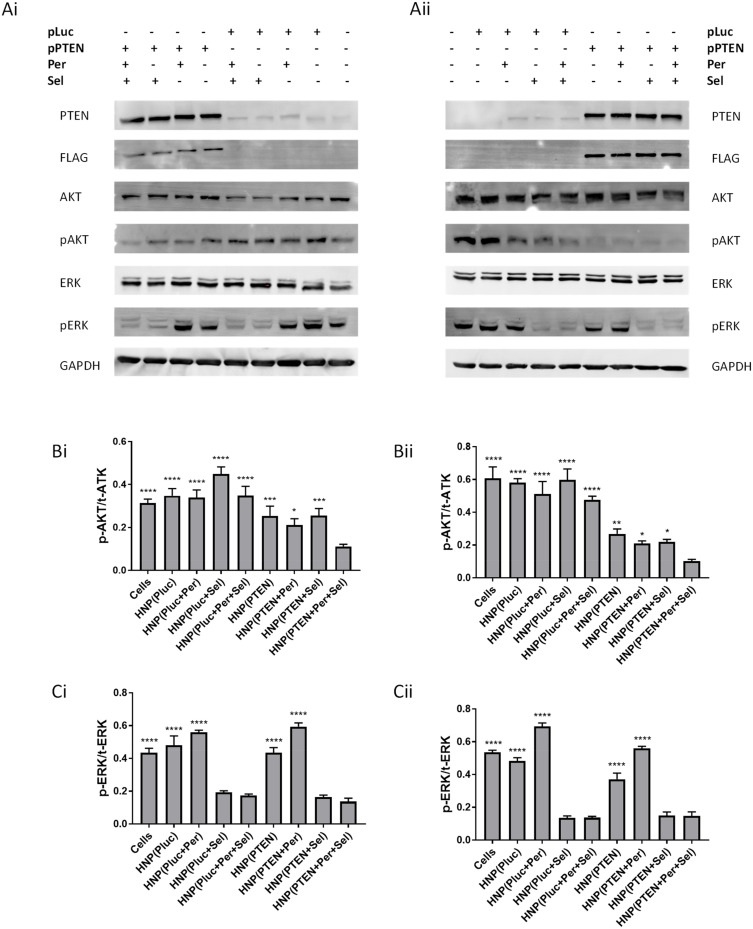
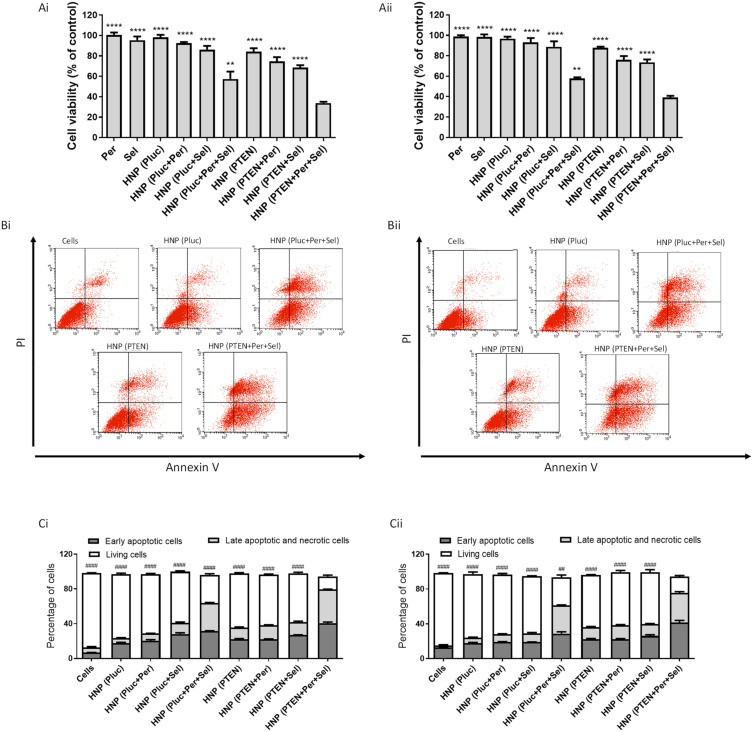
Transmission electron microscopy, zeta potential, Fourier transform infrared spectroscopy, and dynamic light scattering were used to determine the physicochemical properties of hybrid nanosystems and their components. The biological activity and specificity of nanosystems were evaluated using luminescence and flow cytometry. A variety of techniques were used to assess the therapeutic activity of hybrid nanosystems, including the Alamar Blue assay for cell viability; flow cytometry for cell death mechanisms, mitochondrial membrane potential and cell cycle; luminescence for caspase activity; flow cytometry and fluorescence microscopy for cell proliferation; and Western blot for molecular targets levels.
The obtained results showed that this new hybrid nanosystem not only has a high loading capacity of both drugs, but also allows for substantial expression of the PTEN transgene. In addition, the developed formulation has high stability, adequate physicochemical properties and high specificity to HCC cells. Moreover, the achieved data revealed that this innovative nanosystem presents a high antitumor effect, demonstrated not only by the enhancement on the programmed cell death, but also by the reduction in cell proliferation capacity.
The generated formulation shows a high anticancer effect, demonstrating a high translational potential for future clinical application in HCC treatment.
肝细胞癌是最常见的肝癌,也是癌症死亡的主要原因之一。将靶向治疗药物(如抑制细胞存活和增殖相关信号通路的 selumetinib 和 perifosine)与肿瘤抑制基因转染体(如 PTEN)联合应用,可能为 HCC 的治疗提供一种有效的方法。因此,本研究的主要目的是开发一种新型的脂-聚合物杂化纳米系统(HNP),该系统由 PLGA 核包被 pH 敏感的脂质双层组成,该脂质双层上连接有靶向配体 GalNAc,以便特异性和有效地将这种新型联合治疗药物递送至 HCC 细胞。
透射电子显微镜、Zeta 电位、傅里叶变换红外光谱和动态光散射用于测定杂化纳米系统及其成分的物理化学性质。使用发光和流式细胞术评估纳米系统的生物活性和特异性。使用多种技术评估杂化纳米系统的治疗活性,包括用于细胞活力的 Alamar Blue 测定法;用于细胞死亡机制、线粒体膜电位和细胞周期的流式细胞术;用于 caspase 活性的发光法;用于细胞增殖的流式细胞术和荧光显微镜法;以及用于分子靶标水平的 Western blot 法。
研究结果表明,这种新型杂化纳米系统不仅具有两种药物的高载药量,而且还能显著表达 PTEN 转基因。此外,所开发的制剂具有高稳定性、适当的物理化学性质和对 HCC 细胞的高特异性。此外,获得的数据表明,这种创新的纳米系统具有很高的抗肿瘤作用,不仅表现为程序性细胞死亡的增强,还表现为细胞增殖能力的降低。
所生成的制剂显示出很高的抗癌效果,为未来 HCC 治疗的临床应用提供了很高的转化潜力。