Faculty of Medicine, Department of Clinical Pharmacology, Linköping University, Linköping, Sweden.
School of Medicine, Department of Urology, University of Indonesia, Cipto Mangunkusumo Hospital, Jakarta, Indonesia.
World J Urol. 2024 Nov 28;42(1):654. doi: 10.1007/s00345-024-05368-5.
Urolithiasis and symptomatic ureterolithiasis represent diseases known to be on the increase in most westernized countries. The present article aims to give an overview on some drug principles assumed to target signalling systems involved in modulating ureter smooth muscle contractility and to present background to their potential use or prospects in ureter stone disease.
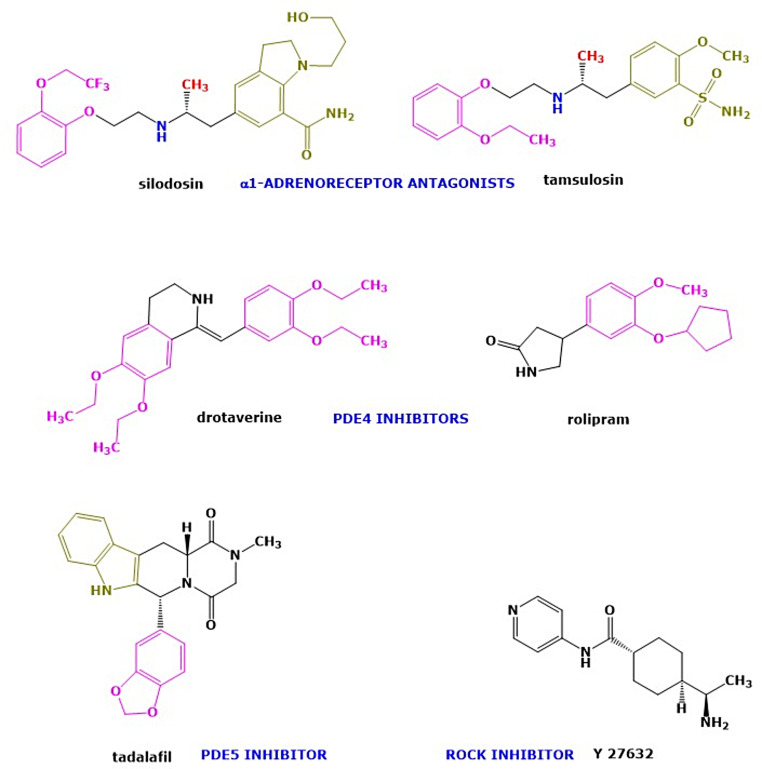
The article reviews drugs that have been evaluated over the last decades in vitro, in vivo and/or in clinical settings with regard to their properties to achieve spontaneous passage of (distal) ureteral stones and relieve colic pain. Among these drugs are alpha- and beta-adrenoceptor antagonists, calcium channel blocking agents, Rho kinase inhibitors, nitric oxide (NO) donor drugs, selective inhibitors of cyclic nucleotide phosphodiesterase enzymes (PDEs), as well as potassium channel openers.
Based on the recent scientific information on agents targeting different pathways, antagonists of alpha 1-adrenoceptors, inhibitors of the PDE isoenzymes PDE4 and PDE5 (affecting cyclic AMP- or NO/cyclic GMP-mediated signals that facilitate relaxation of ureter smooth muscle), as well as the combination of certain drugs (for example, PDE5/PDE4 inhibitor plus alpha 1-AR antagonist) seem to be intriguing pharmacological approaches to medical expulsion therapy (MET) in the overall population of patients.
While NO donors, calcium channel antagonists and potassium channel openers may be limited for further development for medical expulsion therapy (MET) due to their systemic effects and a lack of effect on stone clearance, Rho kinase inhibitors should be explored further as a future pharmacological principle in ureteral stone disease.
尿路结石和症状性输尿管结石是大多数西化国家发病率上升的已知疾病。本文旨在概述一些被认为针对调节输尿管平滑肌收缩性的信号系统的药物原理,并为其在输尿管结石病中的潜在用途或前景提供背景。
本文综述了过去几十年中在体外、体内和/或临床环境中评估的具有自发通过(远端)输尿管结石和缓解绞痛作用的药物,这些药物包括α-和β-肾上腺素能受体拮抗剂、钙通道阻滞剂、Rho 激酶抑制剂、一氧化氮(NO)供体药物、选择性环核苷酸磷酸二酯酶(PDE)酶抑制剂以及钾通道开放剂。
基于针对不同途径的药物的最新科学信息,α 1-肾上腺素能受体拮抗剂、PDE4 和 PDE5 同工酶抑制剂(影响促进输尿管平滑肌松弛的环 AMP 或 NO/cGMP 介导信号),以及某些药物的组合(例如,PDE5/PDE4 抑制剂加α 1-AR 拮抗剂)似乎是针对一般患者人群的医学排出疗法(MET)的有趣的药理学方法。
虽然由于其全身作用和对结石清除无影响,NO 供体、钙通道拮抗剂和钾通道开放剂可能限制用于 MET 的进一步发展,但 Rho 激酶抑制剂应进一步探索作为输尿管结石病的未来药理学原理。