Kuan Chia-Hsuan, Tseng Chi-Nan, Huang Tse-Hung, Yang Chien-Chung, Chen Yu-Sheng
Division of Acupuncture and Traumatology, Department of Traditional Chinese Medicine, LinKou Chang Gung Memorial Hospital, No.5, Fuxing St., Guishan Dist., Taoyuan, 333, Taiwan.
Taiwan Huangdi-Neijing Medical Practice Association (THMPA), Taoyuan, 330, Taiwan.
Perioper Med (Lond). 2024 Nov 29;13(1):112. doi: 10.1186/s13741-024-00470-z.
Stroke is a critical complication of cardiac surgery that results in increased mortality and morbidity. Limited treatment options are available for patients with severe neurological deficits, such as impaired consciousness. Acupuncture is a well-known integrative management method for stroke patients. However, there are no extensive reports discussing the benefit of acupuncture in stroke patients after cardiac surgery. The aim of this study was to demonstrate the role of acupuncture in the neurological recovery of these patients and to identify the factors that provide greater benefit.
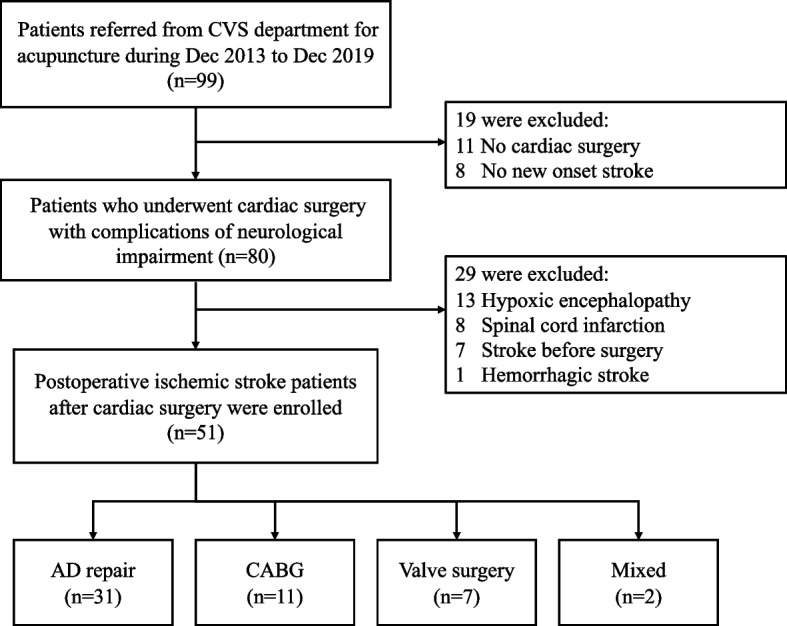
This self-controlled case series utilized inpatient data from stroke patients after cardiac surgery who received acupuncture in a single center from 2013 to 2019. The primary outcomes included the Glasgow Coma Scale, muscle strength grading scale, and Barthel Index. Wilcoxon signed-rank test was used to compare the neurological differences between pre-acupuncture and post-acupuncture.
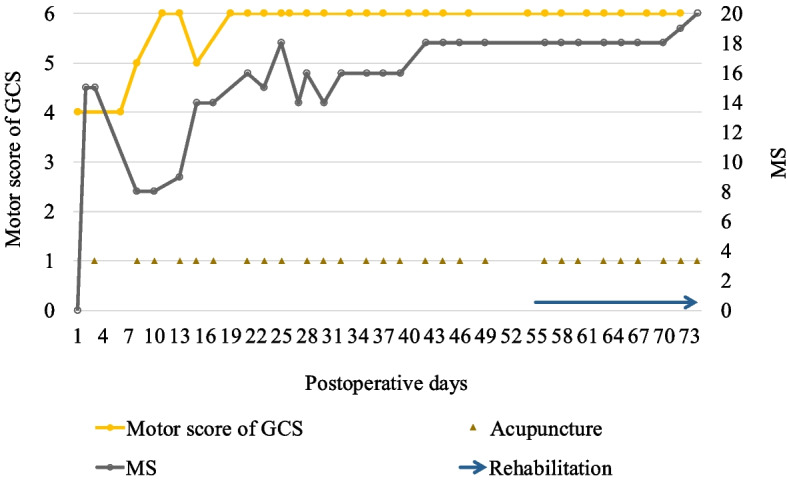
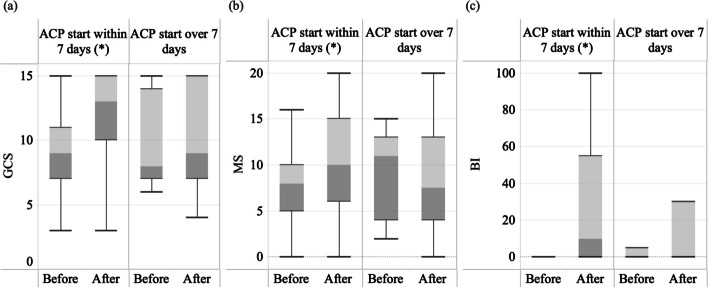
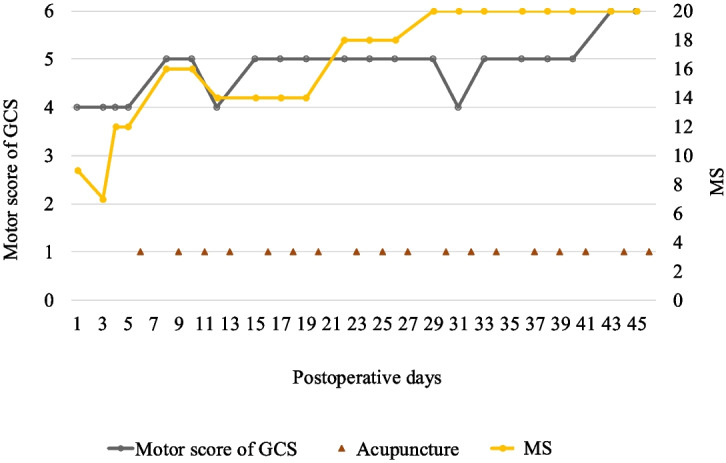
Fifty-one patients who met the criteria showed significant improvement of the severity of neurological impairment, including the Glasgow Coma Scale, muscle strength grading scale, and Barthel Index (p < 0.05). The group that underwent aortic dissection repair and the group that started acupuncture within 7 days after stroke showed greater improvement (p < 0.01). No adverse events were reported. Three patients with profound neurological impairment who received acupuncture intervention were described.
Acupuncture has a potential benefit in improving neurological impairment and reducing mortality in stroke patients after cardiac surgery, especially within 7 days of the event. Further larger prospective studies with control groups are needed to provide convincing evidence.
中风是心脏手术的一种严重并发症,会导致死亡率和发病率上升。对于患有严重神经功能缺损(如意识障碍)的患者,可用的治疗选择有限。针灸是一种众所周知的中风患者综合管理方法。然而,目前尚无广泛的报告讨论针灸对心脏手术后中风患者的益处。本研究的目的是证明针灸在这些患者神经功能恢复中的作用,并确定能带来更大益处的因素。
本自身对照病例系列研究利用了2013年至2019年在单一中心接受针灸治疗的心脏手术后中风患者的住院数据。主要结局指标包括格拉斯哥昏迷量表、肌力分级量表和巴氏指数。采用Wilcoxon符号秩检验比较针灸前后的神经功能差异。
51例符合标准的患者神经功能缺损严重程度有显著改善,包括格拉斯哥昏迷量表、肌力分级量表和巴氏指数(p < 0.05)。接受主动脉夹层修复的组和中风后7天内开始针灸的组改善更为明显(p < 0.01)。未报告不良事件。描述了3例接受针灸干预的严重神经功能缺损患者。
针灸对改善心脏手术后中风患者的神经功能缺损和降低死亡率具有潜在益处,尤其是在发病7天内。需要进一步开展更大规模的有对照组的前瞻性研究以提供令人信服的证据。