School of Computing, Ulster University, Cromore Rd, Belfast, BT52 1SA, United Kingdom, 44 28 7012 3456.
School of Nursing and Pandemic Science, Ulster University, Belfast, United Kingdom.
JMIR Mhealth Uhealth. 2024 Nov 29;12:e56951. doi: 10.2196/56951.
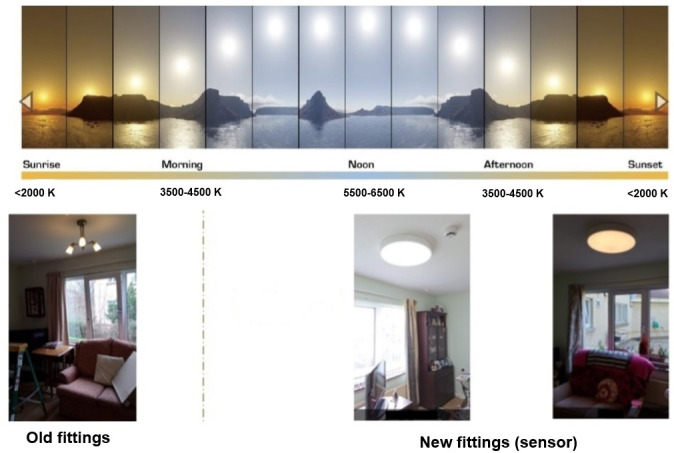
Living with a diagnosis of dementia can involve managing certain behavioral and psychological symptoms. Alongside cognitive decline, this cohort expresses a suppression in melatonin production which can negatively influence their alignment of sleep or wake timings with the 24 hour day and night cycle. As a result, their circadian rhythms become disrupted. Since daylight has the capacity to stimulate the circadian rhythm and humans spend approximately 90% of their time indoors, research has shifted toward the use of indoor lighting to achieve this same effect. This type of lighting is programmed in a daylight-simulating manner; mimicking the spectral changes of the sun throughout the day. As such, this paper focuses on the use of a dynamic lighting and sensing technology used to support the circadian rhythm, behavioral and psychological symptoms, and well-being of people living with dementia.
This study aimed to understand how dynamic lighting, as opposed to static lighting, may impact the well-being of those who are living with dementia.
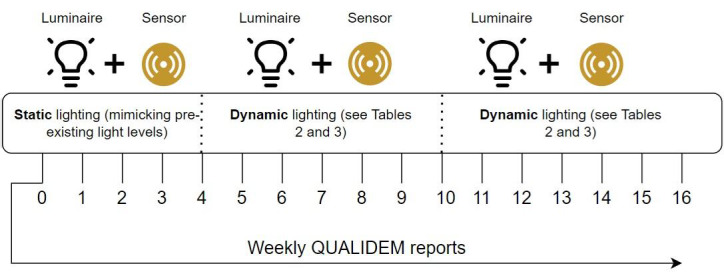
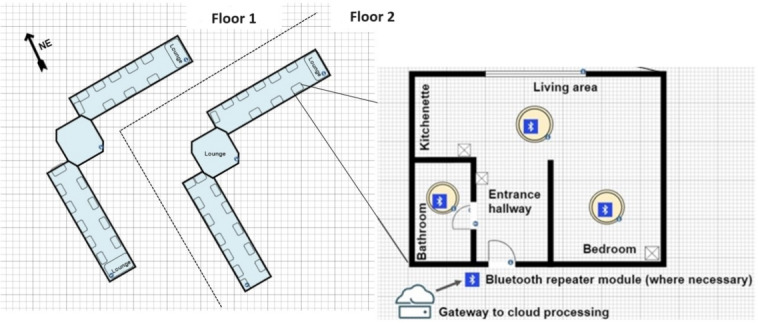
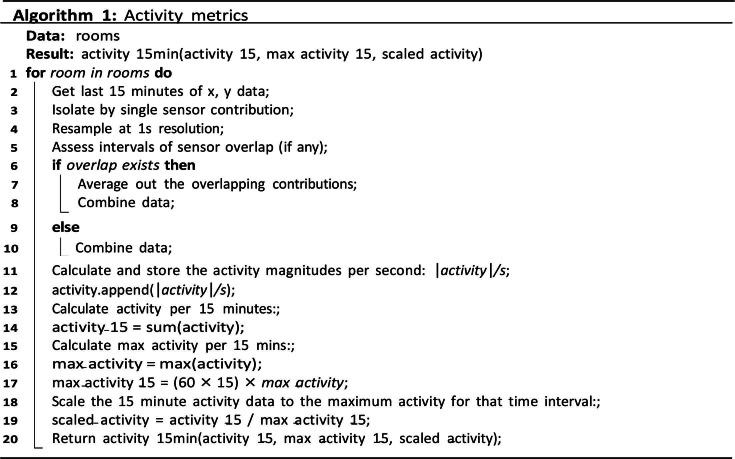
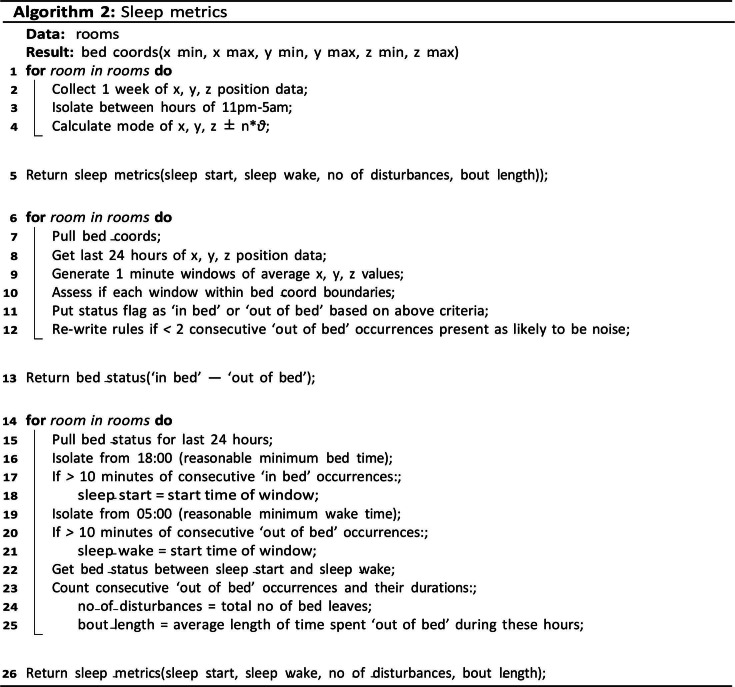
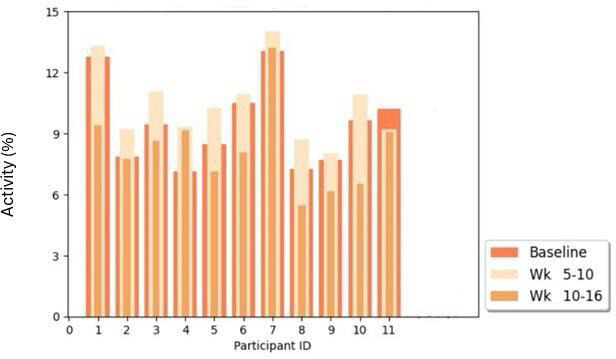
An ethically approved trial was conducted within a care home for people with dementia. Data were collected in both quantitative and qualitative formats using environmentally deployed radar sensing technology and the validated QUALIDEM (Quality of Life for People With Dementia) well-being scale, respectively. An initial 4 weeks of static baseline lighting was used before switching out for 12 weeks of dynamic lighting. Metrics were collected for 11 participants on mood, social interactions, agitation, sense of feeling, and sleep and rest-activity over a period of 16 weeks.
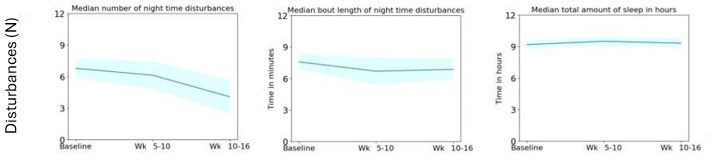
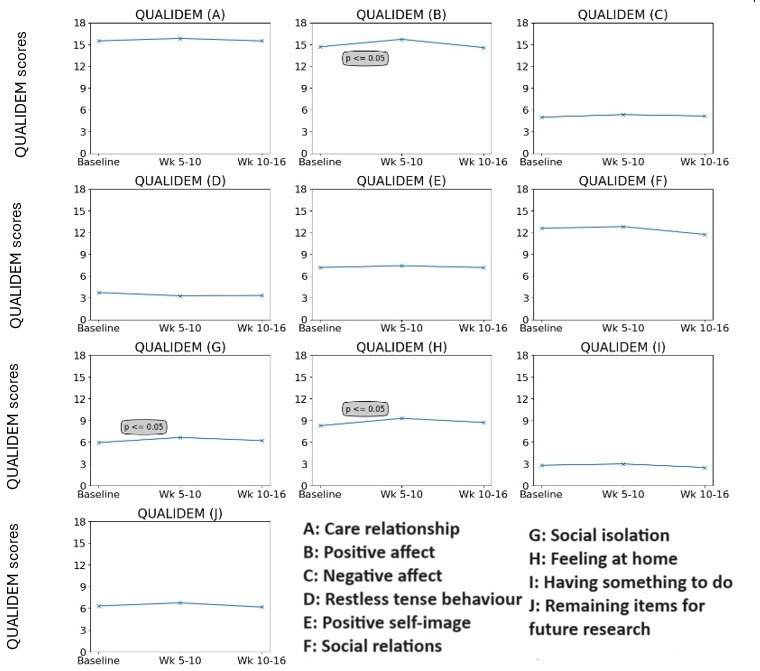
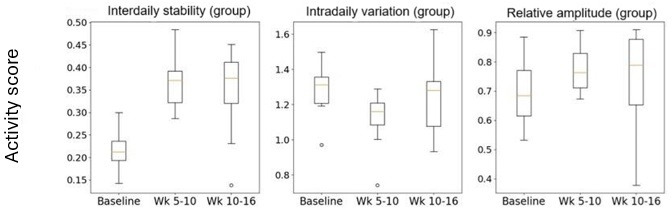
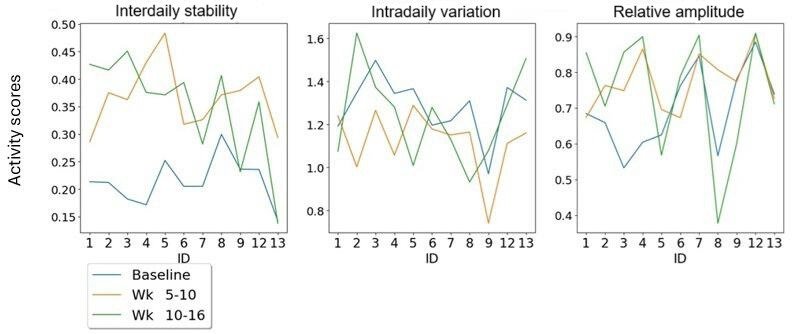
Dynamic lighting showed significant improvement with a moderate effect size in well-being parameters including positive affect (P=.03), social isolation (P=.048), and feeling at home (P=.047) after 5-10 weeks of dynamic lighting exposure. The results also highlight statistically significant improvements in rest-activity-related parameters of interdaily stability (P<.001), intradaily variation (P<.001), and relative amplitude (P=.03) from baseline to weeks 5-10, with the effect propagating for interdaily stability at weeks 10-16 as well (P<.001). Nonsignificant improvements are also noted for sleep metrics with a small effect size; however, the affect in agitation does not reflect this improvement.
Dynamic lighting has the potential to support well-being in dementia, with seemingly stronger influence in earlier weeks where the dynamic lighting initially follows the static lighting contrast, before proceeding to aggregate as marginal gains over time. Future longitudinal studies are recommended to assess the additional impact that varying daylight availability throughout the year may have on the measured parameters.
患有痴呆症的患者需要应对某些行为和心理症状。除认知能力下降外,这一群体的褪黑素生成受到抑制,这可能会对其睡眠或清醒时间与 24 小时昼夜节律的对齐产生负面影响。因此,他们的昼夜节律会被打乱。由于日光具有刺激昼夜节律的能力,而人类大约 90%的时间都在室内度过,因此研究已经转向使用室内照明来达到相同的效果。这种类型的照明采用模拟日光的方式进行编程;模拟太阳在一天中的光谱变化。因此,本文重点介绍了使用动态照明和传感技术来支持患有痴呆症的人的昼夜节律、行为和心理症状以及幸福感。
本研究旨在了解动态照明与静态照明相比如何影响痴呆症患者的幸福感。
在一家专为痴呆症患者提供护理的养老院进行了一项伦理批准的试验。使用环境部署的雷达感应技术和经过验证的 QUALIDEM(痴呆症患者的生活质量)幸福感量表分别以定量和定性格式收集数据。在切换到动态照明 12 周之前,先进行 4 周的静态基准照明。在 16 周的时间里,对 11 名参与者的情绪、社交互动、躁动、感觉和睡眠与休息-活动进行了测量。
动态照明显示出显著改善,在幸福感参数方面具有中等效应量,包括积极情绪(P=.03)、社交隔离(P=.048)和在家的感觉(P=.047),在接受动态照明暴露 5-10 周后。结果还突出显示,在基线至 5-10 周期间,休息-活动相关参数的日内稳定性(P<.001)、日内变化(P<.001)和相对幅度(P=.03)有统计学意义的改善,并且这种影响在 10-16 周的日内稳定性中也得到了延续(P<.001)。尽管效应量较小,但睡眠指标的改善不明显;然而,躁动的影响并没有反映出这种改善。
动态照明有可能支持痴呆症患者的幸福感,在最初跟随静态照明对比的早期几周内,似乎具有更强的影响力,然后随着时间的推移逐渐积累为边际收益。建议进行未来的纵向研究,以评估全年不同日光可用性对测量参数的额外影响。