Department of Urology, the Affiliated Xuzhou Municipal Hospital of Xuzhou Medical University, Xuzhou No. 1 People's Hospital, Xuzhou, 221004, PR China.
Department of Urology, Xuzhou Cancer Hospital, Xuzhou, 221004, PR China.
Sci Rep. 2024 Nov 29;14(1):29720. doi: 10.1038/s41598-024-80986-y.
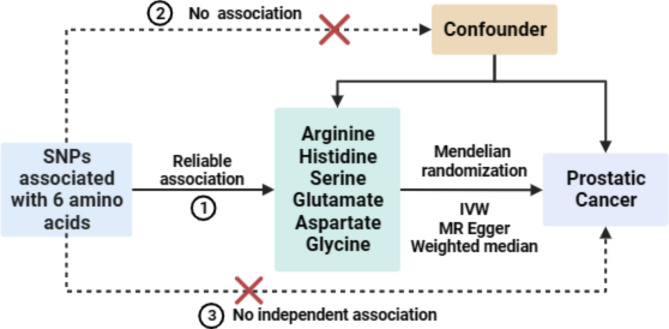
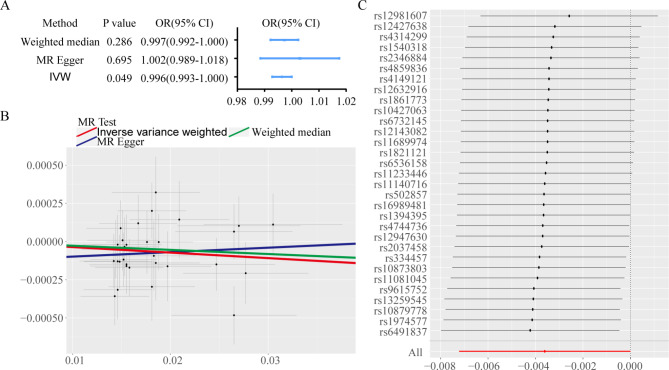
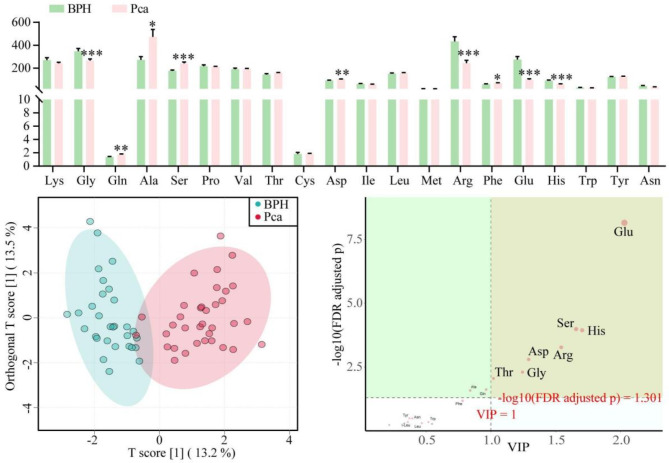
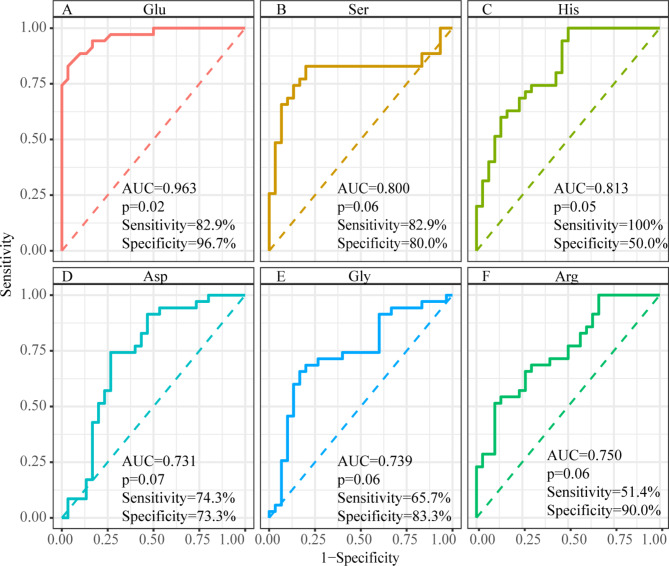
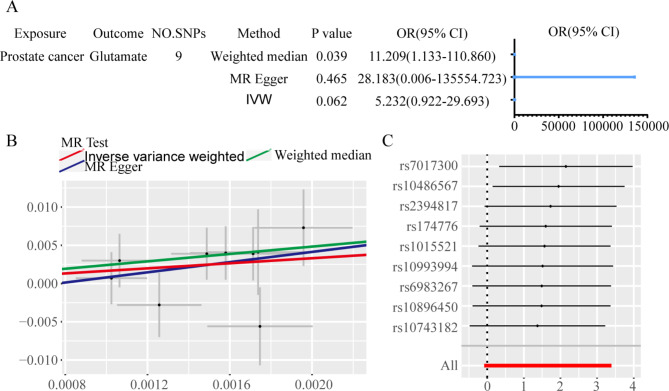
Prostate cancer (PCa) is the second most common malignancy affecting men globally. Recent advances in metabolomics have highlighted significant alterations in specific amino acid (AA) metabolism linked to PCa, indicating their potential utility in diagnosis and therapy. However, no direct causal association between serum AA levels and PCa risk has been established. A total of 35 patients with PCa and 30 individuals with benign prostatic hyperplasia (BPH) were recruited for this study. Targeted metabolomic analysis was performed using ultra-high-performance liquid chromatography-tandem mass spectrometry on serum samples. Two-sample Mendelian randomization (MR) was applied to explore potential causal links between serum AA levels and PCa risk, including mediator effects using dual-phase MR and assessing reverse causality through reverse MR. Results Targeted metabolomic profiling identified six amino acids-glutamate (Glu), Ser, histidine (His), arginine (Arg), aspartic acid (Asp), and glycine (Gly)-that showed significant area under the ROC curve in differentiating between BPH and PCa cases. Notably, Glu demonstrated an inverse association with PCa risk, distinct from the other AAs identified. However, definitive evidence supporting a causal relationship between low Glu levels and increased PCa risk was not observed. Our results suggest a protective role of Glu against PCa development, which may have implications for disease prognosis. Increasing dietary Glu intake may present a potential preventive or therapeutic approach for PCa.
前列腺癌(PCa)是全球男性第二大常见恶性肿瘤。代谢组学的最新进展强调了与 PCa 相关的特定氨基酸(AA)代谢的显著改变,表明它们在诊断和治疗方面具有潜在的应用价值。然而,尚未确定血清 AA 水平与 PCa 风险之间存在直接的因果关系。本研究共招募了 35 名 PCa 患者和 30 名良性前列腺增生(BPH)患者。对血清样本进行了超高效液相色谱-串联质谱的靶向代谢组学分析。采用双相 MR 评估中介效应,并通过反向 MR 评估反向因果关系,进行了两样本 Mendelian 随机化(MR)分析,以探讨血清 AA 水平与 PCa 风险之间的潜在因果关系。结果靶向代谢组学分析鉴定出六种氨基酸——谷氨酸(Glu)、丝氨酸(Ser)、组氨酸(His)、精氨酸(Arg)、天冬氨酸(Asp)和甘氨酸(Gly)——在区分 BPH 和 PCa 病例方面具有显著的 ROC 曲线下面积。值得注意的是,Glu 与 PCa 风险呈负相关,与其他鉴定出的 AA 不同。然而,没有观察到低 Glu 水平与 PCa 风险增加之间存在因果关系的确凿证据。我们的研究结果表明,Glu 对 PCa 发展具有保护作用,这可能对疾病预后具有重要意义。增加膳食 Glu 摄入可能为 PCa 提供一种潜在的预防或治疗方法。