Institute of Virology Münster, University of Münster, 48149, Münster, Germany.
Department of Microbiology, Immunology and Biochemistry, University of Tennessee Health Science Center, Memphis, TN, 38103, USA.
BMC Genom Data. 2024 Nov 29;25(1):102. doi: 10.1186/s12863-024-01284-0.
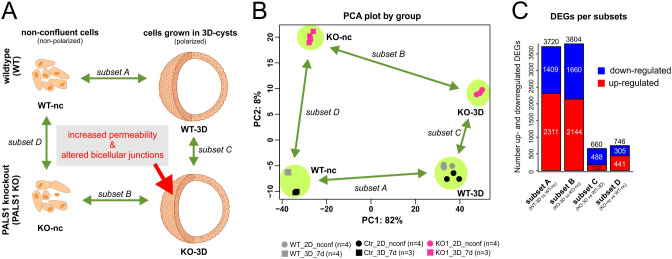
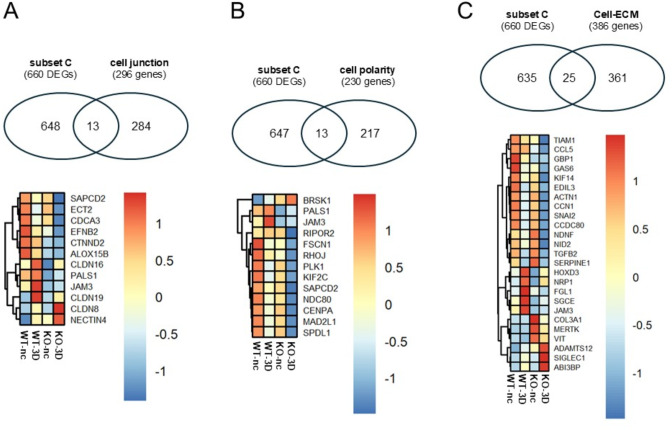
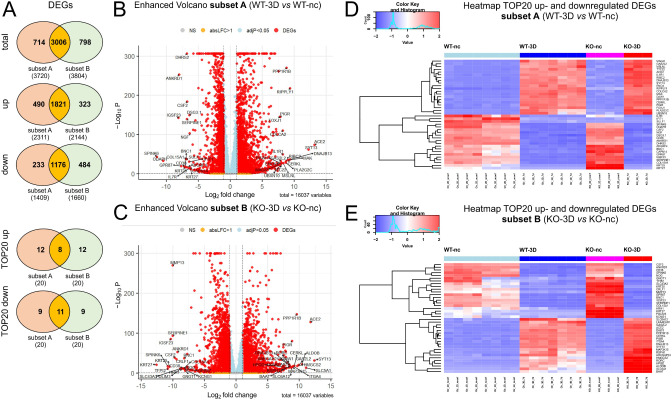
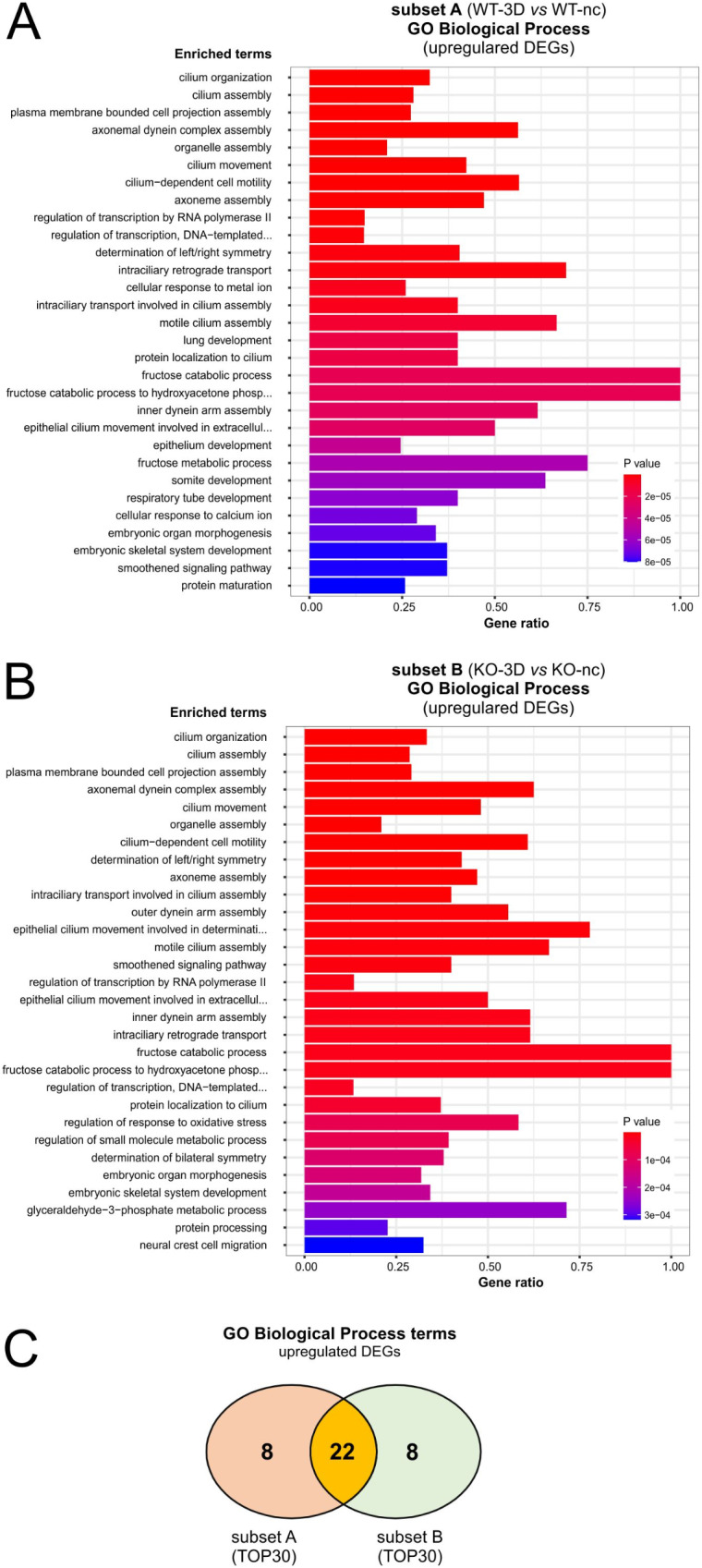
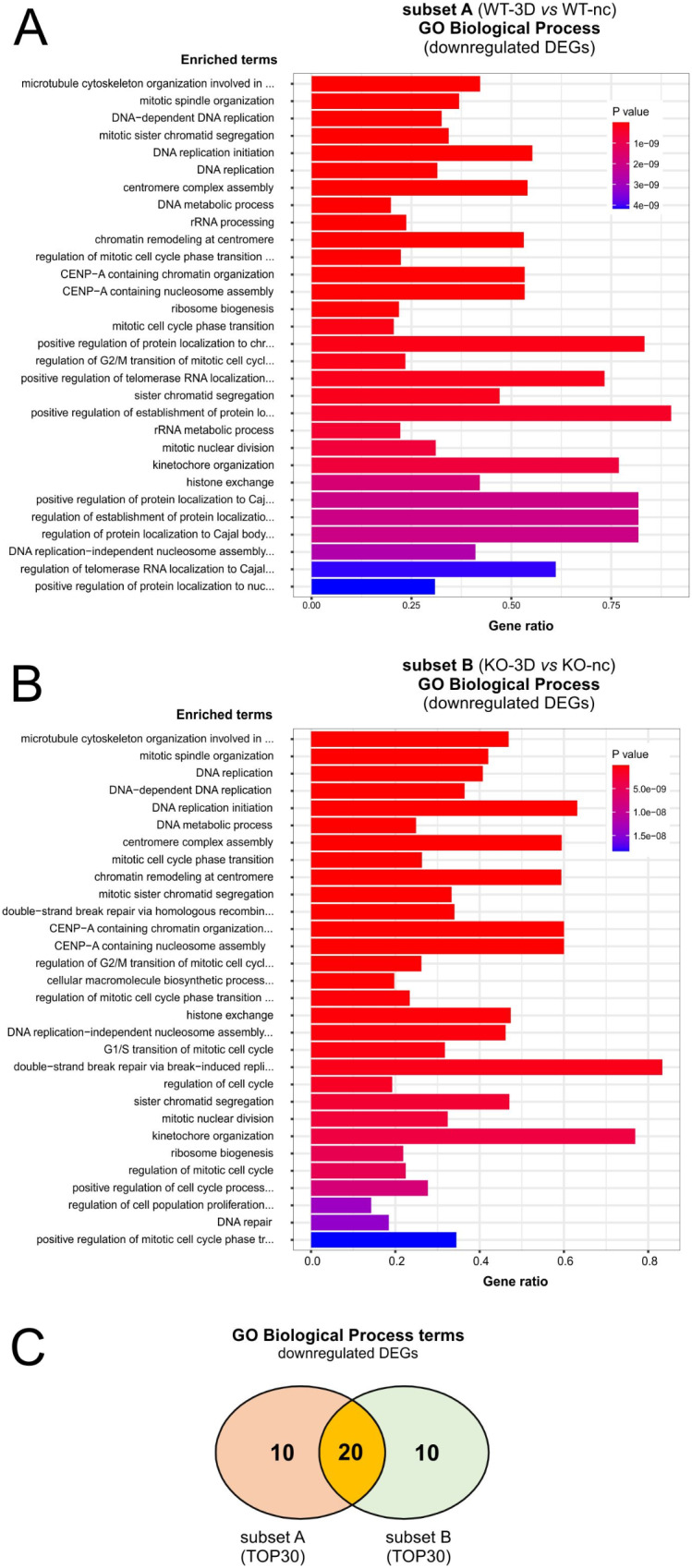
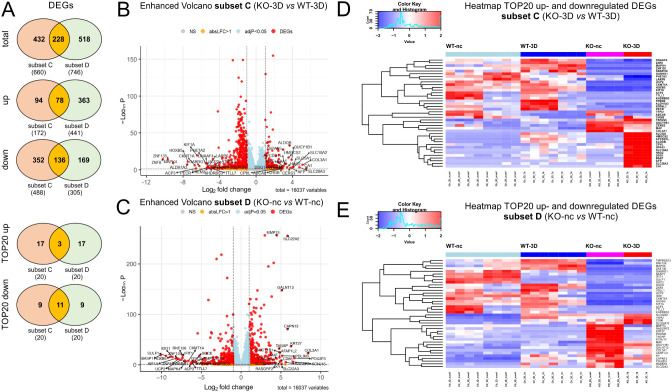
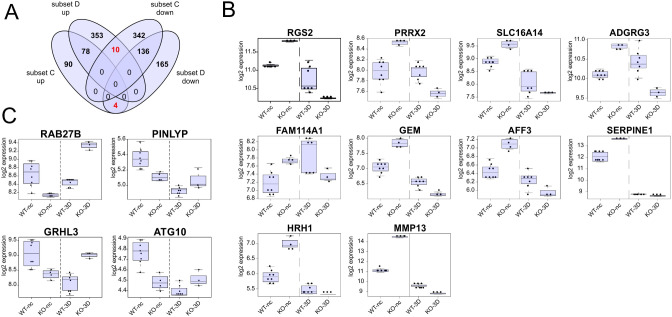
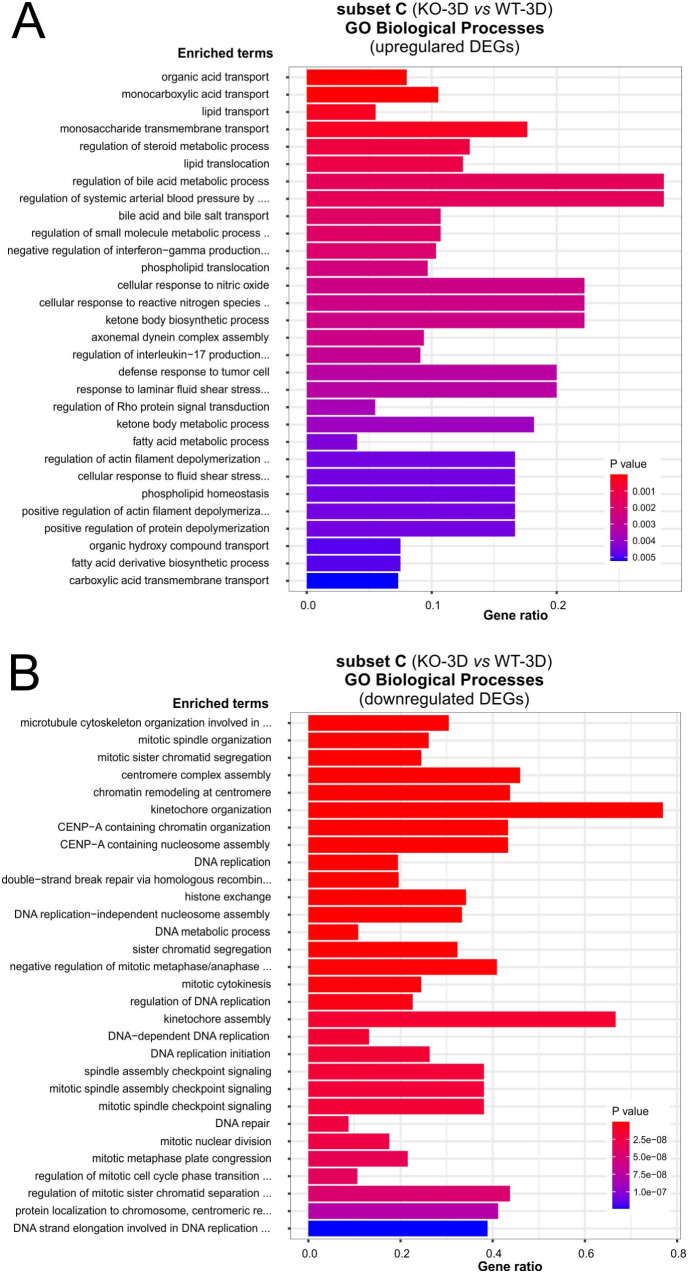
In epithelia, apicobasal cell polarization is closely linked to cell-cell contact formation, both controlled by the conserved Crumbs (CRB) complex, which includes the transmembrane protein Crumbs (CRB3a) and adapter proteins PALS1, PATJ, and LIN7c. In MDCK II cells, a model for cell polarization, depletion of PALS1 - which binds to all CRB components - leads to defective cell polarization and improper distribution of tight junction proteins, resulting in severe epithelial barrier defects in 3D cyst models. This study investigated whether this phenotype is associated with transcriptional changes by analyzing wildtype (WT) and PALS1 knockout (KO) MDCK II cell lines grown under non-confluent conditions and in 3D cyst cultures. Our results indicate that the transition from non-confluent cells to 3D cysts involves numerous differentially expressed genes (DEGs) in both WT and KO cells. Importantly, the analyses revealed significant overlaps between WT and KO cells in their maturation processes, suggesting that most identified DEGs are linked to differentiation from non-confluent to polarized MDCK cells and likely not a result of PALS1 deficiency. Gene Ontology (GO) enrichment and over-representation analyses using REACTOME and KEGG databases confirmed these similarities. In contrast, the direct comparison of WT and KO cells at the two stages showed fewer DEGs and overlaps in associated biological processes and signaling pathways. DEGs associated with the 3D stage, in which the phenotype manifests, contain DEGs and pathways that were predominantly linked to cell cycle linked processes, centromere assembly, or DNA replication. Furthermore, the transcription of genes encoding key junction proteins, additional polarity proteins, and cell-substrate interaction proteins is less affected by the loss of PALS1, indicating that PALS1 influences the transcriptional profiles in epithelial cells as a modulating factor.
在上皮细胞中,顶端-基底细胞极性与细胞-细胞接触的形成密切相关,这两者都受到保守的 Crumbs(CRB)复合物的控制,该复合物包括跨膜蛋白 Crumbs(CRB3a)和衔接蛋白 PALS1、PATJ 和 LIN7c。在 MDCK II 细胞中,作为细胞极化的模型,PALS1 的耗竭 - 它与所有 CRB 成分结合 - 导致细胞极化缺陷和紧密连接蛋白的不当分布,导致 3D 囊肿模型中严重的上皮屏障缺陷。本研究通过分析在非汇合条件下和 3D 囊肿培养物中生长的野生型(WT)和 PALS1 敲除(KO)MDCK II 细胞系,研究了这种表型是否与转录变化相关。我们的结果表明,从非汇合细胞向 3D 囊肿的转变涉及 WT 和 KO 细胞中许多差异表达的基因(DEGs)。重要的是,分析表明 WT 和 KO 细胞在其成熟过程中存在显著重叠,表明大多数鉴定出的 DEGs 与非汇合到极化 MDCK 细胞的分化有关,而不是 PALS1 缺乏的结果。使用 REACTOME 和 KEGG 数据库的基因本体论(GO)富集和过表达分析证实了这些相似性。相比之下,在两个阶段直接比较 WT 和 KO 细胞显示出较少的 DEGs 和相关生物过程和信号通路的重叠。与 3D 阶段相关的 DEGs,其中表型表现出来,包含 DEGs 和途径,这些途径主要与细胞周期相关过程、着丝粒组装或 DNA 复制相关。此外,编码关键连接蛋白、其他极性蛋白和细胞-基质相互作用蛋白的基因的转录受 PALS1 缺失的影响较小,表明 PALS1 作为调节因子影响上皮细胞的转录谱。