Huang Wenchao, Liu Hanxiong, Luo Yan, Xiong Shiqiang, Suo Shuwei, Zhang Zhen, Shang Luxiang, Sun Huaxin
Department of Cardiology, The Third People's Hospital of Chengdu, Chengdu, Sichuan, 610031, People's Republic of China.
Department of Cardiology, The First Affiliated Hospital of Shandong First Medical University and Shandong Provincial Qianfoshan Hospital, Shandong Medicine and Health Key Laboratory of Cardiac Electrophysiology and Arrhythmia, Jinan, Shandong, 250014, People's Republic of China.
J Inflamm Res. 2024 Nov 25;17:9743-9756. doi: 10.2147/JIR.S496590. eCollection 2024.
Serum creatinine and cystatin C levels are influenced by different non-renal factors. The difference between the estimated glomerular filtration rates (eGFRdiff) based on these two markers helps assess cardiovascular risk factors unrelated to kidney function. However, its impact on post-ablation atrial fibrillation (AF) recurrence remains unknown.
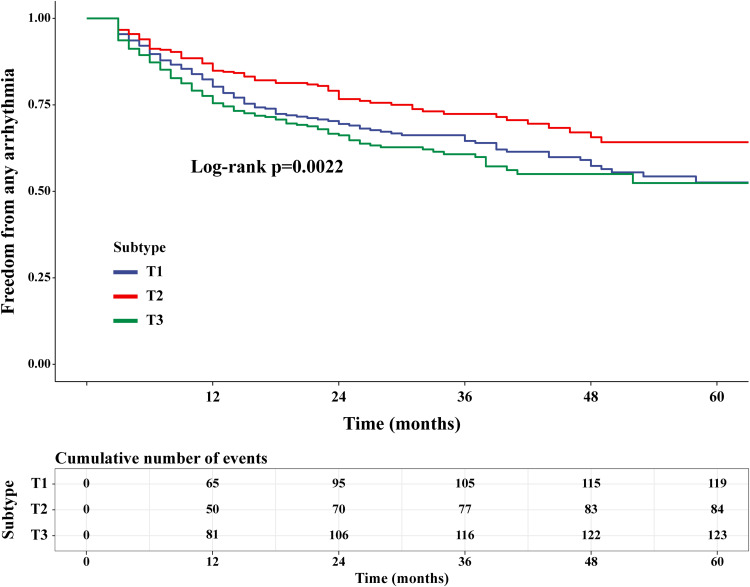
From July 2017 to February 2023, we prospectively observed 989 consecutive AF patients who underwent radiofrequency ablation. The association between eGFRdiff and post-ablation AF recurrence was analyzed using Kaplan-Meier methods, adjusted Cox regression analysis, and restricted cubic spline (RCS) analysis.
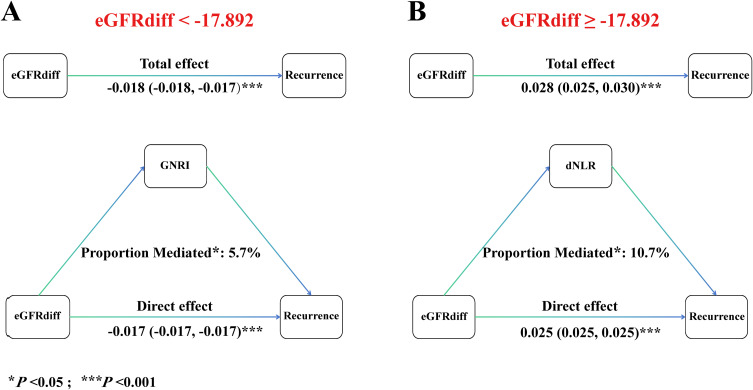
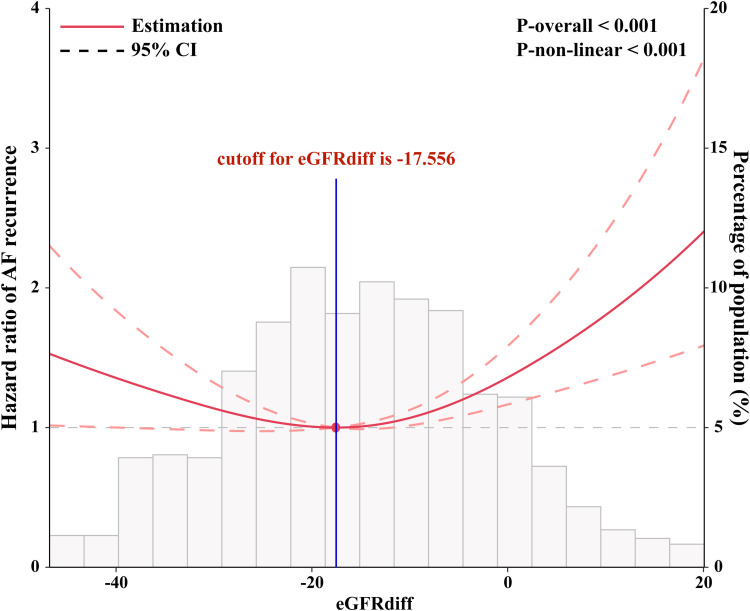
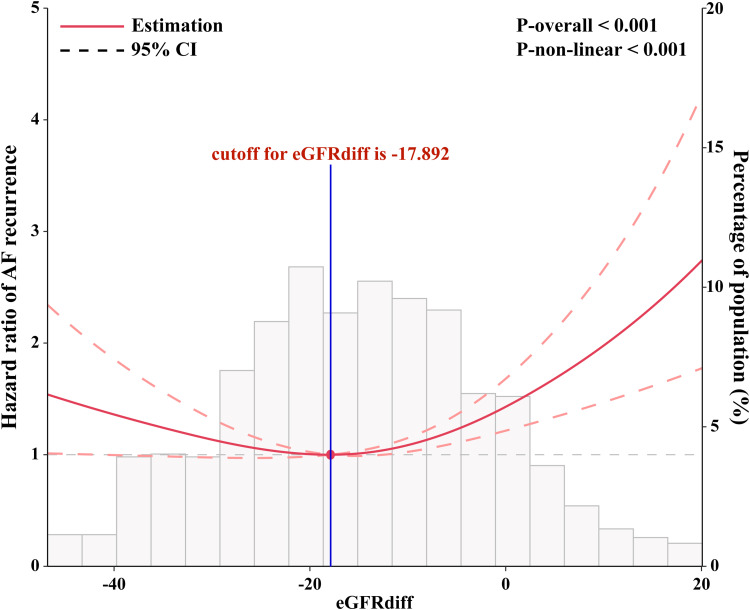
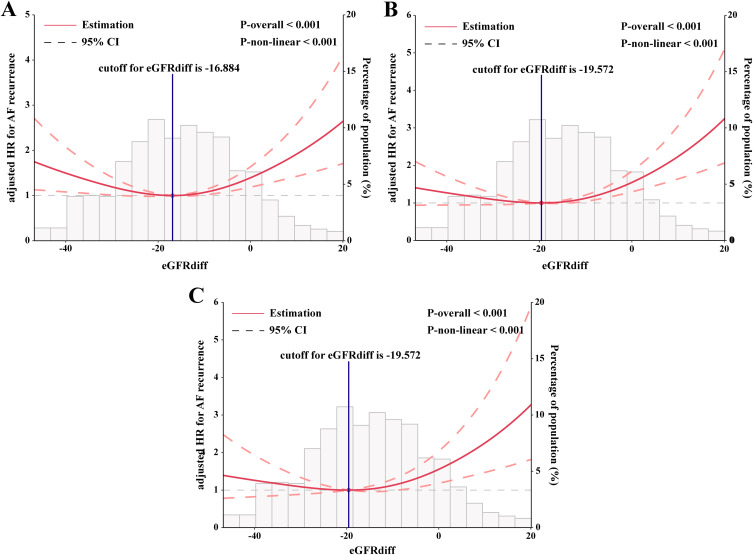
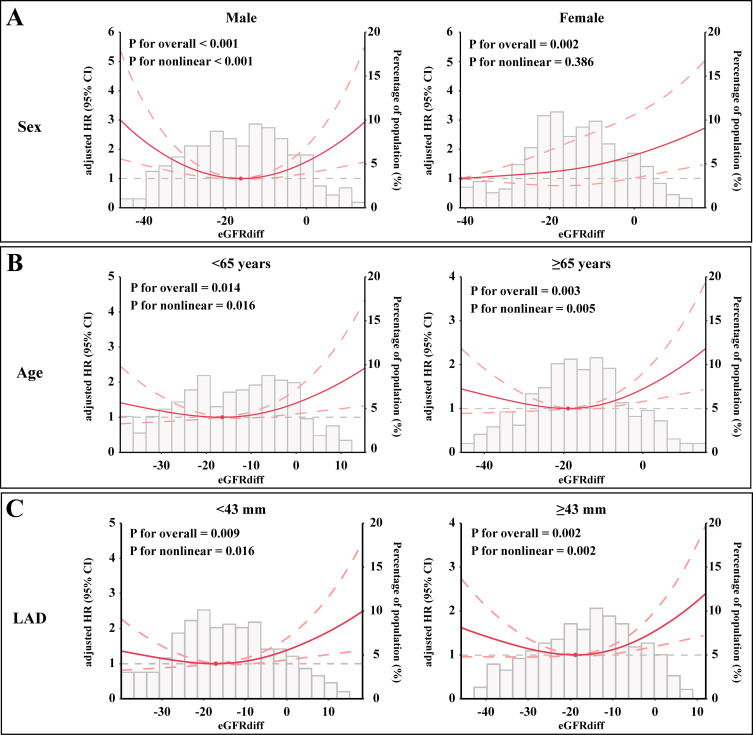
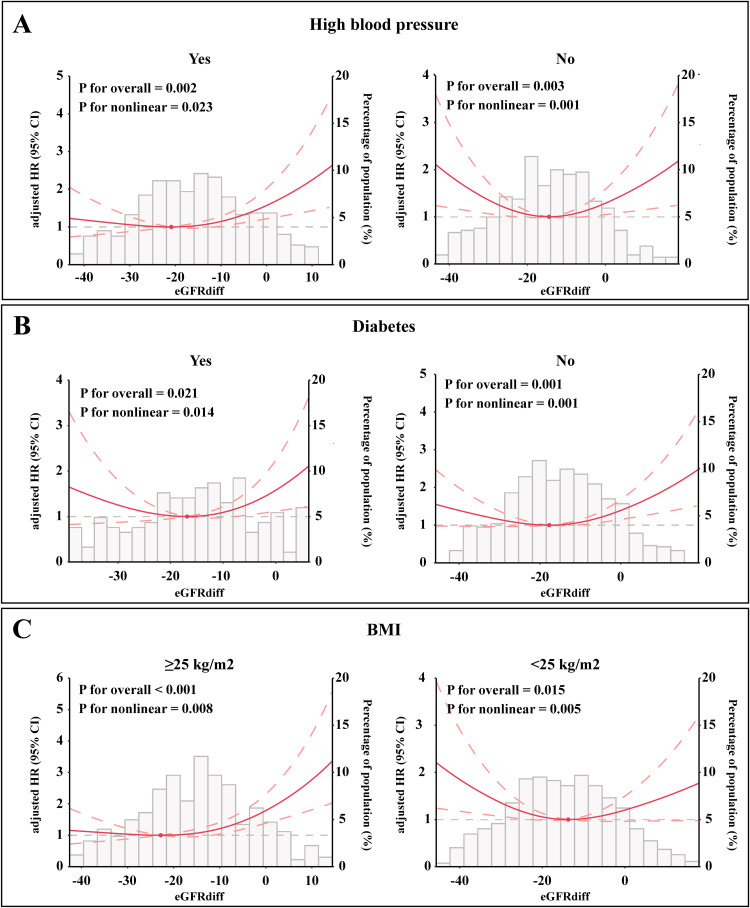
During a median follow-up period of 29 months, 326 cases of AF recurrence were detected. Participants were divided into three groups based on eGFRdiff: high (≥ -9.22), medium (-20.98 to -9.22), and low (≤ -20.98). Multivariable Cox proportional hazards models revealed that, compared to the medium eGFRdiff group, individuals in the low eGFRdiff group (hazard ratio [HR] 1.46, 95% confidence interval [CI] 1.08-1.94, p < 0.01) and the high eGFRdiff group (HR 1.69, 95% CI 1.27-2.27, p < 0.01) had a significantly increased risk of AF recurrence. RCS analysis demonstrated a U-shaped association between eGFRdiff and AF recurrence. Stratified analyses confirmed the robustness of the core findings across subgroups, except for females. Notably, the geriatric nutritional risk index and the derived neutrophil-to-lymphocyte ratio partially mediated the association between eGFRdiff and high AF recurrence by 5.7% and 10.7%, respectively.
eGFRdiff is related to individual nutritional and inflammatory statuses and can be used to predict the risk of AF recurrence. (Clinical trial registration number: ChiCTR-OIN-17013021).
血清肌酐和胱抑素C水平受不同非肾脏因素影响。基于这两种标志物的估算肾小球滤过率差异(eGFRdiff)有助于评估与肾功能无关的心血管危险因素。然而,其对消融术后房颤(AF)复发的影响尚不清楚。
2017年7月至2023年2月,我们前瞻性观察了989例连续接受射频消融的房颤患者。采用Kaplan-Meier法、校正Cox回归分析和限制性立方样条(RCS)分析,分析eGFRdiff与消融术后房颤复发之间的关联。
在中位随访期29个月期间,检测到326例房颤复发。根据eGFRdiff将参与者分为三组:高(≥ -9.22)、中(-20.98至-9.22)和低(≤ -20.98)。多变量Cox比例风险模型显示,与中等eGFRdiff组相比,低eGFRdiff组(风险比[HR] 1.46,95%置信区间[CI] 1.08-1.94,p < 0.01)和高eGFRdiff组(HR 1.69,95% CI 1.27-2.27,p < 0.01)的房颤复发风险显著增加。RCS分析显示eGFRdiff与房颤复发之间呈U形关联。分层分析证实了核心研究结果在各亚组中的稳健性,但女性除外。值得注意的是老年营养风险指数和衍生的中性粒细胞与淋巴细胞比值分别部分介导了eGFRdiff与高房颤复发之间5.7%和10.7%的关联。
eGFRdiff与个体营养和炎症状态相关,可用于预测房颤复发风险。(临床试验注册号:ChiCTR-OIN-17013021)