Nguyen Thanh Nhan, Winkler Carine, Ginster Stefanie, Claudinot Stéphanie, Michalik Liliane, Jafari Paris
Center for Integrative Genomics, University of Lausanne, Lausanne, Switzerland.
FASEB J. 2024 Dec 15;38(23):e70212. doi: 10.1096/fj.202401950R.
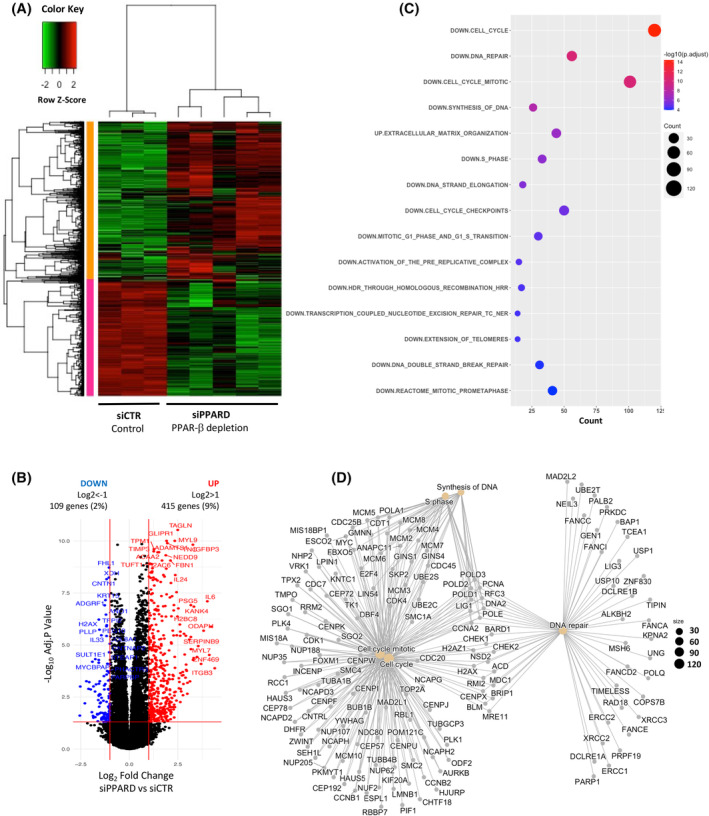
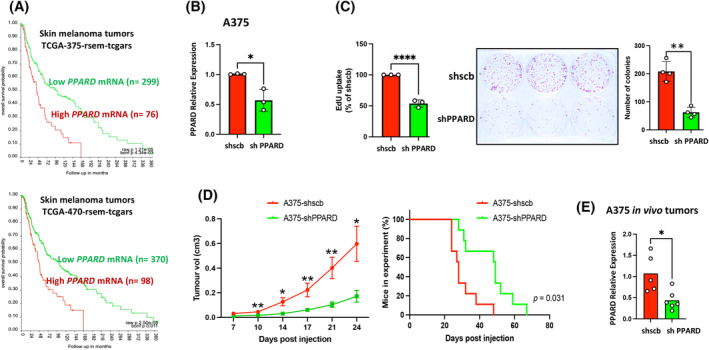
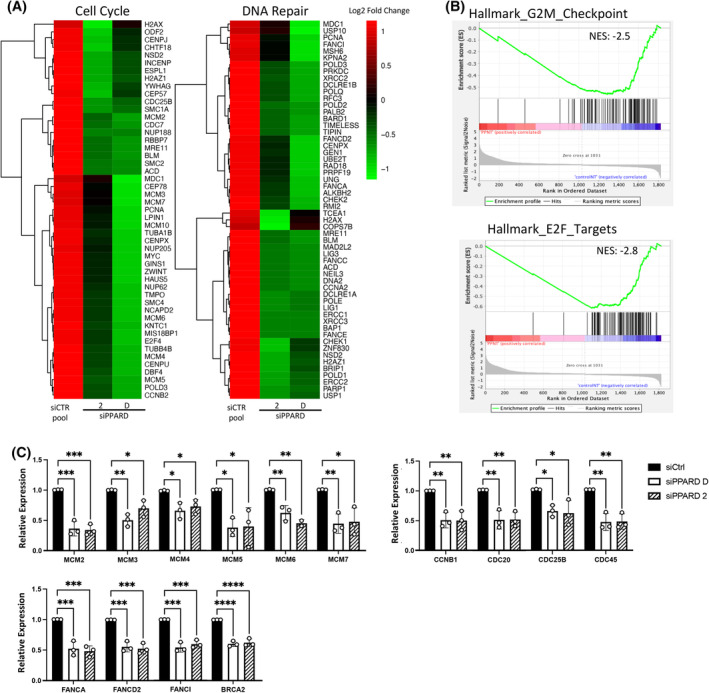
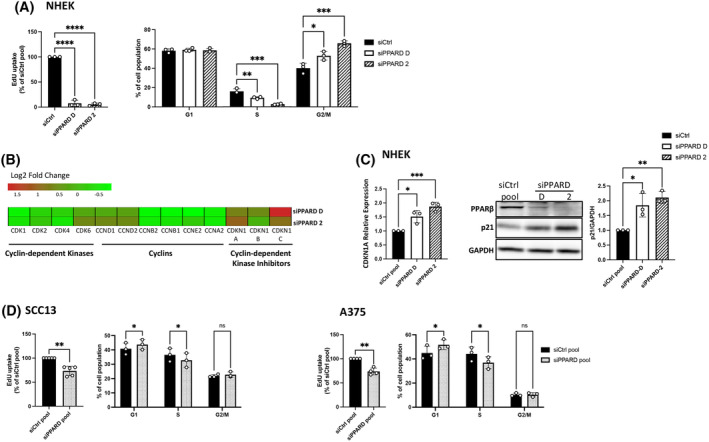
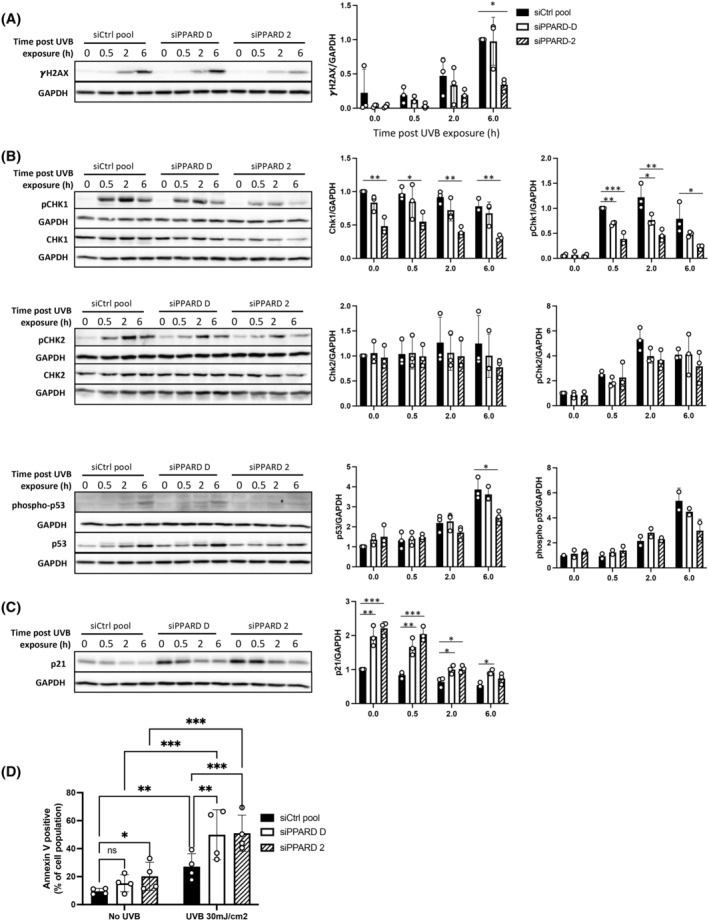
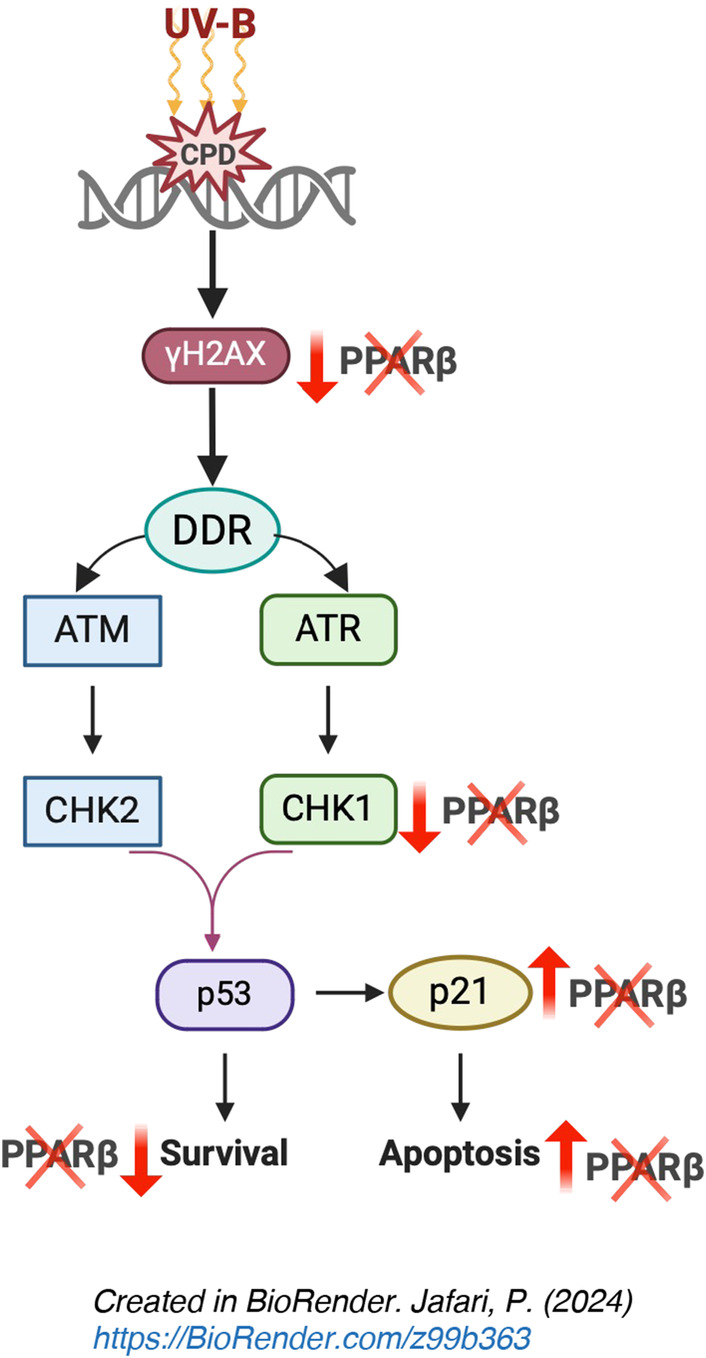
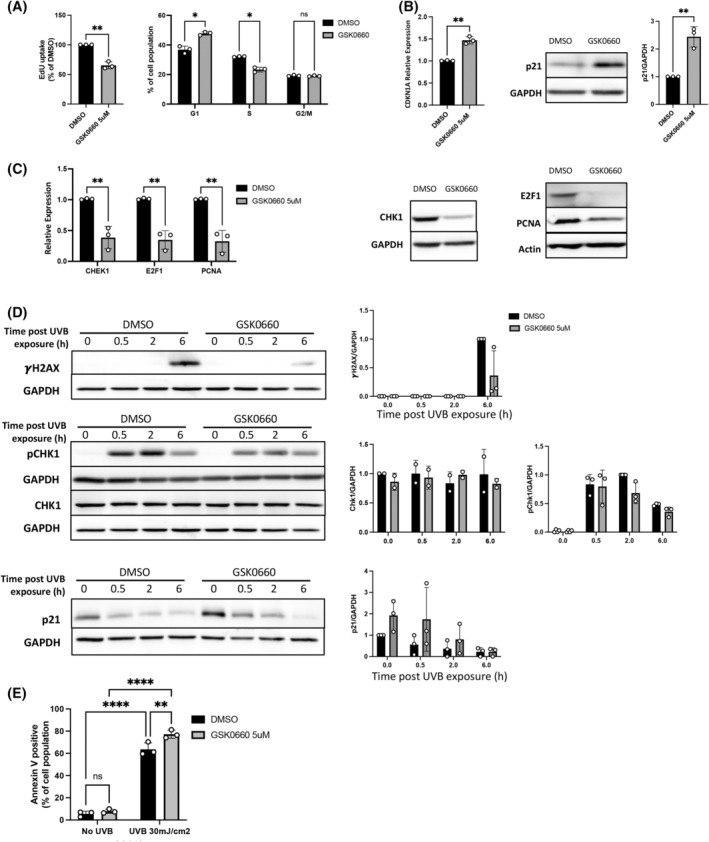
Solar radiation is the main source of human exposure to UV rays, which is the major carcinogen in skin cancers by inducing DNA damage. Skin cells repair these damages by activating the DNA damage response (DDR) to safeguard genome integrity, thereby preventing skin cancers. Peroxisome proliferator-activated receptor beta (PPARβ), a druggable transcription factor, is involved in the development of UV-dependent skin cancers, although its role is not mechanistically elucidated. We showed previously that PPARβ knockout (KO) mice are less prone to UV-induced skin cancers. Here, we report that PPARβ directly regulates gene expression programs associated with cell cycle and DNA repair pathways in normal human epidermal keratinocytes (NHEK). The loss of function of PPARβ in human keratinocytes led to a downregulation in the expression of key cell cycle regulators, including cyclins and cyclin-dependent kinases (CDKs). Simultaneously, it upregulated the expression of p21 protein, a known CDK inhibitor. These molecular alterations resulted in a significant reduction in cell proliferation and induced cell cycle arrest at the G2/M phase. Moreover, the absence of functional PPARβ disrupted the expression and activation of the ataxia telangiectasia and Rad3-related (ATR) pathway, a critical component of the cellular response to UV-induced DNA damage. The alterations in the ATR pathway likely contributed to an increased apoptotic response of NHEK to UV radiation. Using a mouse melanoma model, we demonstrated that the depletion of PPARβ decreases tumorigenicity of melanoma cells and delays tumor formation. Our data suggest that PPARβ inhibition could be considered as a therapeutic target for the prevention of UV-induced skin cancers, by regulating cell proliferation, attenuating DDR, and eliminating skin cells with high UV-induced mutational burden.
太阳辐射是人类暴露于紫外线的主要来源,紫外线是通过诱导DNA损伤导致皮肤癌的主要致癌物。皮肤细胞通过激活DNA损伤反应(DDR)来修复这些损伤,以维护基因组完整性,从而预防皮肤癌。过氧化物酶体增殖物激活受体β(PPARβ)是一种可成药的转录因子,参与紫外线依赖性皮肤癌的发生,尽管其作用机制尚未阐明。我们之前表明,PPARβ基因敲除(KO)小鼠不易患紫外线诱导的皮肤癌。在此,我们报告PPARβ直接调节正常人表皮角质形成细胞(NHEK)中与细胞周期和DNA修复途径相关的基因表达程序。人角质形成细胞中PPARβ功能的丧失导致关键细胞周期调节因子(包括细胞周期蛋白和细胞周期蛋白依赖性激酶(CDK))的表达下调。同时,它上调了已知的CDK抑制剂p21蛋白的表达。这些分子改变导致细胞增殖显著减少,并诱导细胞周期在G2/M期停滞。此外,功能性PPARβ的缺失破坏了共济失调毛细血管扩张症和Rad3相关(ATR)途径的表达和激活,ATR途径是细胞对紫外线诱导的DNA损伤反应的关键组成部分。ATR途径的改变可能导致NHEK对紫外线辐射的凋亡反应增加。使用小鼠黑色素瘤模型,我们证明PPARβ的耗竭降低了黑色素瘤细胞的致瘤性并延迟了肿瘤形成。我们的数据表明,通过调节细胞增殖、减弱DDR以及消除具有高紫外线诱导突变负担的皮肤细胞,PPARβ抑制可被视为预防紫外线诱导的皮肤癌的治疗靶点。