Schlecht Jennifer, König Jochem, Kuhle Stefan, Urschitz Michael S
Institute of Medical Biostatistics, Epidemiology and Informatics, University Medical Centre of the Johannes Gutenberg-University Mainz, Mainz, Germany.
Institute of Clinical Epidemiology, Public Health, Health Economics, Medical Statistics and Informatics, Medical University of Innsbruck, Innsbruck, Austria.
BMJ Paediatr Open. 2024 Dec 3;8(1):e002987. doi: 10.1136/bmjpo-2024-002987.
Children with special healthcare needs (SHCN) due to a chronic health condition perform more poorly at school compared with their classmates. We aimed to estimate the effects of past, current, transient, emerging and persistent SHCN on school performance in primary school children.
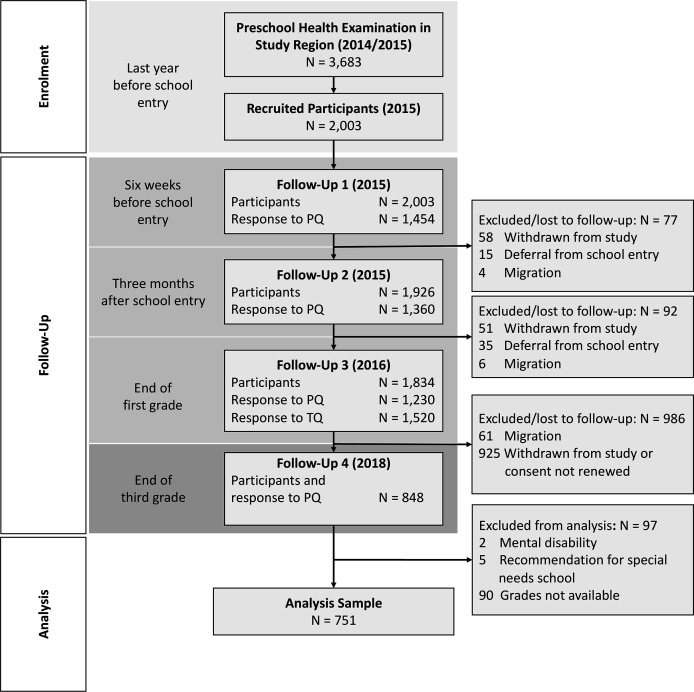
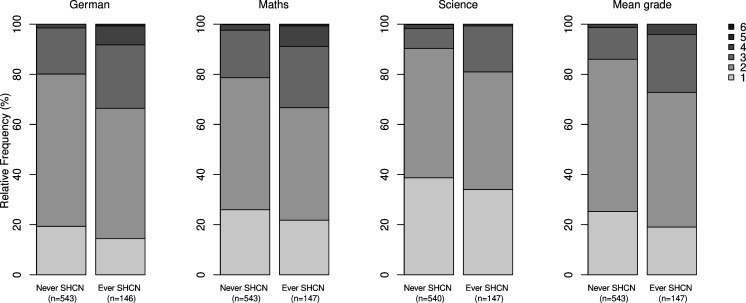
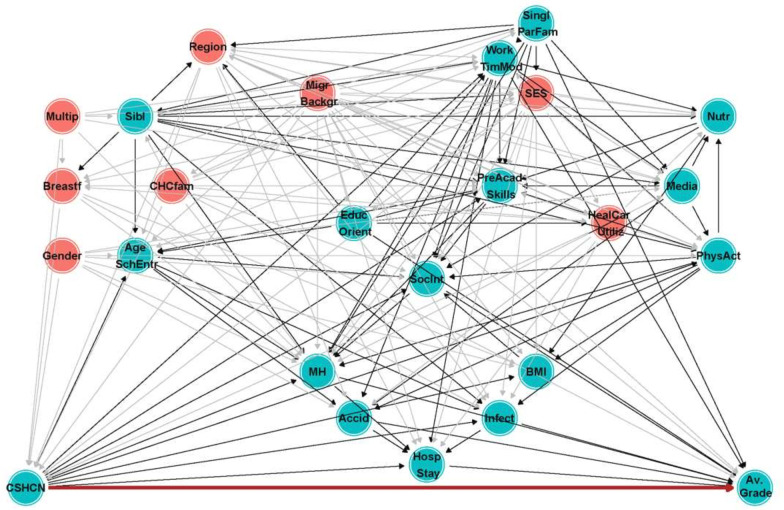
Data from the German population-based prospective cohort study ikidS were used. The children withSHCN screener was administered before school entry (T1) and at the end of first (T2) and third grade (T3). Grades for German, maths and science (range: 1 (Very Good) to 6 (Failure)) were obtained at the end of third grade (age 8-9 years), and an average grade was calculated. Associations between the timing of SHCN and average grade were estimated by mixed linear regression models adjusted for potential confounding variables.
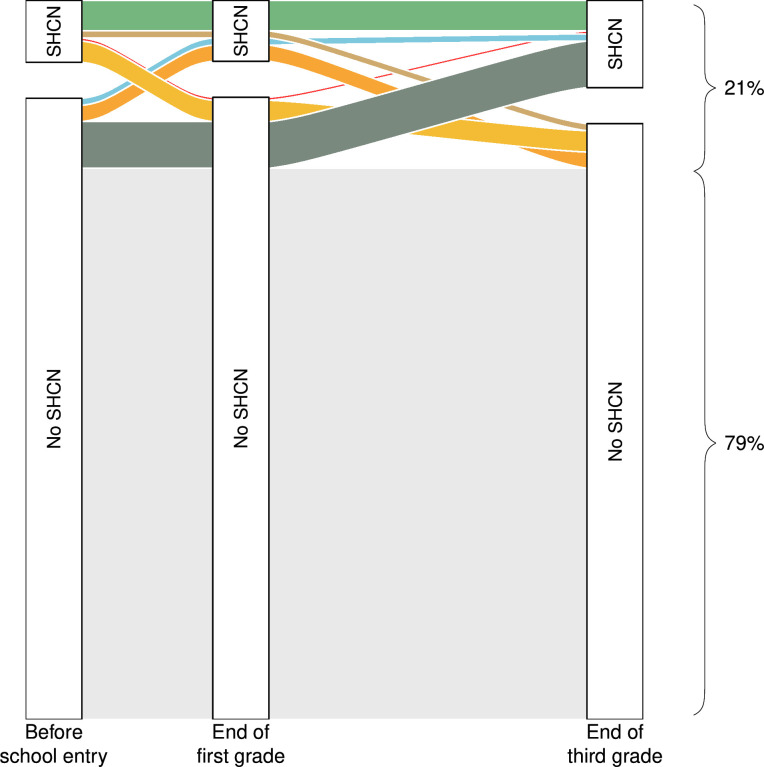
751 children were included, and 21% had ever SHCN. Children with ever SHCN had poorer school performance than children with never SHCN (adjusted mean difference in average grade [95% CI]: 0.17 [0.06; 0.28]). SHCN in the third year were associated with a poorer average grade (0.29 [0.16; 0.41]) compared with healthy children. Only emerging (0.31 [0.15; 0.48]) and persistent (0.25 [0.07; 0.43]) SHCN were associated with average grade.
This study demonstrates the negative effect of current, emerging and persistent SHCN on academic performance in primary school children. Consequently, students should be regularly assessed for SHCN during school age. Timely interventions may help reduce the adverse effects of chronic health conditions on academic achievements in childhood.
患有慢性健康状况的特殊医疗需求儿童(SHCN)在学校的表现比其同学更差。我们旨在评估过去、当前、短暂性、新出现和持续性SHCN对小学生学业成绩的影响。
使用来自德国基于人群的前瞻性队列研究ikidS的数据。在入学前(T1)、一年级末(T2)和三年级末(T3)对儿童进行SHCN筛查。在三年级末(8 - 9岁)获取德语、数学和科学成绩(范围:1(非常好)至6(不及格)),并计算平均成绩。通过针对潜在混杂变量进行调整的混合线性回归模型估计SHCN发生时间与平均成绩之间的关联。
纳入751名儿童,21%曾有SHCN。曾有SHCN的儿童学业成绩比从未有过SHCN的儿童差(平均成绩的调整均值差异[95%置信区间]:0.17[0.06;0.28])。与健康儿童相比,三年级出现的SHCN与较差的平均成绩相关(0.29[0.16;0.41])。只有新出现的(0.31[0.15;0.48])和持续性的(0.25[0.07;0.43])SHCN与平均成绩相关。
本研究证明了当前、新出现和持续性SHCN对小学生学业成绩的负面影响。因此,应在学龄期定期对学生进行SHCN评估。及时干预可能有助于减少慢性健康状况对儿童学业成绩的不利影响。