Mekonnen Negesse, Seo Myeung-Ryun, Yang Hobin, Chelakkot Chaithanya, Choi Jun Young, Hong Sungyoul, Song Kyoung, Shin Young Kee
Research Institute of Pharmaceutical Science, Department of Pharmacy, Seoul National University, College of Pharmacy, Seoul 08826, Republic of Korea.
Department of Veterinary Science, School of Animal Science and Veterinary Medicine, Bahir Dar University, Bahir Dar 7676, Ethiopia.
Biomol Ther (Seoul). 2025 Jan 1;33(1):155-169. doi: 10.4062/biomolther.2024.071. Epub 2024 Dec 5.
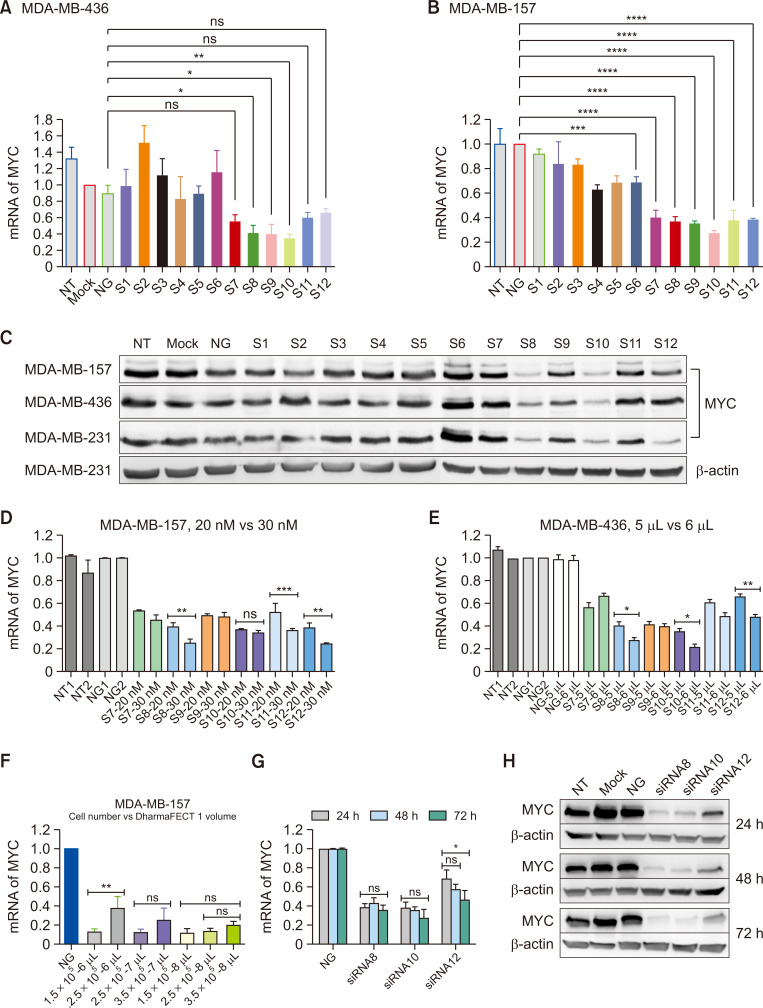
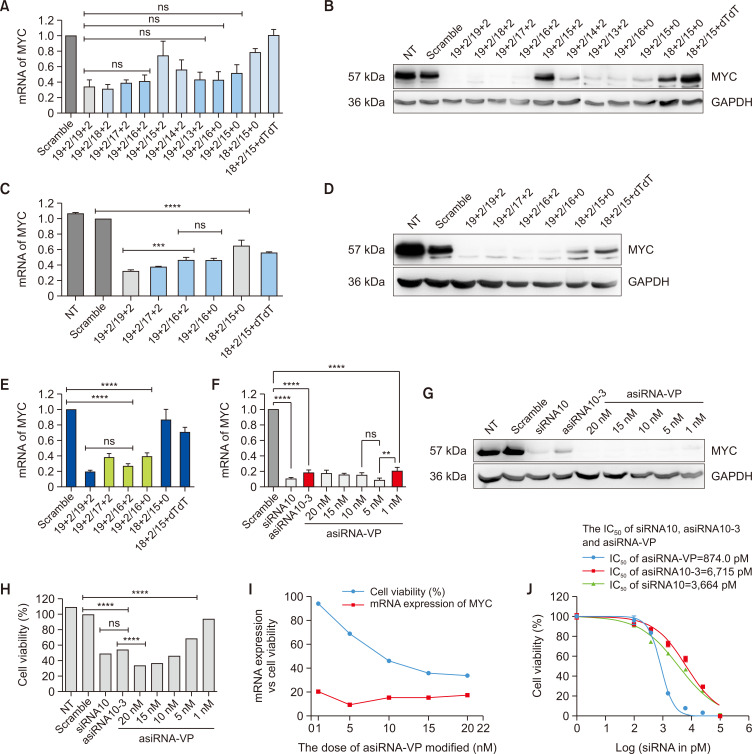
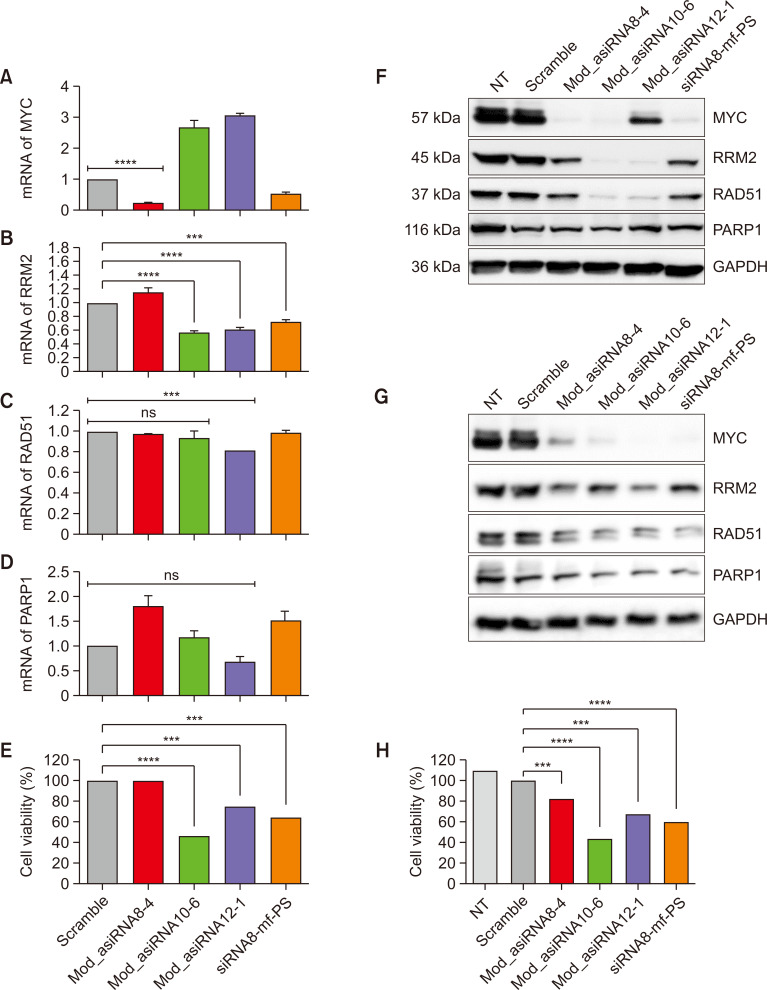
Triple-negative breast cancer (TNBC) is a subtype of breast cancer that lacks hormone receptor and Her2 (ERBB2) expression, leaving chemotherapy as the only treatment option. The urgent need for targeted therapy for TNBC patients has led to the investigation of small interfering RNAs (siRNAs), which can target genes in a sequence-specific manner, unlike other drugs. However, the clinical translation of siRNAs has been hindered by the lack of an effective delivery system, except in the case of liver diseases. The MYC oncogene is commonly overexpressed in TNBC compared to other breast cancer subtypes. In this study, we used siRNA to target MYC in MDA-MB-231, MDA-MB-157, MDA-MB-436 and Hs-578T cells. We designed various symmetric and asymmetric (asiRNAs), screened them for efficacy, modified them for enhanced nuclease resistance and reduced off-target effects, and conjugated them with cholesterol (ChoL) and docosanoic acid (DCA) as a delivery system. DCA was conjugated to the 3' end of asiRNA by a cleavable phosphodiester linker for delivery. Our findings demonstrated that asiRNA-VP and Mod_asiRNA10-6 efficiently downregulated MYC and its downstream targets, including RRM2, RAD51 and PARP1. Moreover, in a tumor xenograft model, asiRNA-VP-DCA effectively knocked down MYC mRNA and protein expression. Remarkably, durable knockdown persisted for at least 46 days postdosing in mouse tumor xenografts, with no visible signs of toxicity, underscoring the safety of DCA-conjugated asiRNAs. In conclusion, this study developed novel asiRNAs, design platforms, validated modification patterns, and delivery systems specifically targeting MYC in TNBC.
三阴性乳腺癌(TNBC)是一种乳腺癌亚型,缺乏激素受体和Her2(ERBB2)表达,使得化疗成为唯一的治疗选择。TNBC患者对靶向治疗的迫切需求促使人们对小干扰RNA(siRNA)进行研究,与其他药物不同,siRNA可以以序列特异性方式靶向基因。然而,除了在肝脏疾病的情况下,siRNA的临床转化一直受到缺乏有效递送系统的阻碍。与其他乳腺癌亚型相比,MYC癌基因在TNBC中通常过度表达。在本研究中,我们使用siRNA在MDA-MB-231、MDA-MB-157、MDA-MB-436和Hs-578T细胞中靶向MYC。我们设计了各种对称和不对称(asiRNA),筛选其有效性,对其进行修饰以增强核酸酶抗性并减少脱靶效应,并将它们与胆固醇(ChoL)和二十二烷酸(DCA)偶联作为递送系统。DCA通过可裂解的磷酸二酯接头与asiRNA的3'端偶联用于递送。我们的研究结果表明,asiRNA-VP和Mod_asiRNA10-6有效地下调了MYC及其下游靶点,包括RRM2、RAD51和PARP1。此外,在肿瘤异种移植模型中,asiRNA-VP-DCA有效地敲低了MYC mRNA和蛋白质表达。值得注意的是,在小鼠肿瘤异种移植中给药后至少46天持续存在持久的敲低,没有明显的毒性迹象,强调了DCA偶联的asiRNA的安全性。总之,本研究开发了新型asiRNA、设计平台,验证了修饰模式以及专门靶向TNBC中MYC的递送系统。