Huang Guangping, Li Wei, Liu Yun, Zhou Jiang, Wei Fuwen
Jiangxi Provincial Key Laboratory of Conservation Biology, College of Forestry, Jiangxi Agricultural University, Nanchang 330045, China.
School of Life Sciences, Guizhou Normal University, Guiyang 550001, China.
iScience. 2024 Nov 8;27(12):111352. doi: 10.1016/j.isci.2024.111352. eCollection 2024 Dec 20.
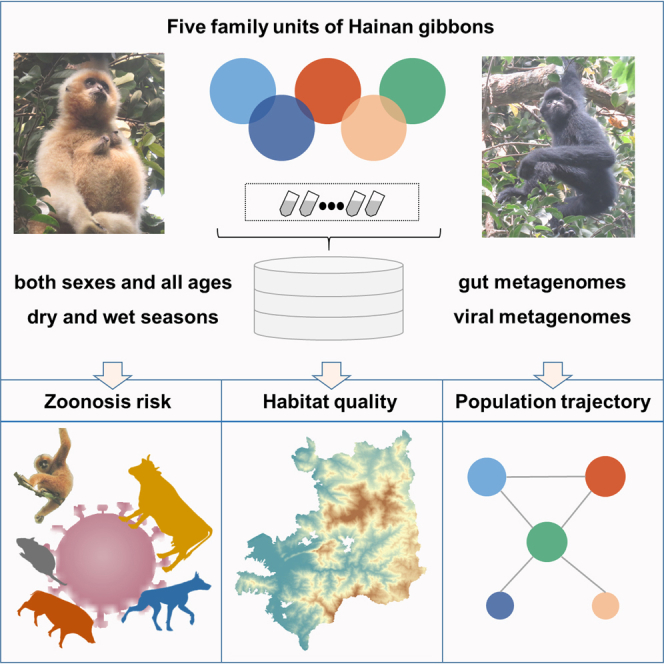
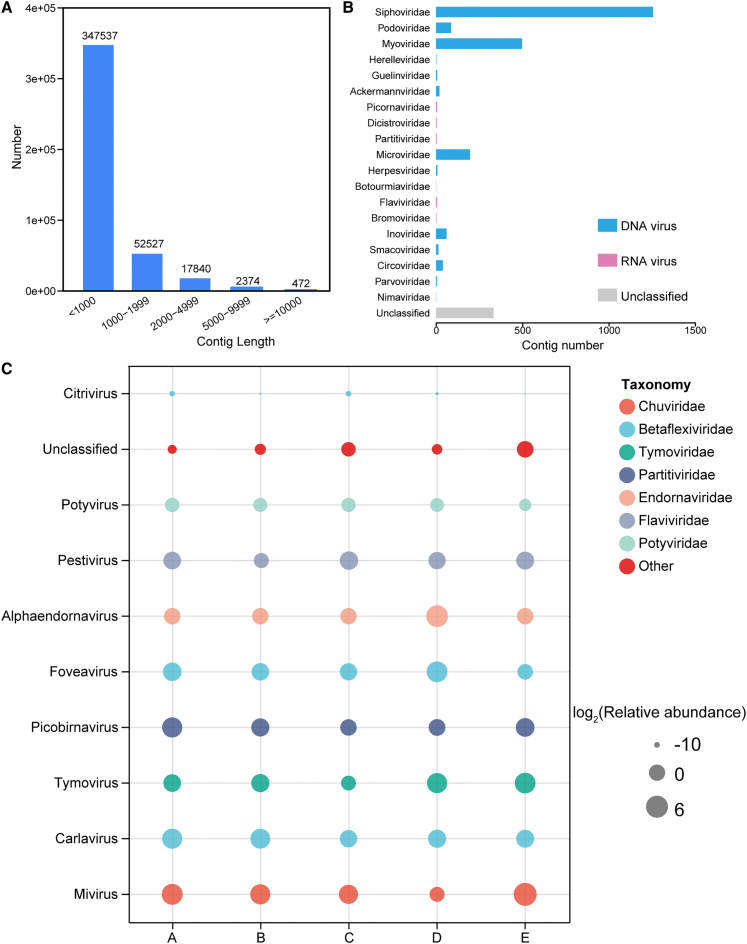
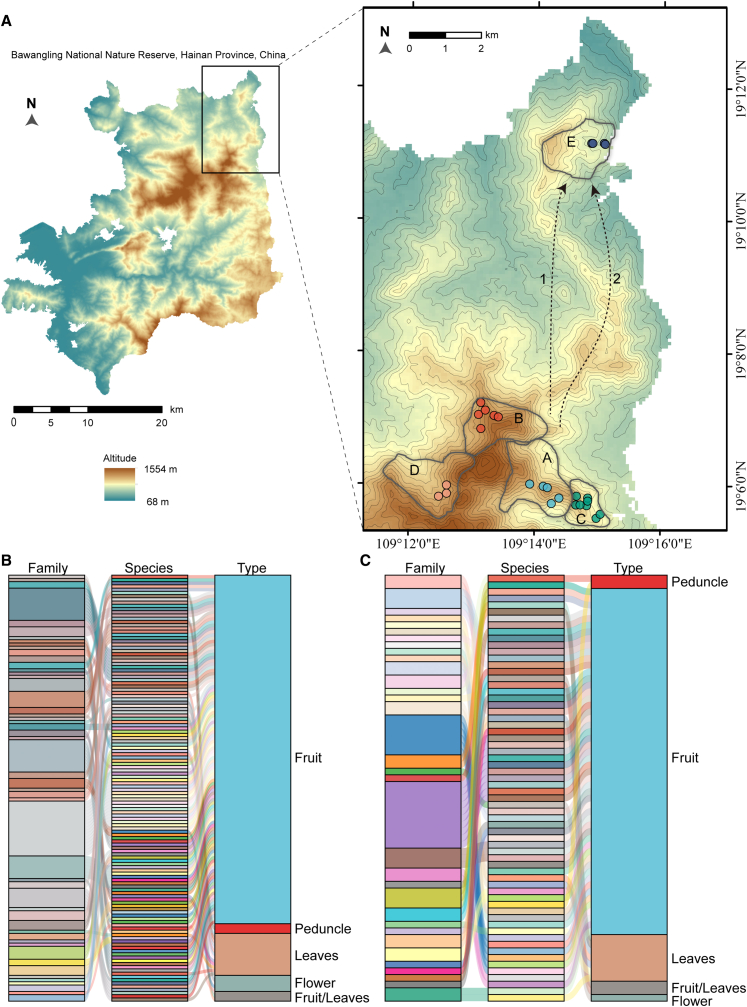
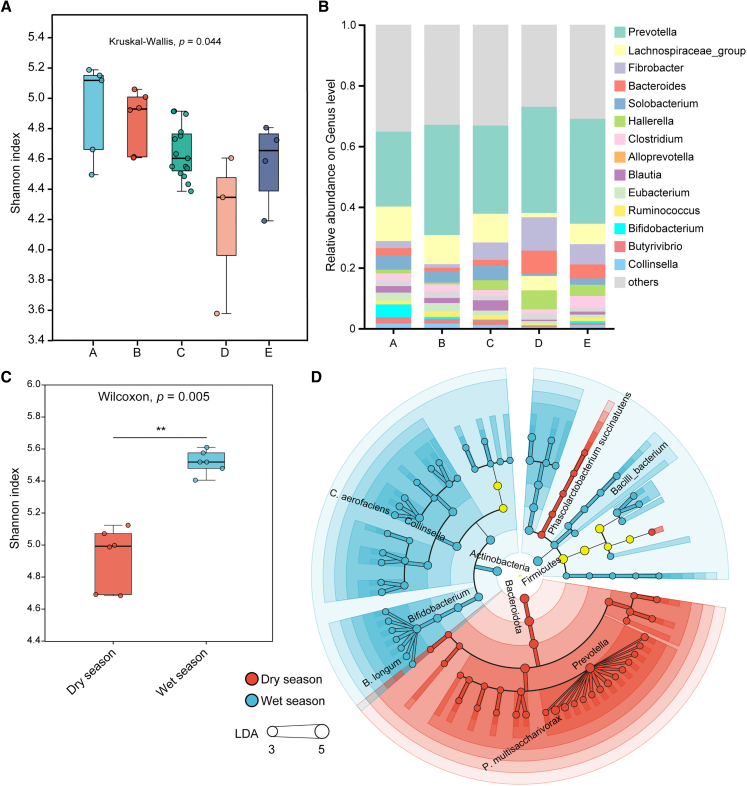
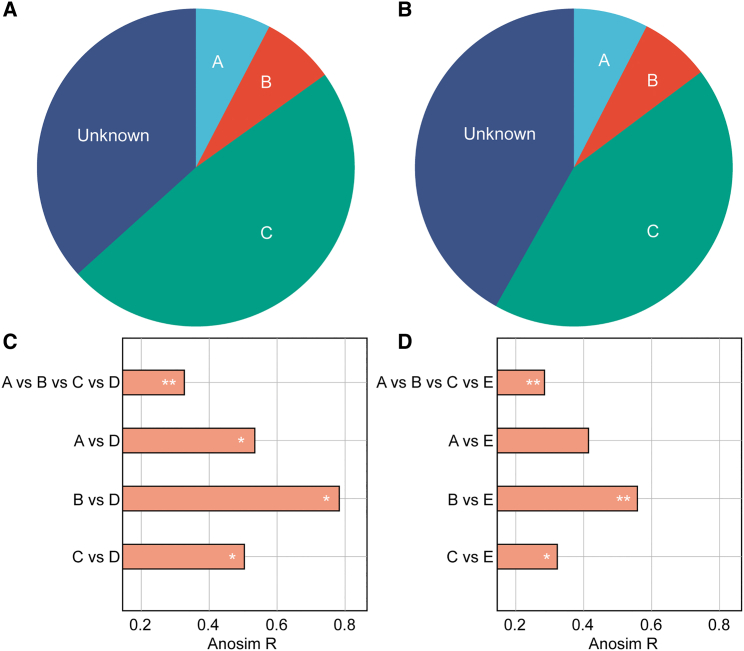
Little is known about the population health status of the world's rarest primate, the Hainan gibbon. Here, the largest gut microbiome dataset yet constructed was generated from all five extant breeding groups of the Hainan gibbons, with 42 samples from individuals spanning all ages and sexes, in addition to dry and wet seasons. Groups A and B exhibited higher diversity of gut microbiota and food resources, in contrast to the subsequently established Groups C, D, and E. Significantly, Group C demonstrated the lowest gut microbial diversity and higher abundance of vector-related , which may be attributed to their proximity to the primary forest edge and the village. We also inferred the origin and possible dispersal paths of the newly established Group E. These findings indicate that Hainan gibbons are still facing viral zoonosis and the threat of extinction, as illuminated by an understanding of the gut microbiome and habitat landscape ecology.
对于世界上最稀有的灵长类动物海南长臂猿的种群健康状况,我们所知甚少。在此,我们从海南长臂猿现存的所有五个繁殖群体中生成了迄今构建的最大的肠道微生物组数据集,除了旱季和雨季外,还包括来自所有年龄和性别的个体的42个样本。与随后建立的C、D和E组相比,A组和B组表现出更高的肠道微生物群多样性和食物资源多样性。值得注意的是,C组的肠道微生物多样性最低,与媒介相关的微生物丰度较高,这可能归因于它们靠近原始森林边缘和村庄。我们还推断了新建立的E组的起源和可能的扩散路径。这些发现表明,通过对肠道微生物组和栖息地景观生态学的理解可以看出,海南长臂猿仍面临着病毒性人畜共患病和灭绝的威胁。