Grötsch Maria Katharina, Ehlert Ulrike
Clinical Psychology and Psychotherapy, University of Zurich, Zürich, Switzerland.
Front Behav Neurosci. 2024 Nov 21;18:1499416. doi: 10.3389/fnbeh.2024.1499416. eCollection 2024.
Allopregnanolone (ALLO), a neuroactive steroid hormone derived from progesterone, can modulate mood via the GABA-A receptor. Peripartum mood can be influenced by psychosocial factors, previous mental illness, and hormonal changes. Studies suggest a U-shaped effect of ALLO on mood, with some women being more sensitive to hormonal changes than others. However, research in the peripartum is inconclusive.
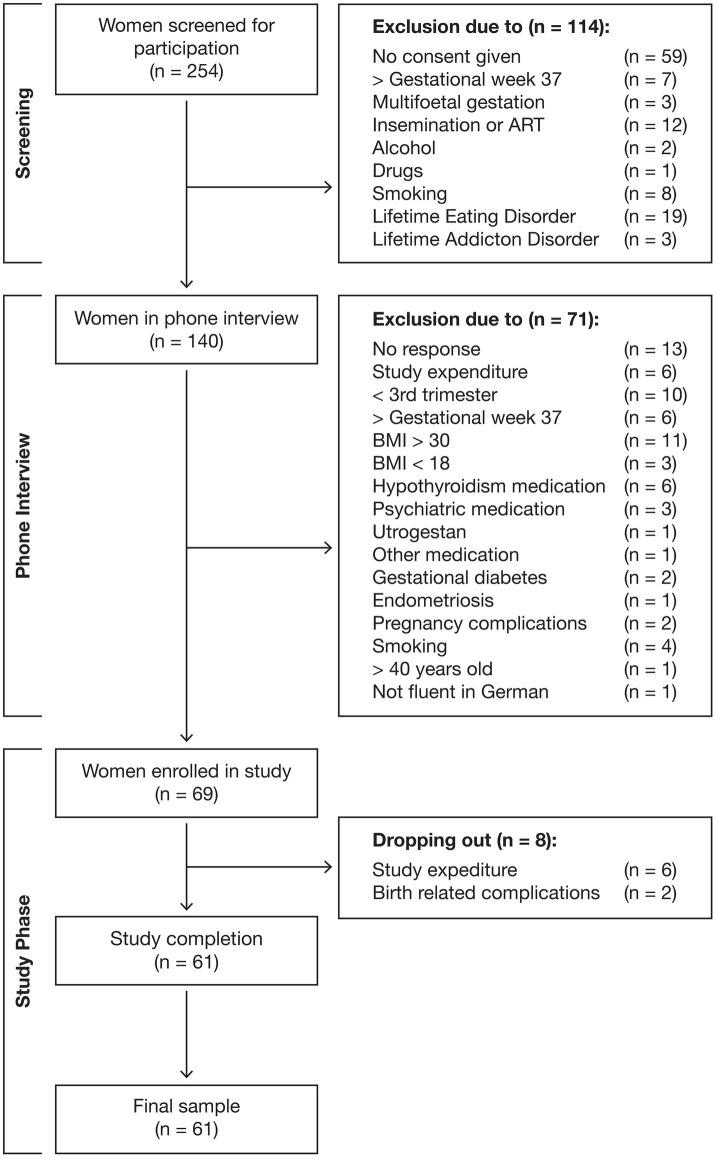
This study explored the link between salivary ALLO and mood during the peripartum. Over 12 weeks, N = 61 women completed the Edinburgh Postnatal Depression Scale and the State Anxiety subscale from the State-Trait Anxiety Inventory and provided saliva samples. Salivary ALLO was analyzed using an enzyme-linked immunosorbent assay, validated for saliva samples. Group-based trajectory modeling was performed to identify trajectories of ALLO courses. Multinomial logistic regression models were employed to identify risk factors associated with these trajectories.
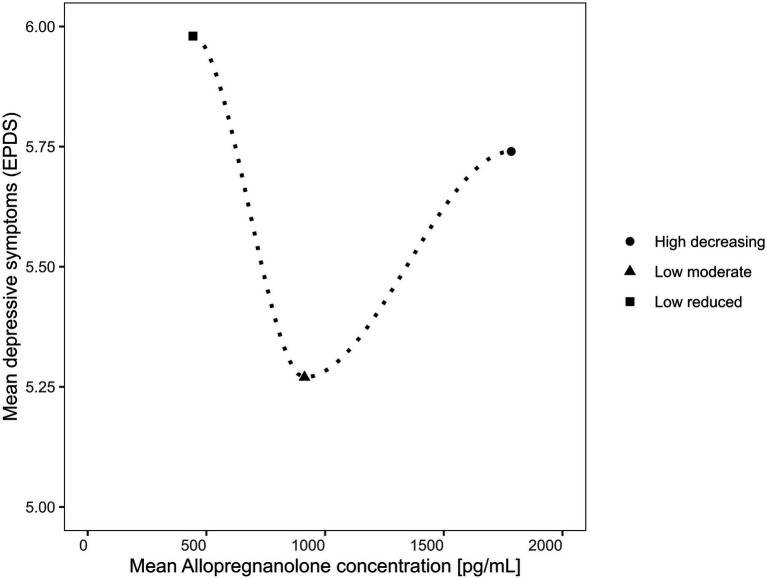
ALLO levels increased during pregnancy and dropped 2 weeks before delivery. Three different trajectory groups of ALLO courses emerged (high decreasing, low moderate, low reduced). Trajectory groups were associated with distinct psychological risk factors, including previous mental illness, adverse childhood experiences, sleep problems, premenstrual symptoms, and resilience. The peripartum ALLO course showed a negative linear association with anxiety symptoms and a U-shaped association with depressive symptoms.
The consideration of individual ALLO courses can predict the risk for peripartum mood symptoms, particularly among women with preexisting risk factors. While the majority of women remain healthy during the peripartum transition, analyzing ALLO subgroups helps to provide a better understanding of the relationship between ALLO and peripartum mood.
别孕烯醇酮(ALLO)是一种由孕酮衍生而来的神经活性甾体激素,可通过γ-氨基丁酸A受体调节情绪。围产期情绪会受到社会心理因素、既往精神疾病和激素变化的影响。研究表明,ALLO对情绪有U型影响,一些女性比其他女性对激素变化更敏感。然而,围产期的相关研究尚无定论。
本研究探讨了围产期唾液中ALLO与情绪之间的联系。在12周的时间里,N = 61名女性完成了爱丁堡产后抑郁量表和状态-特质焦虑量表中的状态焦虑分量表,并提供了唾液样本。使用酶联免疫吸附测定法分析唾液中的ALLO,该方法已针对唾液样本进行了验证。采用基于组的轨迹模型来识别ALLO水平变化的轨迹。使用多项逻辑回归模型来识别与这些轨迹相关的风险因素。
孕期ALLO水平升高,在分娩前2周下降。出现了三种不同的ALLO水平变化轨迹组(高下降组、低中度组、低降低组)。轨迹组与不同的心理风险因素相关,包括既往精神疾病、童年不良经历、睡眠问题、经前症状和心理韧性。围产期ALLO水平变化轨迹与焦虑症状呈负线性相关,与抑郁症状呈U型相关。
考虑个体的ALLO水平变化轨迹可以预测围产期情绪症状风险,尤其是在已有风险因素的女性中。虽然大多数女性在围产期过渡期间保持健康,但分析ALLO亚组有助于更好地理解ALLO与围产期情绪之间的关系。