AlOmier Abdullah, Hoecherl Martin, Cha Dongkyu, Ayirala Subhash, Yousef Ali A, Hoteit Hussein
Physical Science and Engineering Division (PSE), King Abdullah University of Science and Technology (KAUST), Thuwal 23955, Saudi Arabia.
EXPEC Advanced Research Center, Saudi Aramco, Dhahran 31311, Saudi Arabia.
ACS Appl Mater Interfaces. 2024 Dec 18;16(50):69165-69179. doi: 10.1021/acsami.4c13018. Epub 2024 Dec 9.
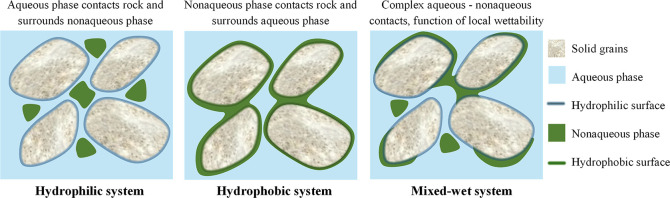
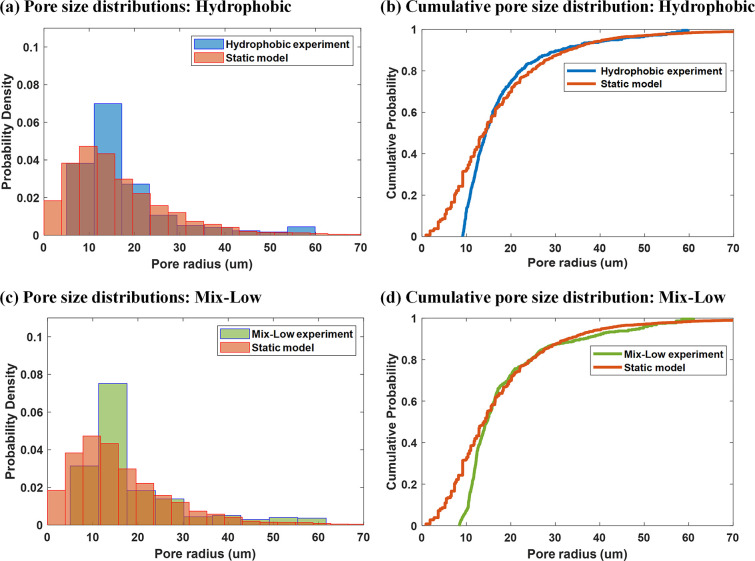
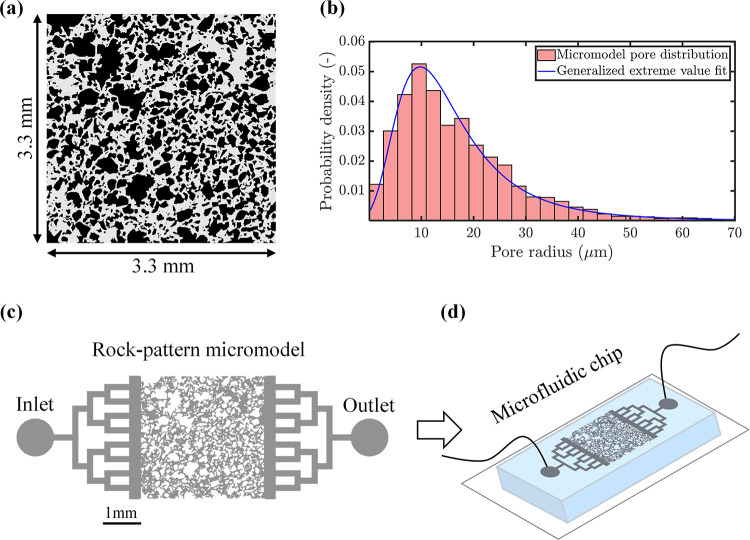
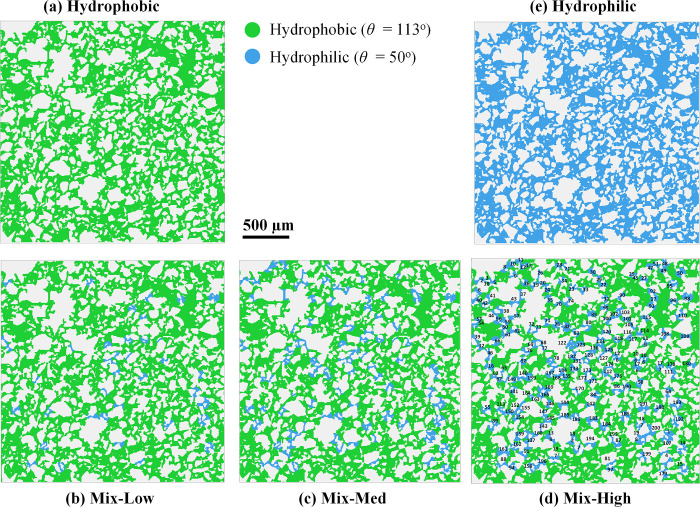
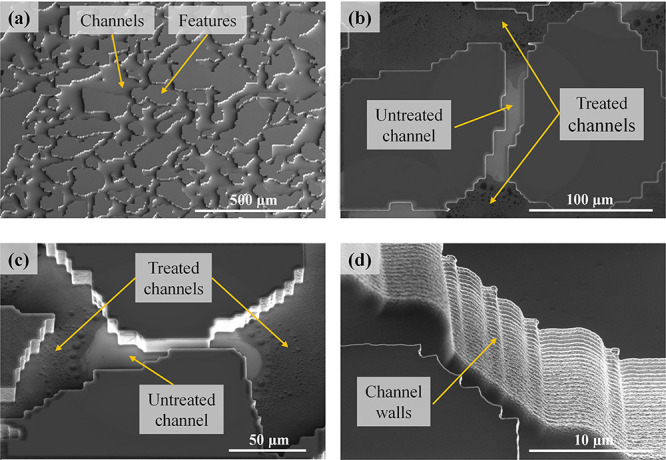
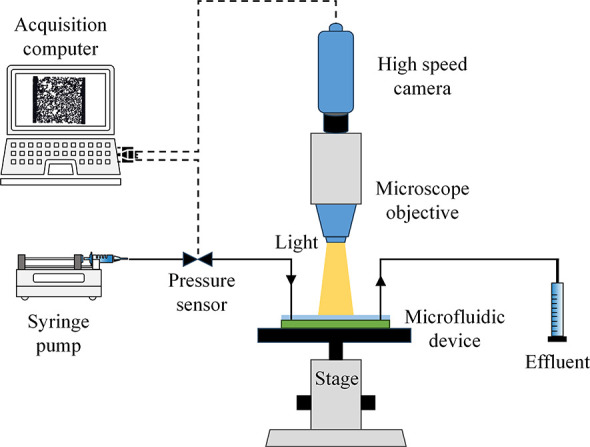
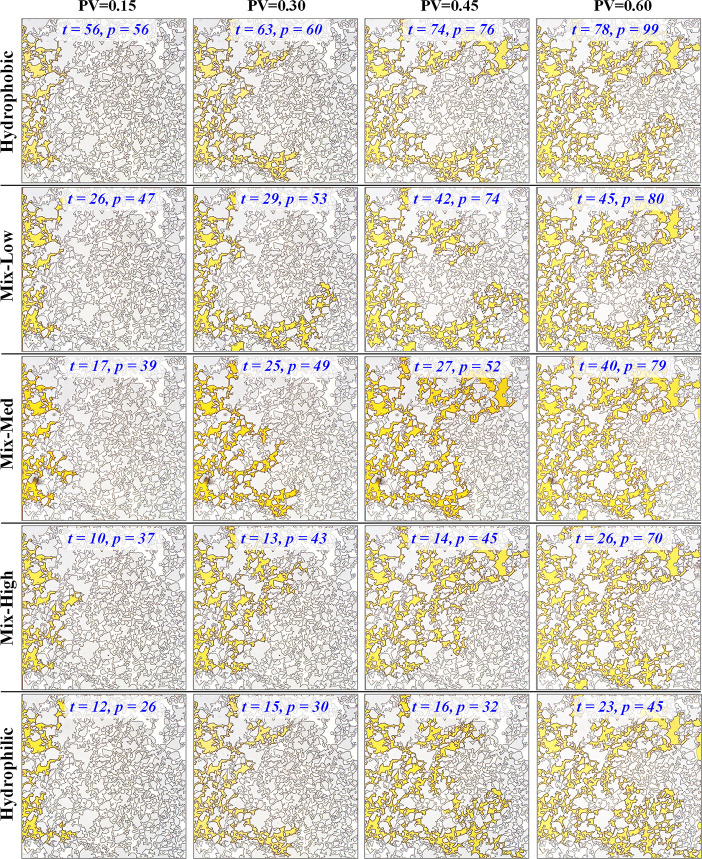
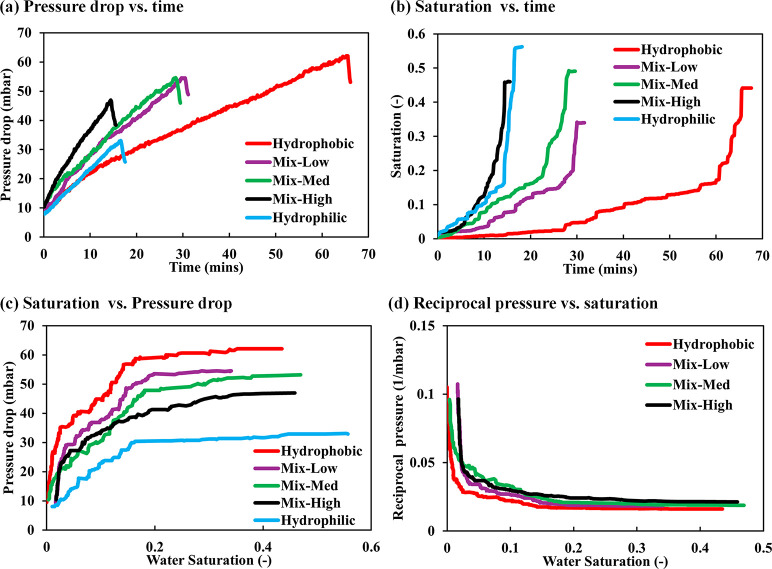
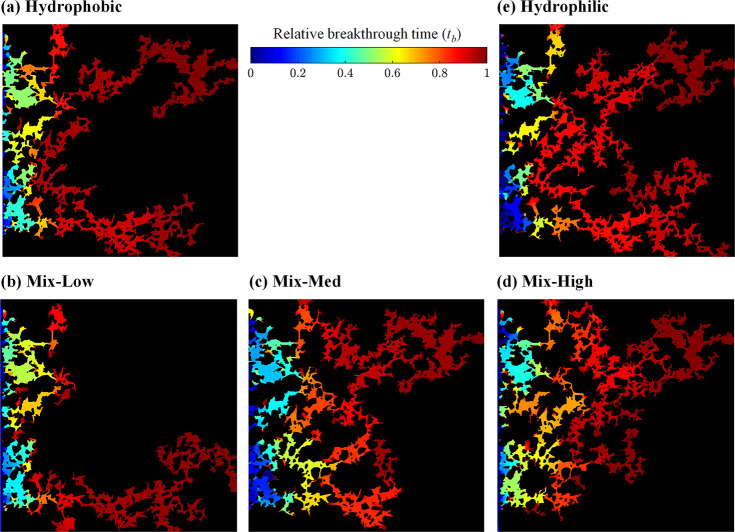
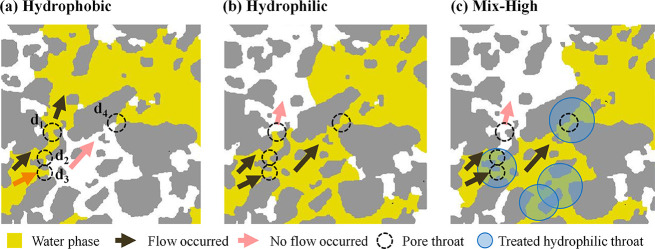
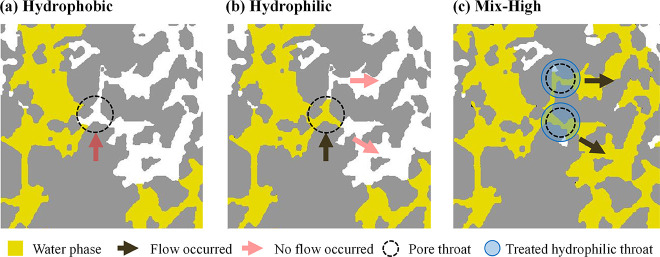
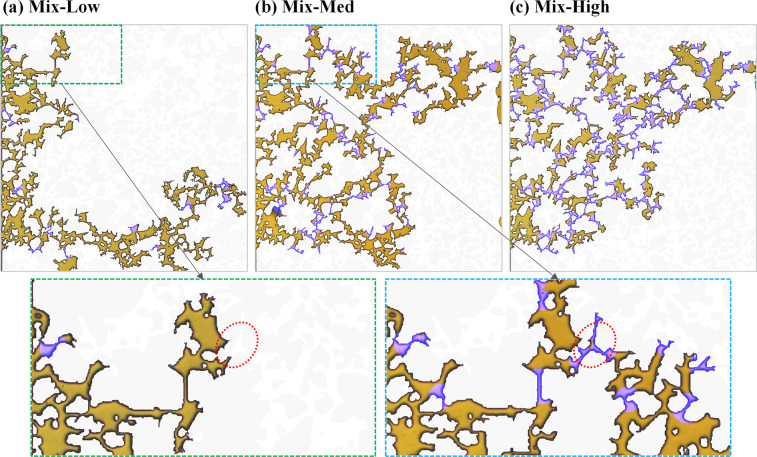
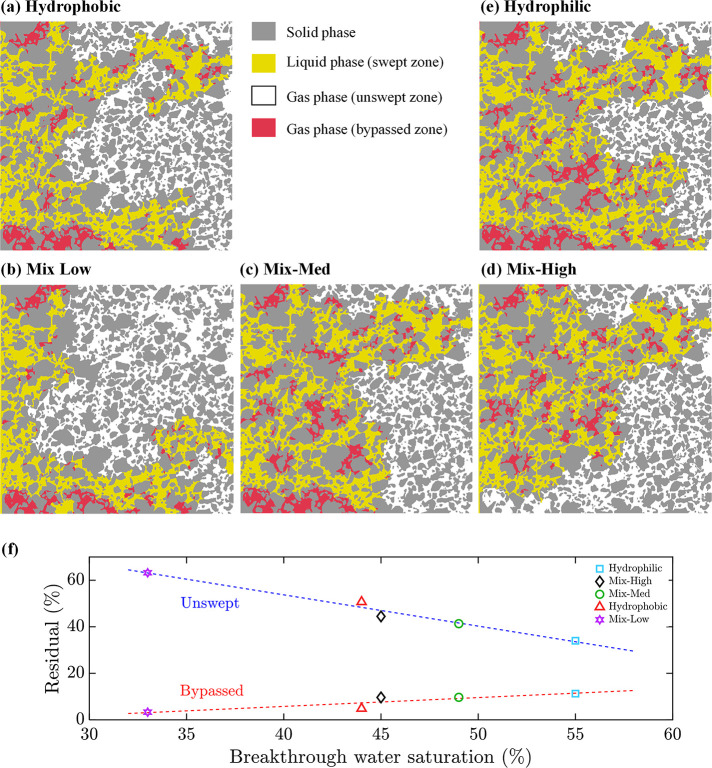
Understanding rock wettability is crucial across various fields including hydrology, subsurface fluid storage and extraction, and environmental sciences. In natural subsurface formations like carbonate and shale, mixed wettability is frequently observed, characterized by heterogeneous regions at the pore scale that exhibit both hydrophilic (water-wet) and hydrophobic (oil-wet) characteristics. Despite its common occurrence, the impact of mixed wettability on immiscible fluid displacement at the pore scale remains poorly understood, creating a gap in effective modeling and prediction of fluid behavior in porous media. The primary objective of this study was to investigate how mixed wettability affects pore-scale fluid displacement dynamics, utilizing microfluidic devices designed to replicate rock-like structures with varied wettability properties. Current techniques for achieving mixed wettability within microfluidic devices often struggle with spatial control and resolution, limiting their accuracy. To address this limitation, a novel approach was employed that combined photolithography and molecular vapor deposition of perfluorodecyltrichlorosilane to precisely and selectively modify wettability within specific pore regions, achieving a mixed wettability distribution correlated with pore size for the first time. The experimental setup included five identical micromodels representing distinct wetting conditions, which were initially saturated with air and subsequently flooded by water. By systematically varying the ratio of hydrophilic to hydrophobic areas, we covered a range from fully hydrophilic to fully hydrophobic and intermediate mixed wettability configurations. Comparative displacement experiments revealed that pore-level mixed wettability has a pronounced effect on fluid displacement behavior, influencing the injection time, spatial invasion patterns, and dynamic pressure profiles. Results indicated that both the injection time and dynamic pressure decreased with an increase in the hydrophilic area fraction. Each wettability configuration displayed unique sequences of pore-filling events, emphasizing the critical role of the wettability distribution in influencing displacement dynamics. While mixed wettability exhibited a clear monotonic effect on invasion time and dynamic pressure, saturation behavior was notably nonmonotonic. Interestingly, mixed wettability scenarios with relatively medium to high hydrophilic fractions demonstrated enhanced overall sweep efficiency compared to the hydrophobic case and reduced the bypassed gas phase relative to the hydrophilic case. However, inefficiently distributed mixed wet zones were found to reduce the sweep efficiency. These findings highlight the critical influence of mixed wettability in fluid displacement processes, with significant implications for applications in oil recovery, CO sequestration, and other subsurface energy technologies.
了解岩石润湿性在包括水文、地下流体储存与开采以及环境科学等多个领域都至关重要。在碳酸盐岩和页岩等天然地下地层中,经常观察到混合润湿性,其特征是在孔隙尺度上存在异质区域,这些区域兼具亲水(水湿)和疏水(油湿)特性。尽管混合润湿性很常见,但在孔隙尺度上其对不混溶流体驱替的影响仍知之甚少,这在多孔介质中流体行为的有效建模和预测方面造成了差距。本研究的主要目的是利用设计用于复制具有不同润湿性的岩石状结构的微流控装置,研究混合润湿性如何影响孔隙尺度上的流体驱替动力学。目前在微流控装置中实现混合润湿性的技术在空间控制和分辨率方面往往存在困难,限制了其准确性。为解决这一限制,采用了一种新颖的方法,该方法结合光刻技术和全氟癸基三氯硅烷的分子气相沉积,以精确且有选择地改变特定孔隙区域内的润湿性,首次实现了与孔径相关的混合润湿性分布。实验装置包括五个代表不同润湿条件的相同微模型,这些微模型最初用空气饱和,随后用水驱替。通过系统地改变亲水区域与疏水区域的比例,我们涵盖了从完全亲水到完全疏水以及中间混合润湿性配置的范围。对比驱替实验表明,孔隙级别的混合润湿性对流体驱替行为有显著影响,影响注入时间、空间侵入模式和动态压力剖面。结果表明,注入时间和动态压力均随着亲水区域分数的增加而降低。每种润湿性配置都显示出独特的孔隙填充事件序列,强调了润湿性分布在影响驱替动力学方面的关键作用。虽然混合润湿性对侵入时间和动态压力表现出明显的单调影响,但饱和度行为明显是非单调的。有趣的是,与疏水情况相比,具有相对中等到高亲水分数的混合润湿性情况显示出整体波及效率提高,并且相对于亲水情况减少了绕过的气相。然而,发现混合湿区分布不佳会降低波及效率。这些发现突出了混合润湿性在流体驱替过程中的关键影响,对石油采收、二氧化碳封存和其他地下能源技术的应用具有重要意义。