
健康北印度成年人的肾脏尺寸及其与人体测量学参数的相关性
Kidney Dimensions and its Correlation with Anthropometric Parameters in Healthy North Indian Adults.
作者信息
Bhardwaj Shweta, Singh Anmol, Kaur Ravinder, D'Cruz Sanjay
机构信息
Department of Clinical Immunology and Rheumatology, King George's Medical University, Lucknow, Uttar Pradesh, India.
Department of Cardiology, Government Medical College and Hospital, Chandigarh, India.
出版信息
Indian J Nephrol. 2024 Nov-Dec;34(6):636-642. doi: 10.25259/ijn_12_24. Epub 2024 Aug 29.
BACKGROUND
Knowledge of kidney size is important in the assessment of kidney function. Changes in kidney size can occur in various kidney diseases due to different causes, hence knowledge of normal kidney dimensions in a population is crucial for diagnosis, follow-up and prognostication. While data from other parts of the world does not apply to the Indian population due to differences in ethnicity, diet and body sizes, and there is also a lack of standardized data on normal kidney sizes in healthy Indian adults.
MATERIALS AND METHODS
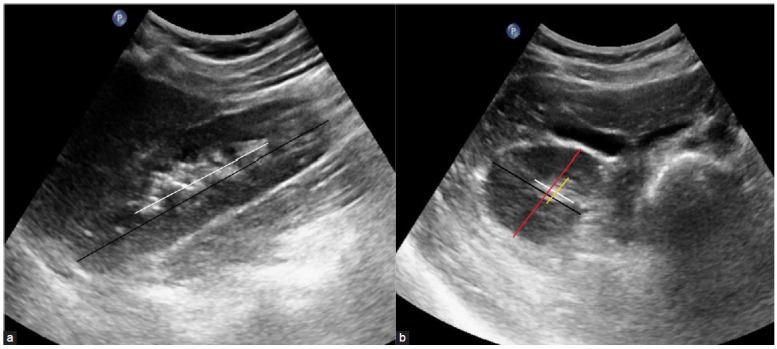
Kidney dimensions from 600 healthy adult volunteers ranging between 20 and 70 years of age were measured with sonography by a single radiologist. Differences in dimensions between men and women, and right and left kidney were analyzed. Finally, kidney sizes were correlated with anthropometric variables such as weight, age, body surface area (BSA), height and body mass index. Estimated glomerular filtration rate (eGFR) was correlated with kidney length and renal parenchymal volume (RPV).
RESULTS
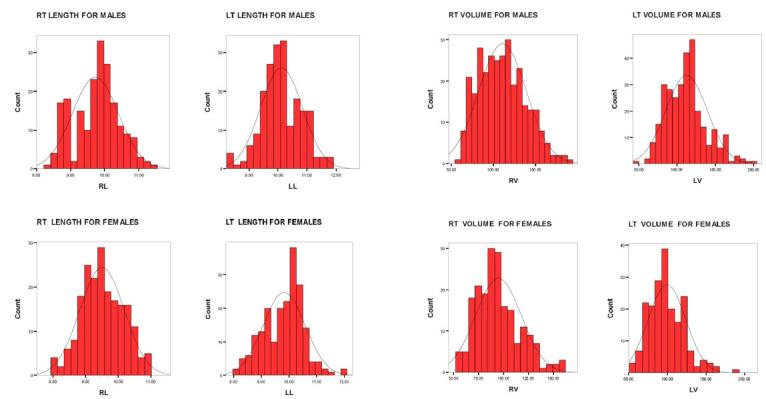
The mean kidney length of the whole cohort, irrespective of gender was found to be 9.6 ± 0.7 cm on the right and 9.9 ± 0.7 cm on the left. Mean kidney length in males was significantly more as compared to females on both sides. Both the kidney length and RPV were significantly associated with BSA, weight and height (in that order) in females, whereas in males, kidney length and RPV best correlated with height, BSA and weight (in that order). In both sexes, there was a significant negative correlation between age and kidney length, RPV. eGFR had a significant positive correlation with kidney length and RPV in the cohort.
CONCLUSION
Normal sonographic mean kidney length was 9.6±0.7 cm and 9.9±0.7 cm on the right and left sides respectively in healthy North Indian population, with the left kidney being larger than the right in all dimensions (length, width, thickness and RPV). Kidney sizes in males were found to be larger than females. Correlation with anthropometric parameters in our study, emphasizes the need to give due consideration to normal variations in kidney sizes with age, gender, height, weight and BSA to differentiate between a normal and a pathologically small or large kidney.
背景
了解肾脏大小对评估肾功能很重要。由于不同原因,各种肾脏疾病都可能出现肾脏大小的变化,因此了解人群中正常肾脏尺寸对于诊断、随访和预后判断至关重要。由于种族、饮食和体型的差异,世界其他地区的数据不适用于印度人群,而且健康印度成年人正常肾脏大小也缺乏标准化数据。
材料与方法
由一名放射科医生通过超声测量600名年龄在20至70岁之间的健康成年志愿者的肾脏尺寸。分析了男性与女性以及左右肾之间尺寸的差异。最后,将肾脏大小与体重、年龄、体表面积(BSA)、身高和体重指数等人体测量变量进行相关性分析。估算肾小球滤过率(eGFR)与肾脏长度和肾实质体积(RPV)进行相关性分析。
结果
整个队列的平均肾脏长度,无论性别,右侧为9.6±0.7厘米,左侧为9.9±0.7厘米。两侧男性的平均肾脏长度均显著长于女性。在女性中,肾脏长度和RPV均与BSA、体重和身高(按此顺序)显著相关,而在男性中,肾脏长度和RPV与身高、BSA和体重(按此顺序)的相关性最佳。在两性中,年龄与肾脏长度、RPV之间均存在显著负相关。在该队列中,eGFR与肾脏长度和RPV呈显著正相关。
结论
在健康的北印度人群中,正常超声测量的平均肾脏长度右侧为9.6±0.7厘米,左侧为9.9±0.7厘米,左肾在所有维度(长度、宽度、厚度和RPV)上均大于右肾。发现男性的肾脏尺寸大于女性。我们的研究中与人体测量参数的相关性强调,需要适当考虑肾脏大小随年龄、性别、身高、体重和BSA的正常变化,以区分正常肾脏与病理性小或大的肾脏。
 Zotero 插件