Madesh S, Gopi Sanjai, Sau Avra, Rajagopal Rajakrishnan, Namasivayam S Karthick Raja, Arockiaraj Jesu
Toxicology and Pharmacology Laboratory, Department of Biotechnology, Faculty of Science and Humanities, SRM Institute of Science and Technology, Kattankulathur, Chengalpattu District, Tamil Nadu 603203, India.
Department of Botany and Microbiology, College of Science, King Saud University, Riyadh 11451, Saudi Arabia.
Toxicol Rep. 2024 Nov 19;13:101819. doi: 10.1016/j.toxrep.2024.101819. eCollection 2024 Dec.
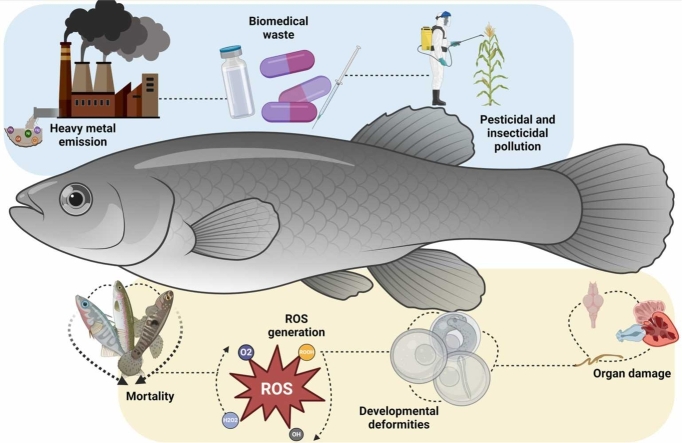
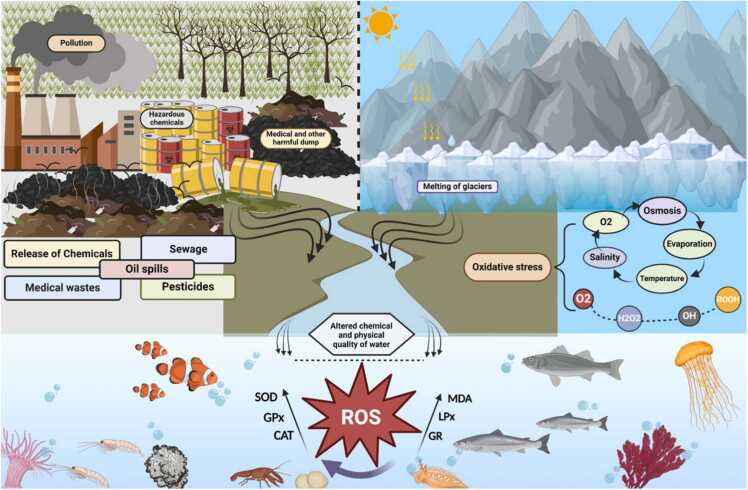
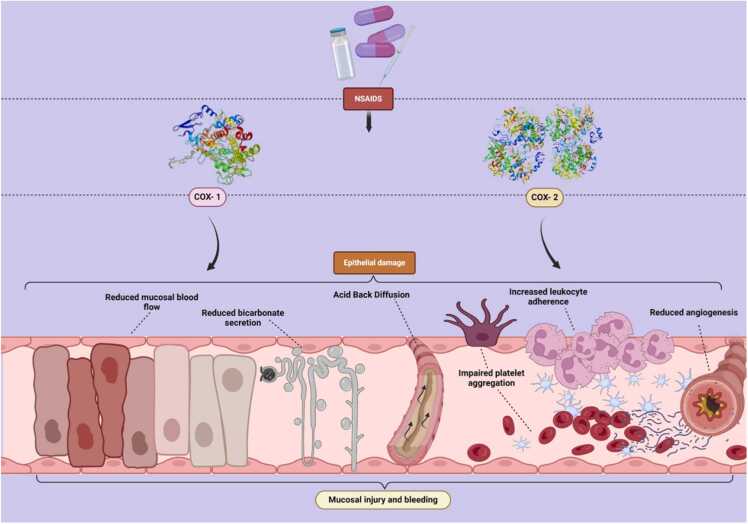
Aquatic environments, including marine and freshwater ecosystems, are vital for ecological balance and biodiversity. The rising global demand for aquaculture products necessitates increased production, with intensified aquaculture practices posing significant environmental risks. This review explores the pathways through which chemical pollutants, heavy metals, pharmaceuticals, and environmental stressors induce teratogenic effects in aquatic species. The review highlights the impact of pesticide include triazine herbicides, organophosphate and organochlorine insecticides, and carbamates on aquatic life, emphasizing their interference with endocrine systems and developmental processes. Heavy metals like mercury, lead, cadmium, arsenic, and chromium are noted for their persistence and bioaccumulative properties, disrupting cellular and hormonal functions. Pharmaceuticals, including NSAIDs, antibiotics, and chemotherapeutic agents, exert teratogenic effects by disrupting physiological and developmental pathways. Environmental stressors includes temperature fluctuations, salinity variations, pH changes, and oxygen level imbalances exacerbate the teratogenic impact of pollutants. This review highlights the importance of comprehensive environmental management and understanding these complex interactions is essential for formulating efficient strategies to safeguard the effective measures to protect aquatic ecosystems and the biodiversity.
包括海洋和淡水生态系统在内的水生环境对于生态平衡和生物多样性至关重要。全球对水产养殖产品的需求不断增加,这就需要提高产量,而集约化水产养殖做法带来了重大环境风险。本综述探讨了化学污染物、重金属、药物和环境应激源在水生物种中诱发致畸效应的途径。该综述强调了农药(包括三嗪类除草剂、有机磷和有机氯杀虫剂以及氨基甲酸盐)对水生生物的影响,强调了它们对内分泌系统和发育过程的干扰。汞、铅、镉、砷和铬等重金属因其持久性和生物累积特性而受到关注,它们会破坏细胞和激素功能。包括非甾体抗炎药、抗生素和化疗药物在内的药物通过干扰生理和发育途径产生致畸作用。环境应激源包括温度波动、盐度变化、pH值变化和氧气水平失衡,这些会加剧污染物的致畸影响。本综述强调了全面环境管理的重要性,理解这些复杂的相互作用对于制定有效的策略以保护水生生态系统和生物多样性至关重要。