Li Hongyan, Yang Chuanghao, Liu Zhiyang, Chen Zhihao
School of Management, Shanghai University of Engineering Science, Shanghai, China.
Front Public Health. 2024 Nov 22;12:1343860. doi: 10.3389/fpubh.2024.1343860. eCollection 2024.
Deepening medical insurance reform is pivotal in promoting fairness, inclusiveness, and sustainability within the system, particularly by enhancing coordination levels and strengthening the interconnection between medical insurance, healthcare, and pharmaceuticals. In China, 71.09 million migrant children, who make up 23.86% of the total child population, exhibit lower participation rates in medical insurance compared to other groups. The health status of children serves as a crucial barometer for the country's socioeconomic standing and the quality of its medical services. Therefore, the inclusion of migrant children in basic medical insurance is essential for elevating their health standards and contributing to the accumulation of human capital.
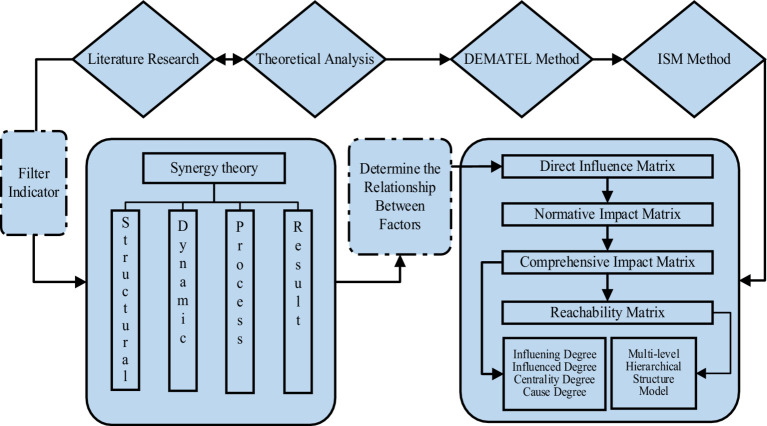
This study employed the structural-dynamic-process-result framework derived from synergy theory. It identified 18 factors influencing the participation of migrant children in basic medical insurance. Utilizing the DEMATEL-ISM method, the research analyzed these factors, culminating in the development of a comprehensive five-level hierarchical structure model.
The research identified the medical insurance system's arrangements as central to influencing the participation of migrant children in medical insurance. The household registration system emerged as a critical factor with significant mandatory and motivational impacts. The study categorized the 18 influencing factors into three tiers: superficial inducing factors, intermediate influencing factors, and deep-rooted causal factors. These tiers demonstrate a complex web of interdependencies and influences, highlighting that encouraging migrant children's participation in medical insurance is a multifaceted systemic endeavor. This process necessitates collaborative efforts from families, schools, markets, society, and government bodies.
To effectively foster the participation of migrant children in basic medical insurance, a strong focus on identifying and addressing core issues is required. This approach should be coupled with enhanced strategic planning and coordination skills to ensure that reforms and developmental strides are equitably beneficial. Recommendations include decentralizing children's medical insurance from local constraints, refining insurance system design, elevating the level of medical insurance coordination, and boosting insurance participation efficiency. Additionally, fortifying the collaborative dynamics among healthcare, medical insurance, and pharmaceutical sectors is crucial in building a united front to support migrant children's healthcare needs.
深化医疗保险改革对于促进医保体系的公平性、包容性和可持续性至关重要,特别是通过提高统筹层次以及加强医疗保险、医疗服务和药品之间的互联互通。在中国,7109万流动儿童占儿童总人口的23.86%,与其他群体相比,他们的医疗保险参保率较低。儿童的健康状况是衡量国家社会经济水平和医疗服务质量的重要指标。因此,将流动儿童纳入基本医疗保险对于提高他们的健康水平和促进人力资本积累至关重要。
本研究采用了源自协同理论的结构 - 动态 - 过程 - 结果框架。确定了影响流动儿童参加基本医疗保险的18个因素。利用DEMATEL - ISM方法对这些因素进行分析,最终构建了一个全面的五级层次结构模型。
研究发现医疗保险制度安排是影响流动儿童参加医疗保险的核心因素。户籍制度是一个关键因素,具有重大的强制性和激励性影响。研究将18个影响因素分为三个层次:表层诱导因素、中间影响因素和深层因果因素。这些层次呈现出复杂的相互依存和影响关系,凸显出鼓励流动儿童参加医疗保险是一项多方面的系统性工作。这一过程需要家庭、学校、市场、社会和政府机构的共同努力。
为有效促进流动儿童参加基本医疗保险,需要高度重视识别和解决核心问题。这种方法应辅之以增强战略规划和协调能力,以确保改革和发展步伐公平受益。建议包括消除儿童医疗保险的地方限制、完善保险制度设计、提高医疗保险统筹层次以及提高参保效率。此外,加强医疗、医保和医药部门之间的协同动态关系对于建立支持流动儿童医疗需求的统一战线至关重要。