Alam Mohammad Mamun, Salauddin Asma, Moni Sayra, Limon Md Belayet Hasan, Musarrat Raisha, Bosu Sagar, Hossain Mohammad Enayet, Rahman Mohammed Ziaur, Rahman Mustafizur
Virology Laboratory, Infectious Diseases Division, International Centre for Diarrhoeal Disease Research, (icddr,b), Bangladesh.
Heliyon. 2024 Nov 22;10(23):e40638. doi: 10.1016/j.heliyon.2024.e40638. eCollection 2024 Dec 15.
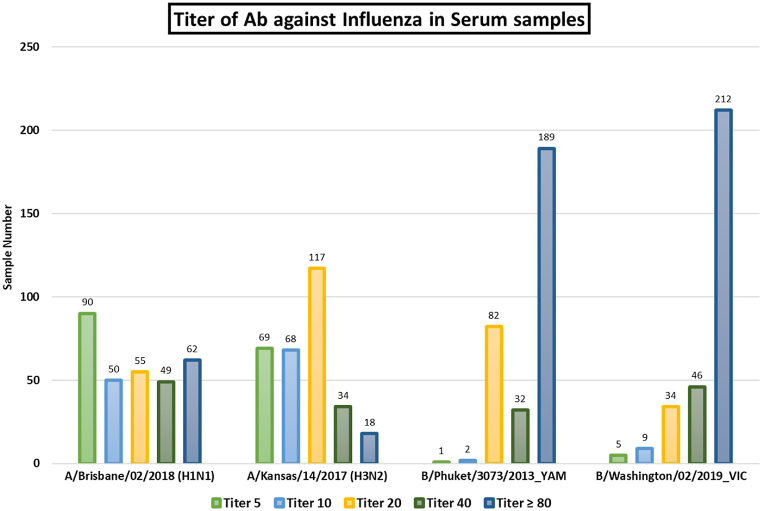
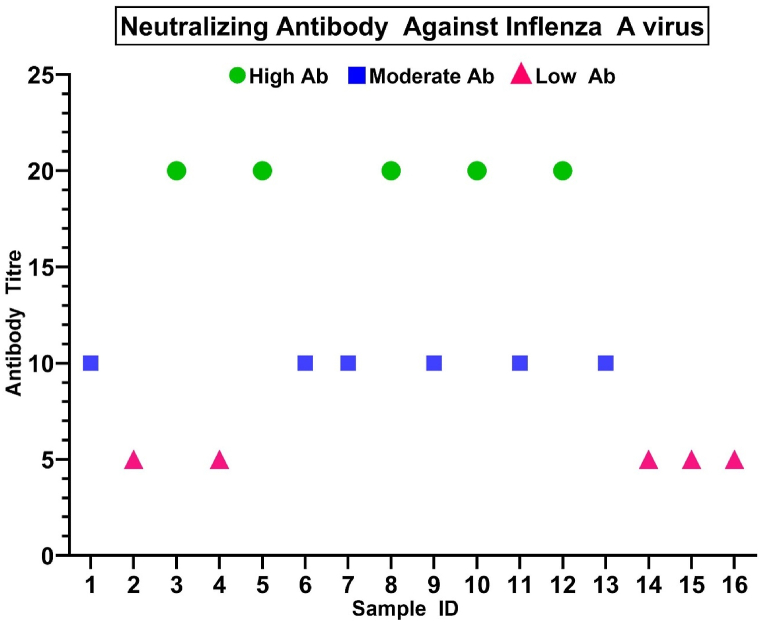
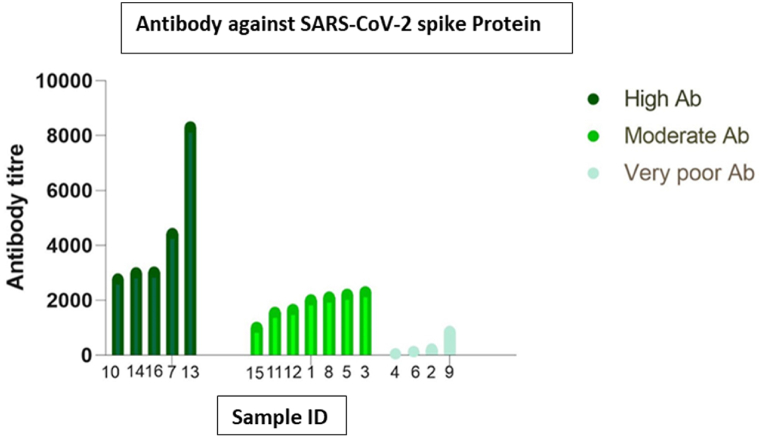
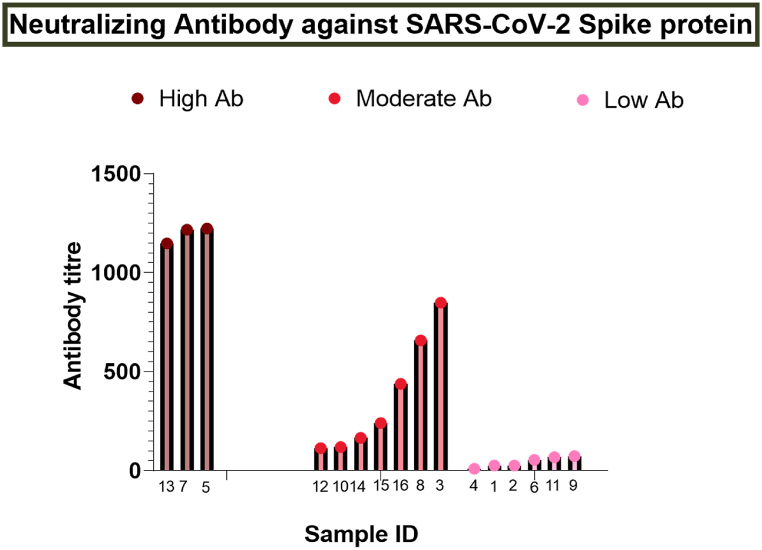
According to sparse information from various countries, the seasonal influenza virus circulation has drastically decreased during the COVID-19 pandemic. Here, we show the cross-reactivity of anti-SARS-CoV-2 antibodies against influenza viruses. Plasma samples were collected from 311 SARS-CoV-2 infected individuals. The samples were tested for antibody titers against SARS-CoV-2 by ELISA and seasonal influenza virus strains (influenza A/H1N1, A/H3N2, B/Yamagata, and B/Victoria) using a Hemagglutination Inhibition Assay (HAI). In addition, SARS-CoV-2 antibody-positive but Influenza antibody-negative samples (n = 16) were investigated to determine the SARS-CoV-2 antibody-neutralizing potential against influenza viruses by microneutralization (MN) assay. The SARS-CoV-2 genomes were sequenced using Illumina next-generation sequencing, and an in-silico protein structural analysis was performed to identify epitope and antibody binding similarities between SARS-CoV-2 and influenza viruses. Among 16 samples that didn't contain antibodies against Influenza A strains (H1N1 and H3N2), five showed high (MN titer≥20), and six showed moderate (MN titer≥10) capability to neutralize Influenza A. Subsequent in-silico analysis revealed that most efficient binding (>8 kcal/mol) was found between the antibodies of SARS-CoV-2 delta variant (ΔG) with influenza A/H1N1 HA (Hemagglutinin), A/H3N2 HA, A/H1N1 NA (Neuraminidase), and A/H3N2 NA glycoproteins with -12.4, -9.3, -10.1, and -11.7 kcal/mol, respectively. This investigation revealed that neutralizing antibodies of the delta variant cross-reacted with the Influenza A virus, which might protect against influenza viruses and reduce and shift the seasonal influenza circulation during the COVID-19 pandemic. Our findings warrant further study to explain the probable mechanisms of this cross-reactivity.
根据各国的零散信息,在新冠疫情期间,季节性流感病毒的传播已大幅减少。在此,我们展示了抗SARS-CoV-2抗体对流感病毒的交叉反应性。从311名感染SARS-CoV-2的个体中采集血浆样本。通过酶联免疫吸附测定(ELISA)检测样本针对SARS-CoV-2的抗体滴度,并使用血凝抑制试验(HAI)检测针对季节性流感病毒株(甲型流感病毒H1N1、A/H3N2、乙型流感病毒山形株和维多利亚株)的抗体滴度。此外,对SARS-CoV-2抗体呈阳性但流感抗体呈阴性的样本(n = 16)进行研究,通过微量中和(MN)试验确定SARS-CoV-2抗体对流感病毒的中和潜力。使用Illumina下一代测序技术对SARS-CoV-2基因组进行测序,并进行计算机蛋白质结构分析,以确定SARS-CoV-2与流感病毒之间的表位和抗体结合相似性。在16份不含抗甲型流感病毒株(H1N1和H3N2)抗体的样本中,5份表现出高(MN滴度≥20)中和甲型流感病毒的能力,6份表现出中等(MN滴度≥10)中和能力。随后的计算机分析表明,SARS-CoV-2德尔塔变异株(ΔG)的抗体与甲型流感病毒H1N1血凝素(HA)、A/H3N2 HA、A/H1N1神经氨酸酶(NA)和A/H3N2 NA糖蛋白之间存在最有效的结合(>8千卡/摩尔),结合能分别为-12.4、-9.3、-10.1和-11.7千卡/摩尔。这项研究表明,德尔塔变异株的中和抗体与甲型流感病毒发生交叉反应,这可能在新冠疫情期间预防流感病毒,并减少和改变季节性流感的传播。我们的研究结果有待进一步研究以解释这种交叉反应的可能机制。