Pagnier Anne, Dermesropian Angelina, Kevorkian-Verguet Charlotte, Bourgoin-Heck Mélisande, Hoarau Cyrille, Reumaux Héloïse, Nugues Frédérique, Audouin-Pajot Christine, Blanc Sibylle, Carbasse Aurélia, Jurquet Anne-Laure, Voidey Mélanie, Villedieu Mona, Bouillet Laurence, Boccon-Gibod Isabelle
Department of Pediatrics, CREAK, University Hospital Grenoble, Grenoble, France.
Allée des Mitaillières, bâtiment A, Meylan, France.
Pediatr Allergy Immunol. 2024 Dec;35(12):e14268. doi: 10.1111/pai.14268.
Hereditary angioedema (HAE) in children has specific features and requires multidisciplinary management.
We performed a literature search and underwent in-depth discussions to provide practical tools for physicians.
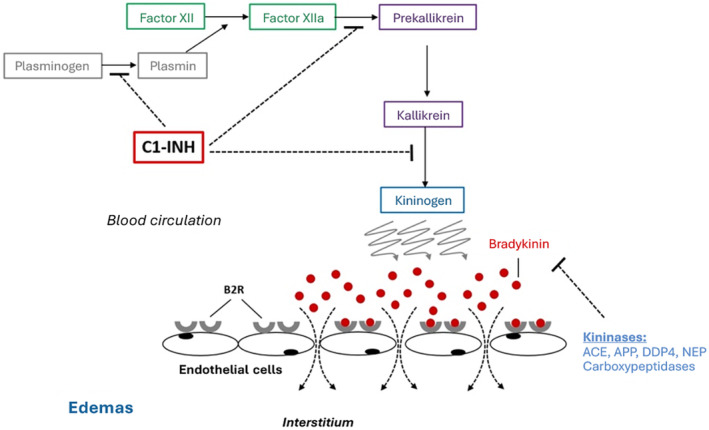
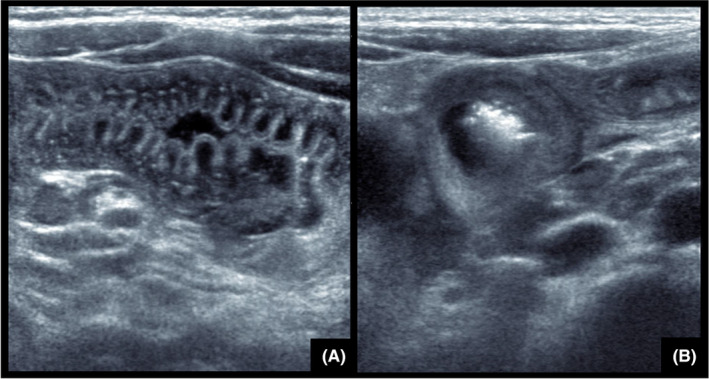
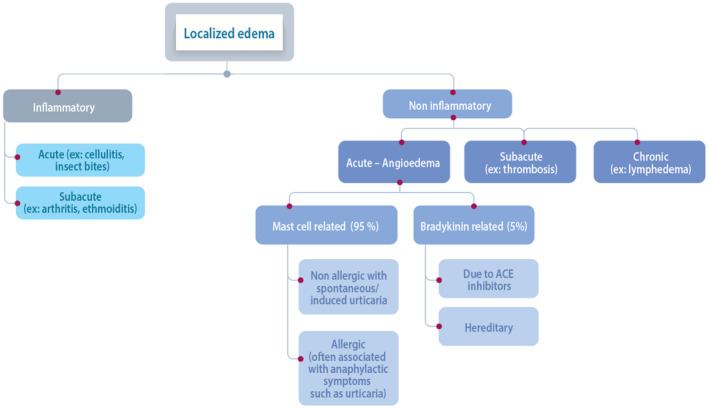
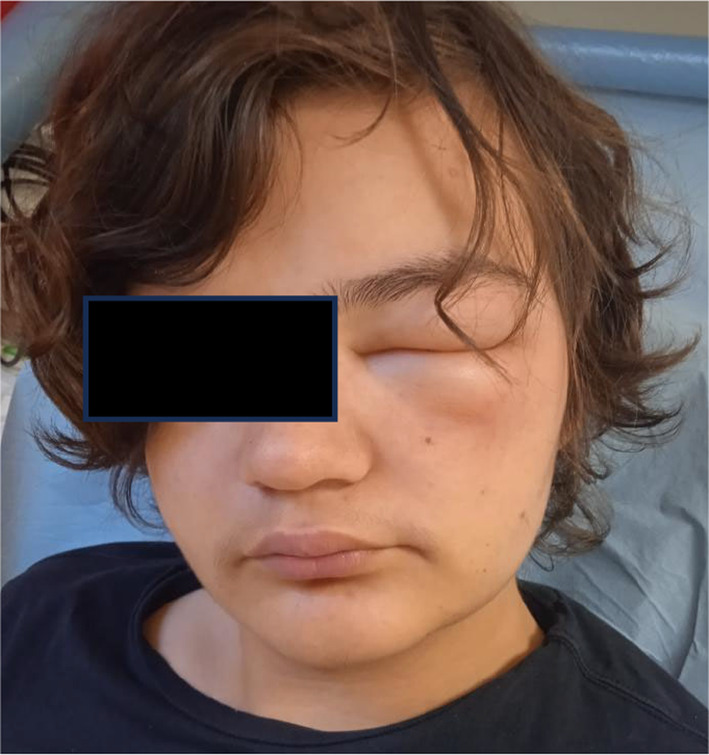
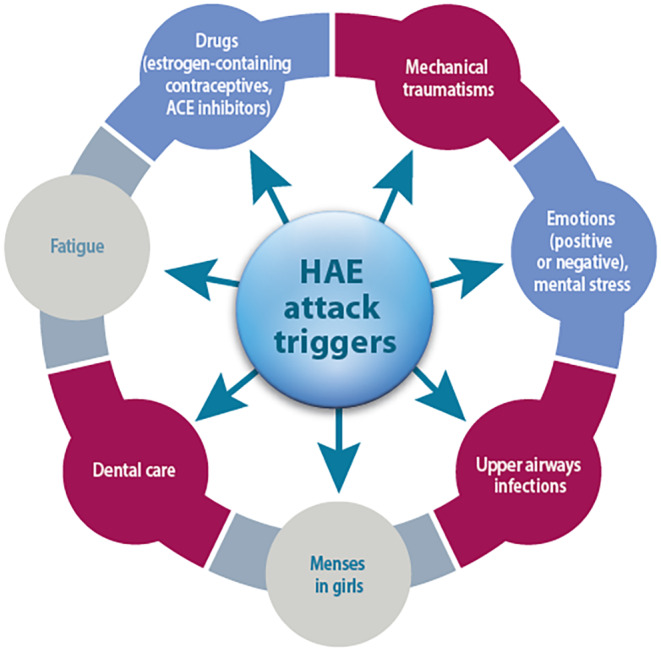
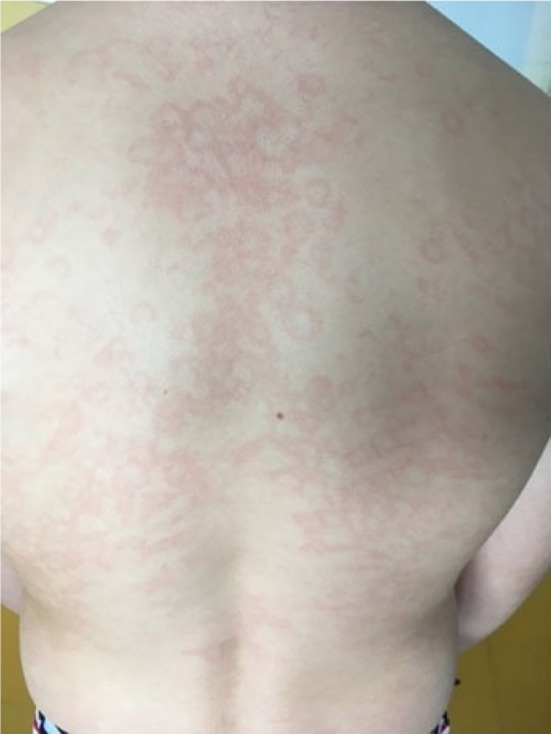
HAE is a rare, life-threatening genetic disorder. Its epidemiology is poorly documented in children. Clinical manifestations usually appear during childhood or early adolescence. Classical signs, often preceded by prodromal symptoms, include transient, localized, non-pitting, non-pruritic swelling of deep dermal/subcutaneous or mucosal/submucosal tissues, leading to oedema of the extremities, face, lips, tongue, trunk and genitals, recurring gastrointestinal symptoms and laryngeal edema possibly causing asphyxiation and death. Diagnosis is often delayed due to low awareness in the medical community, and particularly challenging in case of isolated abdominal crises or atypical presentation and in neonates or infants. It relies on biological tests (measurement of serum/plasma levels of C1INH function, C1INH protein, and C4), genetic testing in selected cases, and imaging for differential diagnosis of acute abdominal crises. Main differential diagnosis for peripheral oedema is mast cell-mediated oedema that accounts for 95% of angioedema in clinical practice. Quality of life can be significantly impaired. Disease management includes treatment of attacks, short-term and long-term prophylaxis, psychological support, avoidance of triggers, patients' and parents' education and coordination of all stakeholders, ideally within a specialized healthcare network. New plasma kallikrein inhibitors, namely lanadelumab (subcutaneous route) and berotralstat (oral route) have facilitated long-term prophylaxis thanks to improved usability.
Diagnostic and treatment of HAE are particularly challenging in children and require specific management by multiple stakeholders.
儿童遗传性血管性水肿(HAE)具有特定特征,需要多学科管理。
我们进行了文献检索并进行了深入讨论,为医生提供实用工具。
HAE是一种罕见的、危及生命的遗传性疾病。其在儿童中的流行病学资料记载较少。临床表现通常出现在儿童期或青春期早期。典型症状常先有前驱症状,包括真皮深层/皮下或黏膜/黏膜下层组织的短暂、局限性、非凹陷性、非瘙痒性肿胀,导致四肢、面部、嘴唇、舌头、躯干和生殖器水肿,反复出现胃肠道症状以及可能导致窒息和死亡的喉头水肿。由于医学界认识不足,诊断往往延迟,在孤立性腹部危机或非典型表现以及新生儿或婴儿中诊断尤其具有挑战性。诊断依赖于生物学检测(测量血清/血浆中C1INH功能、C1INH蛋白和C4的水平)、特定病例的基因检测以及用于急性腹部危机鉴别诊断的影像学检查。外周水肿的主要鉴别诊断是肥大细胞介导的水肿,在临床实践中占血管性水肿的95%。生活质量可能会受到显著损害。疾病管理包括发作期治疗、短期和长期预防、心理支持、避免触发因素、患者及家长教育以及所有利益相关者的协调,理想情况下在专门的医疗保健网络内进行。新型血浆激肽释放酶抑制剂,即拉那芦人单抗(皮下给药途径)和贝罗司他(口服给药途径),因其更好的易用性促进了长期预防。
HAE在儿童中的诊断和治疗尤其具有挑战性,需要多个利益相关者进行特定管理。