Correa Federico, Luise Diana, Virdis Sara, Negrini Clara, Polimeni Barbara, Amarie Roxana Elena, Serra Andrea, Biagi Giacomo, Trevisi Paolo
Department of Agro-Food Sciences and Technologies, University of Bologna, Bologna, Italy.
Department of Agricuture, Food and Environment, University of Pisa, Pisa, Italy.
J Anim Sci. 2024 Jan 3;102. doi: 10.1093/jas/skae370.
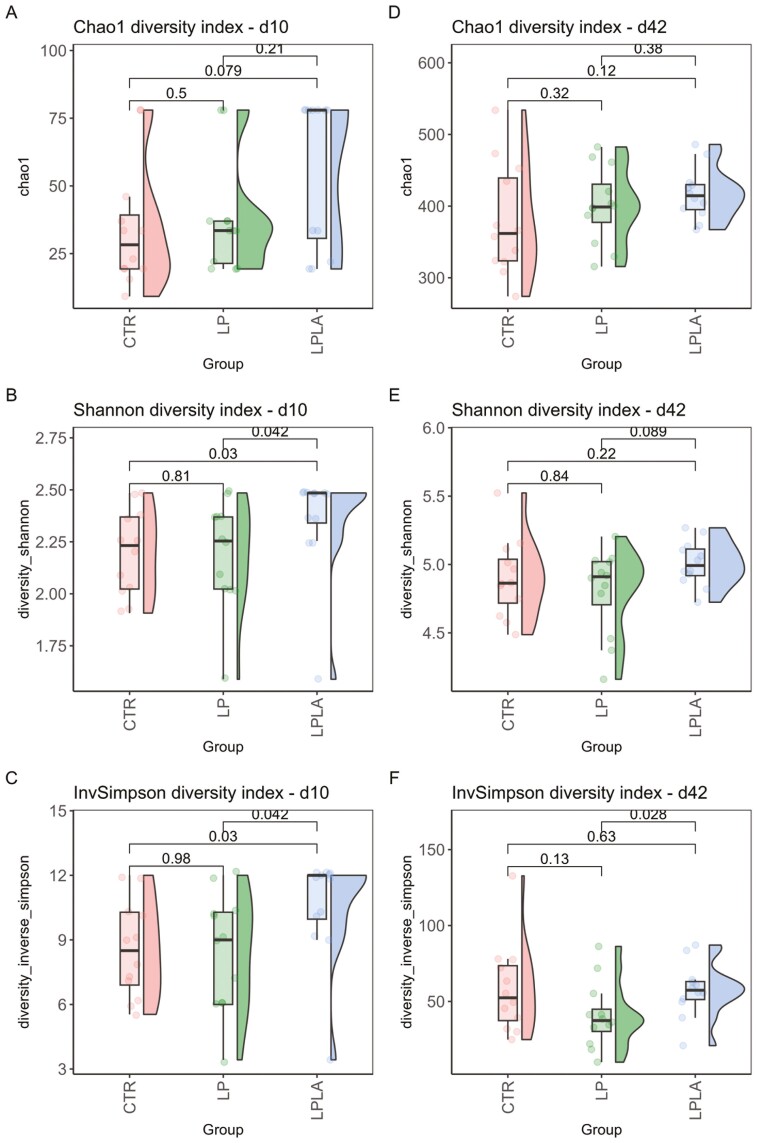
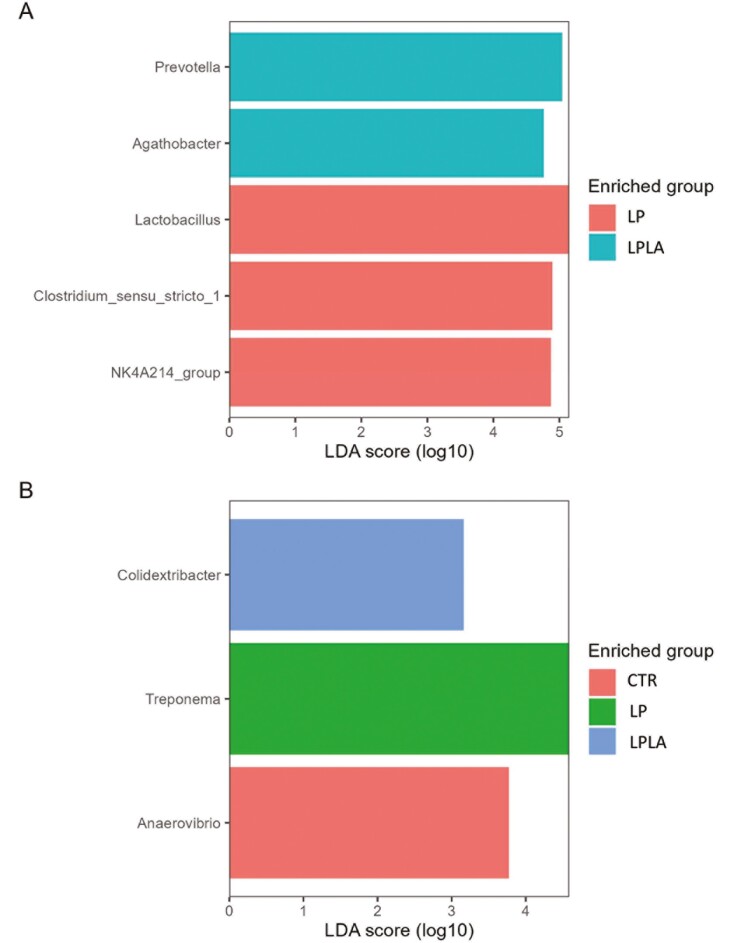
Improving the synchrony between amino acids (AAs) and glucose appearance in the blood can support the growth performance of weaned pigs fed a low crude protein (CP) diet. This can be achieved using a diet with a low amylose-to-amylopectin ratio (AM/AP). The aim of this experiment was to evaluate whether reducing the AM/AP by using a corn variety characterized by a high amylopectin content, in the weaning diet can sustain growth performance and improve the intestinal health of pigs fed a low-CP diet. At weaning (25 ± 2 d), 90 pigs were assigned to 3 treatment groups: 1) control group (CTR), fed a standard diet with a medium-high CP content and high AM/AP (days 0 to 13: 18.0% CP, 0.13 AM/AP; days 14 to 27: 16.6% CP, 0.30 AM/AP; days 28 to 49: 16.7% CP, 0.15 AM/AP); 2) a group fed a low-CP diet with a high AM/AP (LP) (days 0 to 13: 16.0% CP, 0.17 AM/AP; days 13 to 27: 14.7% CP, 0.17 AM/AP; days 28 to 49: 14.5% CP, 0.25 AM/AP); 3) a group fed a low CP and a low AM/AP diet (LPLA) (days 0 to 13: 16.0% CP, 0.09 AM/AP; days 14 to 27: 14.7% CP, 0.05 AM/AP; days 28 to 49: 14.5% CP, 0.09 AM/AP). Pigs were weighted weakly until day 49. Fecal samples were collected on days 10 and 42 (12 samples/group/timepoint) for ammonia and calprotectin content and microbiota profile characterization. Until day 28, body weight (BW) of pigs from CTR was not different from pigs of the LPLA group, whereas it was higher from pigs of the LP group (P < 0.05). Thereafter, CTR group had greater BW compared with LP and LPLA groups for all the other timepoints considered (P < 0.05). From days 0 to 7 LPLA group had a lower incidence of diarrhea than the LP group (P = 0.04). On day 10, LPLA group had a greater alpha diversity (Shannon and InvSimpson indices), than the CTR (P = 0.03) and LP (P = 0.04) groups. On day 42, LPLA group had significantly greater InvSimpson diversity than LP group (P = 0.028). On day 10, LP group was characterized by greater abundance of Lactobacillus (LDA score = 5.15, P = 0.02), Clostridium-sensu-stricto-1 (LDA score = 4.90, P = 0.02) and Oscillospiraceae NK4A214-group (LDA score = 4.87, P = 0.004), whereas LPLA group was characterized by greater abundance of Prevotella (LDA score = 5.04, P = 0.003) and Agathobacter (LDA score = 4.77, P = 0.05). In conclusion, while reducing CP levels may negatively impact growth performance, when combined with higher amylopectin levels, it can reduce the incidence of diarrhea and increase fecal microbial diversity.
提高血液中氨基酸(AAs)和葡萄糖出现的同步性,有助于提高饲喂低粗蛋白(CP)日粮的断奶仔猪的生长性能。这可以通过使用直链淀粉与支链淀粉比例(AM/AP)较低的日粮来实现。本试验旨在评估在断奶日粮中使用高支链淀粉含量的玉米品种降低AM/AP,是否能维持饲喂低CP日粮仔猪的生长性能并改善其肠道健康。在断奶时(25±2日龄),将90头仔猪分为3个处理组:1)对照组(CTR),饲喂中高CP含量和高AM/AP的标准日粮(第0至13天:18.0%CP,0.13 AM/AP;第14至27天:16.6%CP,0.30 AM/AP;第28至49天:16.7%CP,0.15 AM/AP);2)饲喂高AM/AP低CP日粮的组(LP)(第0至13天:16.0%CP,0.17 AM/AP;第13至27天:14.7%CP,0.17 AM/AP;第28至49天:14.5%CP,0.25 AM/AP);3)饲喂低CP和低AM/AP日粮的组(LPLA)(第0至13天:16.0%CP,0.09 AM/AP;第14至27天:14.7%CP,0.05 AM/AP;第28至49天:14.5%CP,0.09 AM/AP)。仔猪每周称重直至第49天。在第10天和第42天采集粪便样本(每组/每个时间点12个样本),用于测定氨和钙卫蛋白含量以及微生物群特征分析。直到第28天,CTR组仔猪的体重与LPLA组仔猪无差异,但高于LP组仔猪(P<0.05)。此后,在所有其他考虑的时间点,CTR组的体重均高于LP组和LPLA组(P<0.05)。从第0天到第7天,LPLA组的腹泻发生率低于LP组(P=0.04)。在第10天,LPLA组的α多样性(香农指数和逆辛普森指数)高于CTR组(P=0.03)和LP组(P=0.04)。在第42天,LPLA组的逆辛普森多样性显著高于LP组(P=0.028)。在第10天,LP组的特征是乳酸杆菌丰度较高(LDA评分=5.15,P=0.02)、严格梭菌属1(LDA评分=4.90,P=0.02)和颤螺菌科NK4A214组(LDA评分=4.87,P=0.004),而LPLA组的特征是普雷沃氏菌丰度较高(LDA评分=5.04,P=0.003)和阿加氏菌丰度较高(LDA评分=4.77,P=0.0