Li Yong, Lu Xiao-Ju, Xu Bo, Li Wei-Wen
Department of Breast, Jiangmen Central Hospital, Jiangmen, China.
Department of General Surgery, The First Affiliated Hospital of Jinan University, Guangzhou, China.
Front Oncol. 2024 Nov 27;14:1412027. doi: 10.3389/fonc.2024.1412027. eCollection 2024.
To assess the impact of the COVID-19 pandemic on the presentation, treatment, and survival of patients with early breast cancer (Stage I-III).
This study utilized data from the Surveillance, Epidemiology, and End Results database from January 1, 2018, to December 31, 2020. Patients diagnosed with primary breast cancer in 2020 were compared to those diagnosed in 2018 or 2019. The primary outcomes were stage distribution and changes in the treatment modalities for early breast cancer. The secondary outcomes were overall survival (OS) and breast cancer-specific survival (BCSS).
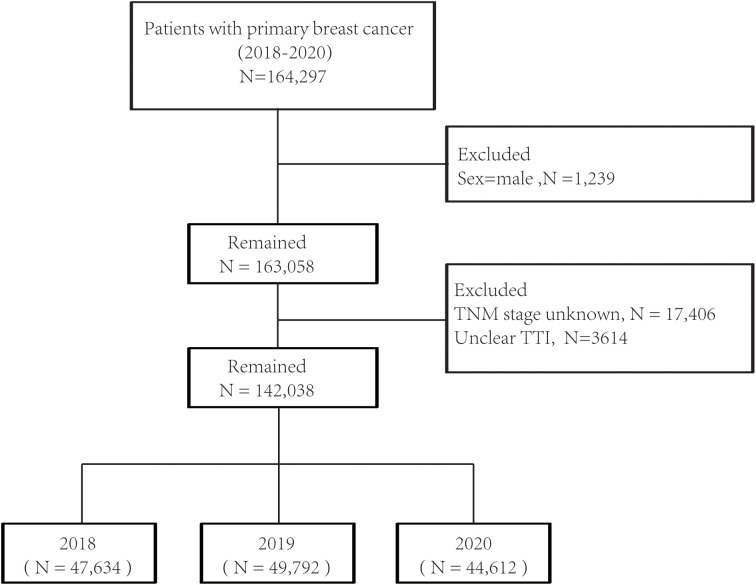
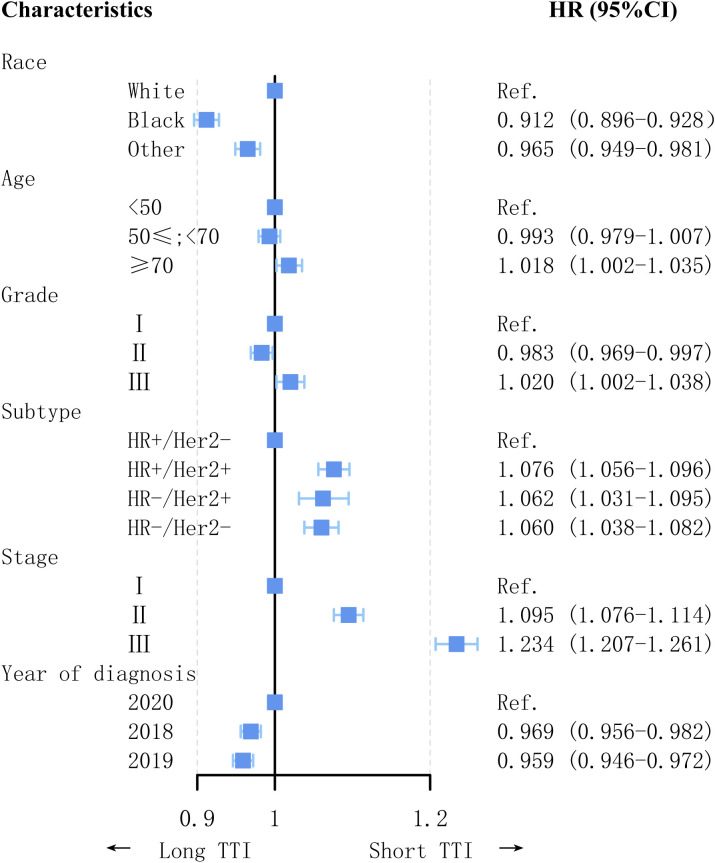
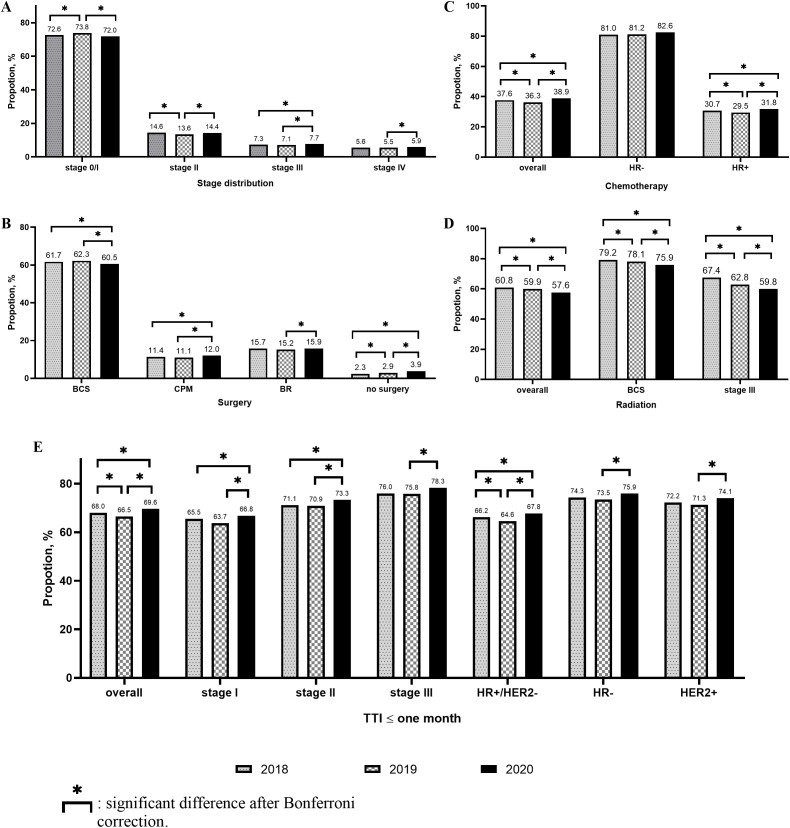
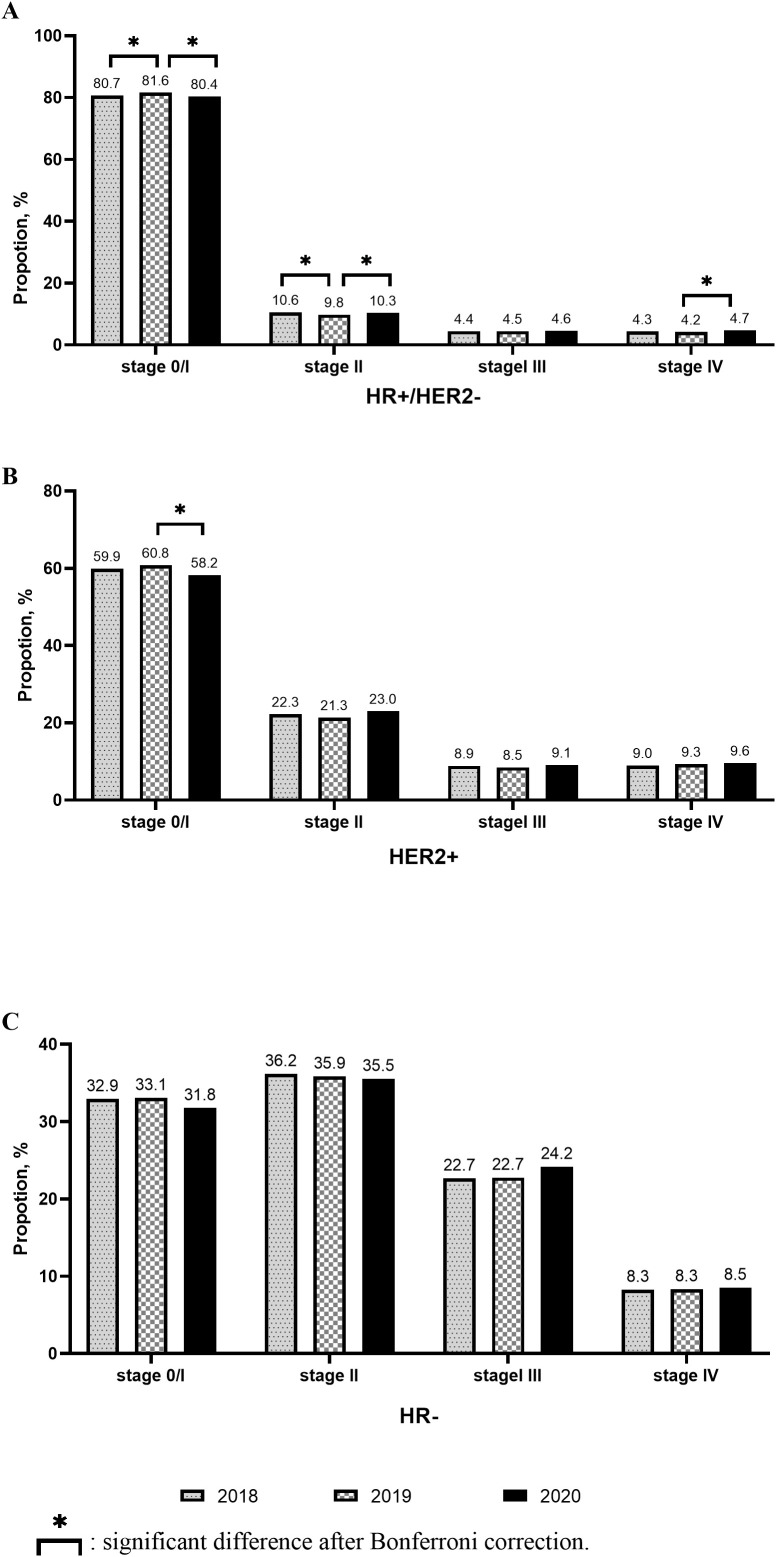
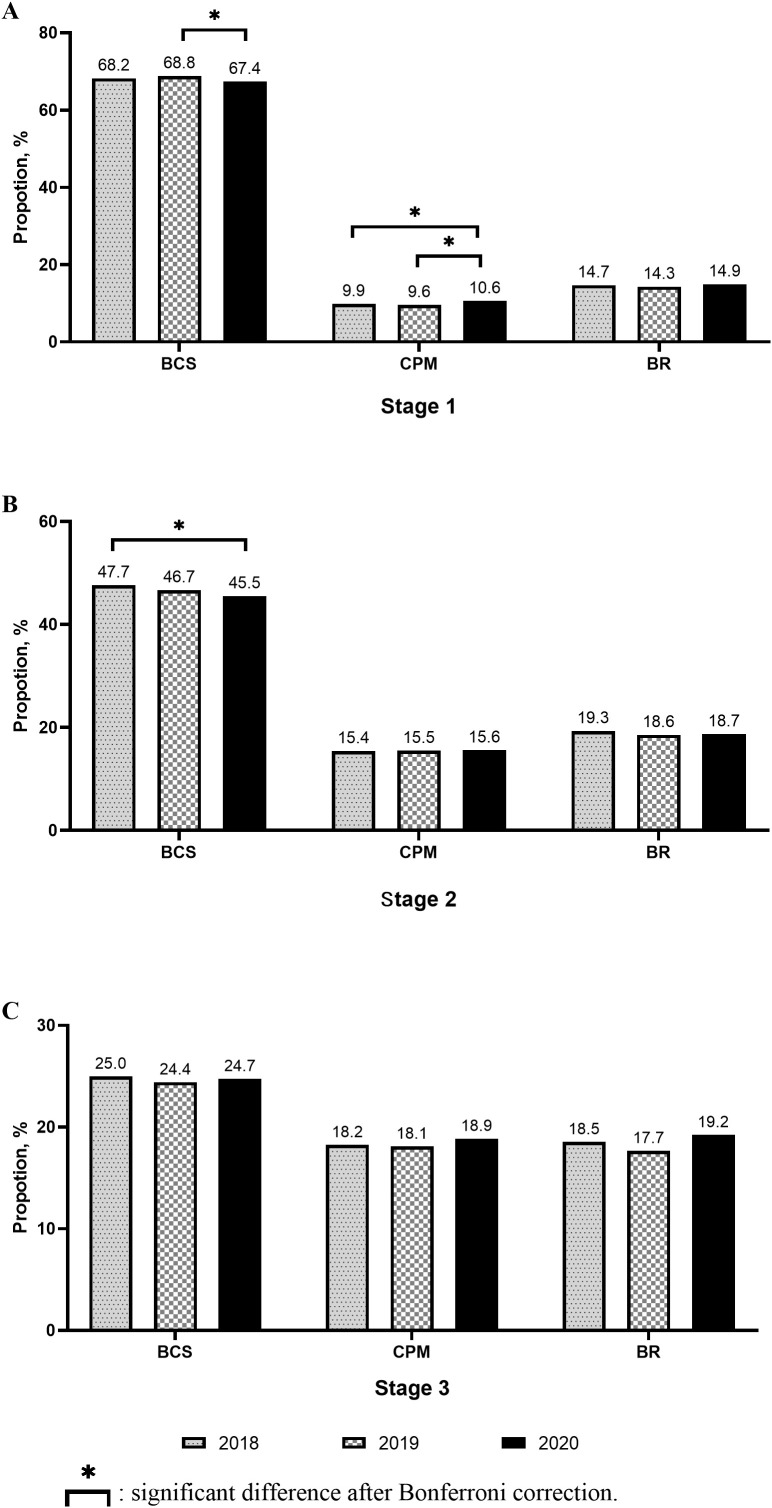
We analyzed 142,038 patients. There has been a decrease in breast cancer diagnoses in 2020, as well as the smaller number of surgeries. The distribution of breast cancer stages among patients exhibited a notable shift in 2020, with a decrease in the proportion of Stage 0-I and an increase in advanced-stage. Additionally, there was a significant decrease in the proportion of breast-conserving surgery (BCS) performed in 2020. The proportion of patients undergoing radiation decreased, while that of chemotherapy cases increased significantly in 2020. Patients showed a shorter treatment delay in 2020 than in 2018 or 2019 (2018: hazard ratio [HR] = 0.969, 95% confidence interval [CI] = 0.956-0.982, < 0.001; 2019: HR=0.959, 95% CI = 0.946-0.972, < 0.001). Diagnosis in 2020 showed a significant correlation with worse OS than diagnosis in 2018 (HR = 0.861, 95% CI = 0.743-0.996, = 0.045).
We observed a shift to advanced-stage and a change of treatment modalities of early breast cancer in 2020. The OS of patients with breast cancer was worse during the pandemic than before the pandemic. The findings could provide empirical basis for optimizing cancer prevention and control strategies in future public health emergencies.
评估2019冠状病毒病(COVID-19)大流行对早期乳腺癌(I-III期)患者的临床表现、治疗及生存情况的影响。
本研究利用了监测、流行病学和最终结果数据库中2018年1月1日至2020年12月31日的数据。将2020年诊断为原发性乳腺癌的患者与2018年或2019年诊断的患者进行比较。主要结局为早期乳腺癌的分期分布及治疗方式的变化。次要结局为总生存期(OS)和乳腺癌特异性生存期(BCSS)。
我们分析了142,038例患者。2020年乳腺癌诊断病例数减少,手术例数也减少。2020年患者中乳腺癌分期分布出现显著变化,0-I期比例下降,晚期比例上升。此外,2020年保乳手术(BCS)的比例显著下降。接受放疗的患者比例下降,而2020年化疗病例的比例显著上升。2020年患者的治疗延迟时间比2018年或2019年更短(2018年:风险比[HR]=0.969,95%置信区间[CI]=0.956-0.982,P<0.001;2019年:HR=0.959,95%CI=0.946-0.972,P<0.001)。2020年诊断的患者与2018年诊断的患者相比,OS显著较差(HR=0.861,95%CI=0.743-0.996,P=0.045)。
我们观察到2020年早期乳腺癌出现向晚期转变及治疗方式改变。大流行期间乳腺癌患者的OS比大流行前更差。这些发现可为未来突发公共卫生事件中优化癌症防控策略提供实证依据。