Xia Huaqiang, Zhang Juan, Mao Wuyuan, Yi Kangle, Wang Teng, Liao Lingyan
Reproductive Medicine Center, Zhuzhou Central Hospital, Zhuzhou Hospital Affiliated to Xiangya School of Medicine, Central South University, Zhuzhou, Hunan, 410120, China.
Hunan Institute of Animal and Veterinary Science, Changsha, 41000, Hunan, China.
Basic Clin Androl. 2024 Dec 13;34(1):22. doi: 10.1186/s12610-024-00240-3.
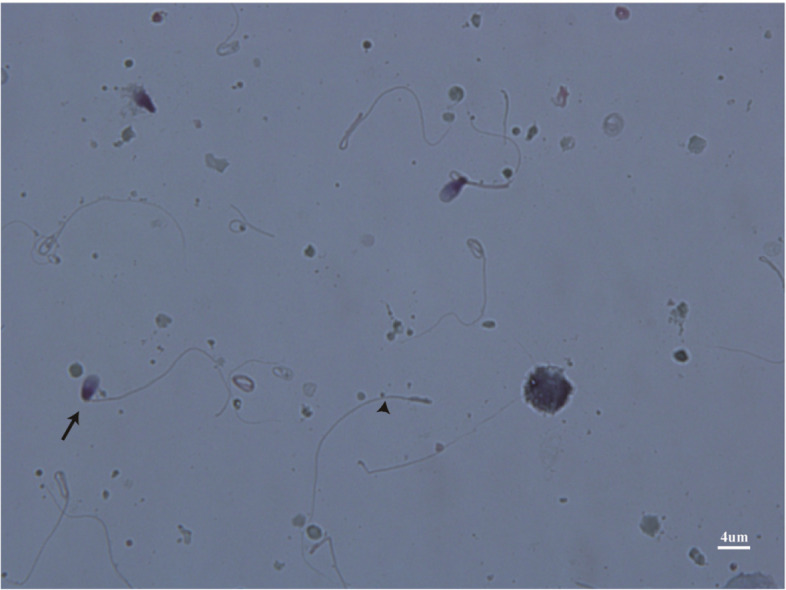
Acephalic spermatozoa syndrome is a rare but severe type of teratozoospermia. The familial trait of acephalic spermatozoa syndrome suggests that genetic factors play an important role. However, known mutations account for only some acephalic spermatozoa syndrome patients, and more studies are needed to elucidate its pathogenesis. The current study aimed to elucidate the pathogenesis of acephalic spermatozoa syndrome caused by PMFBP1 mutation.
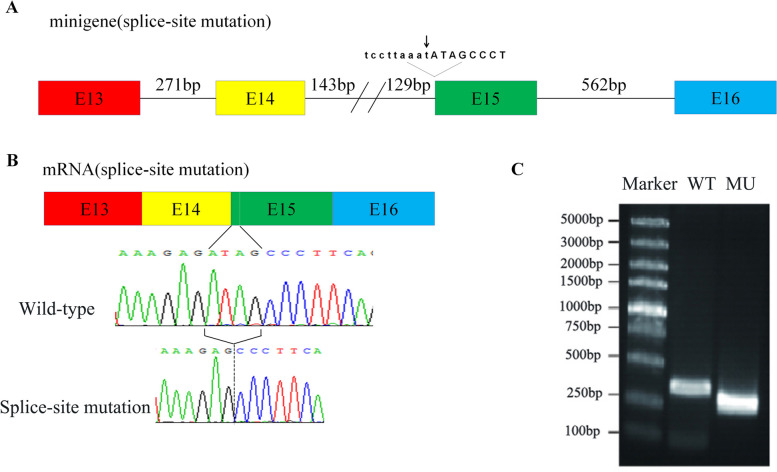
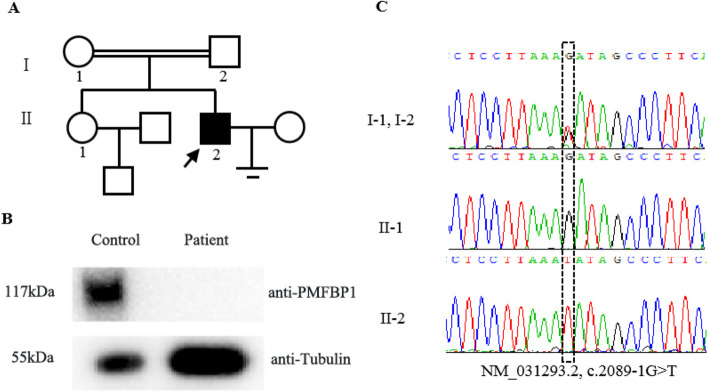
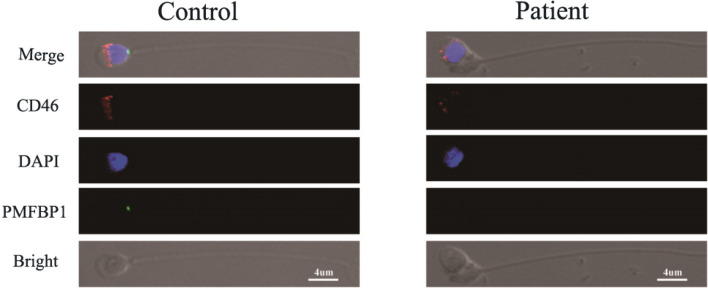
We identified a homozygous splice site mutation (NM_031293.2, c.2089-1G > T) in PMFBP1 through Sanger sequencing. Western blotting and immunofluorescence analyses revealed that this splice site mutation resulted in the absence of PMFBP1 protein expression in the patient's sperm cells. We generated an in vitro model carrying the splice site mutation in PMFBP1 and confirmed, through RT‒PCR and Sanger sequencing, that it led to a deletion of 4 base pairs from exon 15.
A homozygous splice site mutation results in a deletion of 4 bp from exon 15 of PMFBP1, thereby affecting the expression of the PMFBP1 protein. The absence of PMFBP1 protein expression can lead to acephalic spermatozoa syndrome. This finding elucidates the underlying cause of acephalic spermatozoa syndrome associated with this specific mutation (NM_031293.2, c.2089-1G > T) in PMFBP1.
无头精子症候群是一种罕见但严重的畸形精子症类型。无头精子症候群的家族特征表明遗传因素起重要作用。然而,已知的突变仅能解释部分无头精子症候群患者的病因,仍需要更多研究来阐明其发病机制。本研究旨在阐明由PMFBP1突变引起的无头精子症候群的发病机制。
我们通过桑格测序在PMFBP1中鉴定出一个纯合剪接位点突变(NM_031293.2,c.2089-1G>T)。蛋白质免疫印迹和免疫荧光分析显示,该剪接位点突变导致患者精子细胞中缺乏PMFBP1蛋白表达。我们构建了一个携带PMFBP1剪接位点突变的体外模型,并通过逆转录-聚合酶链反应(RT-PCR)和桑格测序证实,该突变导致外显子15缺失4个碱基对。
纯合剪接位点突变导致PMFBP1外显子15缺失4个碱基对,从而影响PMFBP1蛋白的表达。PMFBP1蛋白表达缺失可导致无头精子症候群。这一发现阐明了与PMFBP1中该特定突变(NM_031293.2,c.2089-1G>T)相关的无头精子症候群的潜在病因。