Ge Xiangwei, Liu Qiaowei, Fan Hao, Yu Hongyang, Li Jinfeng, Li Yao, Qin Boyu, Ma Junxun, Wang Jinliang, Hu Yi
Medical School of Chinese PLA, Beijing, China.
Department of Oncology, the First Medical Center, Chinese PLA General Hospital, Beijing, China.
Transl Lung Cancer Res. 2024 Nov 30;13(11):3010-3025. doi: 10.21037/tlcr-24-649. Epub 2024 Nov 21.
Radiation-induced lung injury (RILI) is one of the serious adverse reactions of thoracic radiotherapy, which largely limits the dose and therapeutic effect of radiotherapy. The underlying mechanism has not been elucidated. RILI is characterized by an acute inflammatory response, and stimulator of interferon genes (STING) has been reported to play an important role in regulating inflammation and innate immune activation. However, its role in RLLI, remains unclear. Here, we reported the potential therapeutic effect of STING inhibitor H-151 on RILI.
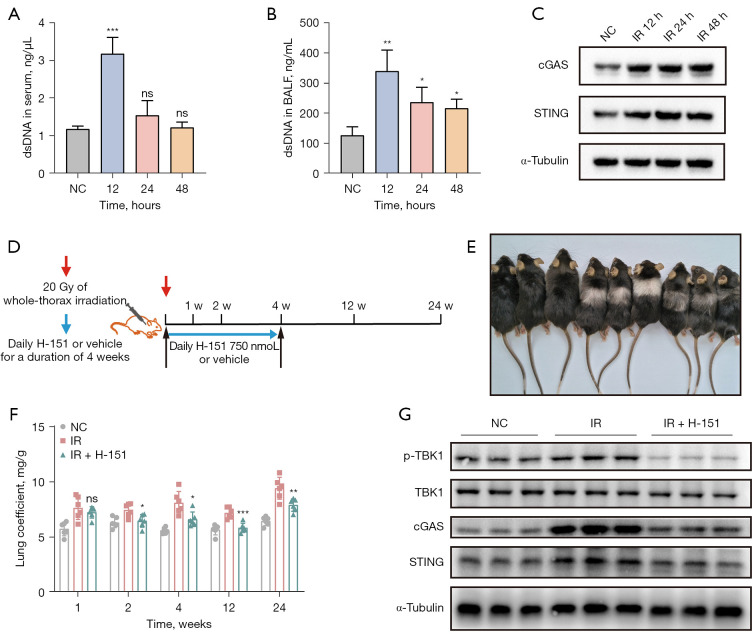
C57BL/6J mice were exposed to 20 Gy whole-thorax irradiation and H-151 was injected intraperitoneally from the day of irradiation for 4 weeks. The degree of RILI was then assessed. To further explore the mechanism of STING in RILI, the supernatant of irradiated lung epithelial cell MLE-12 was co-cultured with embryonic fibroblast cell NIH/3T3.
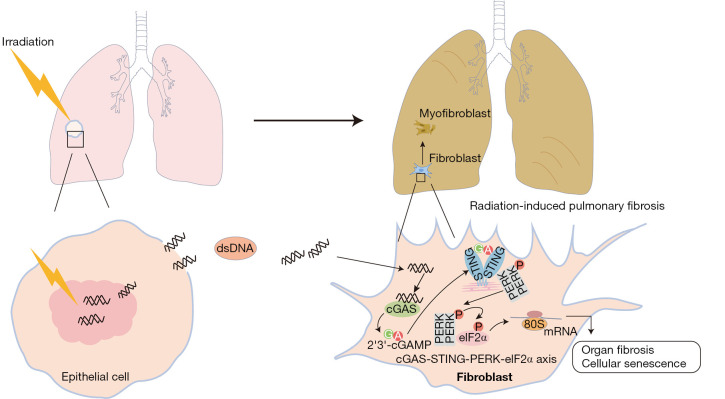
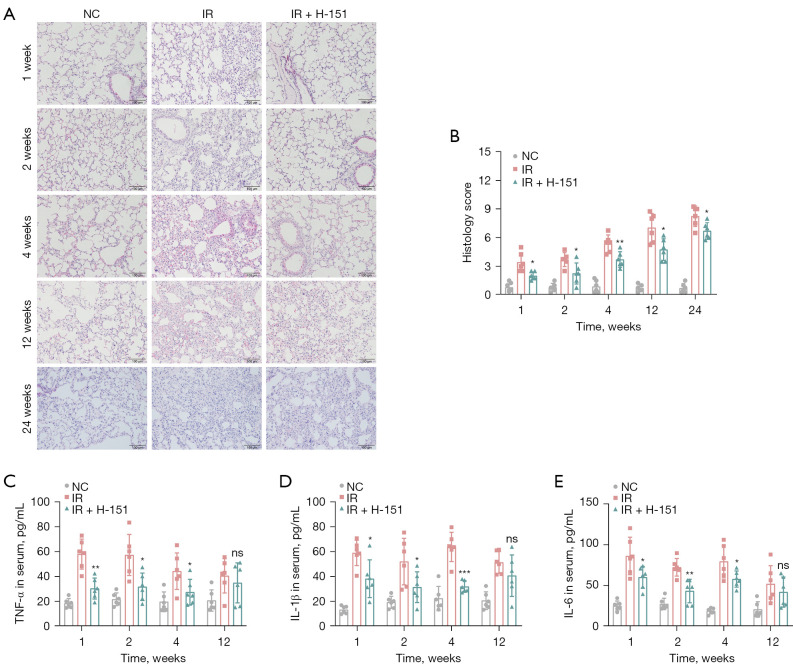
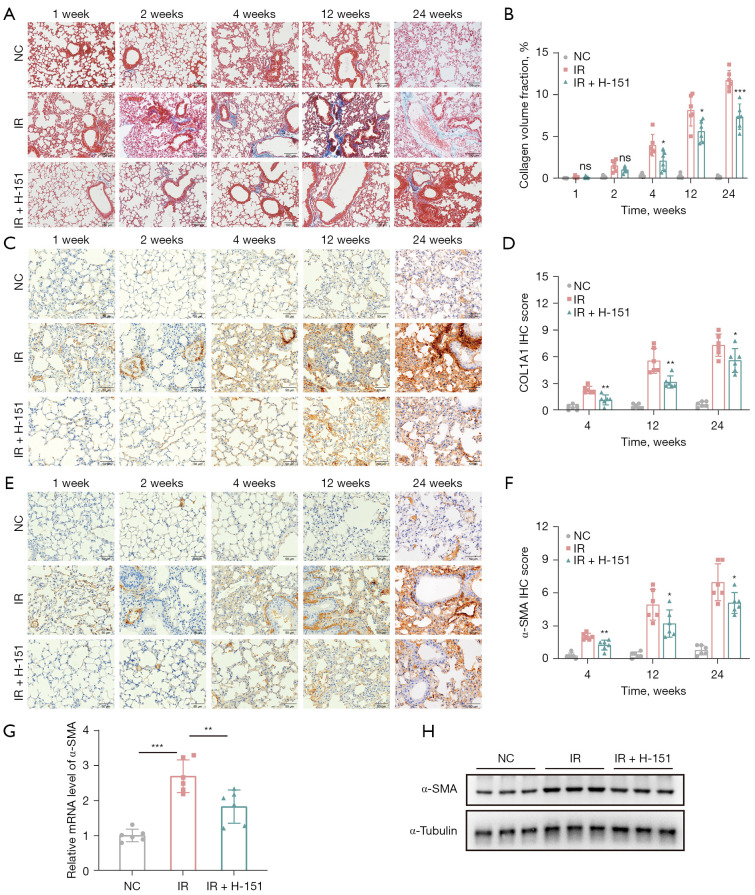
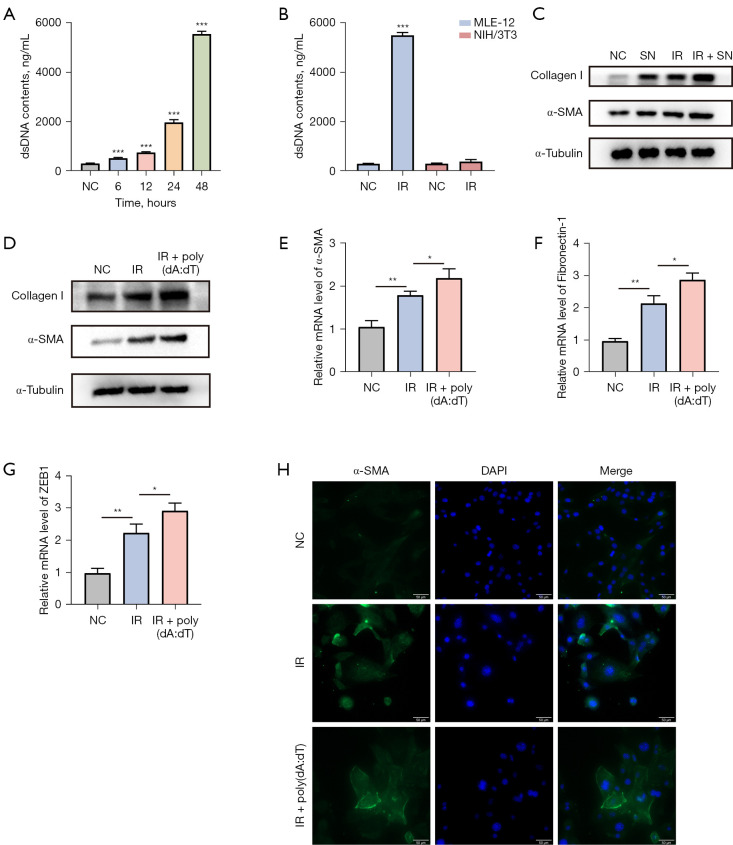
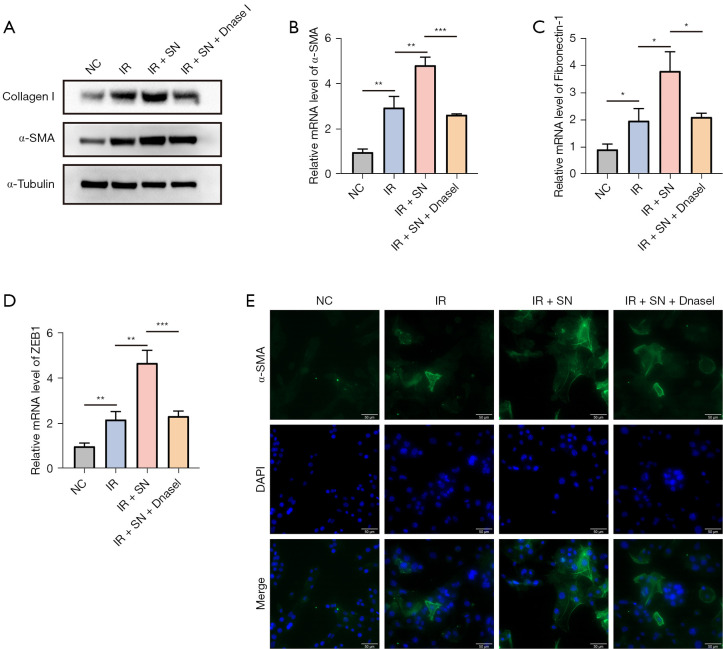
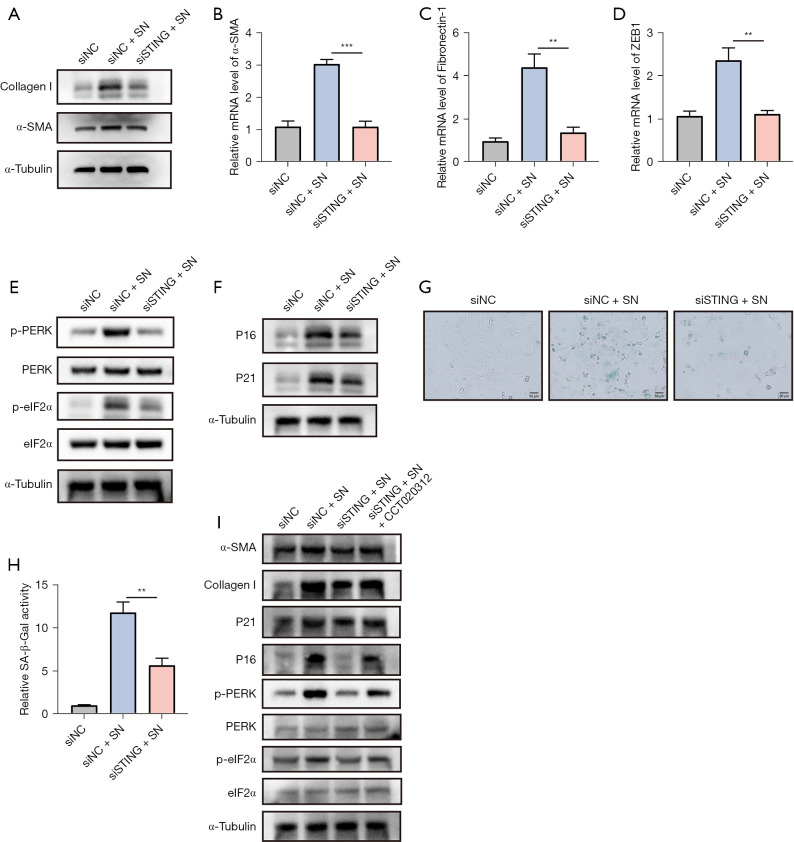
The cyclic guanosine monophosphate-adenosine monophosphate synthase (cGAS)-STING pathway is abnormally activated in irradiated mouse lung tissues. The early application of STING inhibitor significantly alleviated radiation-induced inflammatory cell infiltration and pro-inflammatory cytokine release in lung tissue, as well as the degree of fibrosis in the late stage. The amount of double-stranded DNA (dsDNA) in the supernatant of irradiated MLE-12 cells was abnormally increased, and the epithelial-derived dsDNA could promote the transformation of fibroblasts into myofibroblasts. Mechanistically, STING could mediate the activation of fibroblasts to myofibroblasts via the PKR-like endoplasmic reticulum kinase (PERK)-eukaryotic initiation factor 2α (eIF2α) pathway.
Our study focused on the activation of cGAS-STING signaling pathway in RILI, and inhibition of STING significantly ameliorated RILI in mice. STING mediated the effect of radiation-induced dsDNA release to stimulate the activation of inflammatory response, and STING restriction significantly delayed the fibrosis process through the PERK-eIF2α pathway, suggesting that STING intervention may pave a new avenue for the treatment of RILI.
放射性肺损伤(RILI)是胸部放疗的严重不良反应之一,在很大程度上限制了放疗的剂量和治疗效果。其潜在机制尚未阐明。RILI的特征是急性炎症反应,据报道干扰素基因刺激因子(STING)在调节炎症和先天免疫激活中起重要作用。然而,其在放射性肺损伤中的作用仍不清楚。在此,我们报道了STING抑制剂H-151对RILI的潜在治疗作用。
将C57BL/6J小鼠暴露于20 Gy的全胸照射,从照射当天起腹腔注射H-151,持续4周。然后评估RILI的程度。为进一步探究STING在RILI中的机制,将照射后的肺上皮细胞MLE-12的上清液与胚胎成纤维细胞NIH/3T3共培养。
环磷酸鸟苷-腺苷酸合成酶(cGAS)-STING通路在照射后的小鼠肺组织中异常激活。早期应用STING抑制剂可显著减轻辐射诱导的肺组织炎症细胞浸润和促炎细胞因子释放,以及后期的纤维化程度。照射后的MLE-12细胞上清液中双链DNA(dsDNA)量异常增加,且上皮来源的dsDNA可促进成纤维细胞向肌成纤维细胞转化。机制上,STING可通过蛋白激酶R样内质网激酶(PERK)-真核起始因子2α(eIF2α)通路介导成纤维细胞向肌成纤维细胞的激活。
我们的研究聚焦于RILI中cGAS-STING信号通路的激活,抑制STING可显著改善小鼠的RILI。STING介导辐射诱导的dsDNA释放以刺激炎症反应的激活,限制STING可通过PERK-eIF2α通路显著延迟纤维化进程,提示STING干预可能为RILI的治疗开辟一条新途径。