Farrell Eilish M, Neumann Andreas, Beermann Jan, Wrede Alexa
Benthic Ecology, Alfred Wegener Institute, Helmholtz Centre for Polar and Marine Research, Bremerhaven, Bremen, Germany.
Aquatic Nutrient Cycles, Helmholtz Centre Hereon, Geesthacht, Hamburg, Germany.
PeerJ. 2024 Feb 28;12:e17047. doi: 10.7717/peerj.17047. eCollection 2024.
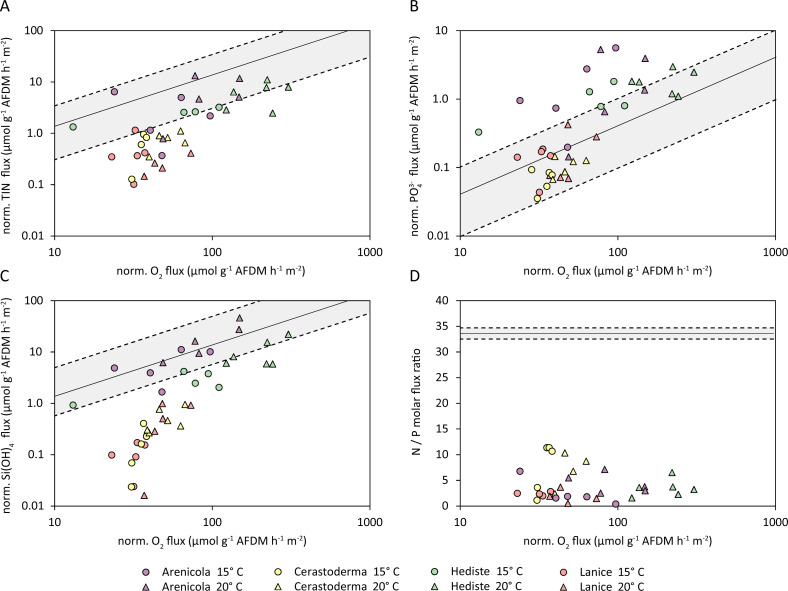
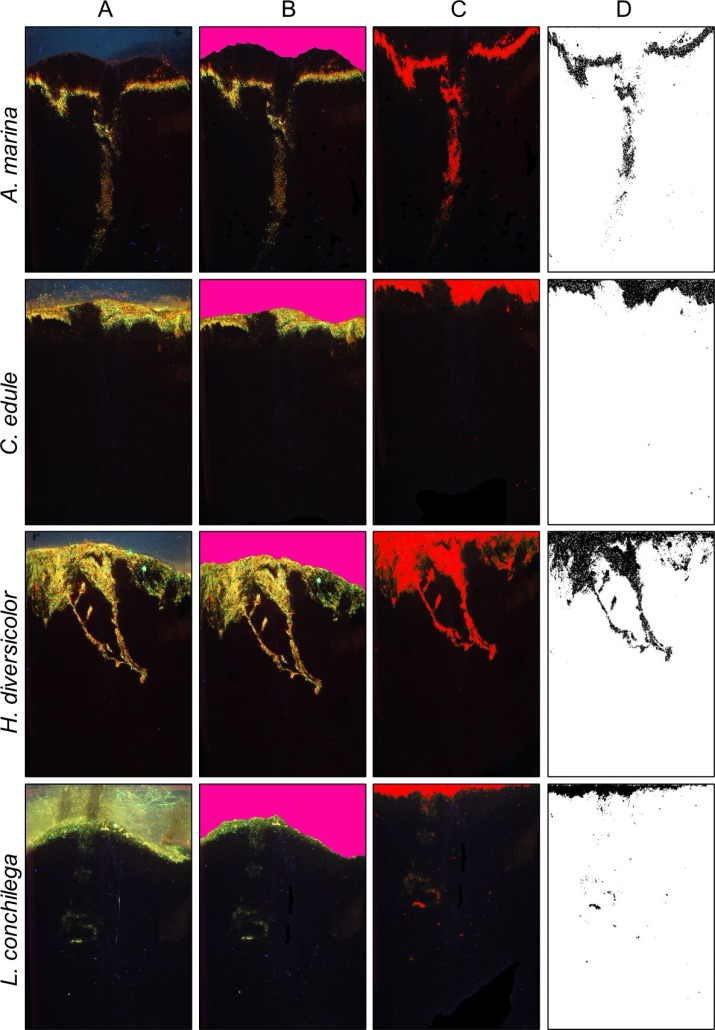
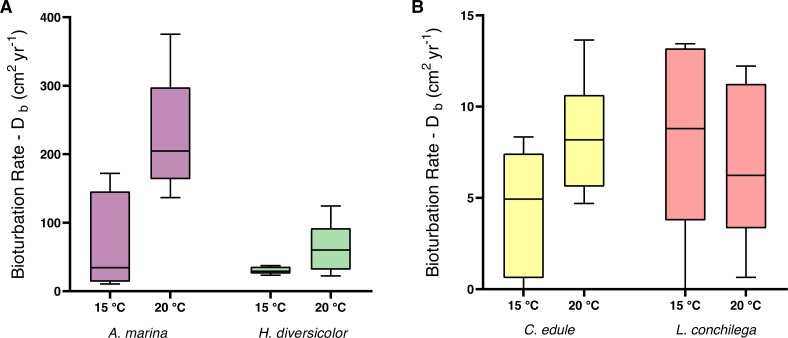
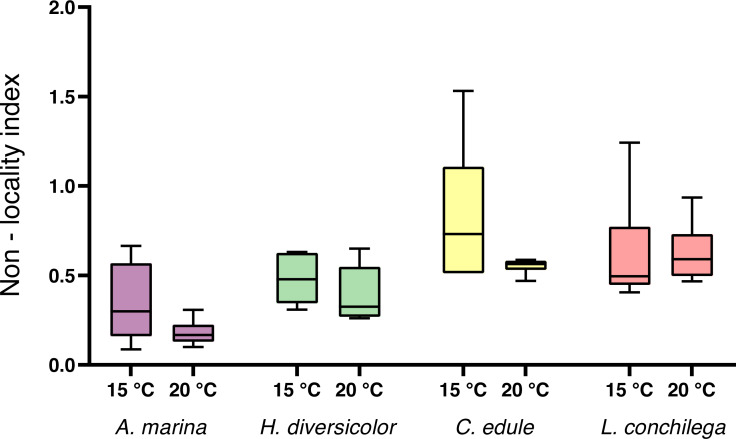
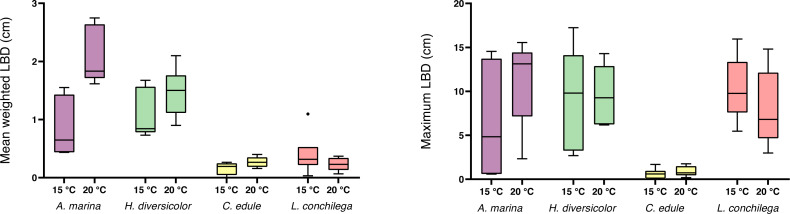
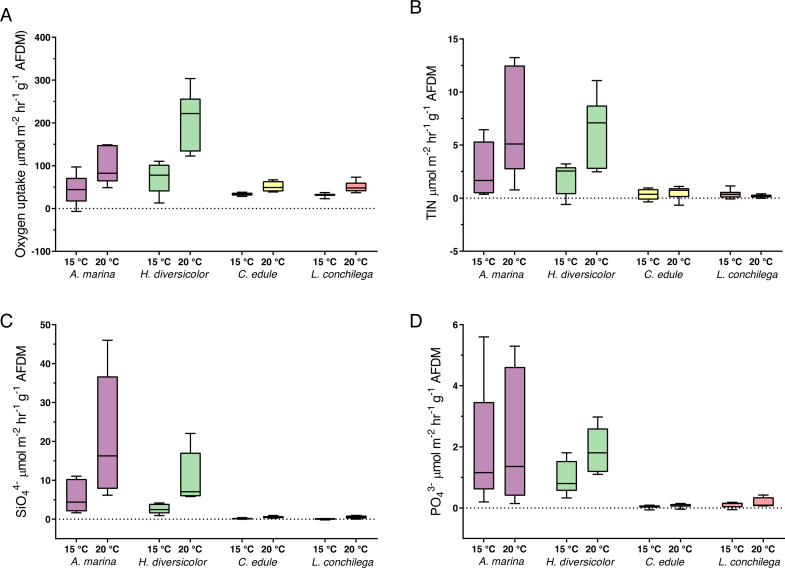
Sediment reworking by benthic infauna, namely bioturbation, is of pivotal importance in expansive soft-sediment environments such as the Wadden Sea. Bioturbating fauna facilitate ecosystem functions such as bentho-pelagic coupling and sediment nutrient remineralization capacities. Yet, these benthic fauna are expected to be profoundly affected by current observed rising sea temperatures. In order to predict future changes in ecosystem functioning in soft-sediment environments like the Wadden Sea, knowledge on the underlying processes such as sediment reworking, is crucial. Here, we tested how temperature affects bioturbation and its associated ecosystem processes, such as benthic nutrient fluxes and sediment oxygen consumption, using luminophore tracers and sediment incubation cores. We used a controlled mesocosm experiment set-up with key Wadden Sea benthos species: the burrowing polychaetes and , the bivalve , and the tube-building polychaete . The highest bioturbation rates were observed from , reaching up to 375 cmyr; followed by with 124 cmyr being the peak bioturbation rate for the ragworm. Additionally, the sediment reworking activity of facilitated nearly double the amount of silicate efflux compared to any other species. and accordingly facilitated stronger nutrient effluxes under a warmer temperature than and The oxygen uptake of and within the sediment incubation cores was correspondingly enhanced with a higher temperature. Thus, increases in sea temperatures may initially be beneficial to ecosystem functioning in the Wadden Sea as faunal bioturbation is definitely expedited, leading to a tighter coupling between the sediment and overlying water column. The enhanced bioturbation activity, oxygen consumption, and facilitated nutrient effluxes from these invertebrates themselves, will aid in the ongoing high levels of primary productivity and organic matter production.
底栖动物对沉积物的改造作用,即生物扰动,在诸如瓦登海这样广阔的软沉积物环境中至关重要。生物扰动动物促进了诸如底栖 - 水层耦合和沉积物养分再矿化能力等生态系统功能。然而,预计这些底栖动物会受到当前观测到的海温上升的深刻影响。为了预测像瓦登海这样的软沉积物环境中生态系统功能的未来变化,了解诸如沉积物改造等潜在过程的知识至关重要。在此,我们使用发光体示踪剂和沉积物培养核心,测试了温度如何影响生物扰动及其相关的生态系统过程,如底栖养分通量和沉积物氧消耗。我们使用了一个受控的中宇宙实验装置,其中包含瓦登海关键底栖生物物种:穴居多毛类动物 和 、双壳贝类 以及管栖多毛类动物 。观察到 的生物扰动速率最高,达到375厘米/年;其次是 ,沙蚕的峰值生物扰动速率为124厘米/年。此外,与其他任何物种相比, 的沉积物改造活动促进的硅酸盐外流几乎多一倍。在温度较高时, 和 相应地促进了比 和 更强的养分外流。沉积物培养核心内 和 的氧摄取量随着温度升高而相应增加。因此,海温升高最初可能对瓦登海的生态系统功能有益,因为动物的生物扰动肯定会加快,导致沉积物与上覆水柱之间的耦合更紧密。这些无脊椎动物自身增强的生物扰动活动、氧消耗和促进的养分外流,将有助于维持高水平的初级生产力和有机物质生产。