Mulay Manjushree V, Naik Shraddha D, Wyawahare Anupama S, Mahajan Swati M, Kulkarni Smita S
Department of Microbiology, MGM Medical College and Hospital, Aurangabad, Maharashtra, India.
GMS Hyg Infect Control. 2024 Nov 5;19:Doc59. doi: 10.3205/dgkh000514. eCollection 2024.
This study aimed to assess the awareness of and adherence to infection control practices among healthcare workers (HCWs) in three primary healthcare centers (PHCs) near Aurangabad City, Maharashtra, India.
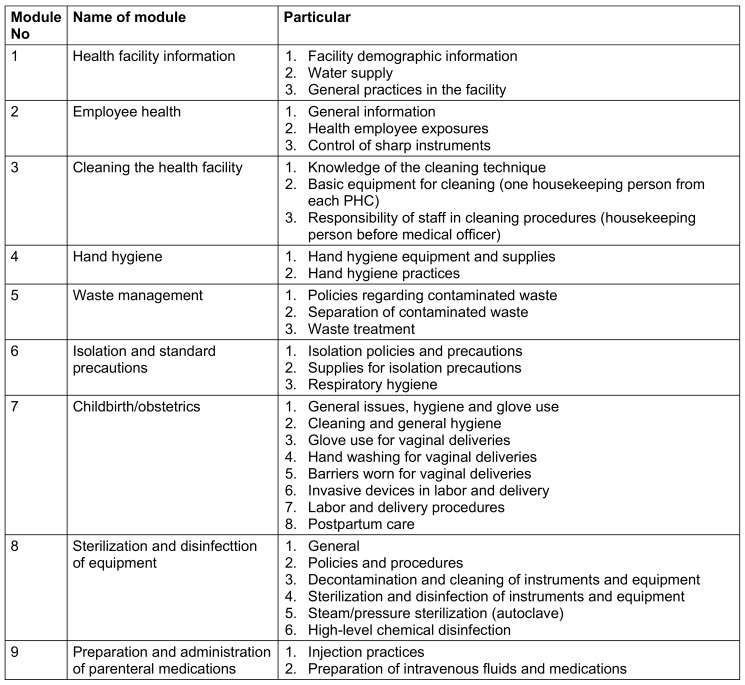
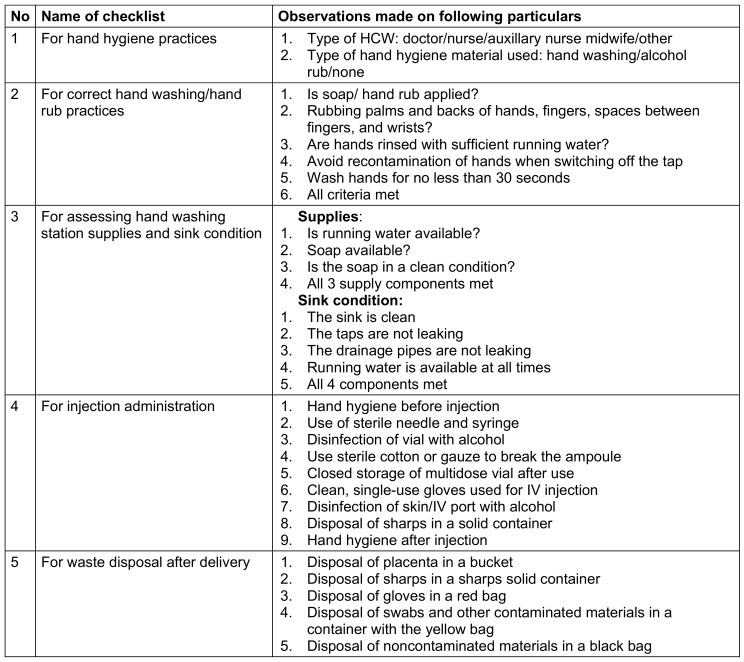
A prospective observational study over six months involved 64 HCWs from three PHCs (A, B, and C). Questionnaires and observation checklists based on guidelines from the WHO and the Systems for Improved Access to Pharmaceuticals and Services (SIAPS) were used to evaluate infection control practices across nine modules. These modules encompass health facility information, employee health, cleaning practices, hand hygiene, waste management, isolation and standard precautions, childbirth/obstetrics, sterilization, and preparation/administration of parenteral medications.
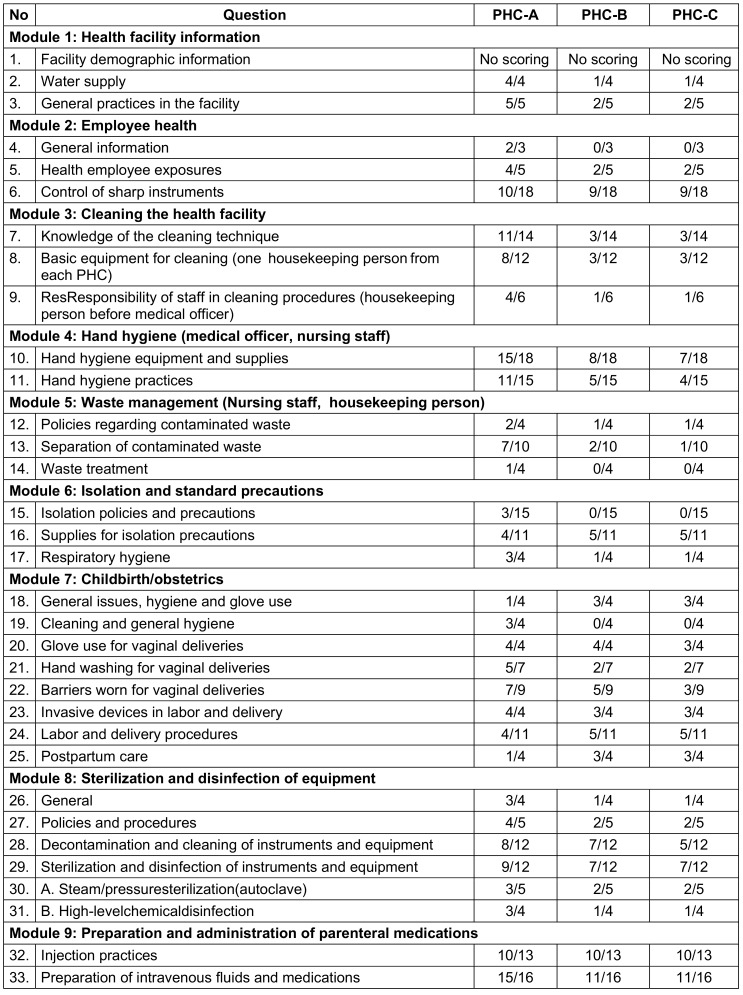
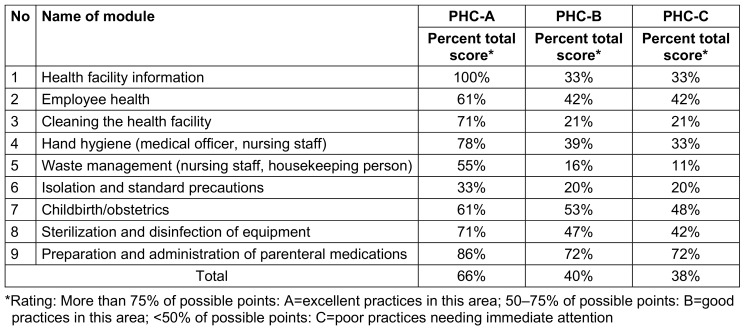
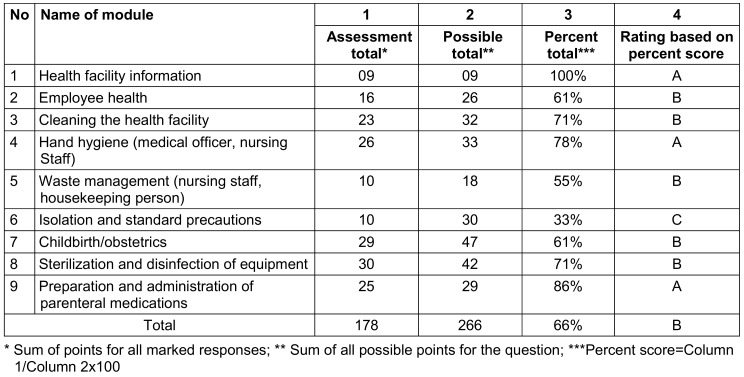
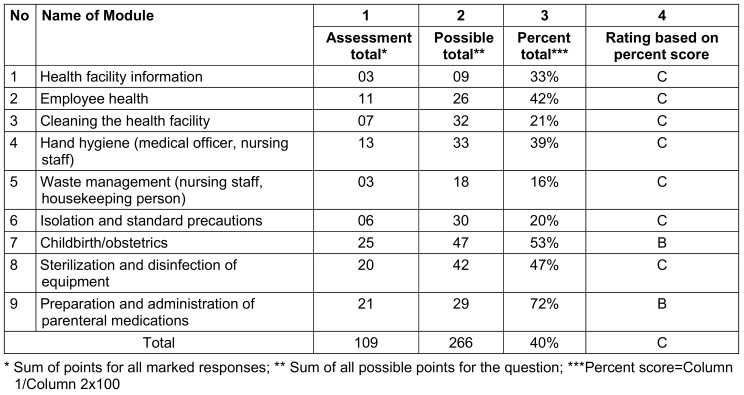
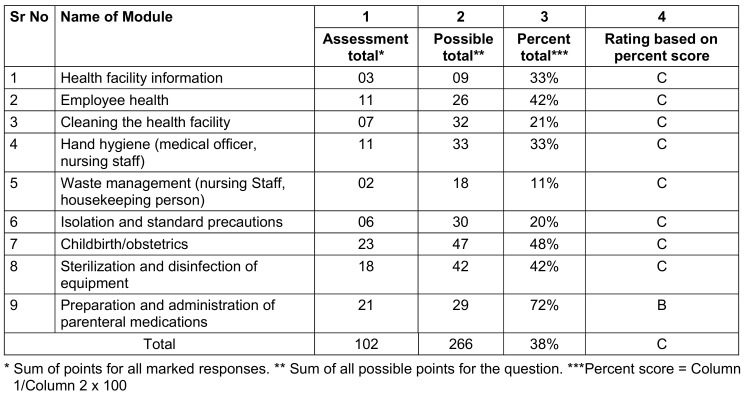
The study revealed varying levels of adherence to infection control practices among the three PHCs. PHC-A demonstrated strong practices with an overall score of 66%, while PHC-B and PHC-C exhibited weaker practices with 40% and 38%, respectively. Hand hygiene practices showed higher compliance at PHC-A (78%), contrasting with lower compliance observed at PHC-B (39%) and PHC-C (33%). The study also noted deficiencies in hand hygiene facilities and inconsistencies in injection administration and waste disposal practices.
This study underscores the importance of ongoing training and targeted interventions to enhance infection control practices among HCWs in PHCs. The findings provide valuable insights for policymakers and administrators seeking to improve infection prevention measures in primary healthcare settings, contributing to better healthcare outcomes and enhanced patient safety.
本研究旨在评估印度马哈拉施特拉邦奥兰加巴德市附近三个初级卫生保健中心(PHC)的医护人员对感染控制措施的知晓度和依从性。
一项为期六个月的前瞻性观察性研究纳入了来自三个初级卫生保健中心(A、B和C)的64名医护人员。基于世界卫生组织和改善药品及服务可及性系统(SIAPS)的指南制定的问卷和观察清单,用于评估九个模块的感染控制措施。这些模块包括医疗机构信息、员工健康、清洁措施、手卫生、废物管理、隔离和标准预防措施、分娩/产科、消毒以及胃肠外用药的配制/给药。
研究揭示了三个初级卫生保健中心在感染控制措施依从性方面存在不同水平。初级卫生保健中心A表现出较强的措施,总分为66%,而初级卫生保健中心B和C表现较弱,分别为40%和38%。手卫生措施在初级卫生保健中心A的依从性较高(78%),与之形成对比的是,在初级卫生保健中心B(39%)和C(33%)观察到较低的依从性。研究还指出了手卫生设施的不足以及注射给药和废物处理措施的不一致性。
本研究强调了持续培训和针对性干预对于提高初级卫生保健中心医护人员感染控制措施的重要性。这些发现为寻求改善初级卫生保健环境中感染预防措施的政策制定者和管理人员提供了有价值的见解,有助于实现更好的医疗结果并提高患者安全性。