Youssef Ahmed M, Shamsaldin Muhamed, Abuzayed Bushra, Alameeri Shahad, Al Eid Mithaq M, Dib Ayah, Hussein Amal, Khalid Amna
College of Medicine, University of Sharjah, Sharjah, ARE.
Family and Community Medicine, University of Sharjah, Sharjah, ARE.
Cureus. 2024 Nov 14;16(11):e73666. doi: 10.7759/cureus.73666. eCollection 2024 Nov.
Living in university dormitories can have a negative impact on students' psychological health and quality of life. This cross-sectional study aimed to investigate the frequency and risk factors of psychological distress and quality of life among university students living in dormitories at a university in Sharjah.
A total of 336 participants between the ages of 18 and 24 years were recruited. The World Health Organization Quality of Life Brief Version (WHOQOL-BREF) scale and Kessler's Psychological Distress Scale (K10) were used to assess the quality of life (QoL) and psychological distress (PD), respectively. Data were analyzed via SPSS 25 (Chicago, IL: IBM Corp.) and p≤5% were reported as statistically significant.
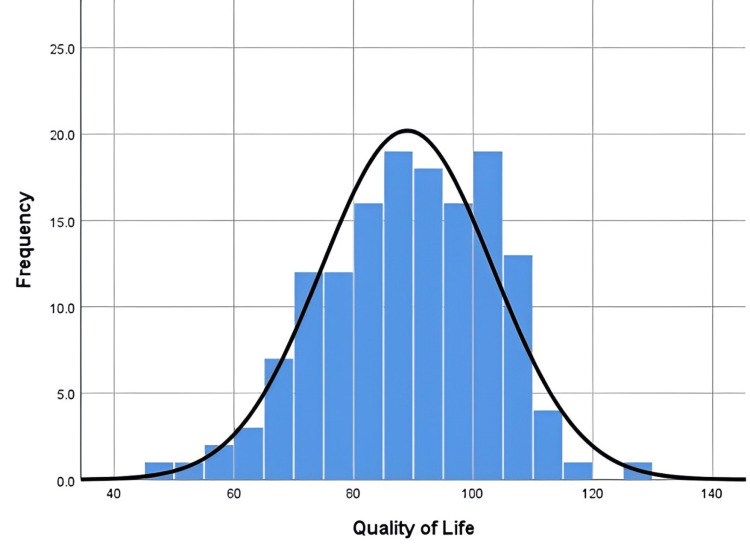
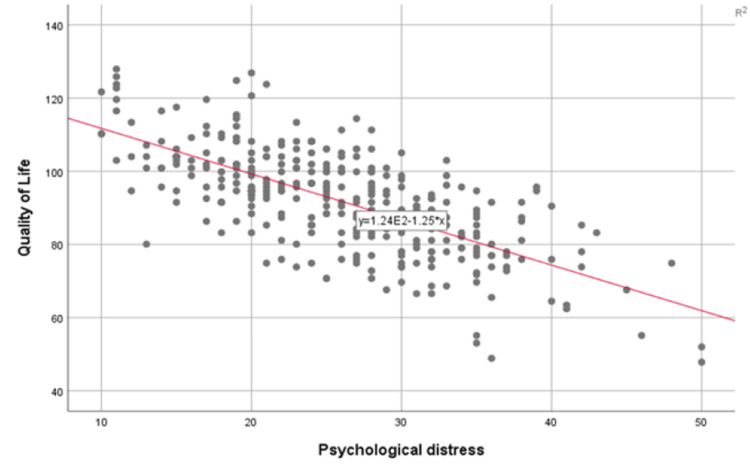
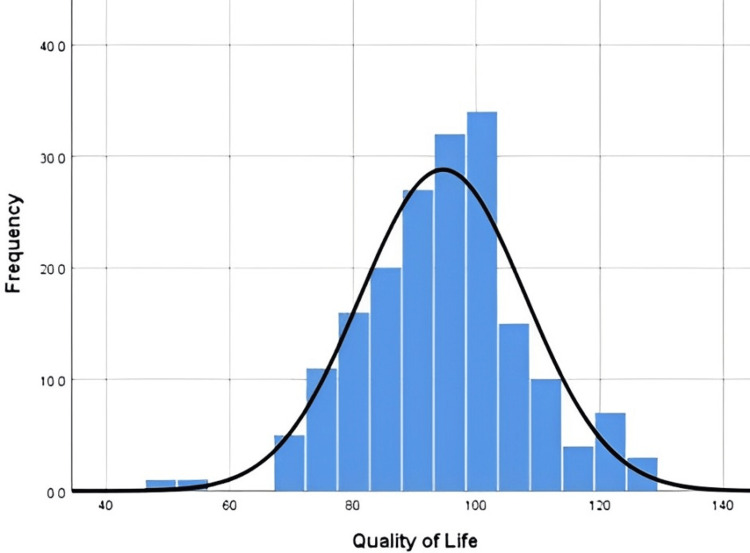
A total of 43.45% (n=145) of participants lived in dormitories, while 56.55% (n=186) lived elsewhere. The mean QoL was higher (94.55) for non-dormitory students compared to dormitory students (88.97) (p<0.000, 95% CI = -8.591 to -2.577). Our results also show that the QoL is inversely proportional to PD (p<0.001).
The findings of this study indicate that students living in dormitories are at higher risk of experiencing lower QoL compared to those living elsewhere, on top of the high rates of PD that they have to endure.
居住在大学宿舍可能会对学生的心理健康和生活质量产生负面影响。这项横断面研究旨在调查沙迦一所大学宿舍学生心理困扰和生活质量的发生频率及风险因素。
共招募了336名年龄在18至24岁之间的参与者。分别使用世界卫生组织生活质量简表(WHOQOL - BREF)和凯斯勒心理困扰量表(K10)来评估生活质量(QoL)和心理困扰(PD)。数据通过SPSS 25(伊利诺伊州芝加哥:IBM公司)进行分析,p≤5%被报告为具有统计学意义。
共有43.45%(n = 145)的参与者居住在宿舍,而56.55%(n = 186)居住在其他地方。非宿舍学生的平均生活质量(94.55)高于宿舍学生(88.97)(p < 0.000,95%可信区间 = -8.591至 -2.577)。我们的结果还表明生活质量与心理困扰成反比(p < 0.001)。
本研究结果表明,与居住在其他地方的学生相比,居住在宿舍的学生生活质量较低的风险更高,而且他们还必须忍受较高的心理困扰发生率。