Che Yonglu, Lee Jinwoo, Abou-Taleb Farah, Rieger Kerri E, Satpathy Ansuman T, Chang Anne Lynn S, Chang Howard Y
Department of Dermatology, Stanford University School of Medicine, Redwood City, CA, USA.
Department of Pathology, Stanford University School of Medicine, Stanford, CA, USA.
bioRxiv. 2024 Dec 4:2024.12.03.626669. doi: 10.1101/2024.12.03.626669.
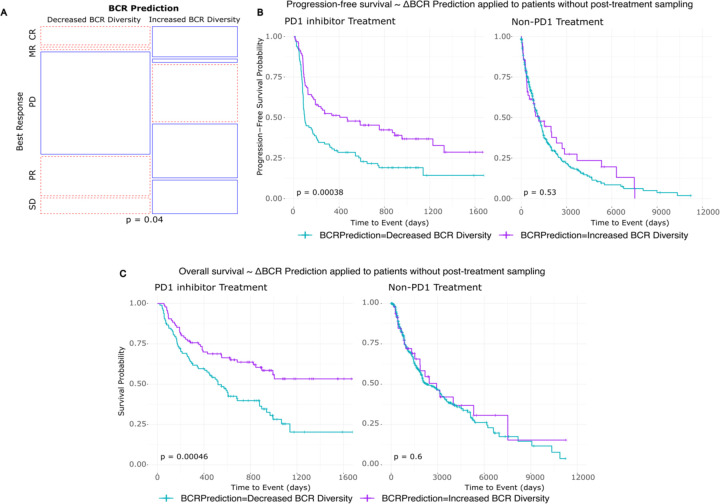
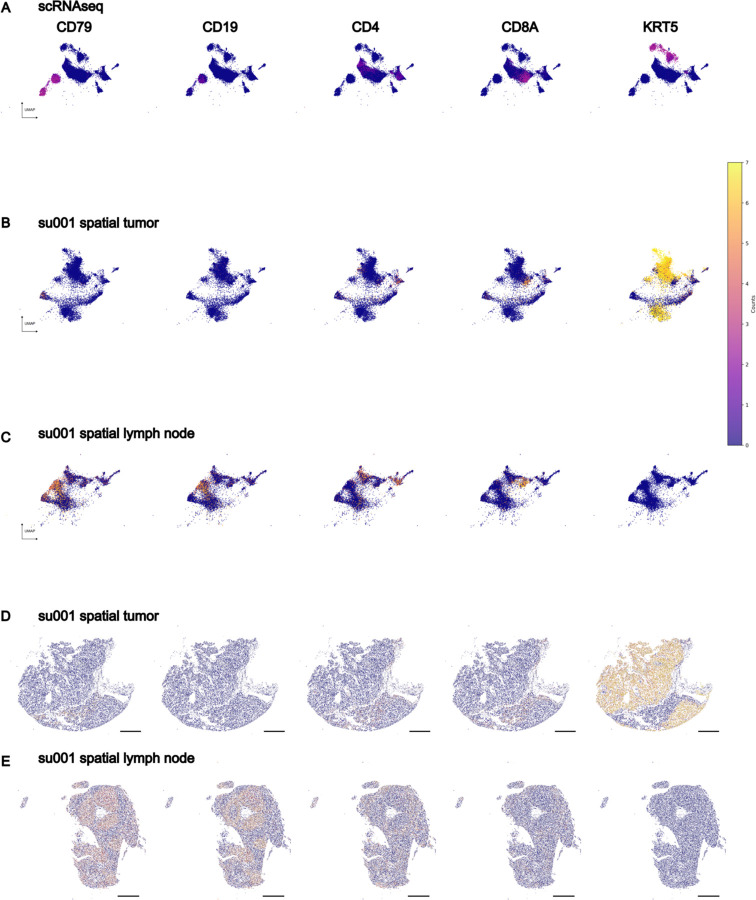
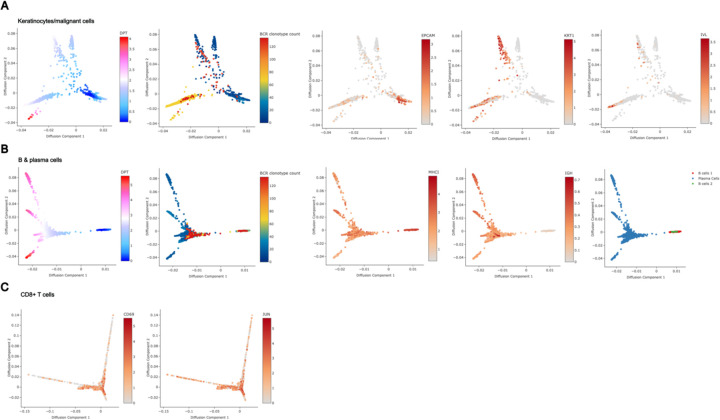
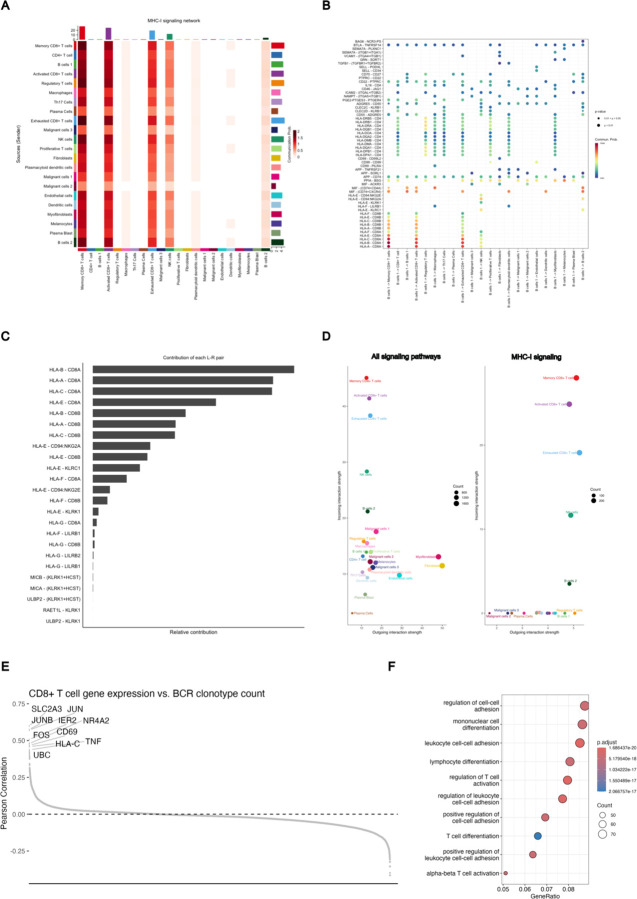
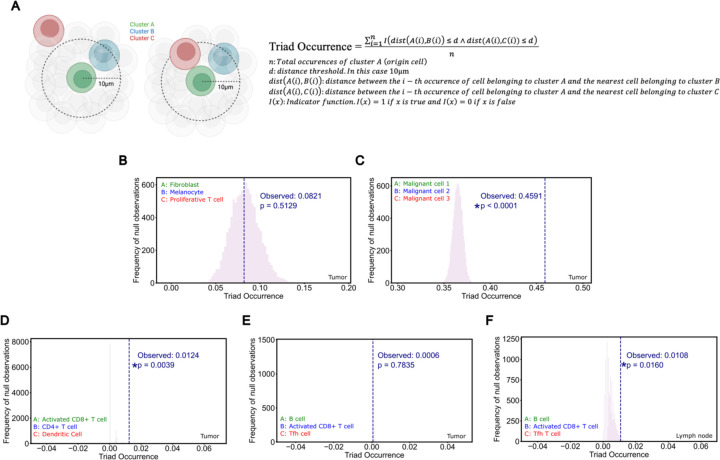
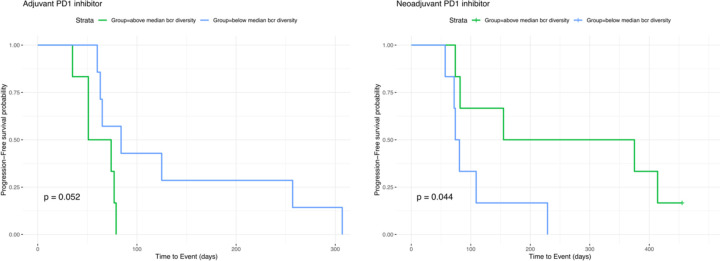
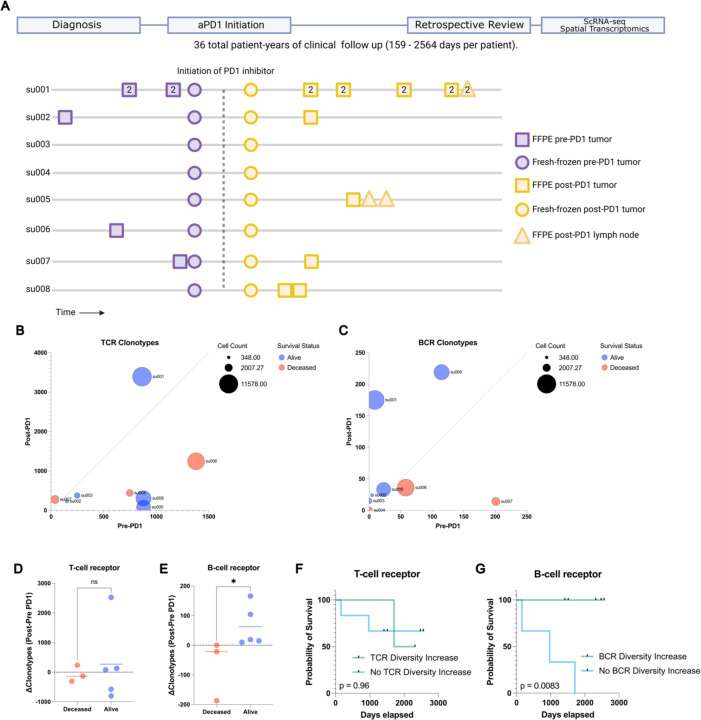
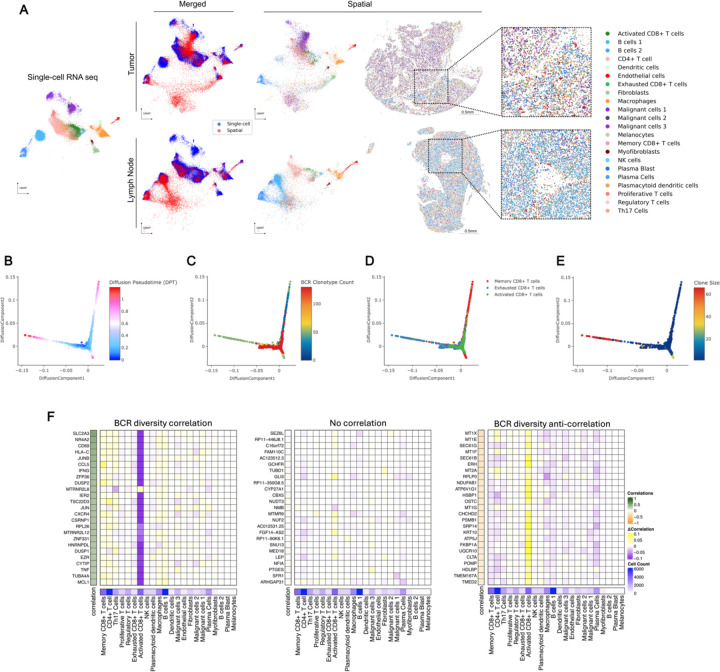
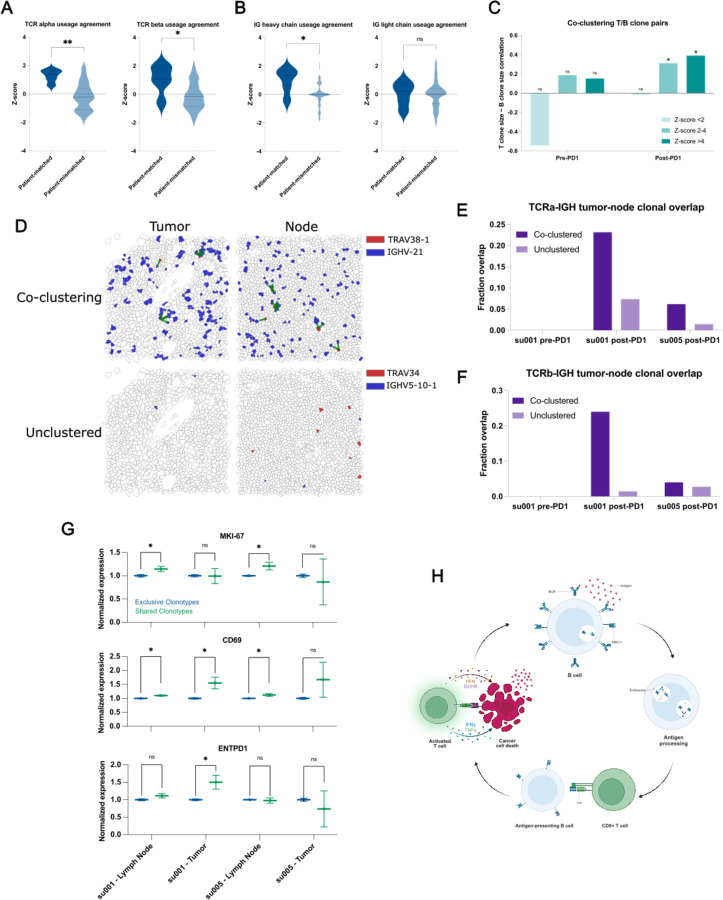
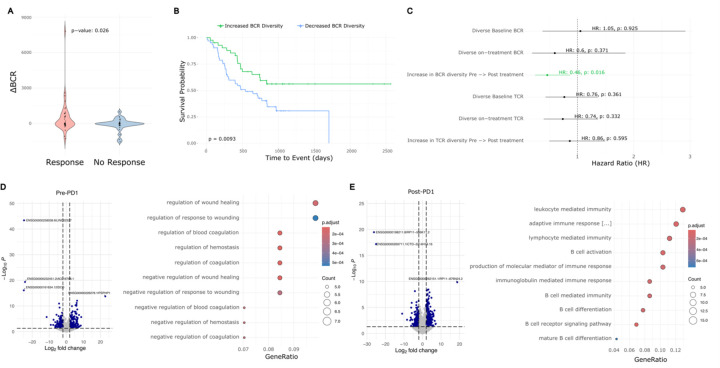
Immune checkpoint inhibitors such as anti-PD-1 antibodies (aPD1) can be effective in treating advanced cancers. However, many patients do not respond and the mechanisms underlying these differences remain incompletely understood. In this study, we profile a cohort of patients with locally-advanced or metastatic basal cell carcinoma undergoing aPD-1 therapy using single-cell RNA sequencing, high-definition spatial transcriptomics in tumors and draining lymph nodes, and spatial immunoreceptor profiling, with long-term clinical follow-up. We find that successful responses to PD-1 inhibition are characterized by an induction of B-cell receptor (BCR) clonal diversity after treatment initiation. These induced BCR clones spatially co-localize with T-cell clones, facilitate their activation, and traffic alongside them between tumor and draining lymph nodes to enhance tumor clearance. Furthermore, we validated aPD1-induced BCR diversity as a predictor of clinical response in a larger cohort of glioblastoma, melanoma, and head and neck squamous cell carcinoma patients, suggesting that this is a generalizable predictor of treatment response across many types of cancers. We discover that pre-treatment tumors harbor a characteristic gene expression signature that portends a higher probability of inducing BCR clonal diversity after aPD-1 therapy, and we develop a machine learning model that predicts PD-1-induced BCR clonal diversity from baseline tumor RNA sequencing. These findings underscore a dynamic role of B cell diversity during immunotherapy, highlighting its importance as a prognostic marker and a potential target for intervention in non-responders.
免疫检查点抑制剂,如抗程序性死亡蛋白1(PD-1)抗体(aPD1),在治疗晚期癌症方面可能有效。然而,许多患者并无反应,而这些差异背后的机制仍未完全明确。在本研究中,我们对一组接受aPD-1治疗的局部晚期或转移性基底细胞癌患者进行了分析,采用单细胞RNA测序、肿瘤及引流淋巴结的高清空间转录组学以及空间免疫受体分析,并进行了长期临床随访。我们发现,对PD-1抑制的成功反应的特征是在治疗开始后诱导B细胞受体(BCR)克隆多样性。这些诱导的BCR克隆在空间上与T细胞克隆共定位,促进其激活,并与它们一起在肿瘤和引流淋巴结之间移动,以增强肿瘤清除。此外,我们在更大的胶质母细胞瘤、黑色素瘤和头颈部鳞状细胞癌患者队列中验证了aPD1诱导的BCR多样性作为临床反应的预测指标,这表明这是多种癌症治疗反应的一个可推广的预测指标。我们发现,治疗前的肿瘤具有一种特征性基因表达特征,预示着aPD-1治疗后诱导BCR克隆多样性的可能性更高,并且我们开发了一种机器学习模型,可从基线肿瘤RNA测序预测PD-1诱导的BCR克隆多样性。这些发现强调了B细胞多样性在免疫治疗过程中的动态作用,突出了其作为预后标志物的重要性以及作为对无反应者进行干预的潜在靶点的重要性。