Roy Abhijit Deb, Gonzalez Cristian Saez, Shahid Farid, Yadav Eesha, Inoue Takanari
Department of Cell Biology and Center for Cell Dynamics, Johns Hopkins University School of Medicine, 855 North Wolfe Street, Baltimore, MD 21205, USA.
Center for Cell Analysis and Modeling, University of Connecticut School of Medicine, 400 Farmington Avenue, Farmington, CT 06030, USA.
bioRxiv. 2024 Dec 2:2024.12.01.626286. doi: 10.1101/2024.12.01.626286.
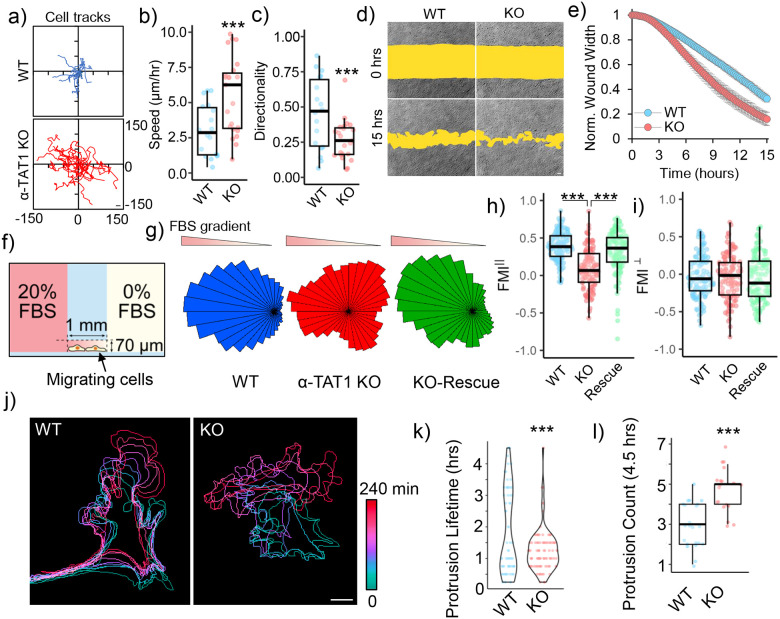
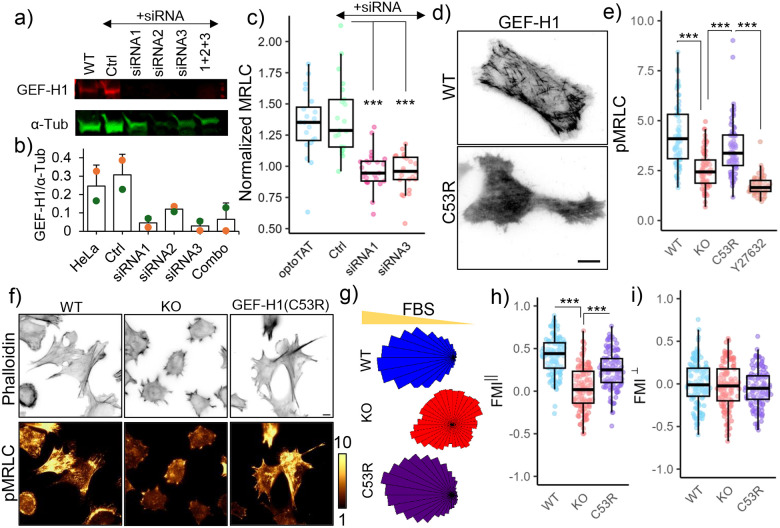
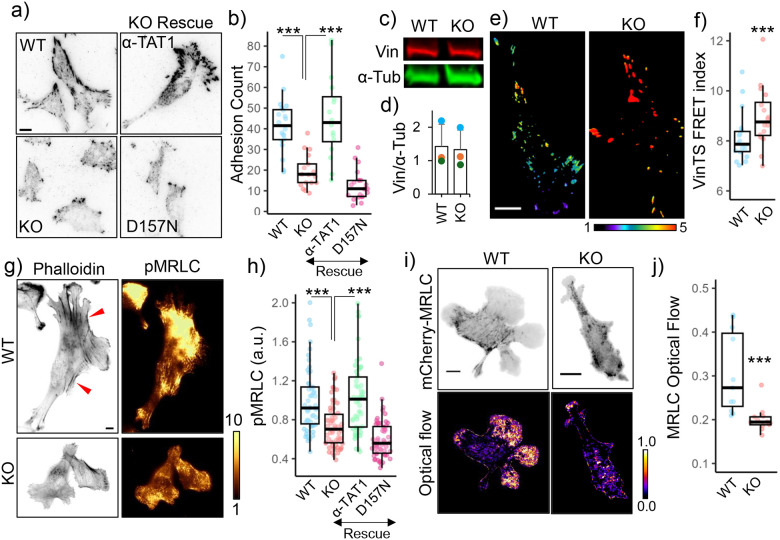
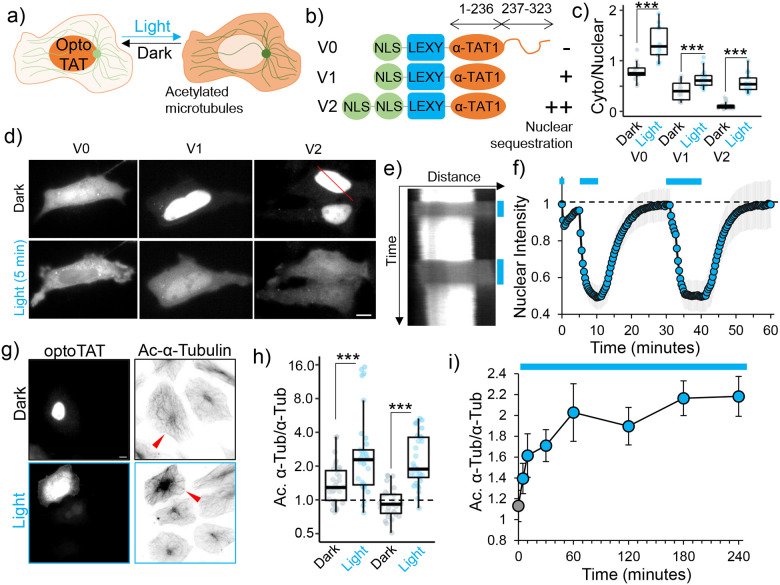
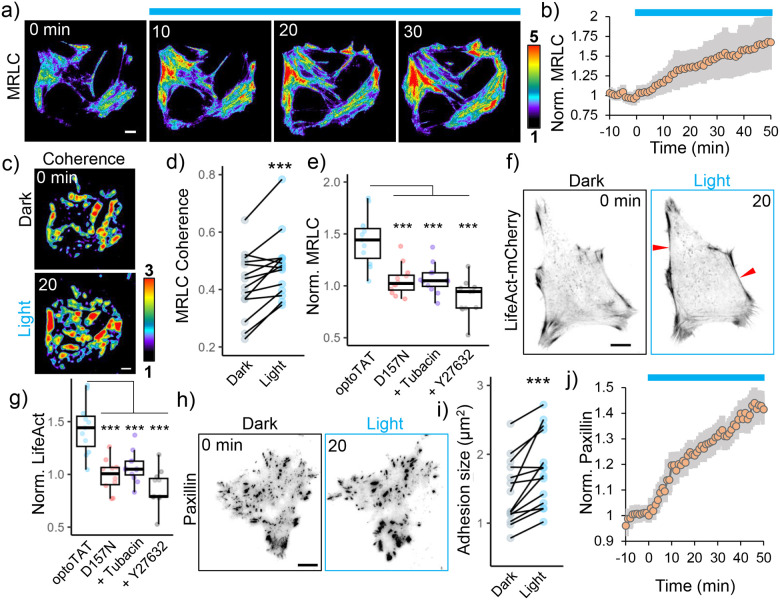
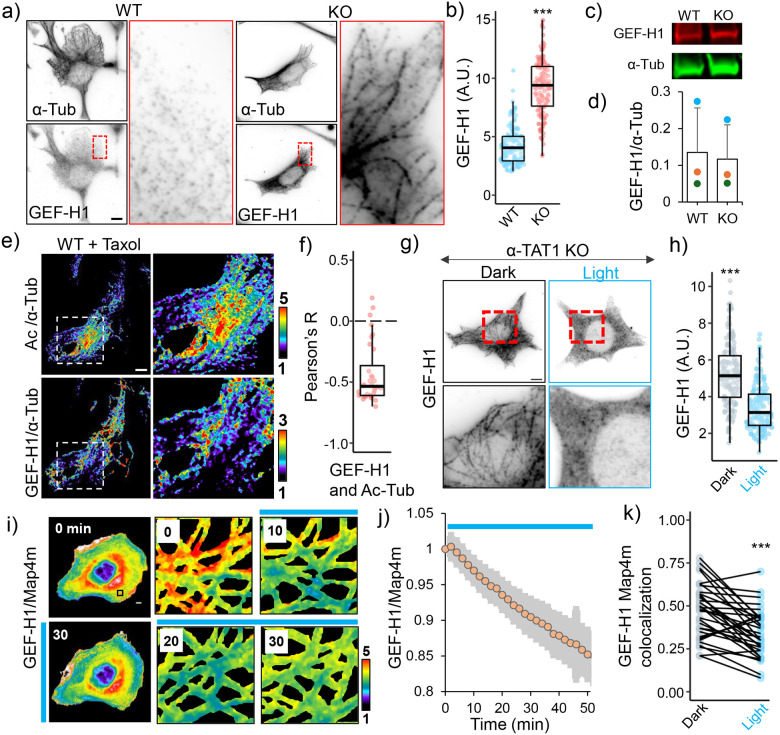
Microtubule acetylation is implicated in regulating cell motility, yet its physiological role in directional migration and the underlying molecular mechanisms have remained unclear. This knowledge gap has persisted primarily due to a lack of tools capable of rapidly manipulating microtubule acetylation in actively migrating cells. To overcome this limitation and elucidate the causal relationship between microtubule acetylation and cell migration, we developed a novel optogenetic actuator, optoTAT, which enables precise and rapid induction of microtubule acetylation within minutes in live cells. Using optoTAT, we observed striking and rapid responses at both molecular and cellular level. First, microtubule acetylation triggers release of the RhoA activator GEF-H1 from sequestration on microtubules. This release subsequently enhances actomyosin contractility and drives focal adhesion maturation. These subcellular processes collectively promote sustained directional cell migration. Our findings position GEF-H1 as a critical molecular responder to microtubule acetylation in the regulation of directed cell migration, revealing a dynamic crosstalk between the actin and microtubule cytoskeletal networks.
微管乙酰化与细胞运动的调节有关,但其在定向迁移中的生理作用及潜在分子机制仍不清楚。这一知识空白长期存在,主要是因为缺乏能够在活跃迁移的细胞中快速操纵微管乙酰化的工具。为了克服这一限制并阐明微管乙酰化与细胞迁移之间的因果关系,我们开发了一种新型光遗传学驱动器optoTAT,它能够在活细胞中在数分钟内精确且快速地诱导微管乙酰化。使用optoTAT,我们在分子和细胞水平上都观察到了显著且快速的反应。首先,微管乙酰化触发RhoA激活剂GEF-H1从微管上的隔离状态释放。这种释放随后增强了肌动球蛋白的收缩力并驱动粘着斑成熟。这些亚细胞过程共同促进细胞持续定向迁移。我们的研究结果将GEF-H1定位为在定向细胞迁移调节中对微管乙酰化起关键作用的分子反应者,揭示了肌动蛋白和微管细胞骨架网络之间的动态相互作用。