Dou He, Gao Tian, Li Zhaoting, Jia Siyuan, Luo Danli, Ba Yuling, Li Fucheng, Wang Jianan, Xiao Min
Department of Breast Surgery, Harbin Medical University Cancer Hospital, Harbin, China.
Gland Surg. 2024 Nov 30;13(11):1907-1920. doi: 10.21037/gs-24-293. Epub 2024 Nov 24.
Age has been confirmed as a very aggressive biological factor associated with the poor prognosis of breast cancer (BC) patients. However, the understanding of young women with breast cancer (YWBC) is scarce. This study compares and evaluates the clinical characteristics and pathologic complete response (pCR) rate after neoadjuvant chemotherapy (NAC) in YWBC and older women with BC.
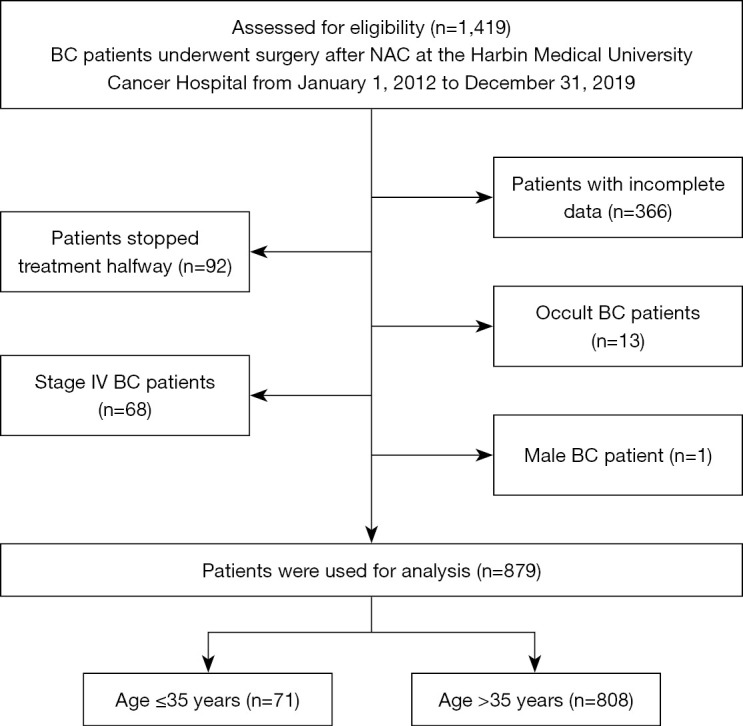
We retrospectively analyzed the clinicopathological data and pCR rates of 1,419 non-metastatic BC patients from the Harbin Medical University Cancer Hospital from 1 January 2012 to 31 December 2019. Patients were classified according to age (≤35 >35 years old) with the clinical parameters. The chi-squared or Fisher's exact test was used to evaluate the correlation between clinicopathological variables and pCR. Any predictor variables with P<0.05 in the univariate analysis were included in the multivariate regression analysis to study the relationship between different age groups and pCR.
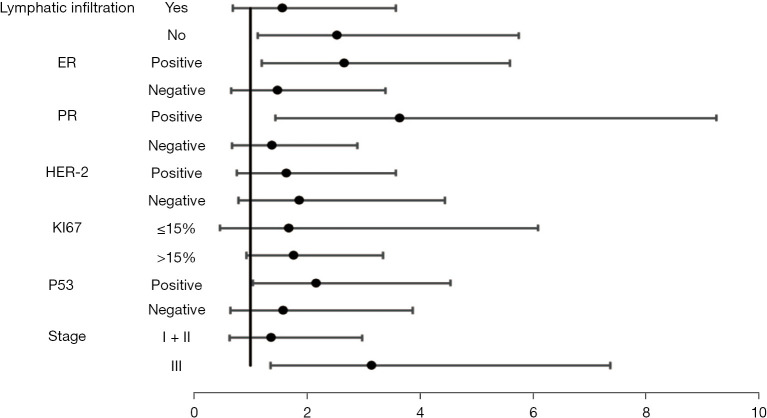
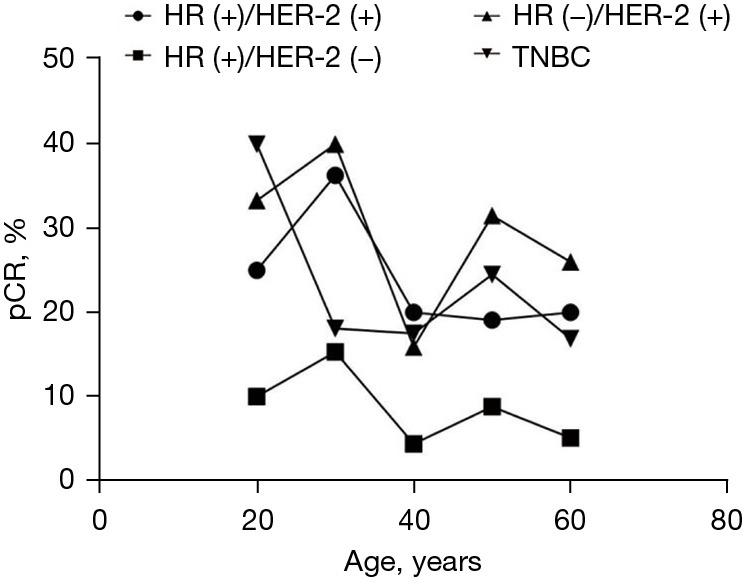
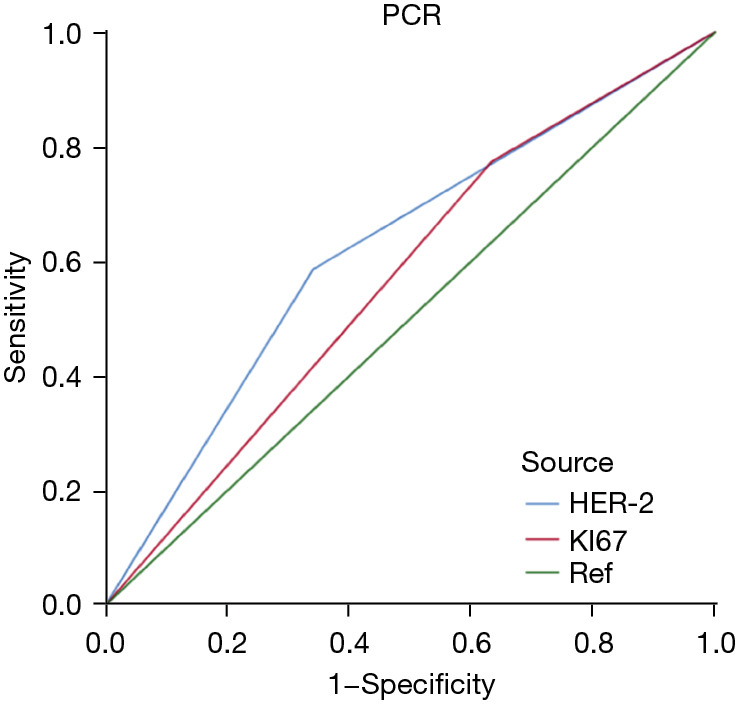
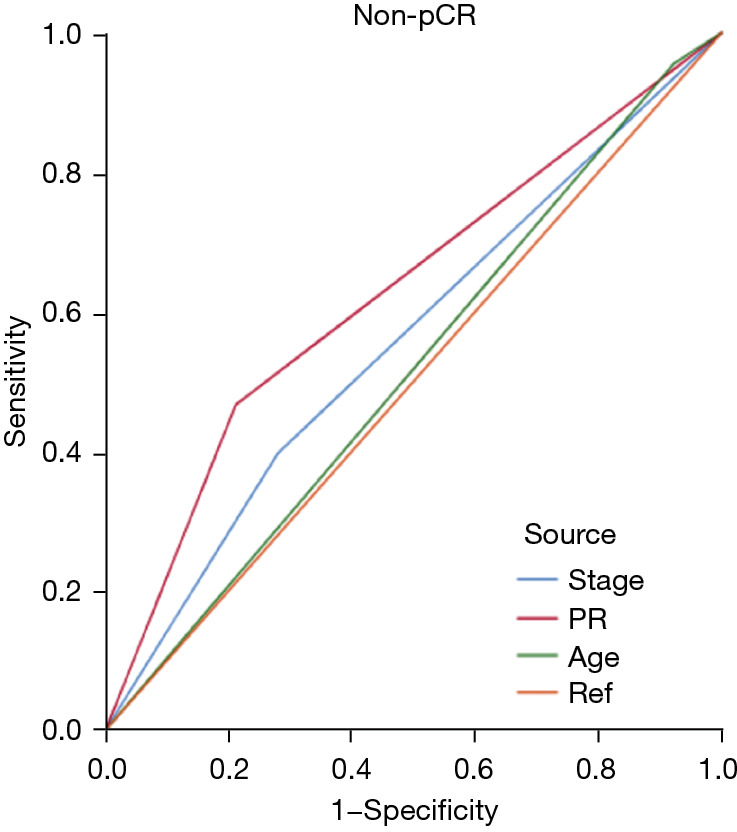
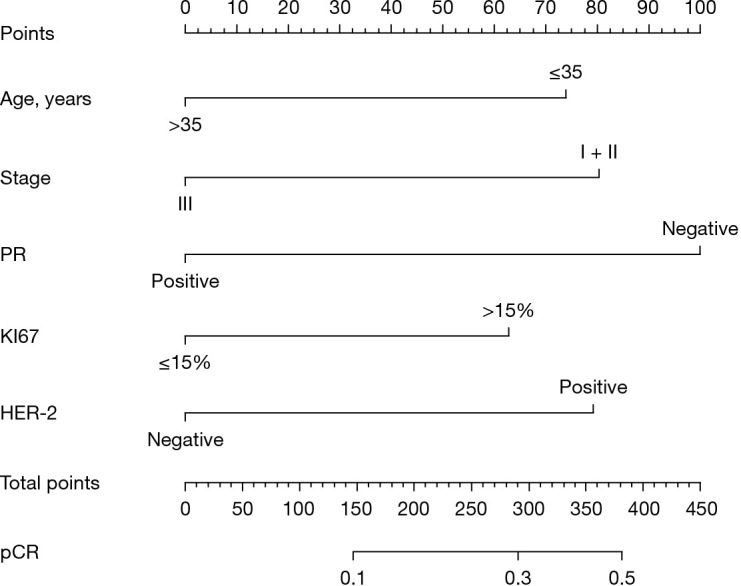
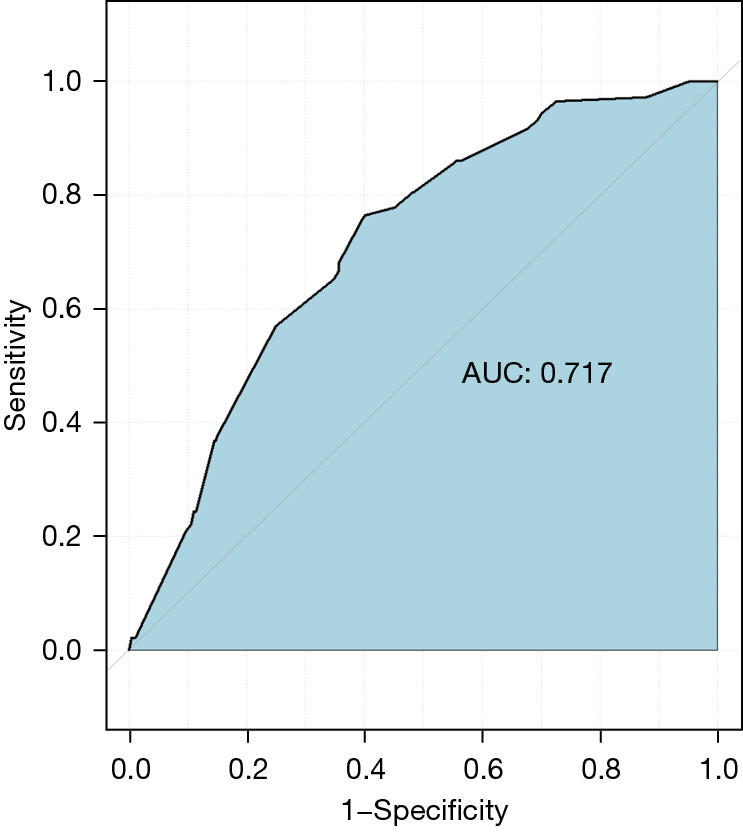
A total of 879 patients in this study were eligible for analysis, and 71 (8.1%) female patients were ≤35 years old. Compared with elderly patients, YWBC were more likely to achieve pCR (25.4% 15.6%, P=0.03) and undergo breast-conserving surgery (BCS). There was a higher proportion of clinically higher stage in the YWBC group. Patients with YWBC, clinical stage I+II, positive human epidermal growth factor receptor 2 (HER-2) expression, negative progesterone receptor (PR) expression, and KI67 >15% were more likely to achieve pCR (P<0.05).
Our study found that age is the main factor affecting the achievement of pCR in patients with BC. Chemotherapy is more effective in patients with YWBC. We need to pay more attention to this group and achieve individualized treatment, which will facilitate improved treatment of BC and provide new targets and blueprints for clinical therapy.
年龄已被确认为与乳腺癌(BC)患者预后不良相关的一个极具侵袭性的生物学因素。然而,对年轻乳腺癌女性(YWBC)的了解却很少。本研究比较并评估了YWBC和老年BC女性患者的临床特征以及新辅助化疗(NAC)后的病理完全缓解(pCR)率。
我们回顾性分析了2012年1月1日至2019年12月31日期间来自哈尔滨医科大学附属肿瘤医院的1419例非转移性BC患者的临床病理数据和pCR率。根据年龄(≤35岁与>35岁)对患者进行分类,并分析其临床参数。采用卡方检验或Fisher精确检验评估临床病理变量与pCR之间的相关性。单因素分析中P<0.05的任何预测变量均纳入多因素回归分析,以研究不同年龄组与pCR之间的关系。
本研究共有879例患者符合分析条件,其中71例(8.1%)女性患者年龄≤35岁。与老年患者相比,YWBC更有可能实现pCR(25.4%对15.6%,P=0.03)并接受保乳手术(BCS)。YWBC组中临床分期较高的比例更高。YWBC患者、临床I+II期、人表皮生长因子受体2(HER-2)表达阳性、孕激素受体(PR)表达阴性以及KI67>15%的患者更有可能实现pCR(P<0.05)。
我们的研究发现年龄是影响BC患者实现pCR的主要因素。化疗对YWBC患者更有效。我们需要更多地关注这一群体并实现个体化治疗,这将有助于改善BC的治疗,并为临床治疗提供新的靶点和思路。