Liu Jia, Xu Lulu, Guan Xiaoling, Zhang Jie
Chongqing Medical University, Chongqing, the Department of Geriatrics, Chongqing General Hospital, Chongqing University, Chongqing, China.
Department of Geriatrics, Chongqing General Hospital, Chongqing University, Chongqing, China.
J Thorac Dis. 2024 Nov 30;16(11):7458-7476. doi: 10.21037/jtd-24-882. Epub 2024 Nov 29.
Rheumatoid arthritis-associated interstitial lung disease (RA-ILD) is a serious pulmonary complication in rheumatoid arthritis (RA) patients, is one of the leading causes of death in RA patients. This study was designed to determine whether pirfenidone and nintedanib can alleviate joint inflammation and pulmonary fibrosis in a mouse model of RA-ILD.
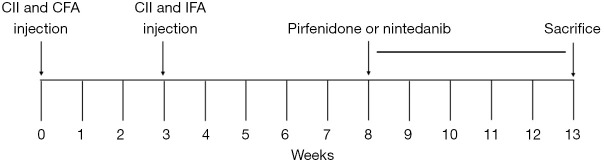
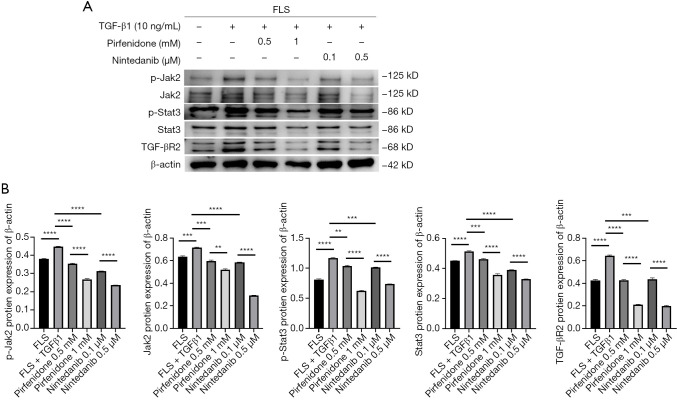
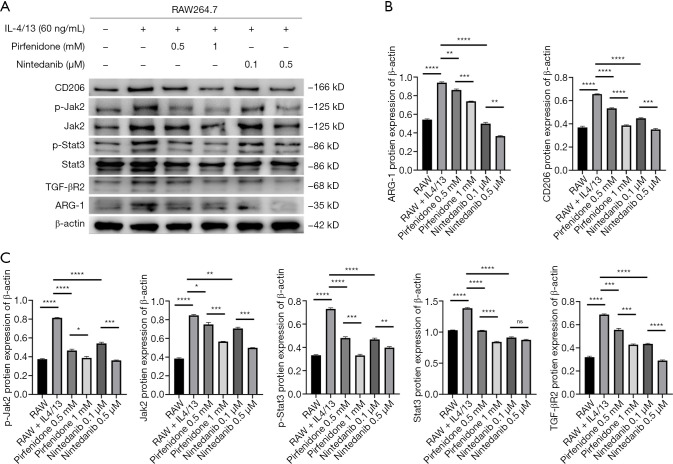
Male DBA/1 mice were injected with bovine type II collagen (bCII) to establish the RA-ILD model. Pirfenidone (20 mg/kg) and nintedanib (60 mg/kg) were administered, and body weight, joint swelling, pathology of the lungs and knees, macrophage polarization in bronchoalveolar lavage fluid (BALF), and the fluorescence intensity of phosphorylated janus kinase 2/phosphorylated signal transducer and activator of transcription 3 (p-Jak2/p-Stat3) in the lungs and knees were determined. Quantitative real-time polymerase chain reaction (qRT-PCR) was used to measure mRNA, and western blotting was conducted to detect the protein. Macrophage line RAW264.7 were divided into the following groups: the RAW264.7, RAW264.7 + IL-4/IL-13 (IL-4/IL-13, 60 ng/mL), RAW264.7 + IL-4/IL-13 + pirfenidone (0.5 and 1.0 mmol/L), RAW264.7 + IL-4/IL-13 + nintedanib (0.1 and 0.5 µmol/L). Mouse primary fibroblast-like synovial (FLS) cells were divided into the following groups: the FLS, FLS + transforming growth factor-β1 (TGF-β1; 10 µg/L), FLS + TGF-β1 + pirfenidone (0.5 and 1.0 mmol/L), FLS + TGF-β1 + nintedanib (0.1 and 0.5 µmol/L) groups. Proteins in each group were detected.
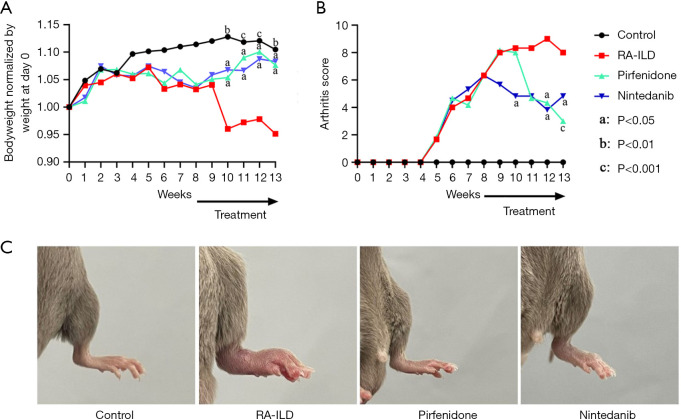
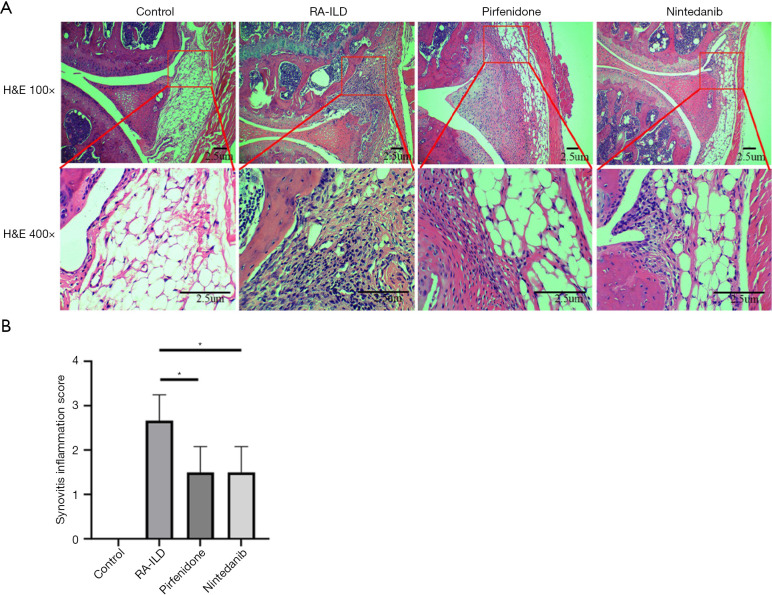
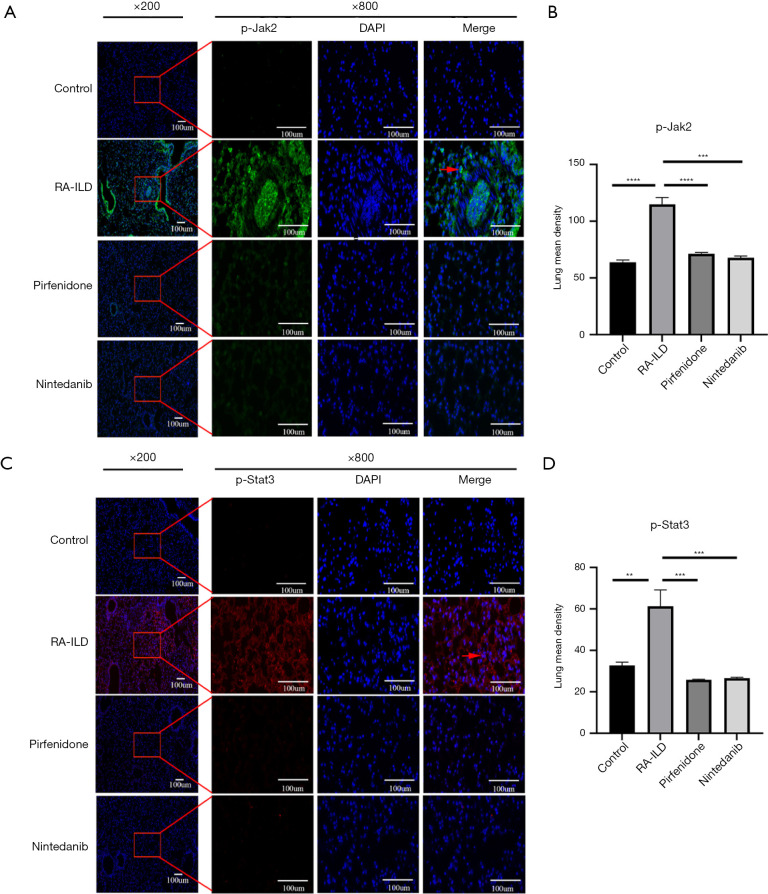
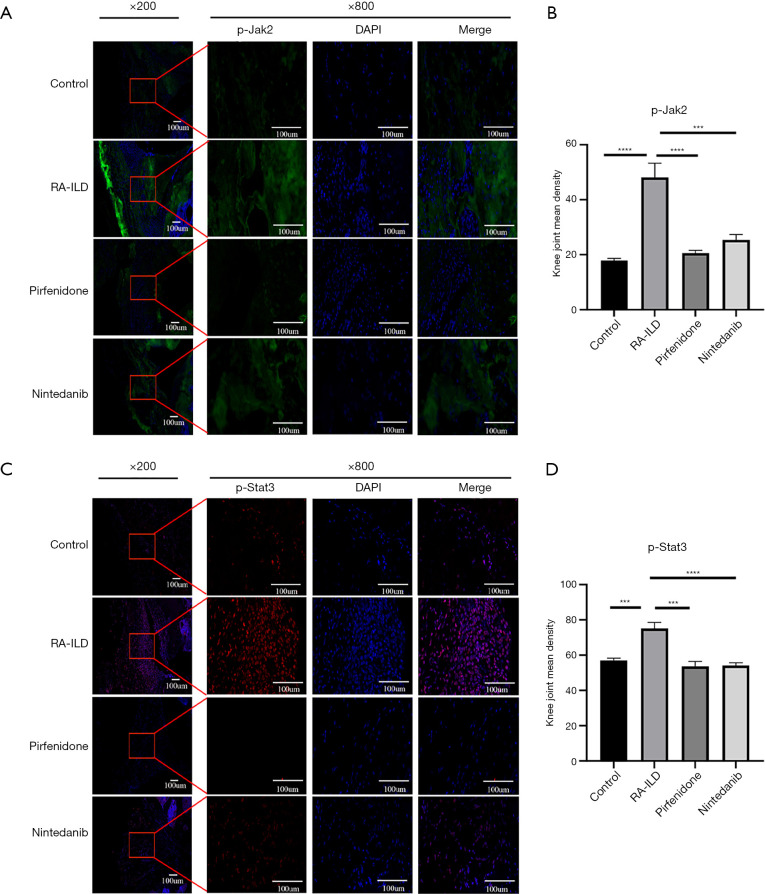
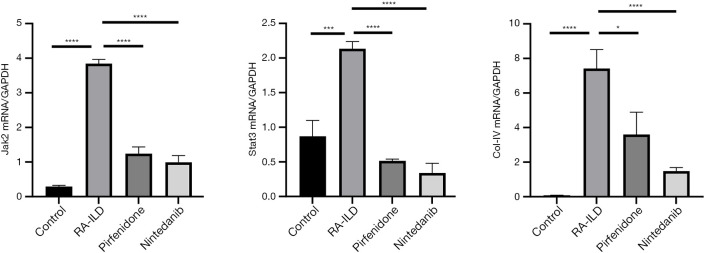
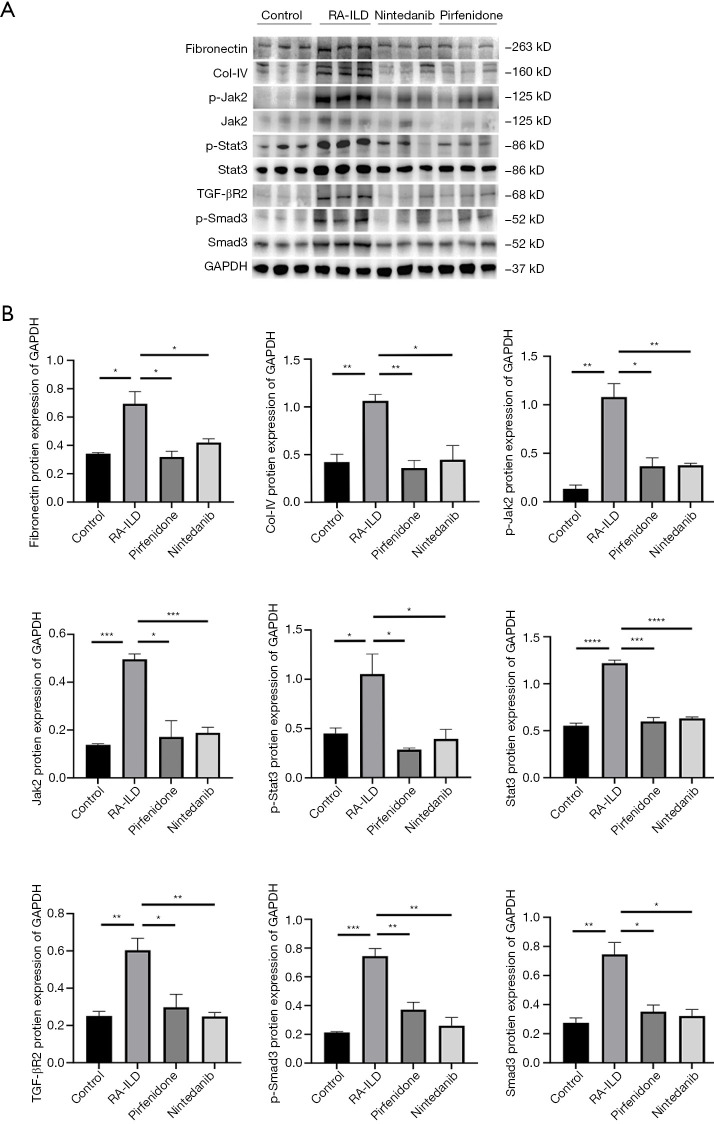
The body weights of the mice in the pirfenidone and nintedanib groups were greater than those in the RA-ILD group (P<0.05), the arthritis scores were also significantly lower (P<0.05). The proportion of M2-type macrophages in the BALF of the nintedanib group significantly decreased (P<0.05). Inflammatory cell infiltration in the lung was reduced in the pirfenidone and nintedanib groups; additionally, decreased levels of synovium, collagen, angiogenesis, and bone destruction of the knee joint and a lower synovitis score were observed (P<0.05). Masson staining revealed that collagen deposition in the lungs in the pirfenidone and nintedanib groups was reduced (P<0.05). P-Jak2/p-Stat3 expression in the lungs and knee joints in the pirfenidone and nintedanib groups was low (P<0.001 in the lung and P<0.005 in the knee joint). The mRNA expression of collagen-IV, Stat3, and Jak2 in the lungs was lower in the pirfenidone and nintedanib (P<0.05); the protein expression levels of p-Jak2/Jak2, p-Stat3/Stat3, p-Smad3/Smad3, and TGF-β receptor 2 (TGF-βR2) in the lungs in the pirfenidone and nintedanib groups decreased (P<0.05). P-Jak2/Jak2, p-Stat3/Stat3, TGF-βR2, cluster of differentiation 206 (CD206), and arginase-1 (ARG-1) were lower in the pirfenidone and nintedanib groups of RAW264.7 cells (at all different concentrations, P<0.05). P-JAK2/JAK2, p-Stat3/Stat3, and TGF-βR2 were lower in the pirfenidone and nintedanib groups of FLS cells (at all different concentrations, P<0.05).
Pirfenidone and nintedanib not only reduced the degree of pulmonary fibrosis but also relieved joint symptoms in an RA-ILD mouse model. The mechanisms of action are related to the inhibition of the TGF-β signaling pathway, Jak2/Stat3 signaling pathway, and polarization of macrophages to the M2 phenotype.
类风湿关节炎相关间质性肺疾病(RA - ILD)是类风湿关节炎(RA)患者严重的肺部并发症,是RA患者主要死亡原因之一。本研究旨在确定吡非尼酮和尼达尼布是否能减轻RA - ILD小鼠模型中的关节炎症和肺纤维化。
给雄性DBA/1小鼠注射牛II型胶原(bCII)以建立RA - ILD模型。给予吡非尼酮(20 mg/kg)和尼达尼布(60 mg/kg),并测定体重、关节肿胀、肺和膝关节病理学、支气管肺泡灌洗液(BALF)中的巨噬细胞极化以及肺和膝关节中磷酸化的janus激酶2/磷酸化信号转导和转录激活因子3(p - Jak2/p - Stat3)的荧光强度。采用定量实时聚合酶链反应(qRT - PCR)检测mRNA,进行蛋白质印迹法检测蛋白质。将巨噬细胞系RAW264.7分为以下几组:RAW264.7组、RAW264.7 + IL - 4/IL - 13组(IL - 4/IL - 13,60 ng/mL)、RAW264.7 + IL - 4/IL - 13 + 吡非尼酮组(0.5和1.0 mmol/L)、RAW264.7 + IL - 4/IL - 13 + 尼达尼布组(0.1和0.5 μmol/L)。将小鼠原代成纤维样滑膜(FLS)细胞分为以下几组:FLS组、FLS + 转化生长因子 - β1(TGF - β1;10 μg/L)组、FLS + TGF - β1 + 吡非尼酮组(0.5和1.0 mmol/L)、FLS + TGF - β1 + 尼达尼布组(0.1和0.5 μmol/L)。检测每组中的蛋白质。
吡非尼酮组和尼达尼布组小鼠的体重高于RA - ILD组(P<0.05),关节炎评分也显著更低(P<0.05)。尼达尼布组BALF中M2型巨噬细胞的比例显著降低(P<0.05)。吡非尼酮组和尼达尼布组肺内炎症细胞浸润减少;此外,观察到膝关节滑膜、胶原、血管生成和骨破坏水平降低以及滑膜炎评分降低(P<0.05)。Masson染色显示吡非尼酮组和尼达尼布组肺内胶原沉积减少(P<0.05)。吡非尼酮组和尼达尼布组肺和膝关节中P - Jak2/p - Stat3表达较低(肺内P<0.001,膝关节内P<0.005)。吡非尼酮组和尼达尼布组肺内IV型胶原、Stat3和Jak2的mRNA表达较低(P<0.05);吡非尼酮组和尼达尼布组肺内p - Jak2/Jak2、p - Stat3/Stat3、p - Smad3/Smad3和转化生长因子β受体2(TGF - βR2)的蛋白质表达水平降低(P<0.05)。吡非尼酮组和尼达尼布组RAW264.7细胞中的P - Jak2/Jak2、p - Stat3/Stat3、TGF - βR2、分化簇206(CD206)和精氨酸酶 - 1(ARG - 1)较低(在所有不同浓度下,P<0.05)。吡非尼酮组和尼达尼布组FLS细胞中的P - JAK2/JAK2、p - Stat3/Stat3和TGF - βR2较低(在所有不同浓度下,P<0.05)。
吡非尼酮和尼达尼布不仅降低了RA - ILD小鼠模型中的肺纤维化程度,还缓解了关节症状。其作用机制与抑制TGF - β信号通路、Jak2/Stat3信号通路以及巨噬细胞向M2表型极化有关。