Cheng Yuting, Liu Guanjuan, Huang Xiaolin, Xiong Yue, Song Na, An Zheqing, Hong Wei, Leethanakul Chidchanok, Samruajbenjakun Bancha, Liao Jian
School/Hospital of Stomatology, Guizhou Medical University, Guiyang, China.
Faculty of Dentistry, Prince of Songkla University, Hat Yai, Thailand.
Immun Inflamm Dis. 2024 Dec;12(12):e70094. doi: 10.1002/iid3.70094.
Inflammatory factors leading to bone loss significantly increase the risk of tooth loosening or implantation failure. Zoledronic acid (ZOL) is a widely used medication for effectively inhibiting excessive bone destruction, but its effect on alleviating inflammatory bone loss remains to be elucidated. In this study, we investigated whether ZOL alleviates inflammatory bone resorption through immunomodulatory effect.
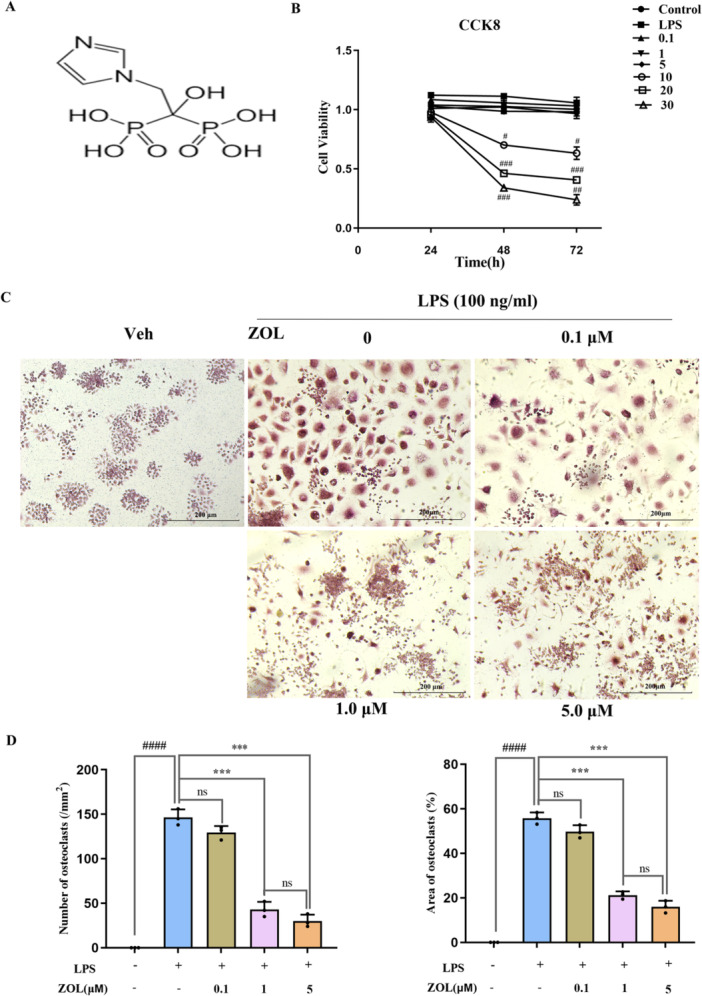
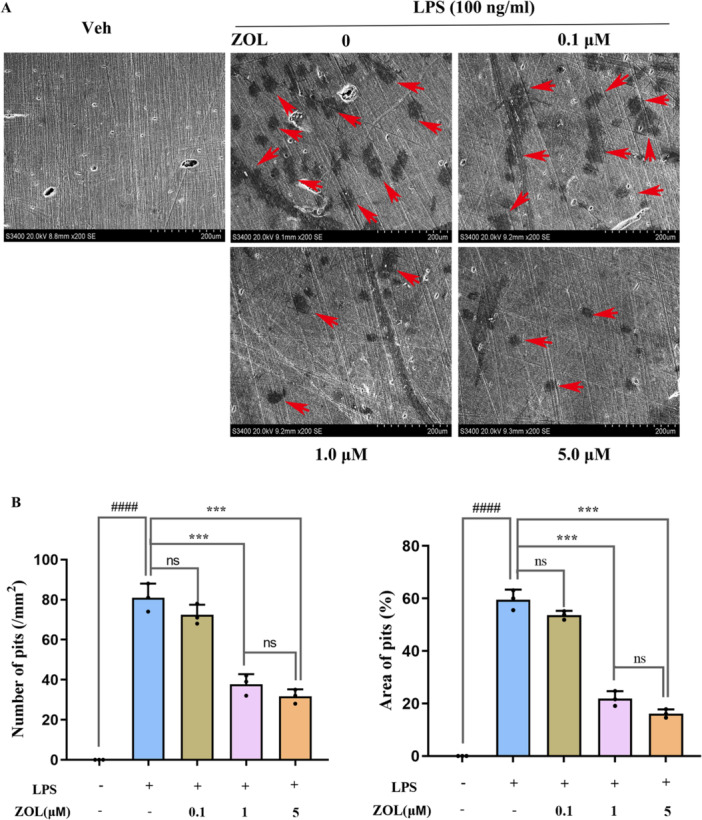
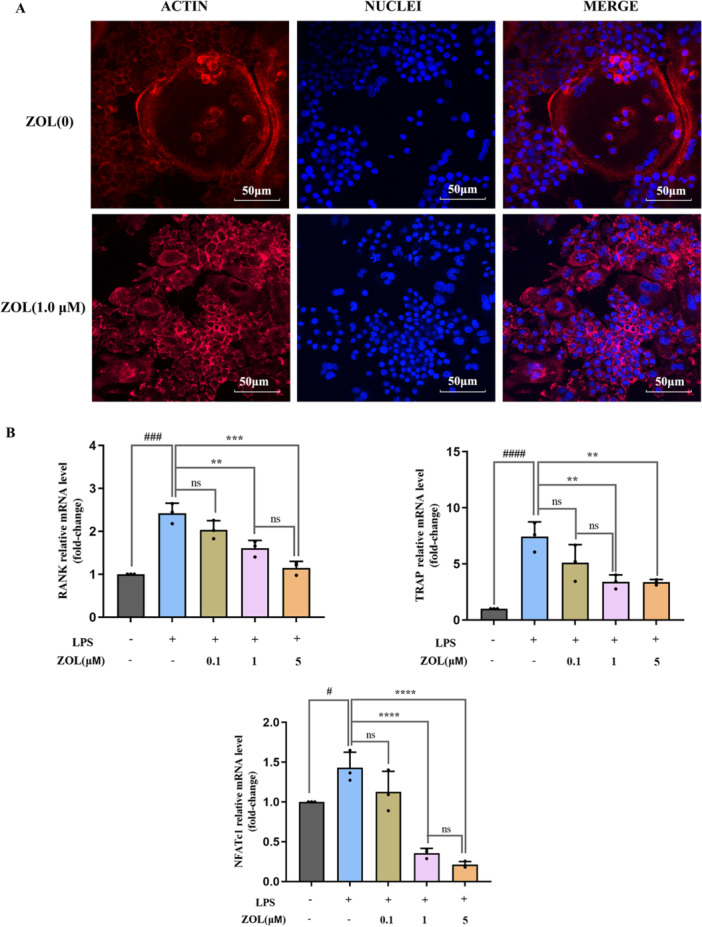
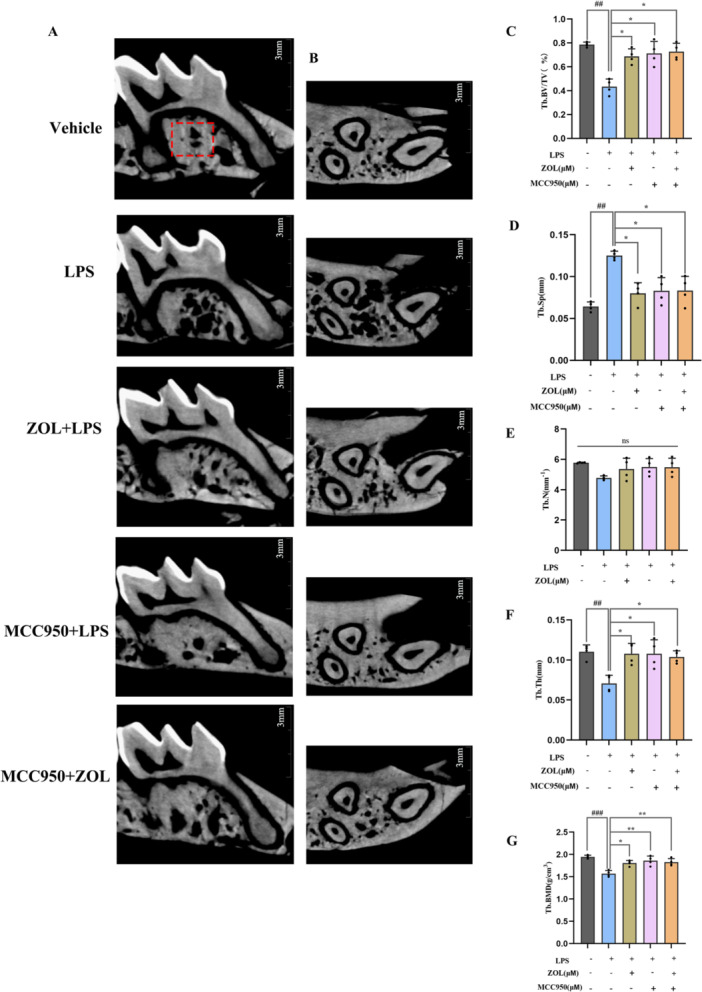
The viability of the cells was evaluated by Cell Counting Kit 8 (CCK8) assay. Osteoclast (OC) differentiation and function were determined by tartrate-resistant acid phosphatase (TRAP) staining and bone resorption pits assays, respectively. Autophagosomes and actin ring structures of OC were observed using transmission electron microscopy (TEM) and F-actin ring staining, respectively. The microstructure in mice maxillary alveolar bone model was observed by micro computed tomography (Miro-CT). Reverse transcription-quantitative PCR (RT-qPCR) to detect the mRNA expression of osteoclast-related genes and Western blot (WB) analysis to evaluate the protein expression levels of autophagy-related proteins and the NOD-like receptor family pyrin domain-containing protein 3 (NLRP3)-related proteins in pre-OCs.
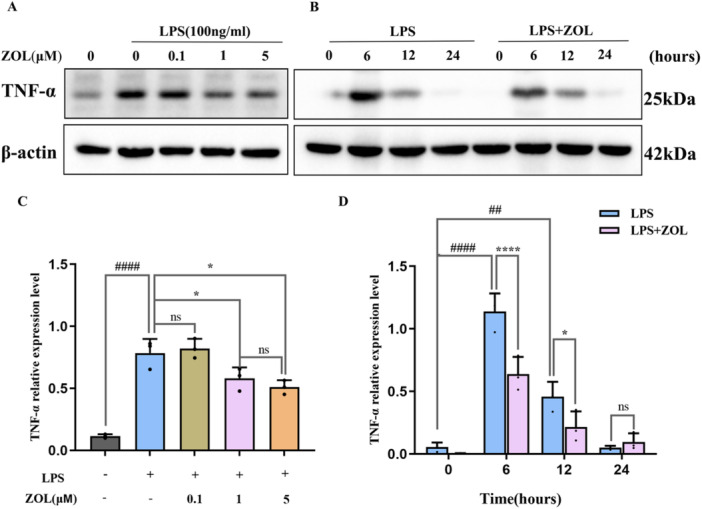
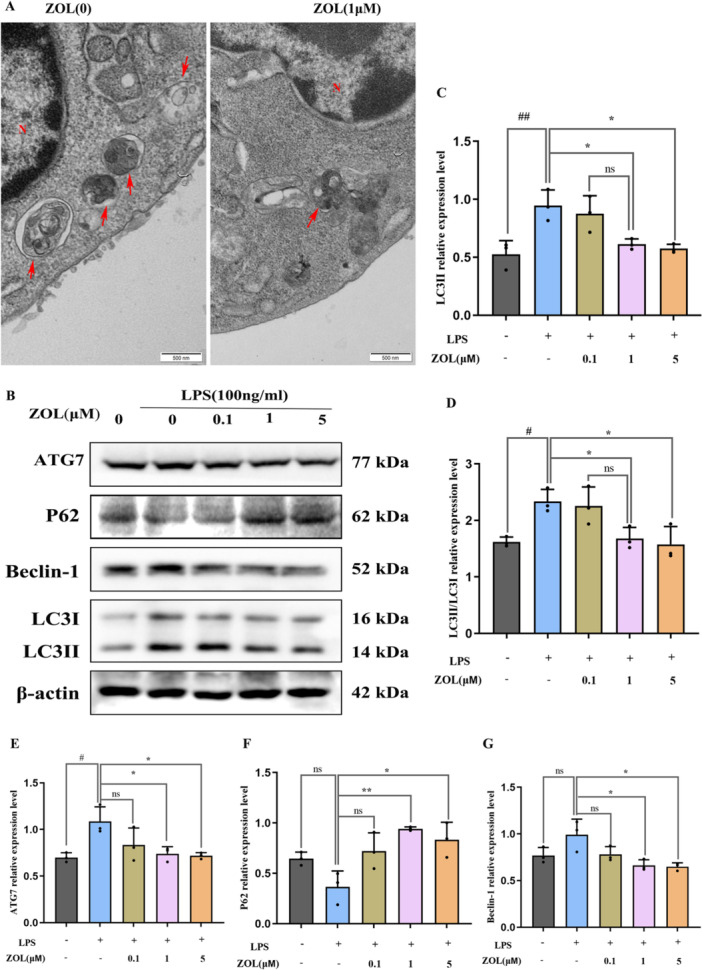
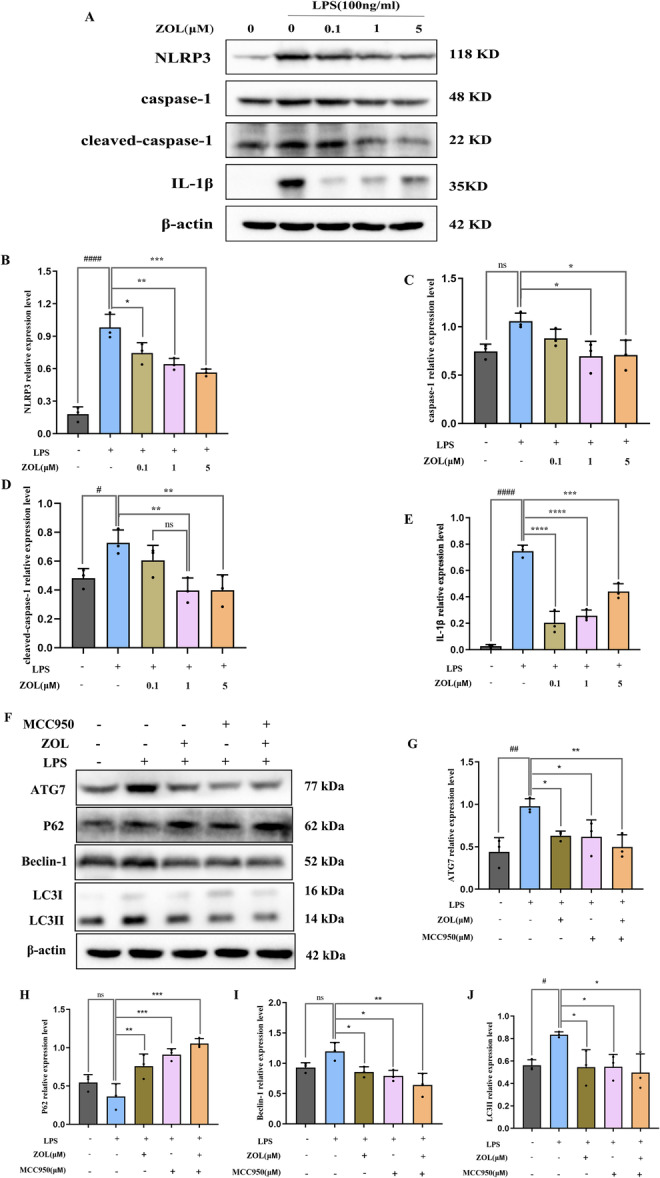
The findings indicated that ZOL hindered lipopolysaccharide (LPS)-mediated OC differentiation, formation, bone resorption activity and autophagosome levels. Furthermore, ZOL diminished the expression of genes associated with OC. And the expression of proteins ATG7, LC3II, Beclin1, NLRP3-related proteins and tumor necrosis factor-α (TNF-α) protein were markedly decreased while P62 was increased, especially in the 1 μM ZOL group or MCC950 + ZOL group.
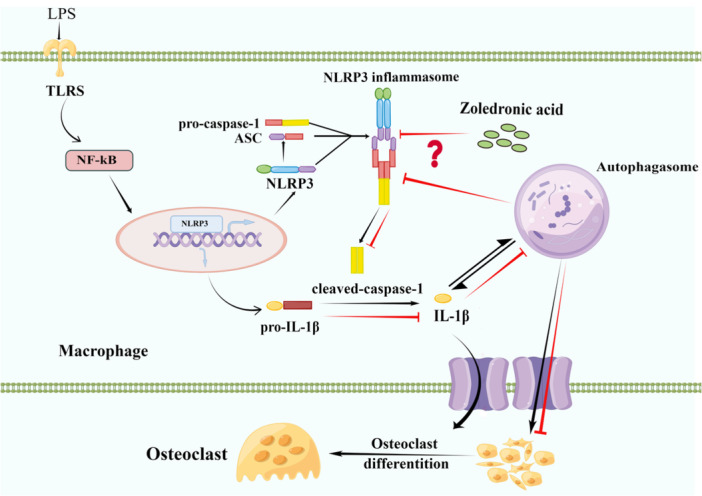
ZOL has a certain immunomodulatory effect that exhibits anti-inflammatory properties at lower concentrations, which can weaken LPS-induced OCs differentiation and function, and NLRP3-mediated autophagy pathway may participate in this process.
导致骨质流失的炎性因子会显著增加牙齿松动或植入失败的风险。唑来膦酸(ZOL)是一种广泛使用的药物,可有效抑制过度的骨质破坏,但其对减轻炎性骨质流失的作用仍有待阐明。在本研究中,我们调查了ZOL是否通过免疫调节作用减轻炎性骨吸收。
通过细胞计数试剂盒8(CCK8)检测评估细胞活力。分别通过抗酒石酸酸性磷酸酶(TRAP)染色和骨吸收陷窝试验测定破骨细胞(OC)的分化和功能。分别使用透射电子显微镜(TEM)和F-肌动蛋白环染色观察OC的自噬体和肌动蛋白环结构。通过微型计算机断层扫描(Micro-CT)观察小鼠上颌牙槽骨模型的微观结构。采用逆转录定量聚合酶链反应(RT-qPCR)检测破骨细胞相关基因的mRNA表达,并通过蛋白质印迹(WB)分析评估前破骨细胞中自噬相关蛋白和含NOD样受体家族吡啉结构域蛋白3(NLRP3)相关蛋白的表达水平。
研究结果表明,ZOL可抑制脂多糖(LPS)介导的OC分化、形成、骨吸收活性和自噬体水平。此外,ZOL降低了与OC相关基因的表达。ATG7、LC3II、Beclin1、NLRP3相关蛋白和肿瘤坏死因子-α(TNF-α)蛋白的表达明显降低,而P62增加,尤其是在1μM ZOL组或MCC950+ZOL组。
ZOL具有一定的免疫调节作用,在较低浓度下具有抗炎特性,可减弱LPS诱导的OC分化和功能,NLRP3介导的自噬途径可能参与此过程。