Correa-Macedo Wilian, Dallmann-Sauer Monica, Orlova Marianna, Manry Jeremy, Fava Vinicius M, Huong Nguyen Thu, Ba Nguyen Ngoc, Van Thuc Nguyen, Thai Vu Hong, Schurr Erwin
Department of Biochemistry, Faculty of Medicine and Health Sciences, McGill University, Montréal, Québec, Canada.
Program in Infectious Diseases and Global Health, The Research Institute of the McGill University Health Centre, Montréal, Québec, Canada.
PLoS Negl Trop Dis. 2024 Dec 16;18(12):e0011866. doi: 10.1371/journal.pntd.0011866. eCollection 2024 Dec.
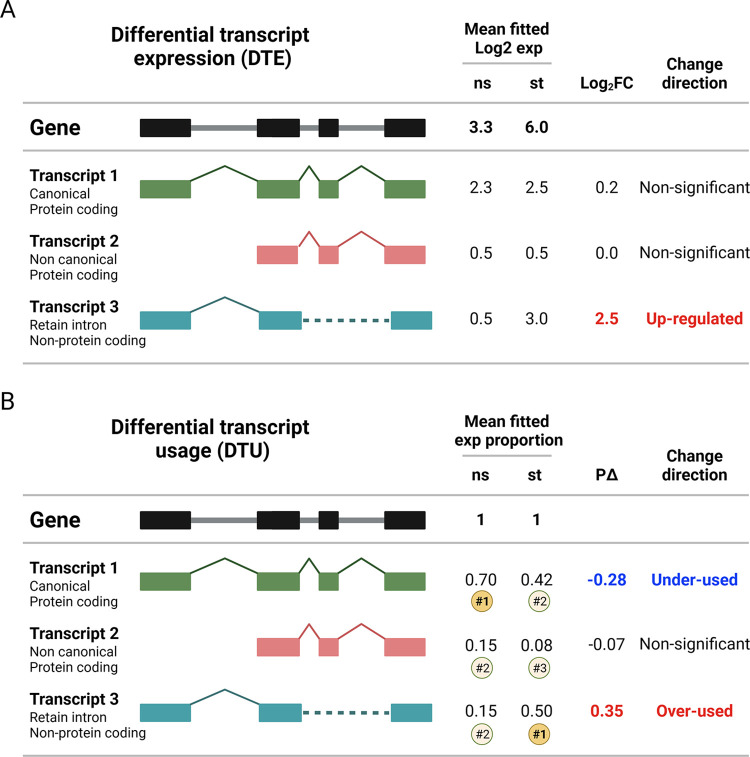
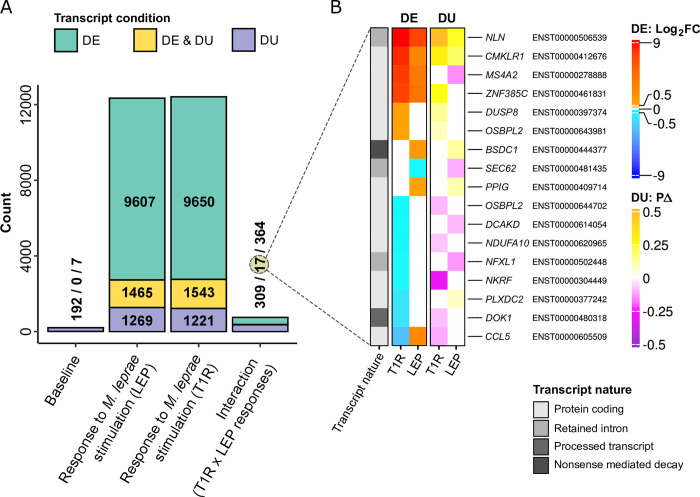
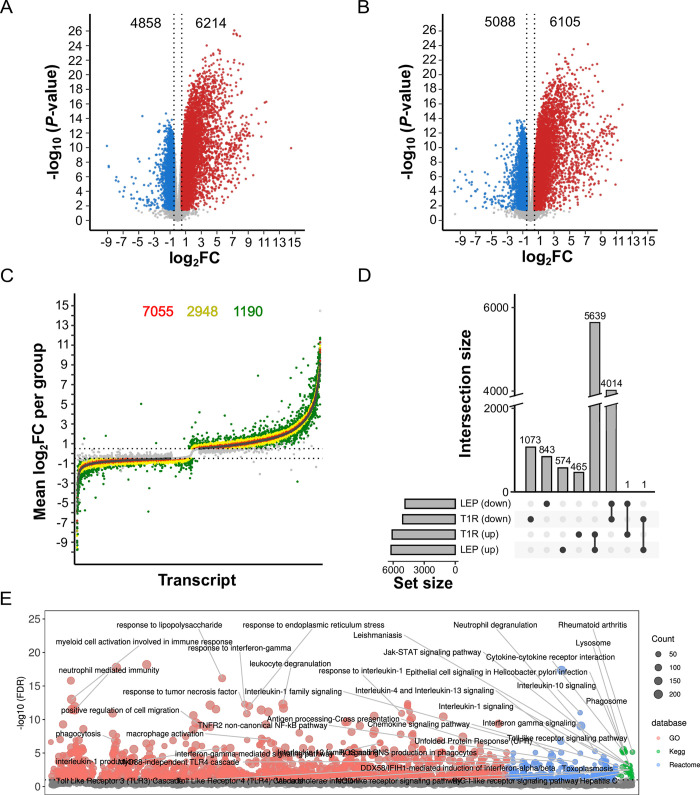
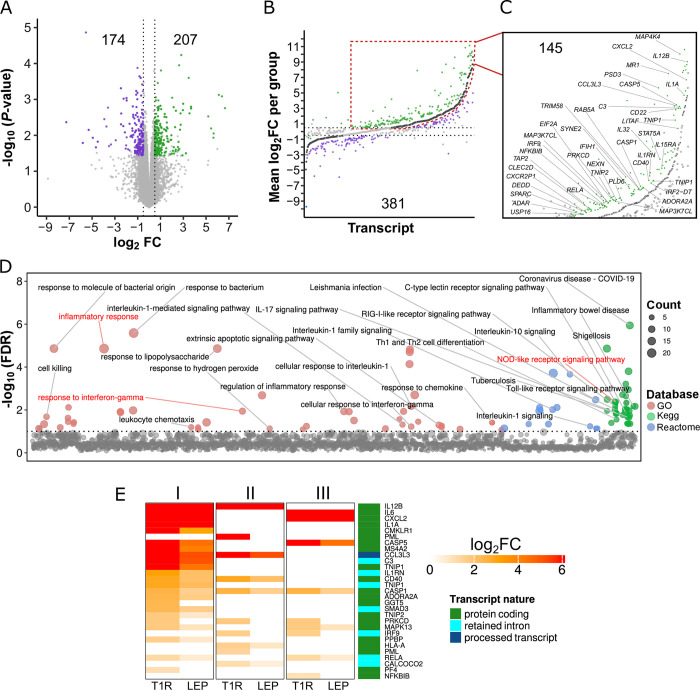
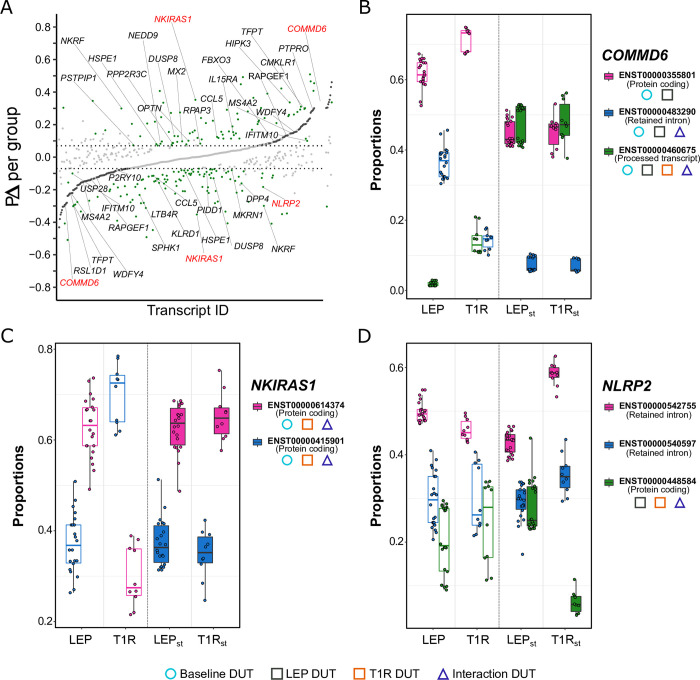
Leprosy is a chronic disease of the skin and peripheral nerves caused by Mycobacterium leprae. A major public health and clinical problem are leprosy reactions, which are inflammatory episodes that often contribute to nerve damage and disability. Type I reversal reactions (T1R) can occur after microbiological cure of leprosy and affect up to 50% of leprosy patients. Early intervention to prevent T1R and, hence, nerve damage, is a major focus of current leprosy control efforts. In a prospective study, we enrolled and collected samples from 32 leprosy patients before the onset of T1R. Whole blood aliquots were challenged with M. leprae sonicate or media and total RNA was extracted. After a three-year follow-up, the transcriptomic response was compared between cells from 22 patients who remained T1R-free and 10 patients who developed T1R during that period. Our analysis focused on differential transcript (i.e. isoform) expression and usage. Results showed that, at baseline, cells from T1R-destined and T1R-free subjects had no main difference in their transcripts expression and usage. However, the cells of T1R patients displayed a transcriptomic immune response to M. leprae antigens that was significantly different from the one of cells from leprosy patients who remained T1R-free. Transcripts with significantly higher upregulation in the T1R-destined group, compared to the cells from T1R-free patients, were enriched for pathways and GO terms involved in response to intracellular pathogens, apoptosis regulation and inflammatory processes. Similarly, transcript usage analysis pinpointed different transcript proportions in response to the in-vitro challenge of cells from T1R-destined patients. Hence, transcript usage in concert with transcript expression suggested a dysregulated inflammatory response including increased apoptosis regulation in the peripheral blood cells of T1R-destined patients before the onset of T1R symptoms. Combined, these results provided detailed insight into the pathogenesis of T1R.
麻风病是由麻风分枝杆菌引起的一种皮肤和周围神经的慢性疾病。麻风反应是一个主要的公共卫生和临床问题,这些炎症发作常常导致神经损伤和残疾。I型逆转反应(T1R)可在麻风病微生物学治愈后发生,影响多达50%的麻风病患者。早期干预以预防T1R,从而预防神经损伤,是当前麻风病控制工作的一个主要重点。在一项前瞻性研究中,我们在32例T1R发作前招募并采集了麻风病患者的样本。将全血 aliquots 用麻风分枝杆菌超声裂解物或培养基进行刺激,然后提取总RNA。经过三年的随访,比较了22例未发生T1R的患者和10例在此期间发生T1R的患者细胞之间的转录组反应。我们的分析集中在差异转录本(即异构体)的表达和使用上。结果表明,在基线时,注定发生T1R的受试者和未发生T1R的受试者的细胞在转录本表达和使用上没有主要差异。然而,T1R患者的细胞对麻风分枝杆菌抗原表现出转录组免疫反应,这与未发生T1R的麻风病患者细胞的反应明显不同。与未发生T1R的患者细胞相比,注定发生T1R的组中上调明显更高的转录本在参与对细胞内病原体的反应、凋亡调节和炎症过程的途径和基因本体术语中富集。同样,转录本使用分析确定了注定发生T1R的患者细胞对体外刺激的不同转录本比例。因此,转录本使用与转录本表达共同表明,在T1R症状发作前,注定发生T1R的患者外周血细胞中炎症反应失调,包括凋亡调节增加。综合起来,这些结果为T1R的发病机制提供了详细的见解。