Stoller Franziska, Hinds Eleanor, Ionescu Tudor, Khatamsaz Elmira, Marston Hugh M, Hengerer Bastian
Boehringer Ingelheim Pharma GmbH & Co. KG, Biberach, Germany.
Sci Rep. 2024 Dec 16;14(1):30492. doi: 10.1038/s41598-024-81930-w.
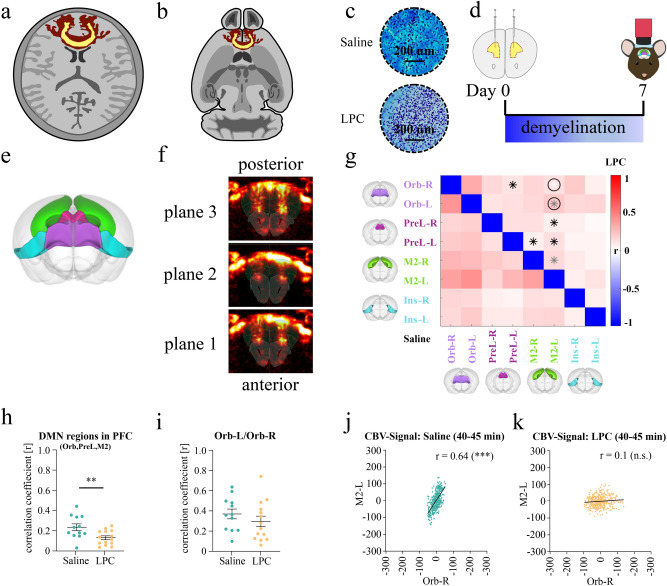
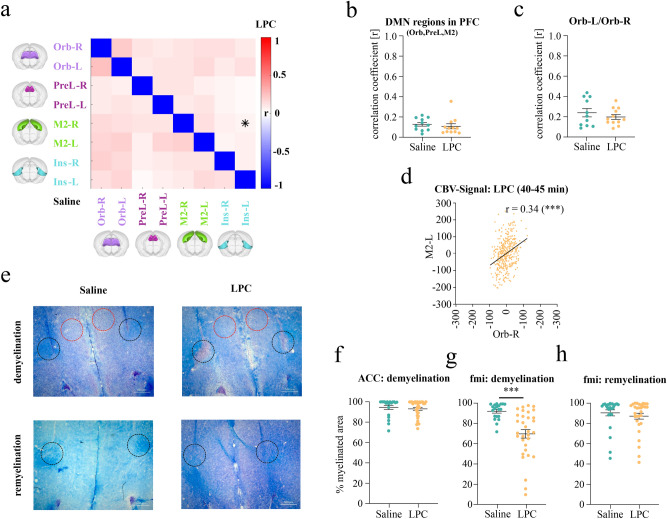
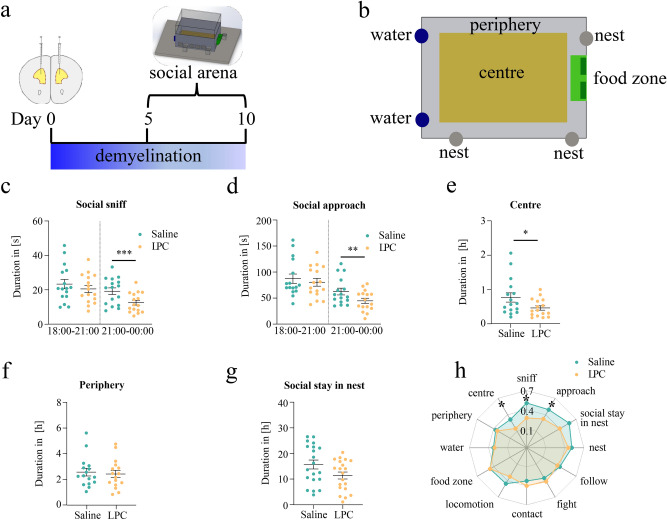
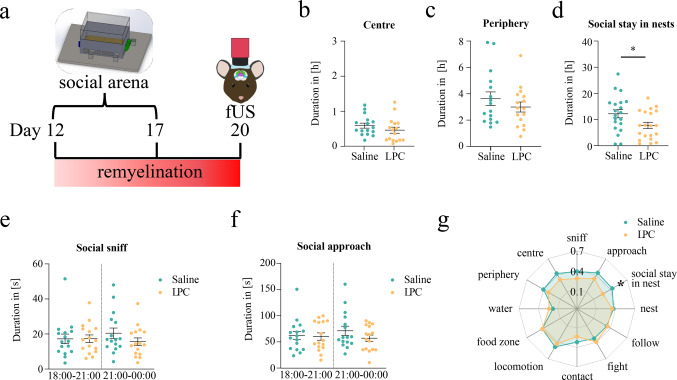
The PRISM project, funded by the EU's Innovative Medicines Initiative, has identified a transdiagnostic, pathophysiological relationship between the integrity of the default mode network (DMN) and social dysfunction. To explore the causal link between DMN integrity and social behaviour, we employed a preclinical back-translation approach, using focal demyelination of the forceps minor to disrupt DMN connectivity in mice. By applying advanced techniques such as functional ultrasound imaging and automated analysis of social behaviour, we demonstrated that reduced DMN connectivity leads to impaired social interactions and increased anxiety in mice. Notably, these effects were reversible, indicating that the forceps minor, a critical fibre tract connecting key DMN regions in the prefrontal cortex, plays a crucial role in social function. This study provides direct evidence for a causal relationship between DMN integrity and social dysfunction, with potential implications for developing targeted treatments in precision psychiatry.
由欧盟创新药物计划资助的PRISM项目已经确定了默认模式网络(DMN)完整性与社会功能障碍之间的一种跨诊断、病理生理关系。为了探究DMN完整性与社会行为之间的因果联系,我们采用了一种临床前反向翻译方法,利用小钳的局灶性脱髓鞘来破坏小鼠的DMN连通性。通过应用功能超声成像和社会行为自动分析等先进技术,我们证明DMN连通性降低会导致小鼠社会互动受损和焦虑增加。值得注意的是,这些影响是可逆的,这表明小钳作为连接前额叶皮质关键DMN区域的关键纤维束,在社会功能中起着至关重要的作用。这项研究为DMN完整性与社会功能障碍之间的因果关系提供了直接证据,对在精准精神病学中开发靶向治疗具有潜在意义。