Hilman L, Ondičová M, Caffrey A, Clements M, Conway C, Ward M, Pentieva K, Irwin R E, McNulty H, Walsh C P
School of Biomedical Sciences, Biomedical Sciences Research Institute, Ulster University, Coleraine, Northern Ireland, BT52 1SA, UK.
Department of Medical Genetics, Life Sciences Institute, University of British Columbia, Vancouver, BC, V6T 1Z4, Canada.
BMC Med. 2024 Dec 16;22(1):579. doi: 10.1186/s12916-024-03804-2.
The human ZFP57 gene is a major regulator of imprinted genes, maintaining DNA methylation marks that distinguish parent-of-origin-specific alleles. DNA methylation of the gene itself has shown sensitivity to environmental stimuli, particularly folate status. However, the role of DNA methylation in ZFP57's own regulation has not been fully investigated.
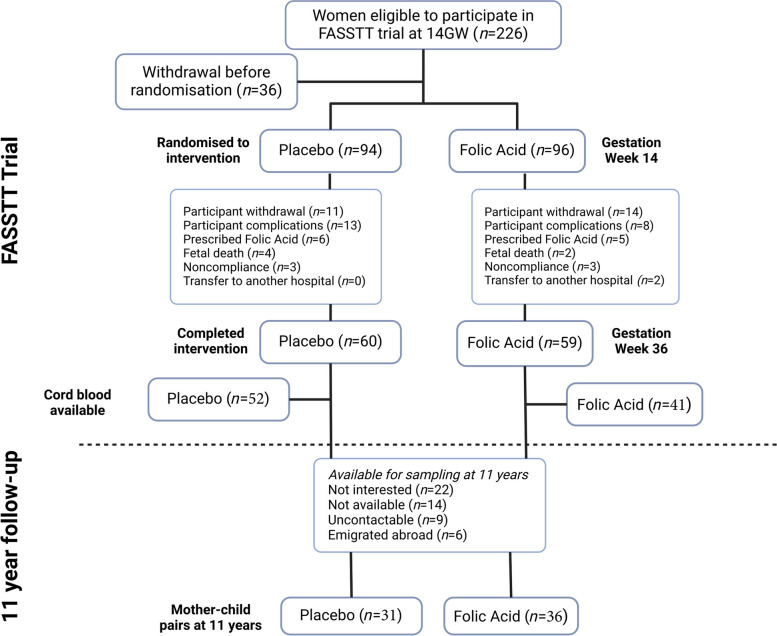
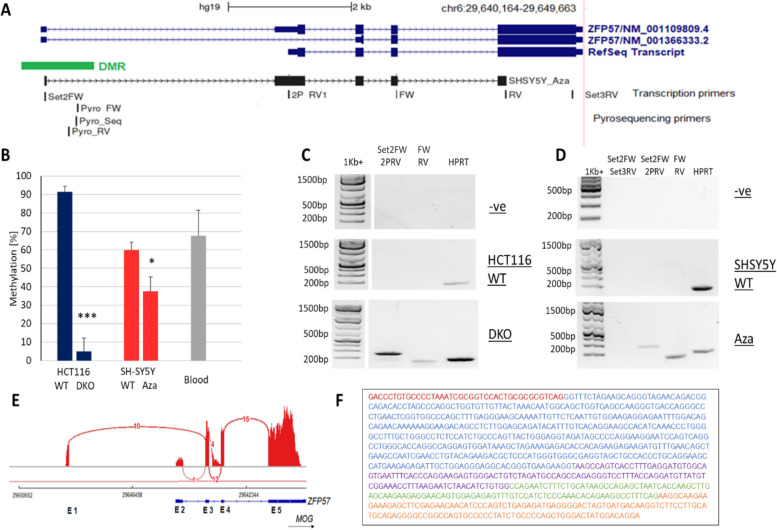
We used samples and data from our previously described randomised controlled trial (RCT) in pregnancy called Folic Acid Supplementation in the Second and Third Trimester (FASSTT), including follow-up of the children at age 11. Biometric and blood biochemistry results were examined for mothers and children. Methylation of ZFP57 was analysed by EPIC arrays, pyrosequencing and clonal analysis, and transcription assessed by PCR-based methods. Functional consequences of altered methylation were examined in cultured cells with mutations or by inhibition of the main DNA methyltransferases. DNA variants were examined using pyrosequencing and Sanger sequencing, with results compared to published studies using bioinformatic approaches. Cognitive outcomes were assessed using the Wechsler Intelligence Scale for Children 4th UK Edition (WISC-IV), with neural activity during language tasks quantified using magnetoencephalography (MEG).
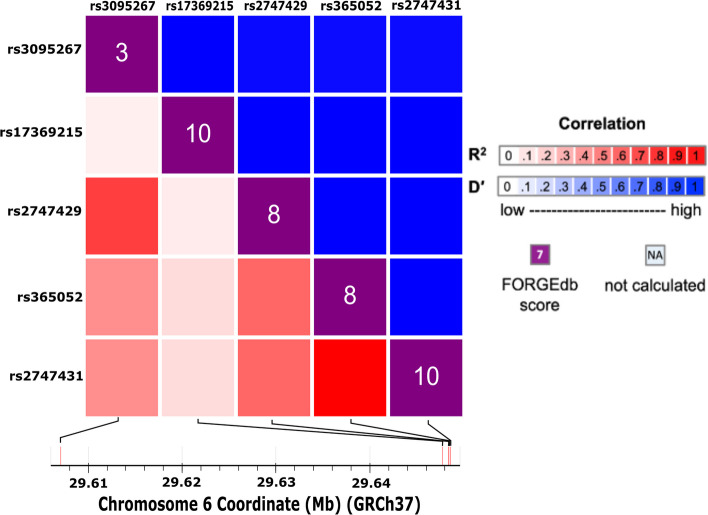
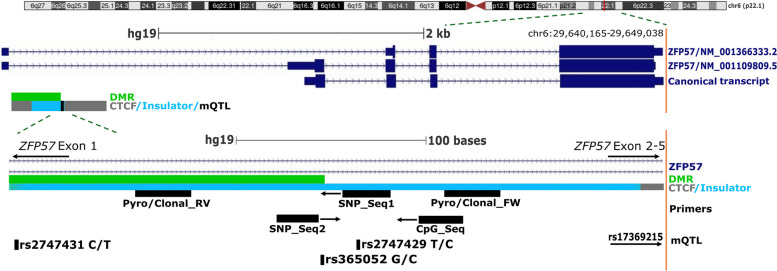
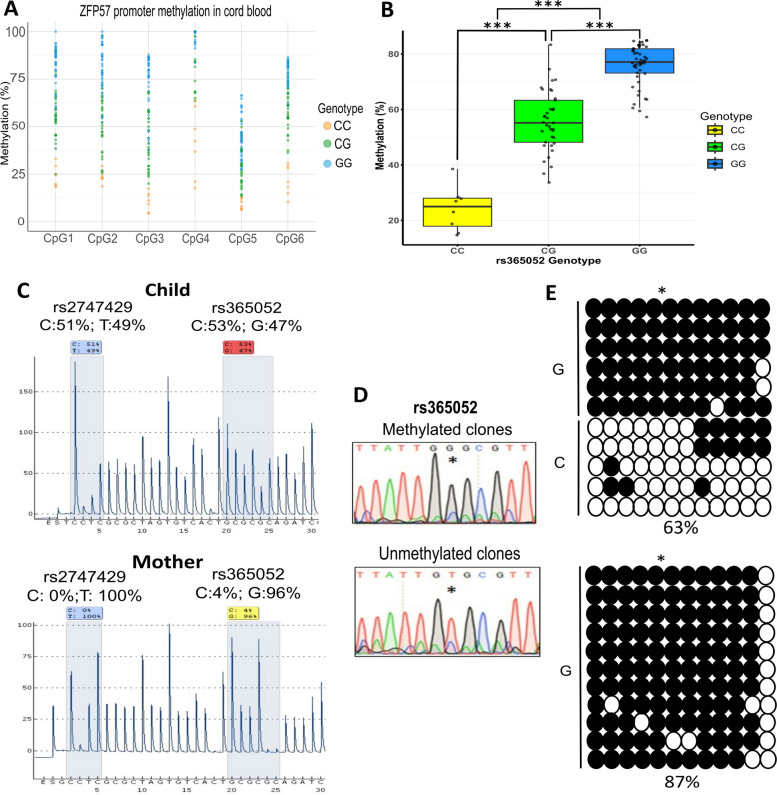
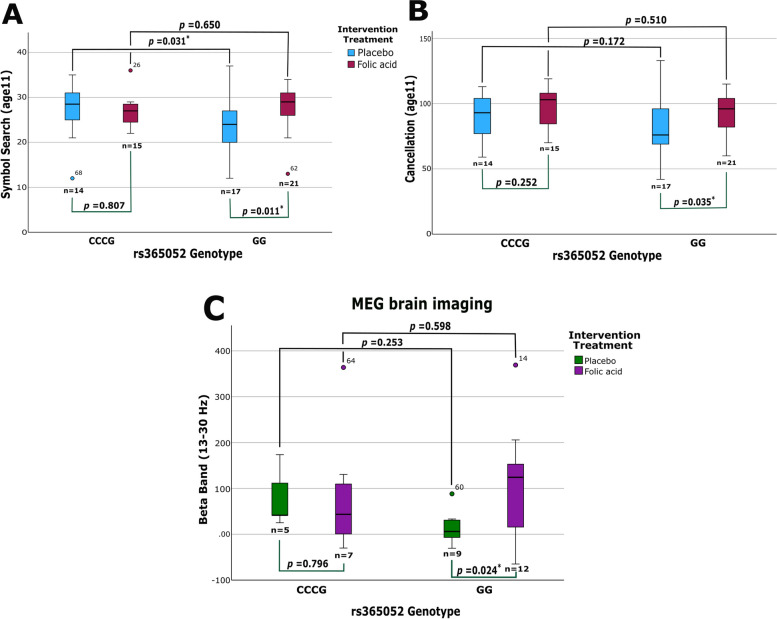
Here we show that methylation at an alternative upstream promoter of ZFP57 is controlled in part by a quantitative trait locus (QTL). By altering DNA methylation levels, we demonstrate that this in turn controls the expression of the ZFP57 isoforms. Methylation at this region is also sensitive to folate levels, as we have previously shown in this cohort. Fully methylated alleles were associated with poorer performance in the Symbol Search and Cancellation subtests of WISC-IV in the children at age 11 years. There were also differences in neural activity during language tasks, as measured by MEG. Analysis of published genome-wide studies indicated other SNPs in linkage disequilibrium with the mQTL were also associated with neurodevelopmental outcomes.
While numbers in the current RCT were small and require further validation in larger cohorts, the results nevertheless suggest a molecular mechanism by which maternal folic acid supplementation during pregnancy may help to counteract the effects of folate depletion and positively influence cognitive development in the offspring.
人类ZFP57基因是印记基因的主要调节因子,维持区分亲本来源特异性等位基因的DNA甲基化标记。该基因本身的DNA甲基化已显示出对环境刺激敏感,尤其是叶酸状态。然而,DNA甲基化在ZFP57自身调节中的作用尚未得到充分研究。
我们使用了来自我们之前描述的孕期随机对照试验(RCT)“孕中期和晚期叶酸补充试验(FASSTT)”的样本和数据,包括对11岁儿童的随访。对母亲和儿童的生物特征和血液生化结果进行了检查。通过EPIC阵列、焦磷酸测序和克隆分析来分析ZFP57的甲基化,并通过基于PCR的方法评估转录情况。在具有突变的培养细胞中或通过抑制主要DNA甲基转移酶来检查甲基化改变的功能后果。使用焦磷酸测序和桑格测序来检查DNA变异,并将结果与使用生物信息学方法的已发表研究进行比较。使用韦氏儿童智力量表第4版英国版(WISC-IV)评估认知结果,并使用脑磁图(MEG)对语言任务期间的神经活动进行量化。
我们在此表明,ZFP57另一个上游启动子处的甲基化部分受数量性状基因座(QTL)控制。通过改变DNA甲基化水平,我们证明这反过来又控制了ZFP57异构体的表达。如我们之前在该队列中所显示的,该区域的甲基化也对叶酸水平敏感。完全甲基化的等位基因与11岁儿童在WISC-IV的符号搜索和划消子测试中的较差表现相关。通过MEG测量,语言任务期间的神经活动也存在差异。对已发表的全基因组研究的分析表明,与甲基化数量性状基因座处于连锁不平衡状态的其他单核苷酸多态性(SNP)也与神经发育结果相关。
虽然当前RCT中的样本数量较少,需要在更大的队列中进一步验证,但结果仍然表明了一种分子机制,通过该机制孕期母亲补充叶酸可能有助于抵消叶酸缺乏的影响,并对后代的认知发育产生积极影响。