Colonna Romano Nunzia, Marchetti Marcella, Marangoni Anna, Leo Laura, Retrosi Diletta, Rosato Ezio, Fanti Laura
Department of Biology and Biotechnology "Charles Darwin", Sapienza University of Rome, 00185 Rome, Italy.
Neurogenetics Group, Department of Genetics, Genomics & Cancer Sciences, University of Leicester, Leicester LE1 7RH, UK.
Cells. 2024 Nov 23;13(23):1944. doi: 10.3390/cells13231944.
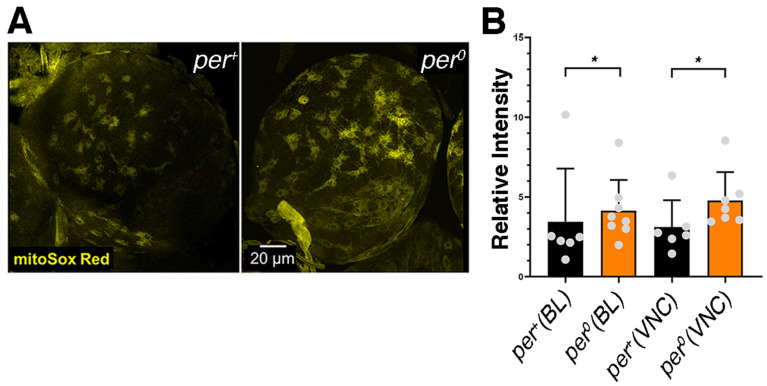
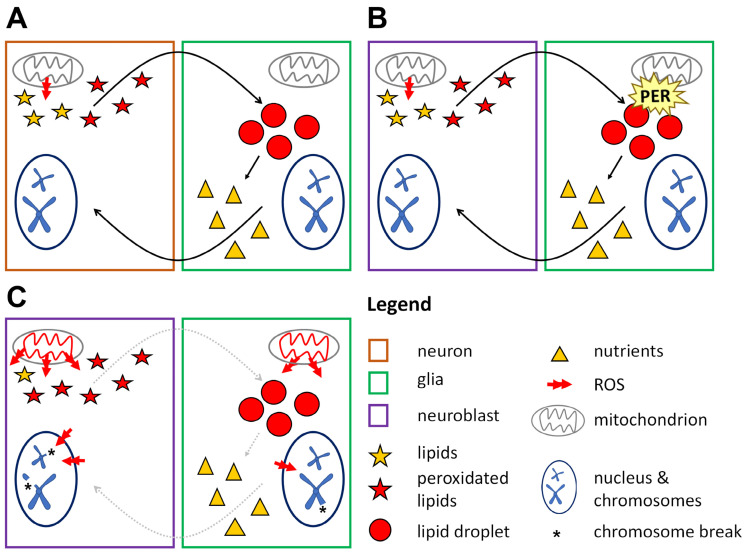
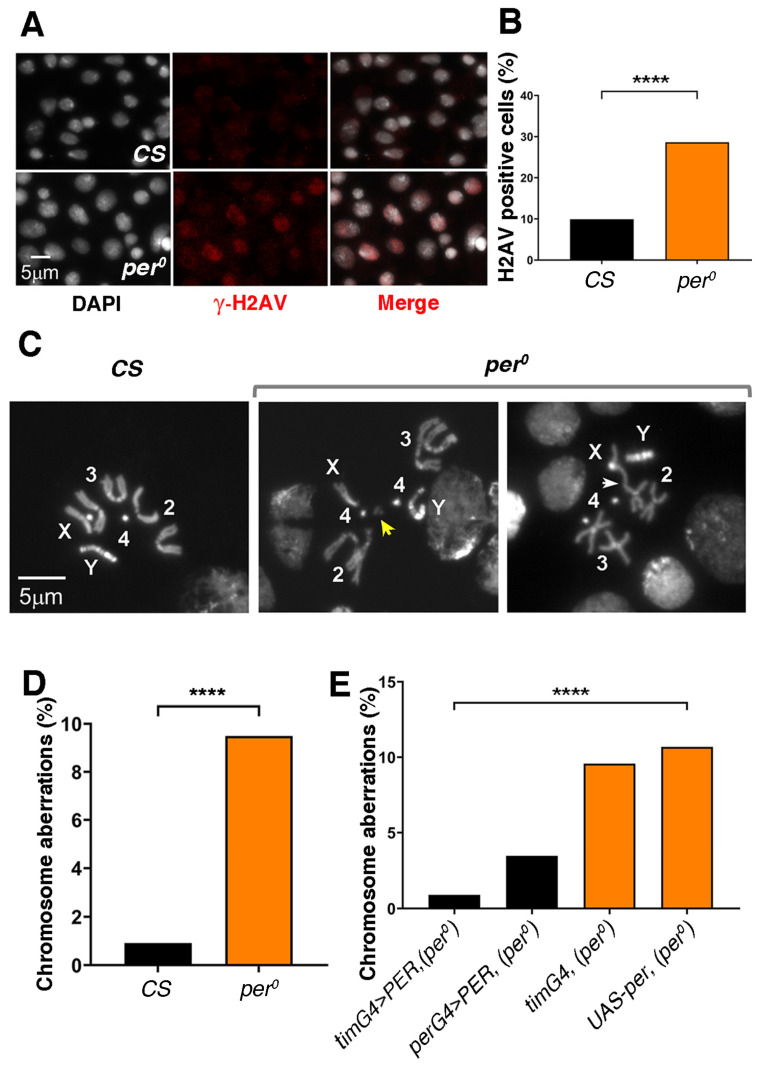
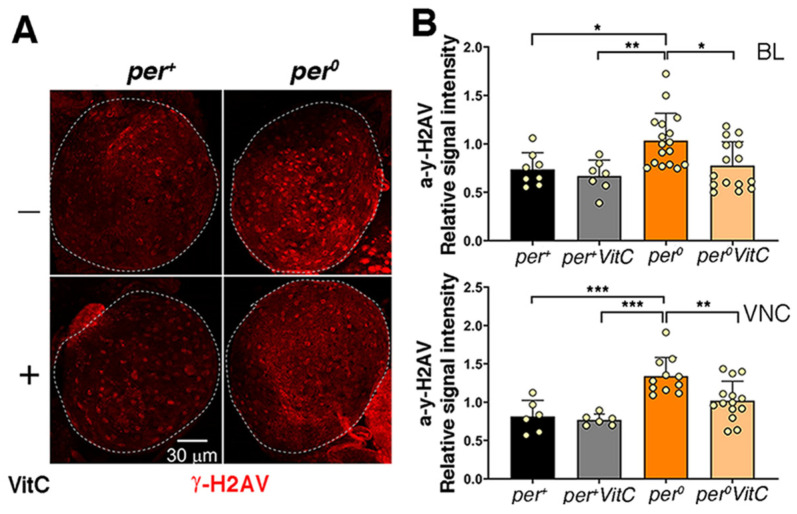
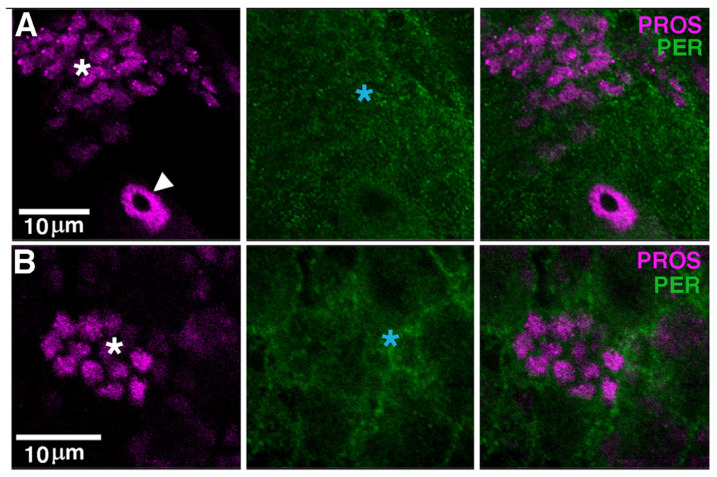
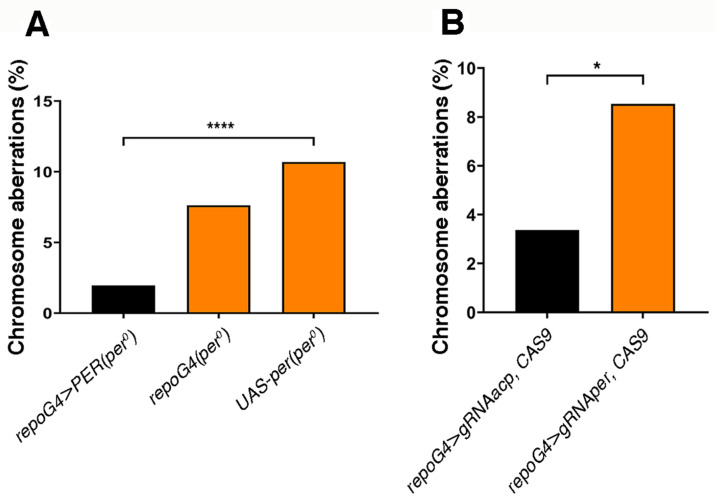
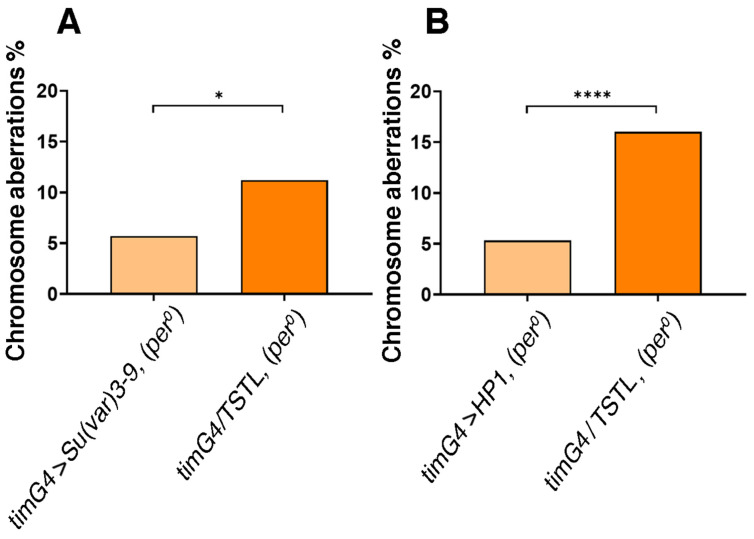
The physiological role and the molecular architecture of the circadian clock in fully developed organisms are well established. Yet, we have a limited understanding of the function of the clock during ontogenesis. We have used a null mutant () of the clock gene () in to ask whether PER may play a role during normal brain development. In third-instar larvae, we have observed that the absence of functional results in increased genotoxic stress compared to wild-type controls. We have detected increased double-strand DNA breaks in the central nervous system and chromosome aberrations in dividing neuronal precursor cells. We have demonstrated that reactive oxygen species (ROS) are causal to the genotoxic effect and that expression of PER in glia is necessary and sufficient to suppress such a phenotype. Finally, we have shown that the absence of PER may result in less condensed chromatin, which contributes to DNA damage.
生物钟在完全发育的生物体中的生理作用和分子结构已得到充分确立。然而,我们对生物钟在个体发育过程中的功能了解有限。我们利用果蝇中生物钟基因period(per)的无效突变体来探究PER是否在正常脑发育过程中发挥作用。在三龄幼虫中,我们观察到与野生型对照相比,功能性per的缺失导致遗传毒性应激增加。我们在中枢神经系统中检测到双链DNA断裂增加,在分裂的神经前体细胞中检测到染色体畸变。我们已经证明活性氧(ROS)是遗传毒性效应的原因,并且神经胶质细胞中PER的表达对于抑制这种表型是必要且充分的。最后,我们表明PER的缺失可能导致染色质凝聚减少,这会导致DNA损伤。